A little while ago at Kamalpur, with respected Malaya Goswami Baideu and Manjula Hazarika Baideu — embracing countless lives with the warmth of motherhood and guiding them towards light.
May all our mothers stay well, and keep us well too.
Cricket gyaan: I saw Sachin Tendulkar at 14 and thought I would never see another prodigious teen talent quite like him. Vaibhav Suryavanshi is potentially just as special, in his case with a white ball for now. Just another level of batting skill. 🤩👍
Sepon becomes the first of the ‘big ones’ to refrain from extravagant celebrations this year following Zubeen Garg’s demise. They will only observe the traditional rituals and there won’t be any musical night.
An Iranian man left this comment on my YouTube channel. This is without a doubt the single best explanation of the reality facing Iranian people today👇
"As an Iranian, I can tell you the situation is no longer just political—it's existential. We are trapped between two collapsing structures: one internal, one external. On one hand, we face a deeply dysfunctional government, led by the Supreme Leader and the Islamic Republic’s unelected institutions.
Decades of economic mismanagement, suppression of dissent, and brutal ideological control have alienated multiple generations. No one believes in reform anymore—because every attempt has either been co-opted or crushed. But here's the paradox: We are also terrified of regime collapse—because we've watched the aftermath of Western intervention in countries like Iraq, Libya, Syria, and Afghanistan. Each was promised freedom; each descended into chaos, civil war, or foreign occupation.
So no, we don't trust the U.S. or Israel. Not because we support our regime—but because we know how imperial powers treat ‘liberated’ nations in the Middle East.
Freedom, in their language, often means vacuum, fire, and permanent instability. Right now, many Iranians live with three truths at once: The Islamic Republic is morally and politically bankrupt. The alternatives offered by foreign actors are not liberation—they’re collapse.
A bad government is survivable. No government is not. We are not silent because we agree. We are cautious because we’ve learned—too well—what happens when superpowers decide to "help." In a sentence: Iran is a nation held hostage by its own regime, but haunted by the fate of its neighbors. We are stuck in a house we hate, surrounded by fires we fear more."
J&K has shown the world what effort and intent can do ..They have made that region so proud of them .. tuff environment makes tuff people. Aqib nabi on his way to national colours .. england is the place to start in the summer @bcci@imAagarkar@lonsaikia
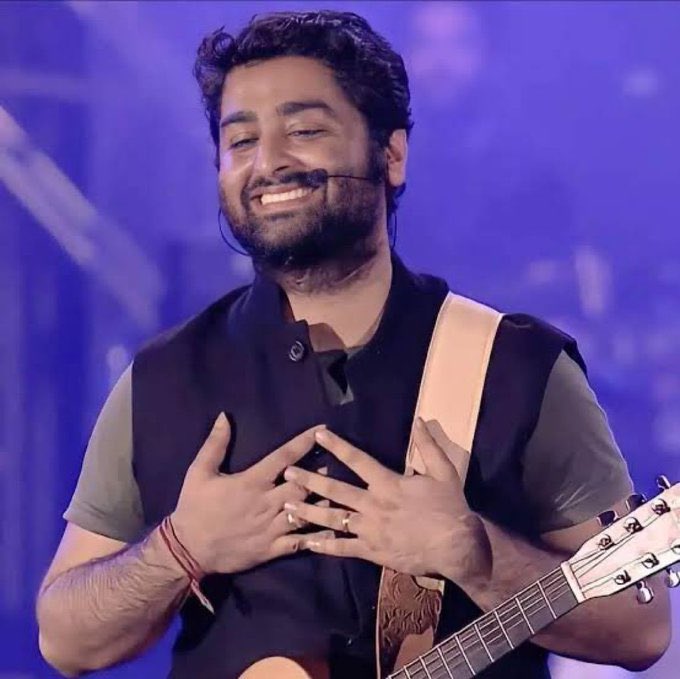
Arijit Singh has decided not to walk on that tightrope. We can only hope that the journey of his soulful music does not come to a halt. We shall wait to listen to the songs that emerge from Arijit Singh’s soul, unbound by the market. (2/2)
Historian Eric Hobsbawm wrote that in the contemporary world, an artist has to move forward on a tightrope—on one end lies the artist’s soul, and on the other, the market. In other words, one must maintain an equal regard for inner peace and market approval. (1/2)
Every night, Anke Gowda chose books over rest.
Once a bus conductor, later a timekeeper at the Pandavapur Cooperative Sugar Factory, Gowda spent nearly 30 years working while quietly building a dream.
After long days as a bus conductor, he’d search for what others had left behind—old textbooks, torn novels, discarded dictionaries.
Over decades, that quiet habit grew into Pustak Mane—the world’s largest free-access library with 2M+ books in 20 languages, rare manuscripts, documents from the Mysore dynasty, and newspapers dating back to the 1800s.
No entry fee. No ID cards. No questions asked. Just shelves of knowledge, open to anyone who walks in—students, researchers, writers, civil service aspirants, even judges.
“Books are my breath. It is my duty to preserve them for the next generation,” Gowda says.
Nearly 80% of his salary, his retirement pension of ₹40–45 lakh, and even his house and plots in Mysuru—all of it went into building the library.
Today, at 75, he doesn’t just run the library—he lives inside it with his wife. Because for him, books were never a hobby. They were a responsibility.
This Republic Day, India honoured him with the Padma Shri.
Impact doesn’t always begin with a big idea. Sometimes, it begins with loving one small thing deeply and choosing it, every single day.
#PadmaShri #RepublicDay #Karnataka
India should lobby for the safeguarding of religious minorities in Bangladesh. The visual is disturbing. Religious fanaticism is scavenger of cognition.
At midnight tomorrow, it will be 40 years since an Accord was signed to resolve Assam’s foreigners’ issue. Many generations and many governments later, we now find ourselves applying for arms licences to protect against the same foreigners.
Ayatollah Ali Khamei, Iran's 86-year-old Supreme Leader, faces the greatest test since the 1979 revolution -- to protect the regime and protect the nation. --I write in #TheHinduProfiles.
https://t.co/xQuuMABZJ4
If there’s one story you’d read this sad night…
Divided by conflict, 2 Manipur families now bound by grief—a Kuki & a Meitei were among AI 171 crew
Ananya Bhardwaj @BhardwajAnanya and Bismee Taskin @MainaBismee report for ThePrint https://t.co/fwvU6FYQyJ
I’m a middle-aged man, born and raised in Guwahati. My wife is from the hills of Nagaland and belongs to one of its indigenous tribes. We’ve been together for over 25 years and have raised two daughters.
Lately, I’ve been hearing worried whispers about how a couple from mainland India went missing during their honeymoon in Meghalaya. Suddenly, people are questioning the safety of the hills and painting its people with suspicion.
Let me offer a more grounded perspective, shaped by years of lived experience:
* Tribal people are not wired for premeditated violence or crime.
* They are fiercely independent and proud, but not hostile.
* Their social structure is deeply rooted in clan and tribal unity—individuals rarely act against their collective conscience.
* Loyalty to their land, tribe, and natural resources runs deep. This loyalty is sacred.
* Fringe elements, when they arise, are often dealt with internally by the community, not through the conventional criminal justice system.
* Yes, they can be extremely protective—especially when it concerns their land, water, and rights.
* Women in the hills enjoy freedom in ways that many parts of India are yet to catch up with. Be it in love or in livelihood, they make their own choices.
* For women travellers, the North-East remains one of the safest regions to explore—any time of the year.
Don’t let isolated incidents cloud your judgment. The people of the hills are among the most hospitable, honest, and dignified you’ll ever meet.