"ألا تسمع الأرض تصرخ مطالبة بالدم؟ دم الحيوانات لا يرضيها ولا دم المجرمين المسفوك باسم العدالة يكفيها، ...، لا قوة أعتى من تلك التي تسوق الرجال إلى ميدان الدم؛ يلقي المرء بنفسه في الهاوية التي حفرها بحر يديه، ويمنح الموت كما يتلقاه، من غير أن يرتاب لحظةً أن حسبه مَن نسج مصيره"
Horrible LARP. They will be read less and less as time progresses (which is unfortunate). If they are spoken of, they will be used to lend 'esoteric' prestige to ultimately superficial projects (look at Karp and Thiel invoking Hegel and Schmitt/Girard to legitimate Palantir).
This below account is particularly excellent at laundering the spooky appeal of windy philosophers who've been in the ground for decades. As we lose the capacity to read texts, they become more and more mysterious.
That notwithstanding, Heidegger is right: philosophy is dead, replaced by cybernetics.
Paul Dirac was famous for saying: “It is more important to have beauty in one’s equations than to have them fit experiment.” He discarded “ugly” formulations and believed aesthetic simplicity revealed truth.
غاب اسمه عن كثير من الحديث مع أنه كان في قلب المأساة.
عندما تُذكر فاجعة الدكتورة رانيا العباسي وأطفالها يمر اسم زوجها عبد الرحمن الياسين مرورًا عابرًا مأساة أب وزوج أيضًا.
ذلك الرجل عاش في لحظاته الأخيرة ما تعجز الكلمات عن وصفه رأى أسرته تُنتزع منه وشهد من الظلم والقهر ما لا يطيقه بشر... وهو عاجز عن حماية أحب الناس إلى قلبه. أي ألم يمكن أن يحمله إنسان وهو يرى زوجته وأطفاله يُساقون الى مصيرهم واحدة تلو الأخرى؟ وأي قهر أشد من قهر رجل حُرم من الدفاع عن أسرته؟
رحم الله عبد الرحمن الياسين ورحم زوجته رانيا وأطفالهما جميعًا وتقبلهم من الشهداء. فهذه ليست قصة أم وأطفال فقط، بل قصة عائلة كاملة اقتُلعت من جذورها، وقصة أبٍ لم ينل من الذكر والإنصاف ما يستحقه من الناس.
عادة في الشيشان عند دخول كبير السن مكان او مجلس الجميع يقف احتراماً وتقديراً
وقف هؤلاء الشباب على الفور لإظهار الاحترام عندما دخل كبير في السن الغرفة، رغم أنهم كانوا في المستشفى ومتصلين بأنابيب الوريد
Imagine a 19-year-old scrolling TikTok. She watches a creator list five "signs you have undiagnosed anxiety." She recognizes three in herself. By the end of the week, she's describing herself as anxious to her friends. A month later, she's avoiding situations she used to handle fine.
What went wrong?
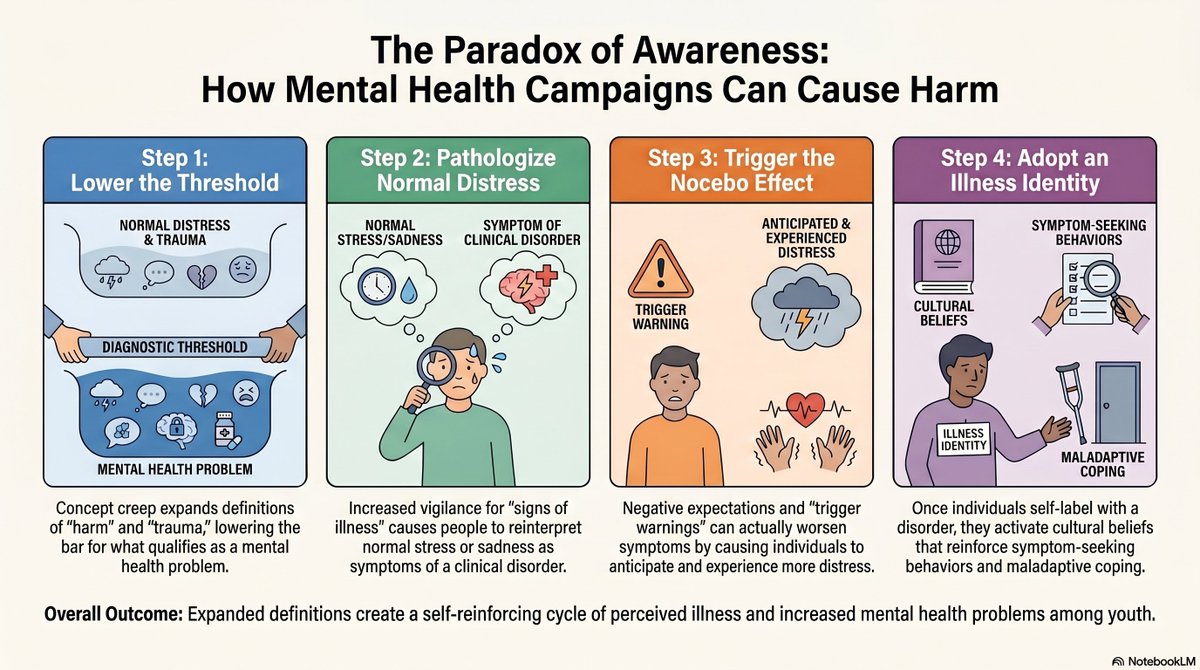
In a new paper by my PhD student Dasha Sandra, titled "Why mental health awareness can harm: Converging explanations for a societal problem", we argue that well-meaning mental health awareness can backfire, and we identify how. Four separate literatures (concept creep, nocebo effects, prevalence inflation, and illness self-labeling) have been circling the same problem from different angles. We show they converge on three mechanisms:
1.Awareness lowers the threshold for what counts as a disorder.
2. It trains people to scan their inner lives for symptoms and reinterpret normal distress as pathology.
3. Once someone adopts an illness identity, they behave in ways that confirm and deepen it.
The evidence is wide. Learning that loneliness is harmful makes solitude feel worse. Learning that stress is harmful worsens well-being and performance. Awareness videos about fake conditions like "wind turbine syndrome" produce real headaches. Trigger warnings raise anticipatory anxiety without reducing distress.
This does not mean awareness should stop. It means awareness can have unintended consequences, including manufacturing the suffering it tries to prevent. Inoculating people against these mechanisms works, and we already have evidence it does.
Link to paper: https://t.co/ucoGyhEuAj