A Provisional Sinn Féin press release from August 1972, carrying a statement from the Paris based French Committee for the Liberation of the Irish People regarding the events of Bloody Friday on July 21st.
@badenemyjake It has often been said that Paisley was rather good to Catholics in his constituency when he wasn't in demagogue mode, not that this is much of a defense.
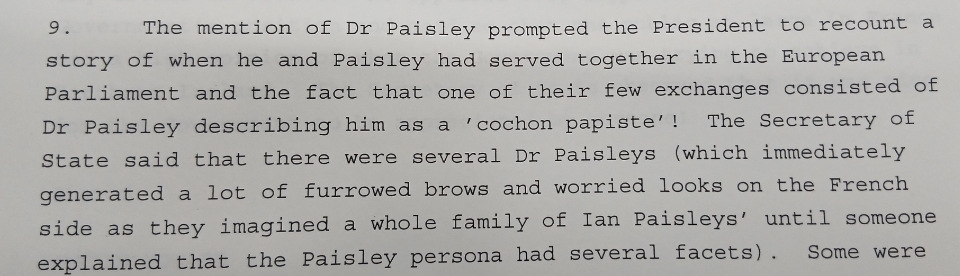
At a private 1996 meeting with British officials about the peace process in Ireland, then French President Jacques Chirac recalled once being called a "papist pig" by Ian Paisley. The meeting also saw French officials concerned at the possibility of multiple Ian Paisley's.
The association of Ian Paisley with Loyalism in the French media did Loyalism few favours, as Karine Deslandes has written about in her contribution to "France and Ireland in the Public Imagination" ed. Keatinge and Pierse (2014).
In general Loyalist outreach in France was rare, with British officials deeming it best that they deal with such outreach regarding the North of Ireland themselves.
Members of the Ligue Communiste (IV International) marching at a major protest called in Paris in response to Bloody Sunday in Derry, with banner declaring "Solidarity with the IRA".
Provisional IRA prisoners in France at times found themselves in close contact with other imprisoned activists. In a very literal example, James Coll of the Eksund shipment recalls in 1988 being chained to a political prisoner from Guadeloupe in transfer to hospital in Paris.
1/
For his part, Coll and 4 others had been imprisoned for the importation of several tonnes of armaments aboard the Eksund, weapons given by the Libyan state.
Source: The Irish Prisoner no. 16 (1989)
This prisoner was likely a member of L’Alliance révolutionnaire caraïbe (Caribbean Revolutionary Alliance), several members of which were arrested in 1987. The group carried out several attacks in Paris and Guadeloupe in the 1980s, aiming for independence from French rule.
2/
May 1978 - Members of Irish solidarity groups interrupted a lecture given by former Labour Minister Conor Cruise O'Brien in the University of Vincennes, Paris.
How did British diplomats and officials interpret and respond to ETA?
My new book, ETA and the “Basque Problem”: The View from London (1968–93), will be published next month in hardback by @routledgebooks
Preview of Chapter 1 now available: https://t.co/LwepvmJZbU
"Solidarity with the Revolutionary Struggle of the Irish People."
Postcard produced by Comite Irlande in France in the late 1970s.
With thanks to Stan Demidjuk
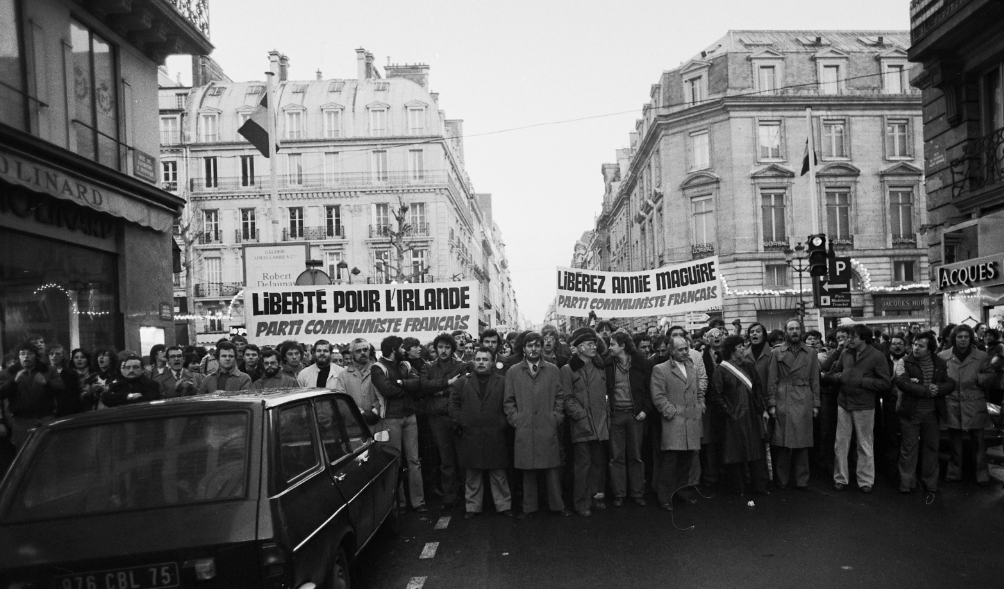
"Liberté Pour l'Irlande."
A protest held near the British Embassy in Paris in late 1980.
Organised by The French Communist Party and members of Irish solidarity groups for the first hunger strike, as well as calling for the release of Anne Maguire of the Maguire Seven.
How Irish revolutionaries used French language to secure support: The multilingual skills of the revolutionary generation helped them to amplify Ireland's cause on the world stage. By Síobhra Aiken, Claire Dubois and Mark O'Rawe @QUBelfast@univ_lille https://t.co/JoNqcmjjgw
More research to be done into what motivated individuals to join the Republican movement outside of Irish circles, as well as why this was generally quite rare even in comparison to other armed groups internationally.
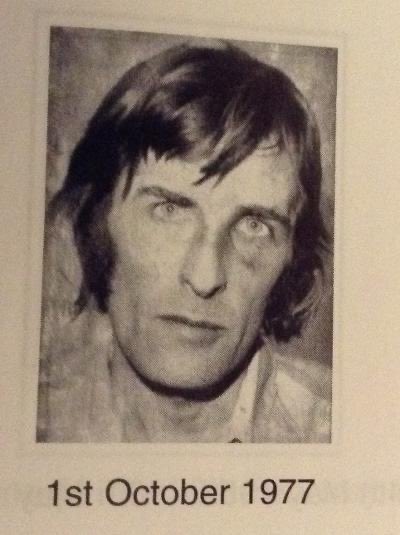
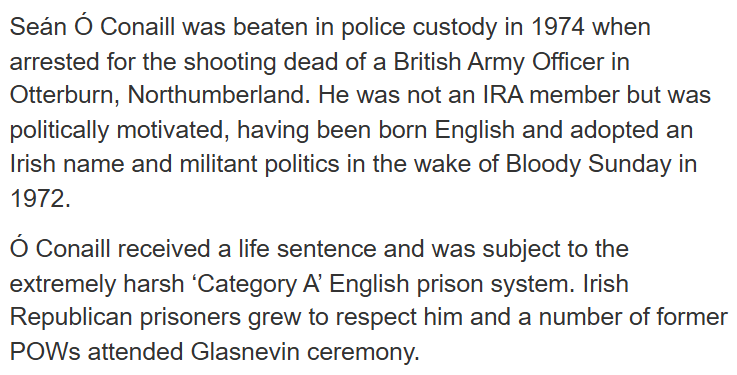
Seán Ó Conaill is an interesting case of the internationalisation of the Irish conflict. He had no Irish ancestry but identified with the Republican movement, even taking an Irish name and ultimately dying a Republican prisoner and member of Sinn Féin. (An Phoblacht, 12/10/77).
Seán O’Connaill Republican POW. Died in Parkhurst prison England on 1/10/1977. (The Dublin NGA recently unveiled a headstone on Seán’s grave in Glasnevin cemetery) Fuair sé bás ar son saoirse na hÉireann.