15 years of providing the lab tests needed to tackle chronic health issues. Pickleball addict. CEO at @TrueHealthLabs.com with over 2,500 5-star reviews.
Most lab tests focus on diagnosis, not why you feel off.
I started https://t.co/RBbVHLBSYI 15 years ago so people can order labs that matter—whether symptomatic, health curious, or biohacking.
Follow for what your doctor won’t tell you in 10 minutes.
Scientists have created one of the most detailed 3D reconstructions of a human cell (eukaryotic cell) ever produced.
This groundbreaking model, often termed a "Cellular Landscape Cross-Section Through a Eukaryotic Cell," combines data from X-ray tomography, nuclear magnetic resonance (NMR), and cryo-electron microscopy to map molecular structures in extreme detail.
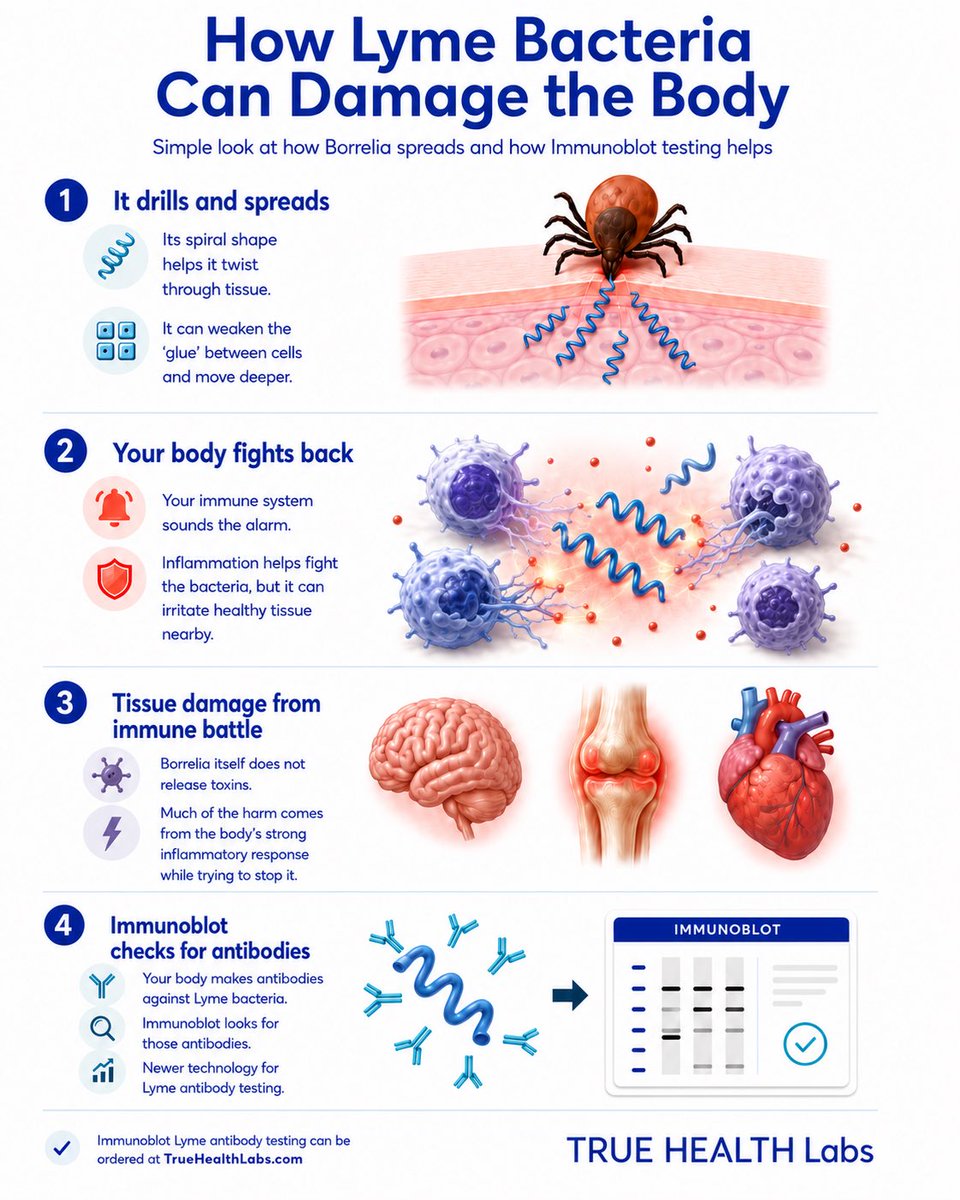
A past tick bite may be connected to symptoms that do not seem related.
Lyme disease can, in some people, affect the nervous system, including the brain, leading to long-term mood changes, sleep disturbances, balance problems, and many other symptoms that may not seem directly Lyme related.
Newer immunoblot IgM and IgG testing for Lyme disease is important if someone thinks they have been bitten by a tick.
Learn more:
https://t.co/ejPkpjIMR5
Follow True Health Labs as we talk about how Borrelia burgdorferi, the bacteria that causes Lyme disease, evades the immune system and how other bacteria can hitch a ride during a tick bite.
Share this post with friends you think would find it helpful.
Over 400,000 people a year are diagnosed/treated for Lyme disease. Numbers have gone up significantly this year, and in some areas of the Midwest, they have seen a 300% increase over just the past few years.
See the images to find out why tick populations have gone up. It's not what you think.
Tick bites don't always lead to Lyme disease, but early recognition of symptoms can make a big difference. The classic sign is the bull's-eye rash, but here are other symptoms you may not associate with being bitten by a tick that can show up even weeks after being bitten:
• Fever
• Fatigue
• Headache
• Muscle aches
• Joint pain
Lab testing is important. The timing of lab testing is even more important.
If the tick carries the Lyme disease-causing bacteria, Borrelia burgdorferi, and you get infected, it could take two weeks or longer for your body to develop antibodies that can be detected.
Lab testing technology has gotten much better, and True Health Labs now carries the ImmunoBlot test, which is a big improvement over the older Western Blot test for antibodies.
You can view the test here: https://t.co/ejPkpjJkGD
Follow us as we show you things you’ve never known about Lyme disease.
@minchoi@grok for a non-coder, can you educate me on why these products are using terminal, and what a harness is in simple terms. Give a simple but highly useful example on how a non-coder would use this.
Global food systems pose increasing harms to human health and the environment, so how can we shift toward healthier, sustainable, and more equitable systems for the world’s 8 billion people?
In a new #ScienceReview, researchers examine the evidence for how global diets have changed and strategies that could transition food systems toward a healthier future.
Learn more: https://t.co/kCuDwFjSbR
He’s not wrong , total LDL is a pretty incomplete picture on its own (oxidized LDL is way better).
But the deeper story is in the markers most doctors never order: ApoB, particle size and density for both LDL and HDL, Lp(a) (which is largely genetic and often overlooked), and Lp-PLA2, which can actually signal active plaque buildup.
Together, these paint a cardiovascular risk profile that a standard cholesterol panel can’t even come close to.
The wild part? The vast majority of people go their entire lives without ever getting them tested.
He’s right that total LDL alone doesn't tell the whole story.
but...
There are also advanced markers not mentioned here, including ApoB, LDL + HDL particle size and density, Lp(a) (genetic risk), and Lp-PLA-2 (plaque buildup marker), that can show cardiovascular risk assessment far beyond a standard cholesterol panel.
Most people never have these labs done.
A new AI blood test detects 12 common cancers with 99% accuracy.
It’s fast, takes a small amount of blood, and being trialed by the NHS.
This could be promising! Would you want it added to your annual physical lab panel?
https://t.co/Wv8LzXp3xR
Still bloated, breaking out, or foggy, despite cutting foods and taking probiotics?
A calprotectin test checks if your gut is inflamed. Not all about food or bugs. It shows if your gut lining is inflamed due to other causes.
This isn’t part of a basic stool test. So most never get it.
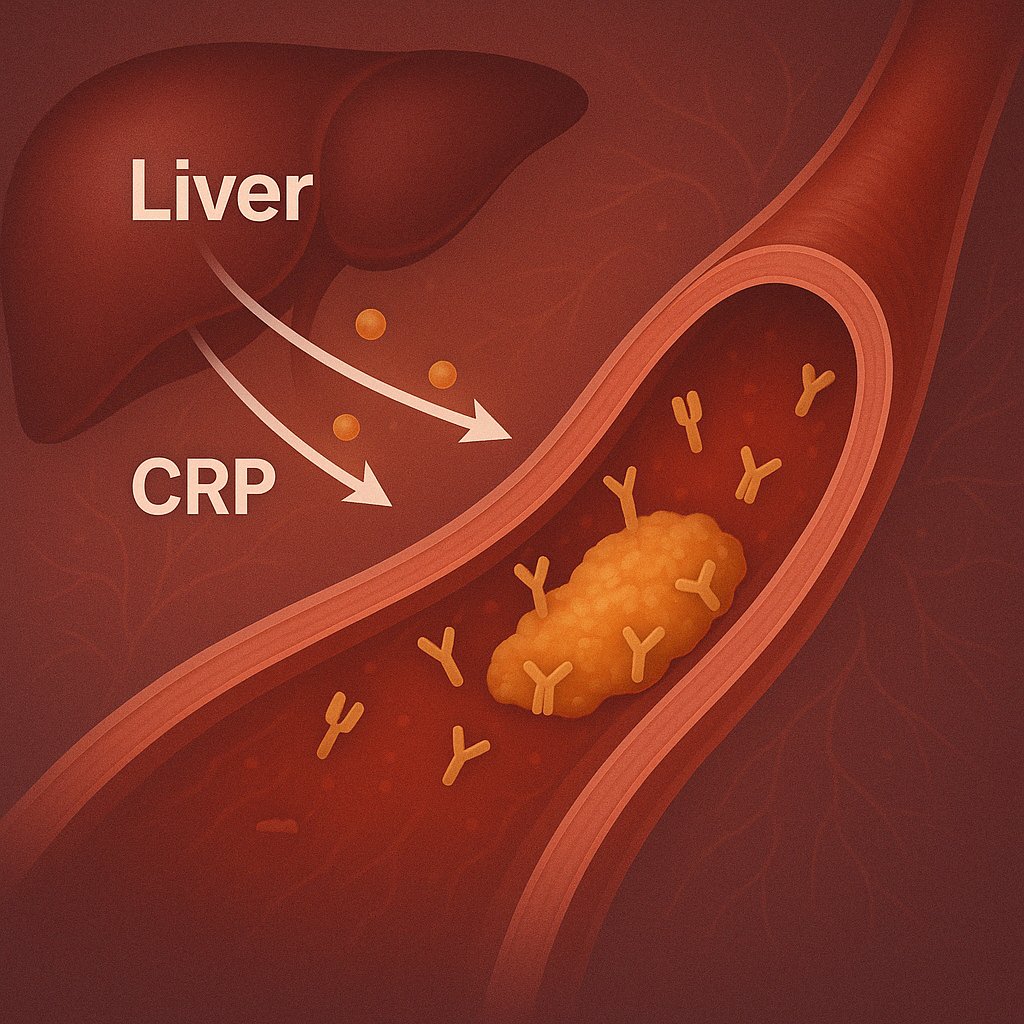
Inflamed arteries are a big problem. You don't know it's happening, and standard blood tests don't show it.
CRP is a blood marker that may reveal hidden inflammation in your arteries and can lead to more plaque buildup.
This might explain why some people still face heart issues despite having “good” numbers. Inflammation could be the piece they’re missing.
Your cholesterol looks fine on test results. But that might not mean what you think.
ApoB measures the number of particles that can damage your arteries. You can have normal LDL but still have high ApoB—meaning higher silent risk that the standard panel might miss.
@ElieJarrougeMD Spot on! Even though quit pre-diabetes who don’t know it can develop nonalcoholic fatty liver disease. Easily tested for.
https://t.co/K28sDxxdog
If this hits home, you can actually test your leptin levels with a lab test. Most people don’t even realize that’s an option, but it can explain a lot.
It’s not about willpower. Your brain might just not be getting the signal that you’ve had enough.
Seeing that in your results can be very motivating. You can see it improve as you get better.
Just because your cholesterol is “normal” on a carnivore diet doesn’t mean you’re safe.
Standard tests don’t show particle size. Small LDL acts like BB pellets—sneaking into artery walls and building plaque. Bigger ones bounce off.
You need to know what kind you have.
Your cholesterol might be fine—but that doesn’t always mean your arteries are.
Lp-PLA2 is a lab test that is linked to artery inflammation. It’s released by immune cells inside artery plaque—especially the kind more likely to cause trouble.
Unlike general inflammation tests like CRP, Lp-PLA2 activity tends to show up right where plaque is forming or becoming unstable.
Some studies suggest people with elevated Lp-PLA2—even if cholesterol levels look great—may have up to a 1.5x higher chance of heart issues down the road.
Routein labs look good? Lp-PLA2 might still pick up early signs of artery stress that standard tests miss. This could be more problematic for those starting or following a carnivore diet.
It’s one way to get a clearer picture of what’s really going on inside arteries.