Developing relational trust between principals and teachers, leading to risk-taking and growth. Consultant/Trainer/Speaker. Author of Trust-Based Observations
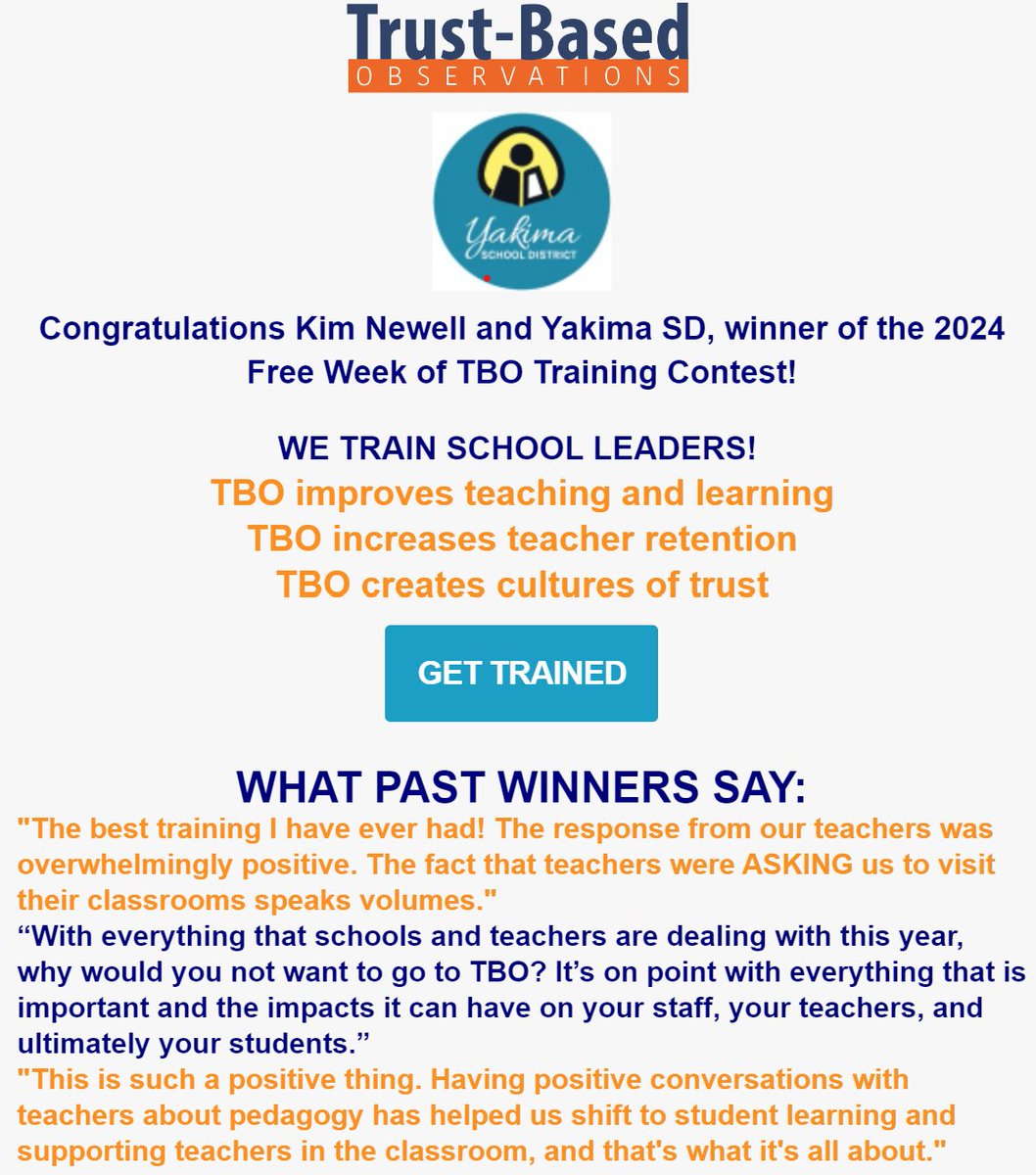
Join me in congratulating Kim Newell and Yakima School District #7 our 2024 TBO Free Week of Training contest winner!!
Want to learn more? Go to: https://t.co/zaPj3LeYUW
@VinceBoley Research shows as soon as we grade pedagogy relational trust between observer and observee is diminished, as a result teachers tend to play it safe and take less risks-doesn’t have to be that way: Trust-Based Observations https://t.co/SSCKHHntxD
teaches and principals love it
Great leaders build trust, not fear.
When teachers feel safe to take risks, innovation and growth thrive.
Learn how TBO transforms schools: https://t.co/SSCKHHntxD
📅 Book a quick, no-pressure discovery call today.
Observation shouldn’t feel like a performance.
It should feel like leadership. Like trust. Like growth.
✅ No scores
✅ No scripts
✅ No “gotchas”
Just real conversations that help teachers thrive.
https://t.co/pGNclyLw0k
When teachers prep for walkthroughs with hand signals and “super lessons,” we’ve lost the plot.
Observations should build trust—not just check boxes.
Let’s fix it.
https://t.co/OAeXF1CaWt
People don’t like being told what to do.
That’s why:
“I have a suggestion—would you like to hear?”
= huge.
It’s one small piece of a bigger trust-building system.
If this shifts everything, imagine a whole model built on it.
🔗 https://t.co/SSCKHHntxD
#edleadership#trust
What if observation wasn’t about compliance—but about cultivating greatness?
Too often, our systems push teachers into survival mode. But greatness can’t be forced—it grows in cultures rooted in trust.
That’s the heart of Trust-Based Observations.
If Hattie’s highest effect size is collective teacher efficacy,
but our eval systems lower self-efficacy
How will we ever get there?
Observations must build trust—not anxiety.
🎙 w/ [@DarrinMPeppard] on Lean Into Leadership
#TBO#TeacherSupport#EdLeadership#CollectiveEfficacy
@VinceBoley Check out Kagan Cooperative Learning’s Timed-Pair Share—instead of turn n talk or think pair share—the difference is in the details—also do noncontent versions as practice—like name your favorite movie and why—kids will always talk about their interest and then content is easier