Excited to update our manuscript with many major improvements in genotying VNTR motifs and profiling their impact on gene expression. Special thanks to @PaulinaNSmaruj and @gfudenberg for adding the cool genome folding analysis, and @nmancuso_ for guiding association studies.
After a lot of work, happy to post the revised version of our manuscript relating tandem repeat motif variation to expression by @TsungYuLu1 From some great reviewer comments (review not broken), we've updated: https://t.co/iK2SUiBCAX
Even in the case where motif count correlates with VNTR size, sequence compositions provide insights into potential regulation mechanism, as illustrated in the HRNR case. The perturbation on genome folding can be well predicted by the number of CTCF binding sites in the repeat.
Excited to update our manuscript with many major improvements in genotying VNTR motifs and profiling their impact on gene expression. Special thanks to @PaulinaNSmaruj and @gfudenberg for adding the cool genome folding analysis, and @nmancuso_ for guiding association studies.
After a lot of work, happy to post the revised version of our manuscript relating tandem repeat motif variation to expression by @TsungYuLu1 From some great reviewer comments (review not broken), we've updated: https://t.co/iK2SUiBCAX
The holy grail of this paper is to show that motif composition explains trait variations in certain scenarios that could not be explained by VNTR length. We highlighted the promoter VNTR of RNF213 that is predicted to have TF binding sites in certain expanded alleles but not all.
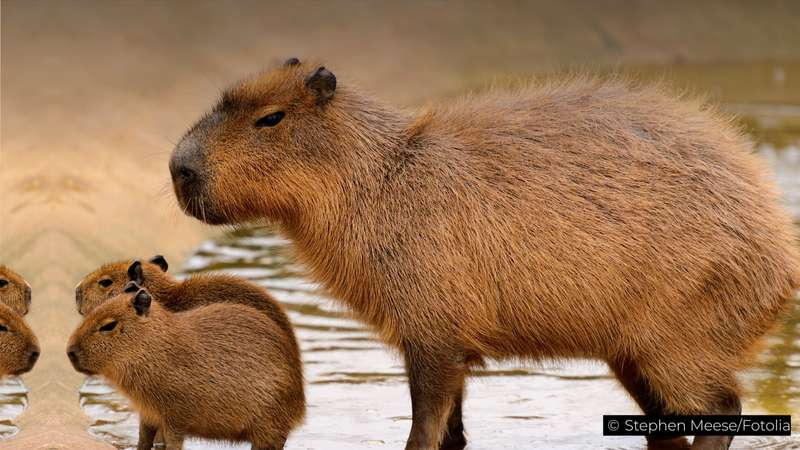
“Rises in brain temperature reliably trigger yawning, and yawning is followed by decreases in brain temperature” I yawn because my brain is having a heated debate!? https://t.co/yVe4DVjDWz
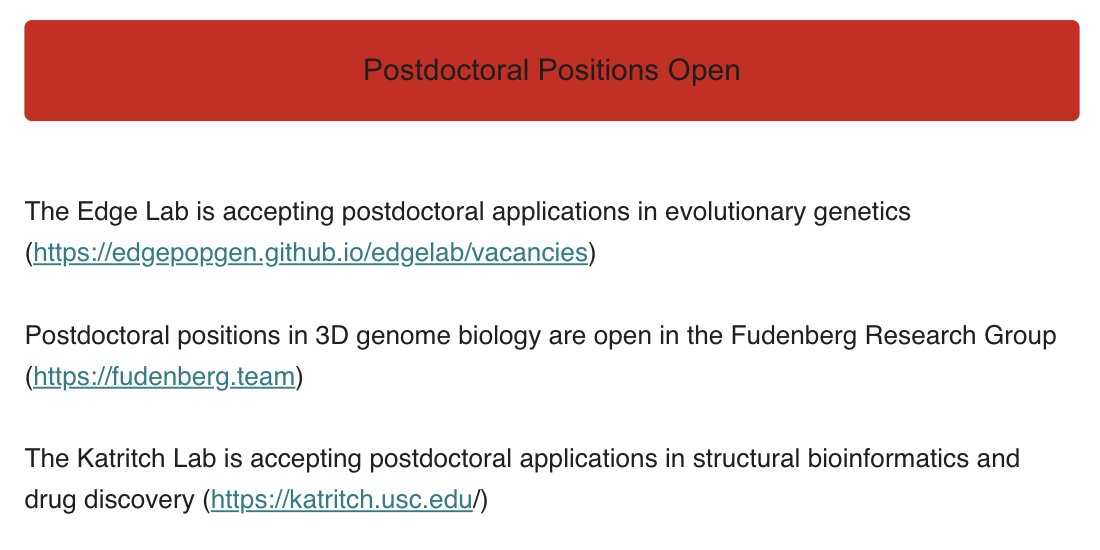
I'm looking to hire a postdoc to work on questions related to genetic privacy, forensic genetics, and complex traits from a population-genetic perspective. Please RT and write to me if interested.
https://t.co/05gWfWkSAB
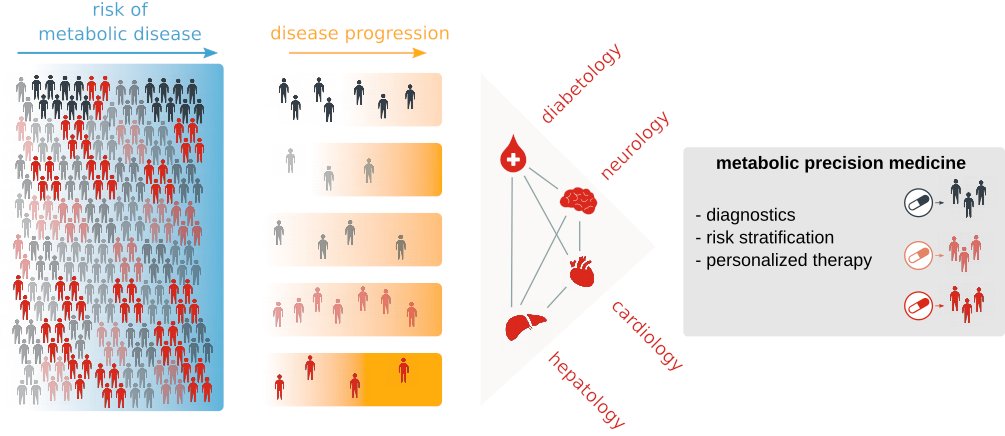
Please RT: Thrilled to announce 14 postdoc positions on multi-omics data science to study metabolic diseases. Great team of PIs from AI/ML, bioinf, experimental+clinical medicine. Apply until Nov 21. https://t.co/FY9hKvWcYx @UniklinikDUS@MedHHU@HHU_de @ddz_info @HeiCAD_HHU
Preprint online showing a "flipped" approach to variant validation: compare how a call set estimates a genome rather than how calls overlap, work done by Quentin Yang TT-Mars: Structural Variants Assessment Based on Haplotype-resolved Assemblies https://t.co/6FwnlvzUBY
Not Monday gloom but Monday glee🥳 The tool is now more scalable to genotype thousands of samples (2 days for 1000 Genomes high-coverage samples on our Discovery cluster)
Our paper on profiling VNTR variation using repeat pangenome graphs is out: https://t.co/5nfDuG8QKa
To celebrate this, Tony released v1.3 of danbing-tk, with a 24x (!) speedup relative to the manuscript. New pangenome graphs to drop soon.
Delighted to share the T2T-Polishing Team's preprint showcasing the lessons learned from polishing the first complete sequence of a human genome.@kishwarshafin @malonge11 @ArangRhie https://t.co/X6bbkTcK5N
Academic writing is wild bc you’ll read four articles just to write one sentence.
Anyway, here’s a thread of resources I’ve been using to speed through this review I’m working on:
Short answer, it's early and we don't know anything, but since everyone is asking, here's my take on what the halting of the tominersen Phase III Huntington's disease trial means for our efforts in prion disease: https://t.co/Hqhorsowzl
Please RT: Still accepting applications for PhD position on algorithmic pangenomics (https://t.co/iXtazanCcu), with a focus on complex loci. Part of Alpaca network (https://t.co/Z98MEK7GhV) with great PIs: @RayanChikhi@ZaminIqbal@richard_durbin@jensstoye@veli_makinen et al.
Here are my lecture notes on Computational and Mathematical Population Genetics that I have been sporadically working on for several years. I don't know whether I will ever be able to finish, so decided to release them now. Please share with your friends: https://t.co/MdyxtXoK31
Dr. Peter Jin is looking for a postdoc interested in multi-omics analysis, computational method development, structural variation, and/or functional genomics using zebrafish, to join his lab at Washington University School of Medicine. See https://t.co/Szk7ku3t3v for more info.