🔥 ARCS GENESIS GIVEAWAY — ROUND 1
Want some $ARCS?
① Follow @ARCScriptionsHQ
② Like + Repost
③ Drop your EVM wallet below
We’ll keep picking winners and sending $ARCS on-chain.
More wallets. More ARCS. More rounds.
Community leader, KOL, creator or project team?
Partnerships are now open — DM us.
@Arc
#Arc #ARCS #Giveaway
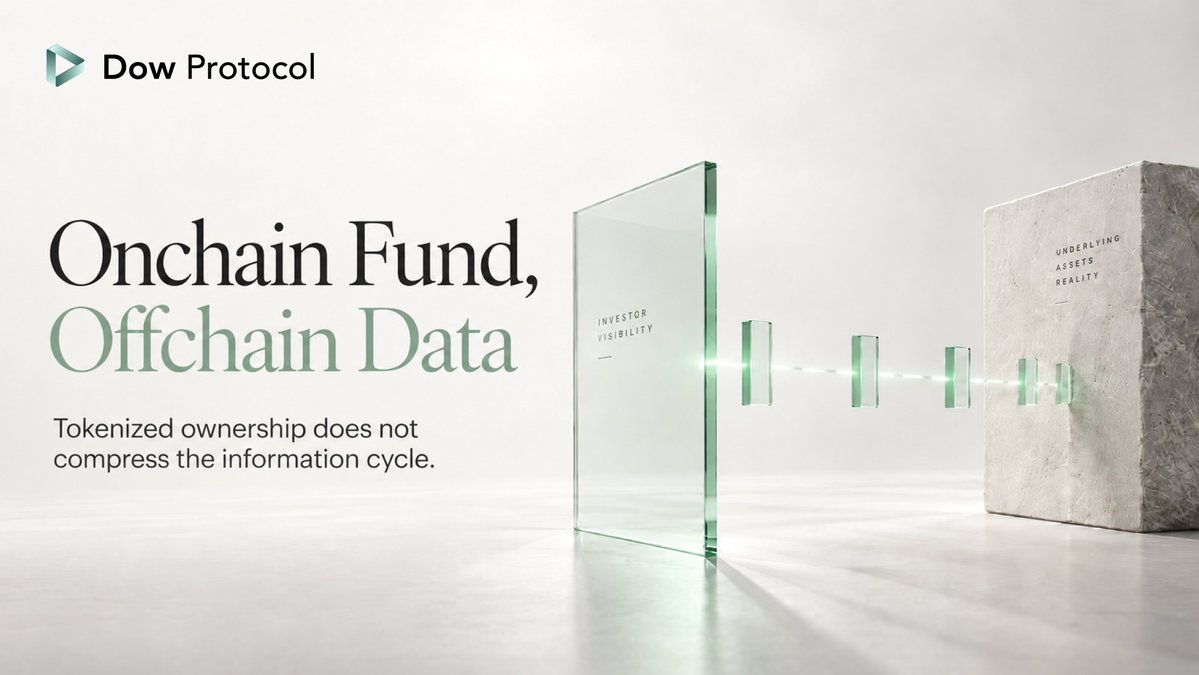
A fund can be onchain while its information remains offchain.
Tokenized ownership, 24/7 transferability, and smart-contract settlement do not automatically make the underlying risk more observable.
If portfolio data still arrives monthly, the investor is holding a digital asset with an analogue information cycle.
For onchain credit, the real upgrade is not just tokenizing the fund. It is shortening the distance between what happens in the underlying asset and what the investor can actually see.
One under-discussed effect of blockchain in private markets is that it can change the minimum economical size of a financial asset.
Traditional private credit carries a lot of fixed overhead: documentation, reporting, reconciliation, servicing and administration. Below a certain ticket size, the economics simply stop working.
Automation changes that threshold.
When more of the lifecycle can be standardized and executed programmatically, smaller and more granular assets become economically viable to finance at scale.
That may be one of RWA’s more important effects: not just making existing markets more efficient, but making previously uneconomic markets financeable.
@volo_sui’s latest deep dive unpacks the full architecture behind our joint USDC vault on Sui.
From e-commerce financing and underwriting to monitoring, collections and repayment, it walks through how the underlying credit process is translated into an onchain product.
A detailed look at what actually sits behind the vault.
24/7 markets will become inevitable as banks begin overhauling the accounting and ledger infrastructure beneath the financial system.
And once that foundation changes, the rest of the asset lifecycle will have to follow.
Trading, underwriting, servicing and settlement cannot remain on different clocks forever.
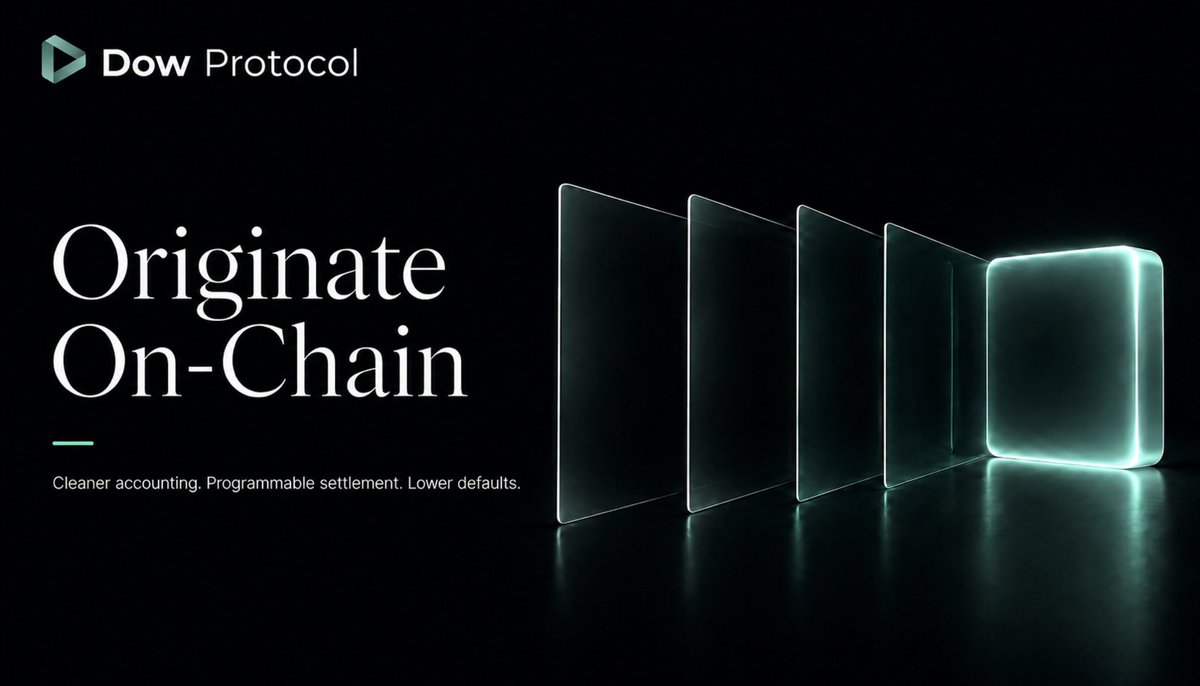
Figure and its partners have already originated over $30 Billion of loans through a blockchain-native capital-markets stack. BIS argues why this matters since tokenization can collapse messaging, reconciliation and settlement into one operation, replacing multiple ledgers and hand-offs with a single programmable asset record.
Dow Protocol applies that architecture to commerce credit with ownership, repayment waterfalls and risk triggers are defined at origination, not reconciled after the fact. The important point is not that blockchain eliminates credit risk, but that live underwriting plus pre-programmed cash-flow control leaves fewer places for risk to hide.
The Dow Protocol community is now live on Telegram at https://t.co/TC2MFF2USj.
Join us for product updates, ecosystem news, and conversations around RWA, stablecoins, and the future of working capital.