Super proud and excited to finally present LiteMol-1. This is our first foundation model from LiteFold, pre-trained from scratch.
Today, LiteMol-1 can generate small molecules, peptides, cyclic peptides, depsipeptides, peptides with ncAAs, macrocycles, and PROTACs.
Across our peptide and small-molecule evaluations, the model shows competitive results. In several settings, we are on-par with or better than frontier structure-based models, at a fraction of the generation cost.
But the part I find most interesting is that this is a model for agents. We have seen ourselves how much compute, and how many tokens it can take to generate good binders using frontier structure-based models. Sometimes you need to generate tens of thousands of designs just to get a handful worth taking forward.
Now put this inside an AutoResearch loop. The agent has to continuously parse structures, inspect PDB/CIF files, compare candidates, run evaluations, modify the design, and repeat the whole thing again. It becomes extremely expensive very quickly.
Sequence space gives us a very different interface. LLMs are much more efficient at inspecting and manipulating compact molecular representations like SMILES than repeatedly operating over full structural files.
So LiteMol-1 becomes something like an infinite molecular canvas for the agent. For a given target and objective, the model can continuously propose what a biomolecule could look like. The agent can inspect those generations, take inspiration from them, preserve certain regions, edit others, optimize them, score them, and generate again.
Generate → inspect → evaluate → edit → generate again.
There is another problem I care a lot about. Most molecule design models today are heavily optimized around binding. But binding is only one part of whether something eventually becomes a therapeutic. What about ADME? Toxicity? Selectivity? Solubility? Membrane permeability? Synthesizability?
For this, we also built a Monte Carlo Tree Search-based multi-objective generation framework around LiteMol-1. Instead of combining everything into one score, the search keeps multiple strong candidates, each balancing the desired properties in a different way.
As our scoring functions and verifiers get better, the generation system gets better too. We can start steering molecules not just toward “binds well”, but toward a broader therapeutic design specification.
The bottleneck slowly moves from simply generating molecules to having sufficiently good verifiers and scoring functions to tell us what is actually worth generating. Check out our technical research blog post for all the details.
At LiteFold, our research is focused on engineering biomolecules and building systems that can carefully forecast their pre-clinical success.
To stay updated on our research, follow LiteFold.
Cheers!
This Independence Day 🇮🇳, I asked, "What will the next century of young Indians look like?"
$0.01 Drone Deliveries. UAVs that never land. Groceries in under 10 minutes.
Meet The 22nd Century Indian. A Documentary on a New India.
Today, we're announcing Markov (YC S26).
We've built the most advanced CUA datasets for CAD, design, browser-use & more.
We're working with frontier AI labs and our open-source datasets have crossed 150,000+ downloads on HuggingFace.
Sample dataset below :)
@markov__ai
We’ve raised $5.2M to build the default AI assistant over text.
Most AI assistants understand your email inbox. They don’t understand you as a person.
Pally is the first AI assistant with access to your personal iMessage and WhatsApp inboxes.
That means it understands the conversations, relationships, commitments, and context that make up your actual life.
AI agents are incredibly powerful, but for most people, they’re still too complicated or unfamiliar to use every day.
We believe the path to bringing agents to everyone is to make them deeply personal, proactive, and, above all, simple.
That’s what we’re building with Pally. One text away from done.
See the fully story from Business Insider here: https://t.co/zx7uAASUc9
Thanks to the incredible investors who have backed us: @cyberfund@ycombinator@fdotinc@pioneer_fund@468Capital@Multimodal_Vent@iamcal@karimatiyeh@Thom_Wolf@taro_f@mytechceoo@brycent and 100+ others!
Try Pally today, here's a free month of pro: https://t.co/fWCeSeuRmR
I turned ₹30,000 into ₹9.5 lakh in 40 days. Here’s what happened:
In April this year, I came across a hackathon happening on the 17th that I thought would be interesting to participate in.
For a while, I had been thinking about building a system that could automate lighting, specifically lasers, to music at concerts and live events. The hackathon felt like the perfect opportunity to finally build a prototype.
After doing some initial validation, I started looking for a laser to work with.
That was where I got stuck.
Lasers are extremely expensive, and the cheapest rental I could find was ₹30,000, which was far more than I had expected to spend on a hackathon.
However, the prize money was 5k USD, so I decided it was a risk worth taking.
I rented the laser, built the prototype and presented it at the hackathon.
Although I was proud of what I had built, I didn’t make it into the top three.
I was disappointed, but the experience made something very clear to me: I believed the idea was genuinely useful, and I had enjoyed every part of building it.
So I decided to continue.
Soon after, I made the difficult decision to leave my job and go all in on the project.
Around the same time, I joined Lossfunk, a research lab for independent researchers in India, where I continued developing the idea.
I shared an early version on Reddit and received encouraging feedback and validation. Through that, I was approached by the founder of one of the world’s largest laser companies.
He liked what I was building and offered to give me a laser for free.
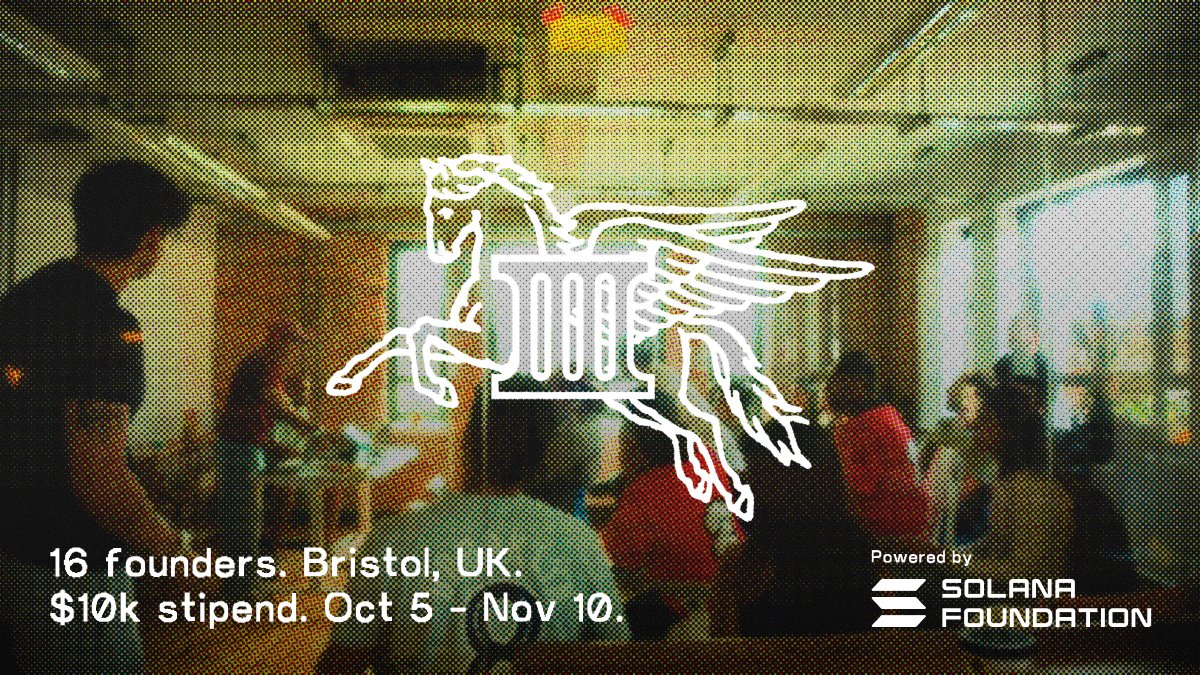
In May, I also applied to Forma Residency, a month-long residency in Bristol for entrepreneurs, where participants receive a $10,000 grant to build their ideas.
On May 26, I found out that I had been accepted.
Somehow, spending ₹30,000 on a hackathon I didn’t win led to a research residency, a professional laser and a $10,000 grant to continue building the idea.
I’m incredibly grateful to the team at Forma for this opportunity, and I’m excited to spend the next month building my startup from Bristol.
I turned ₹30,000 into ₹9.5 lakh in 40 days. Here’s what happened:
In April this year, I came across a hackathon happening on the 17th that I thought would be interesting to participate in.
For a while, I had been thinking about building a system that could automate lighting, specifically lasers, to music at concerts and live events. The hackathon felt like the perfect opportunity to finally build a prototype.
After doing some initial validation, I started looking for a laser to work with.
That was where I got stuck.
Lasers are extremely expensive, and the cheapest rental I could find was ₹30,000, which was far more than I had expected to spend on a hackathon.
However, the prize money was 5k USD, so I decided it was a risk worth taking.
I rented the laser, built the prototype and presented it at the hackathon.
Although I was proud of what I had built, I didn’t make it into the top three.
I was disappointed, but the experience made something very clear to me: I believed the idea was genuinely useful, and I had enjoyed every part of building it.
So I decided to continue.
Soon after, I made the difficult decision to leave my job and go all in on the project.
Around the same time, I joined Lossfunk, a research lab for independent researchers in India, where I continued developing the idea.
I shared an early version on Reddit and received encouraging feedback and validation. Through that, I was approached by the founder of one of the world’s largest laser companies.
He liked what I was building and offered to give me a laser for free.
In May, I also applied to Forma Residency, a month-long residency in Bristol for entrepreneurs, where participants receive a $10,000 grant to build their ideas.
On May 26, I found out that I had been accepted.
Somehow, spending ₹30,000 on a hackathon I didn’t win led to a research residency, a professional laser and a $10,000 grant to continue building the idea.
I’m incredibly grateful to the team at Forma for this opportunity, and I’m excited to spend the next month building my startup from Bristol.
introducing... a brand new pally 👋
pally is an ai assistant that lives in your texts, it connects to your DMs and helps you stop ghosting people
pally sees who you've left on read and replies for you, in your tone, with your context, while escalating to you if it needs to
it's also a full general agent, so it can automate your manual workflows, book your flights, buy things with locked one-time cards, and drive a browser to do basically anything else
use this link for a free month of pro: https://t.co/fWCeSeujxj
stop ghosting people. text pally today. 🫶