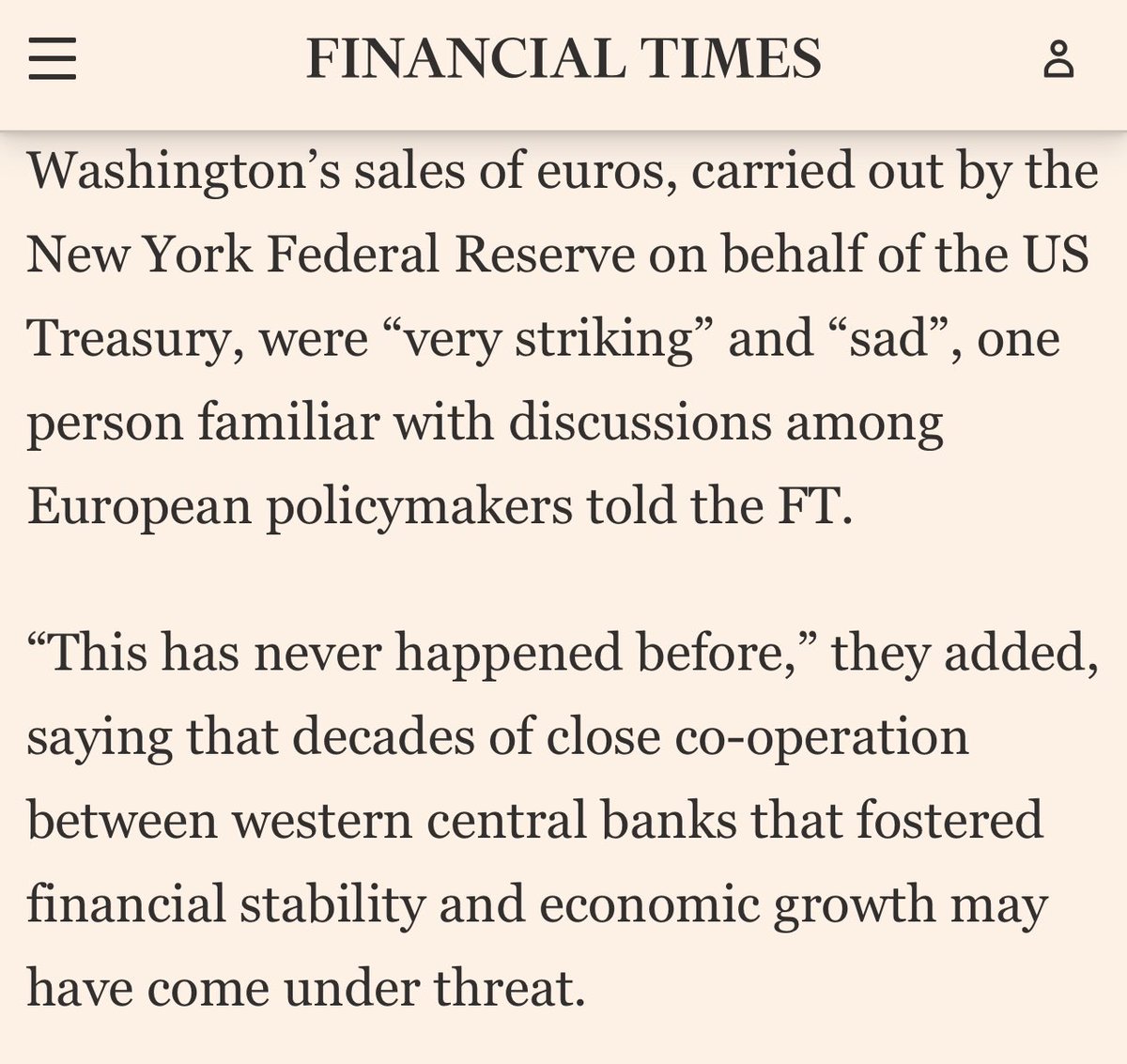
The United States sold euros to buy yen without telling the ECB until after the trade was done. Senior ECB officials called it “an unprecedented breach of longstanding conventions.” One said: “This has never happened before.”
Selling dollars to defend the yen would have contradicted Bessent’s strong-dollar policy. Selling euros avoided that problem. But selling a European asset to defend an Asian currency to protect an American bond market, without consulting the institution whose asset was sold, is not a currency intervention. It is the reserve architecture consuming the alliance architecture.
The reason Washington intervened at all is the part nobody wants to say plainly. Japan is the largest foreign holder of US Treasuries. The yen was at its weakest since 1986. If the yen falls far enough, Japanese institutions sell their most liquid foreign asset to raise cash. That asset is Treasuries. The selling pushes American yields higher at the exact moment the thirty-year just touched 5.28 percent. Washington did not intervene to help Japan. Washington intervened to prevent the Treasury market from absorbing a forced seller at a nineteen-year high in yields.
The convention that was broken to execute this trade is the same kind of convention the reserve confiscation broke in 2022. That one taught central banks their dollar reserves were not safe from seizure. This one taught the ECB that dollar-system cooperation is not safe from unilateral action by its architect. Both lessons point the same direction: build the alternatives faster.
The fix is eating the architecture it was built to preserve.
@WilJay_1 Keep in mind this is a one of one customer car so it was the customer’s choice. The tourbillion is the one that represents the brand mainly. The ones from program solitaire are one of ones.
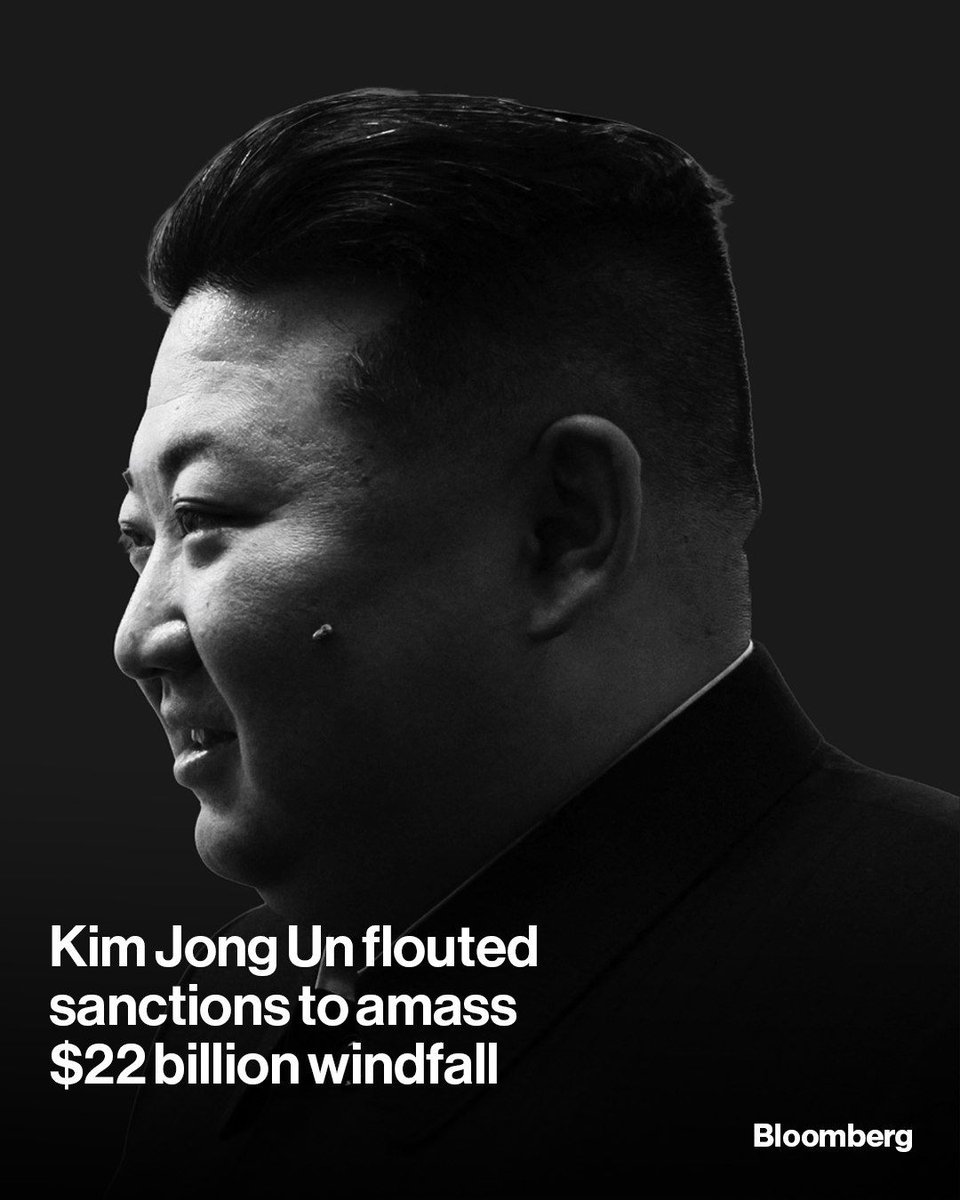
Kim Jong Un’s regime has quietly amassed a $22 billion windfall, giving North Korea more financial firepower than at any point during his 15 years in power. https://t.co/qPpFEqkFxZ
🇰🇵 North Korea is deploying its own missile unit in Russia for strikes on Ukraine
According to Reuters, citing Ukraine’s HUR, a unit of about 90 North Korean servicemen is being prepared in Russia’s Voronezh region, near the border with Ukraine.
It may receive up to 6 missile launchers and up to 120 ballistic missiles as part of the 112th Missile Brigade.
It remains unclear what exact role the North Koreans will play in Russian missile operations.
Earlier, Pyongyang already transferred a new batch of 40 KN-23 and KN-24 missiles to Moscow and sent personnel to Russia.
Last week, Russia launched two North Korean missiles at Ukraine for the first time since August of last year.
Trade records and satellite photos show how North Korea’s dictator Kim Jong Un has quietly amassed a $22 billion windfall, defying global sanctions to fortify his regime and nuclear arsenal. Read The Big Take: https://t.co/PA2jDcTrK0
📷️: Gavriil GRIGOROV/POOL/AFP via Getty Images