Requesting @RepRoKhanna, as the victim’s U.S. Congressman, to help protect a U.S. citizen’s rights, and @DrSJaishankar, as India’s External Affairs Minister, to ensure NRI rights and due process through a prompt, independent probe.
This case underscores critical lapses in India's justice system: forgery via revoked POA, undervalued property sale, and ignored SC directives on FIR registration. As a US citizen is affected, RepRoKhanna and DrSJaishankar should facilitate a prompt, independent probe to protect NRI rights and restore trustThis case underscores critical lapses in India's justice system: forgery via revoked POA, undervalued property sale, and ignored SC directives on FIR registration. As a US citizen is affected, RepRoKhanna and DrSJaishankar should facilitate a prompt, independent probe to protect NRI rights and restore trustThis case underscores critical lapses in India's justice system: forgery via revoked POA, undervalued property sale, and ignored SC directives on FIR registration. As a US citizen is affected, RepRoKhanna and DrSJaishankar should facilitate a prompt, independent probe to protect NRI rights and restore trust.
Thank you for responding. I understand maintenance is necessary, but the timing and frequency are the real issue.
I have not seen other major trading platforms go into maintenance almost every weekend like this. Before Schwab took over thinkorswim, maintenance still happened, but it did not seem to regularly block weekend access the way it does now.
Weekends are when many traders and investors finally have time to review charts, backtest ideas, study positions, and prepare for the coming week. If the platform is unavailable during that window, it directly affects preparation and confidence in the platform.
Please share this feedback with the product and infrastructure teams. It would help to see clearer advance notice, expected downtime windows, and a serious effort to reduce weekend disruptions.
@SchwabTrading@CharlesSchwab@SchwabNetwork Is anyone else frustrated with thinkorswim being under maintenance almost every weekend?
Weekends are when many traders and investors finally have time to review charts, study setups, test ideas, and prepare for the week ahead. When the platform is down during that exact window, it creates a real problem.
This did not seem to happen as often before Schwab took over. I understand maintenance is necessary, but the frequency and timing are becoming a concern.
Schwab needs to do better here. Traders need reliable weekend access, not just market-hours access.
Thank you for responding. I understand maintenance is necessary, but the timing and frequency are the real issue.
I have not seen other major trading platforms go into maintenance almost every weekend like this. Before Schwab took over thinkorswim, maintenance still happened, but it did not seem to regularly block weekend access the way it does now.
Weekends are when many traders and investors finally have time to review charts, backtest ideas, study positions, and prepare for the coming week. If the platform is unavailable during that window, it directly affects preparation and confidence in the platform.
Please share this feedback with the product and infrastructure teams. It would help to see clearer advance notice, expected downtime windows, and a serious effort to reduce weekend disruptions.
There are also people within India facing serious allegations tied to public money, bank NPAs, investigations, and long-running court proceedings.
If accountability matters, should action not apply equally to everyone, regardless of political proximity or influence?
Public-record timeline and case references:
https://t.co/5IAyoH8uZp
#PublicMoney @LiveLawIndia@lawbarandbench@suchetadalal
PUBLIC MONEY. PRIVATE RISK. YEARS OF PROCEEDINGS. STILL NO CLEAR ANSWERS.
Public court records, FIR references, tribunal orders, and agency filings show the repeated appearance of the same entities across:
• Bank NPAs
• EOW Mumbai case (CR 76/2016)
• CBI cases
• Customs tribunal proceedings
• DRT litigation
• High Court & Supreme Court matters
The public-record trail reflects:
Loan exposure → NPA → investigations → FIRs → remand proceedings → litigation → ongoing adjudication.
Questions that still matter:
• What is the current status of these cases?
• Have chargesheets been filed?
• What recoveries have been made?
• Which matters remain pending?
• What accountability exists where public money is involved?
This post relies only on publicly accessible records and proceedings. No conclusion of guilt is asserted. Due process applies.
#PublicMoney @LiveLawIndia@lawbarandbench@suchetadalal
PUBLIC MONEY. PRIVATE RISK. YEARS OF PROCEEDINGS. STILL NO CLEAR ANSWERS.
Public court records, FIR references, tribunal orders, and agency filings show the repeated appearance of the same entities across:
• Bank NPAs
• EOW Mumbai case (CR 76/2016)
• CBI cases
• Customs tribunal proceedings
• DRT litigation
• High Court & Supreme Court matters
The public-record trail reflects:
Loan exposure → NPA → investigations → FIRs → remand proceedings → litigation → ongoing adjudication.
Questions that still matter:
• What is the current status of these cases?
• Have chargesheets been filed?
• What recoveries have been made?
• Which matters remain pending?
• What accountability exists where public money is involved?
This post relies only on publicly accessible records and proceedings. No conclusion of guilt is asserted. Due process applies.
A long trail of loan accounts, investigations, and court proceedings, based on public records.
All references below are to allegations, claims, or observations recorded in official proceedings and are subject to ongoing legal adjudication.
Over several years, publicly available court records, FIRs, tribunal orders, and agency filings refer to the recurring appearance of the same set of entities across multiple proceedings.
Sharing this strictly as a public-record timeline, not an allegation, finding, or conclusion.
1. Banking exposure and NPA timeline
Public reports and filings indicate credit facilities from multiple banks over many years, including nationalised and private institutions. Some accounts were reportedly renewed over time before later being classified as NPAs.
2. HSBC-linked matter (EOW Mumbai C.R. No. 76/2016)
Court records refer to alleged irregularities of approx ₹5.18 crore (2009–2010).
Remand proceedings include references to documents under question, supplier verification issues, and fund flows involving related entities.
These are allegations recorded in proceedings, not findings of guilt.
3. Arrest and remand proceedings (2019)
Bombay High Court records reflect arrest and transit remand proceedings, including production before courts in Indore and Mumbai.
4. CBI Bhopal case (RC0082020A0008)
Registered in 2020, reportedly linked to approx ₹128 crore bank exposure.
Public records describe allegations relating to loan processes, audit observations, and financial transactions involving related entities.
5. Other CBI cases (Jabalpur)
RC0092020A0004
RC0092020A0005
RC0092020A0007
These are referenced in public records as part of broader banking-related proceedings involving associated entities.
6. Customs tribunal matter (CESTAT, 2016)
Case involved import valuation and licensing issues.
The tribunal partly upheld and partly set aside penalties based on individual roles.
7. Fraud classification litigation (MP High Court & Supreme Court)
Multiple writ petitions challenged bank fraud classifications under RBI guidelines.
• Supreme Court (25 April 2025) remanded matters
• MP High Court (8 Sept 2025) set aside earlier classifications
• Banks allowed to proceed again under updated guidelines
• FIRs remain unaffected
8. DRT travel restriction matter (2025)
A High Court ruling set aside a condition requiring ₹50 crore security for foreign travel, holding that the right to travel cannot be restricted without statutory authority.
Summary from public records
The same entities appear across banking, EOW, CBI, customs, DRT, and High Court litigation.
The public-record sequence reflects:
loan exposure → NPA → internal findings → FIRs → remand proceedings → CBI cases → litigation → ongoing adjudication
Key public-interest questions remain:
• What is the current status of each case?
• Have chargesheets been filed?
• What recoveries have been made?
• Which matters are pending or closed?
• What is the expected timeline?
Transparency matters when public money is involved.
(Source: publicly accessible court records, FIR references, tribunal orders, and reported proceedings. No conclusion of guilt is asserted. Due process applies.)
@LiveLawIndia Not an isolated instance. There are other cases too where timelines show loan exposure → NPA → delayed investigation → multi-agency action → years of litigation, with no clear closure. The bigger issue is systemic transparency.
https://t.co/1oseXUG4pz
Yes that’s right , here is some of my research for authorities to have a look and act upon:
Over the past several years, if one goes through publicly available court records, FIRs, and agency filings, a timeline starts to emerge involving the same set of entities across multiple proceedings. I am sharing this only to understand the sequence, not to draw conclusions.
Phase 1, Loan exposure and NPA (1995–2010)
Credit facilities were taken from multiple banks, including Punjab National Bank and HSBC. These accounts were reportedly renewed over time and eventually became NPAs around 2010.
Phase 2, Issues from 2009–2010 come under scrutiny
Transactions from this period later became the subject of investigation. In the HSBC-related matter, an FIR was registered in 2016 and later taken over by the Economic Offences Wing as C.R. No. 76/2016 (EOW Mumbai). This case relates to alleged irregularities in credit facilities of around ₹5.18 crore.
Phase 3, Enforcement action (2016–2019)
After the EOW case was registered, the matter moved from internal bank findings to criminal investigation. Public records show arrest and remand proceedings in February 2019, indicating that the investigation had reached an active stage.
Phase 4, Expansion to larger banking exposure (2020)
In September 2020, the CBI registered RC0082020A0008 (CBI Bhopal) linked to Punjab National Bank, involving an exposure of approximately ₹128 crore.
Around the same time, additional CBI cases were registered in Jabalpur, including:
• RC0092020A0004
• RC0092020A0005
• RC0092020A0007
These relate to credit facilities from other banks (including Bank of India / Bank of Baroda) and are part of the same broader set of proceedings.
Phase 5, Regulatory and legal proceedings (2016–2025)
• A customs tribunal case, Metalman Industries Ltd. v. Vijay Soni (CESTAT, 19 October 2016), dealt with import and valuation issues involving the same group entities.
• Multiple writ petitions were filed before the Madhya Pradesh High Court, including WP 17195/2020, WP 24984/2021, WP 25083/2021, WP 11080/2022, challenging banks’ classification of certain accounts as “fraud” under RBI guidelines.
• These writ matters went up to the Supreme Court, which on 25 April 2025 remanded them back for fresh consideration.
• The Madhya Pradesh High Court then passed a fresh order on 8 September 2025, setting aside earlier fraud classifications and allowing banks to proceed again under updated RBI guidelines, while clarifying that FIRs remain unaffected.
Current status (based on public records):
• EOW Mumbai (C.R. 76/2016): Investigation progressed to arrests and court proceedings; no clear public record of final disposal found.
• CBI Bhopal (RC0082020A0008): FIR continues; not nullified by High Court orders on fraud classification.
• CBI Jabalpur (RC0092020A0004, 0005, 0007): Supreme Court (25 April 2025) recorded that investigation was complete and no coercive steps were required at that stage.
• Fraud classification writ petitions: Disposed of on 8 September 2025, with liberty to banks to re-examine under revised RBI framework.
What stands out when looking at the full timeline:
• The same entities appear across multiple cases
• Proceedings span banking, enforcement, and regulatory domains
• The sequence shows:
loan exposure → NPA → investigation → multi-agency action → prolonged litigation
Since all of this is drawn from publicly available records and several proceedings are still ongoing, it would be helpful if concerned authorities could provide a consolidated update on:
• Current status of each case
• Action taken so far
• Expected timelines for resolution
Greater clarity in such long-running, multi-agency matters would help strengthen transparency and public confidence.
Yes that’s right , here is some of my research for authorities to have a look and act upon:
Over the past several years, if one goes through publicly available court records, FIRs, and agency filings, a timeline starts to emerge involving the same set of entities across multiple proceedings. I am sharing this only to understand the sequence, not to draw conclusions.
Phase 1, Loan exposure and NPA (1995–2010)
Credit facilities were taken from multiple banks, including Punjab National Bank and HSBC. These accounts were reportedly renewed over time and eventually became NPAs around 2010.
Phase 2, Issues from 2009–2010 come under scrutiny
Transactions from this period later became the subject of investigation. In the HSBC-related matter, an FIR was registered in 2016 and later taken over by the Economic Offences Wing as C.R. No. 76/2016 (EOW Mumbai). This case relates to alleged irregularities in credit facilities of around ₹5.18 crore.
Phase 3, Enforcement action (2016–2019)
After the EOW case was registered, the matter moved from internal bank findings to criminal investigation. Public records show arrest and remand proceedings in February 2019, indicating that the investigation had reached an active stage.
Phase 4, Expansion to larger banking exposure (2020)
In September 2020, the CBI registered RC0082020A0008 (CBI Bhopal) linked to Punjab National Bank, involving an exposure of approximately ₹128 crore.
Around the same time, additional CBI cases were registered in Jabalpur, including:
• RC0092020A0004
• RC0092020A0005
• RC0092020A0007
These relate to credit facilities from other banks (including Bank of India / Bank of Baroda) and are part of the same broader set of proceedings.
Phase 5, Regulatory and legal proceedings (2016–2025)
• A customs tribunal case, Metalman Industries Ltd. v. Vijay Soni (CESTAT, 19 October 2016), dealt with import and valuation issues involving the same group entities.
• Multiple writ petitions were filed before the Madhya Pradesh High Court, including WP 17195/2020, WP 24984/2021, WP 25083/2021, WP 11080/2022, challenging banks’ classification of certain accounts as “fraud” under RBI guidelines.
• These writ matters went up to the Supreme Court, which on 25 April 2025 remanded them back for fresh consideration.
• The Madhya Pradesh High Court then passed a fresh order on 8 September 2025, setting aside earlier fraud classifications and allowing banks to proceed again under updated RBI guidelines, while clarifying that FIRs remain unaffected.
Current status (based on public records):
• EOW Mumbai (C.R. 76/2016): Investigation progressed to arrests and court proceedings; no clear public record of final disposal found.
• CBI Bhopal (RC0082020A0008): FIR continues; not nullified by High Court orders on fraud classification.
• CBI Jabalpur (RC0092020A0004, 0005, 0007): Supreme Court (25 April 2025) recorded that investigation was complete and no coercive steps were required at that stage.
• Fraud classification writ petitions: Disposed of on 8 September 2025, with liberty to banks to re-examine under revised RBI framework.
What stands out when looking at the full timeline:
• The same entities appear across multiple cases
• Proceedings span banking, enforcement, and regulatory domains
• The sequence shows:
loan exposure → NPA → investigation → multi-agency action → prolonged litigation
Since all of this is drawn from publicly available records and several proceedings are still ongoing, it would be helpful if concerned authorities could provide a consolidated update on:
• Current status of each case
• Action taken so far
• Expected timelines for resolution
Greater clarity in such long-running, multi-agency matters would help strengthen transparency and public confidence.
Over the years, if you look at publicly available records across banks, agencies and courts, a sequence of events starts to become visible.
It appears to begin in the late 1990s and early 2000s, when credit facilities were taken from multiple banks, including Punjab National Bank and HSBC. These accounts were reportedly renewed over time and eventually became NPAs around 2010.
After that, issues from that period started coming under scrutiny. In one matter related to HSBC, authorities examined transactions from 2009–2010, where concerns were raised about the use of certain documents and movement of funds, with an exposure of around ₹5 crore.
In 2016, the Economic Offences Wing (Mumbai) registered a case in this regard. This marked the shift from internal bank findings to formal investigation, followed by arrests and court proceedings in subsequent years.
Then in 2020, the matter expanded further. The CBI registered a separate case linked to Punjab National Bank, involving a much larger exposure of around ₹128 crore.
At the same time, related matters were also being examined in other forums, including a customs tribunal case on import-related issues, and multiple High Court petitions challenging the classification of certain accounts as “fraud” under RBI guidelines.
When you step back and look at all of this together, what stands out is the timeline itself, the same set of entities appearing across multiple proceedings, over many years, and across different institutions.
Since all of this is based on publicly available records and many proceedings are still ongoing, it would be helpful if authorities could provide a clear, consolidated update on:
• Current status of each case
• Action taken so far
• Expected timelines for resolution
Greater transparency in such long-running, multi-agency matters would go a long way in strengthening public confidence.
@RNGhuwalewala@narendramodi .@rashtrapatibhvn .@FinMinIndia .@AmitShah Procedural gaps cannot be a long-term excuse. When several cases are already documented in public records, the priority should be timely investigation and enforcement.
Authorities may kindly update on the status and action taken.
@ACenter18262@USPSHelp I’ve already provided full details via DM. This is not theft, it is a likely misdelivery. Please address the delivery error instead of redirecting responsibility. No action from the local office yet. This is urgent.
@USPSHelp@relations46692 Need urgent assistance. A credit card was marked delivered but not received. Checked mailbox within 10 minutes, all other mail present, suggests misdelivery, not theft.
Tracking number and details sent via DM. No response from local office.
@CharlesSchwab, ever since you took over thinkorswim, the platform has gone downhill.
Every weekend, right when people actually have time to research and run scans, it’s under maintenance. Scans don’t work properly, data is unreliable, and it makes the platform borderline useless.
This is exactly when serious traders need it most. What’s the plan to fix this?
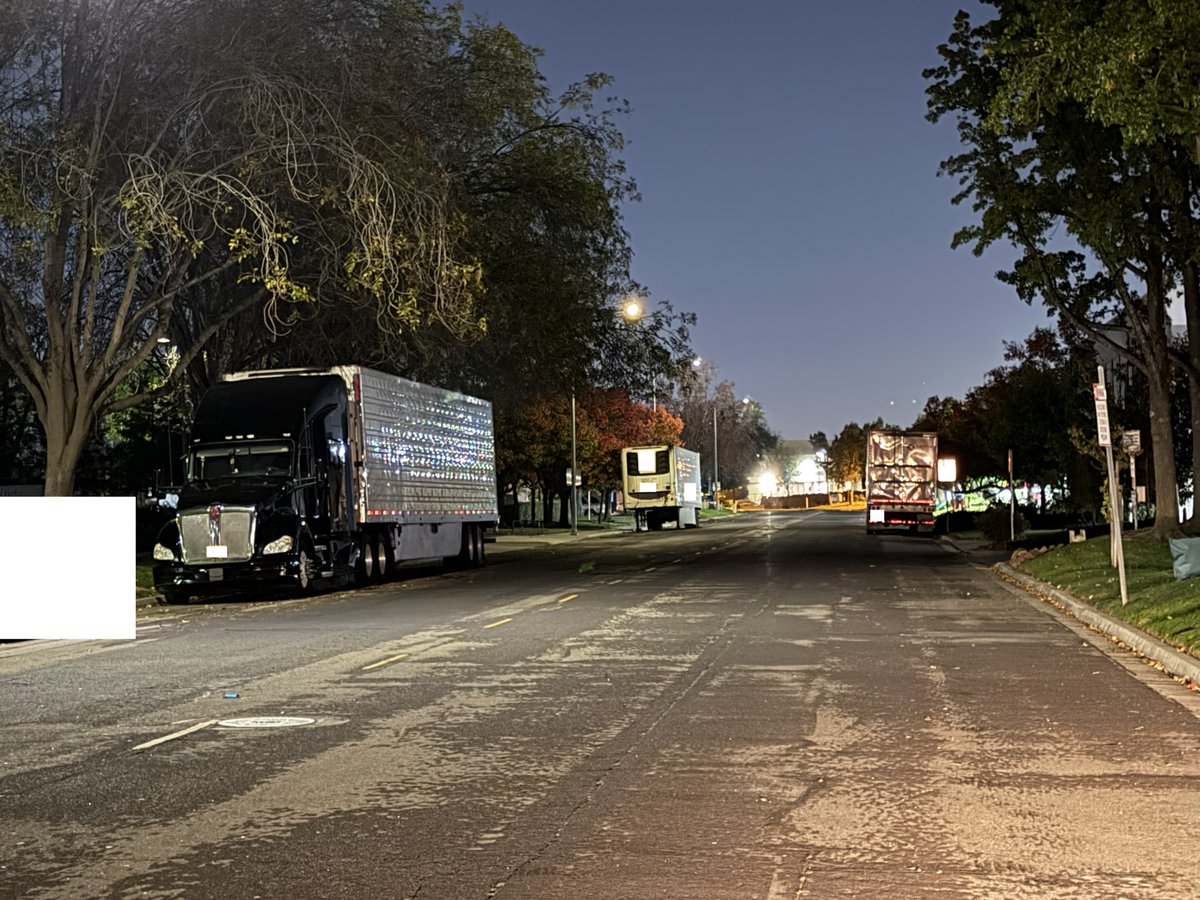
You’re exactly right. @GavinNewsom@POTUS We have been requesting the City of Milpitas administration to look into this here on X for over a month, even though this has been an ongoing problem for years. Big rigs continue to block visibility overnight and create unsafe conditions.
@MilpitasPD@MilpitasCityGov Mornings are tough on Topaz & Turkish Streets, where large trucks keep parking overnight despite posted 9PM–6AM restrictions. Can patrol units help enforce these rules for everyone’s safety? Residents would really appreciate it.
@ThoMy2027646@MilpitasPD@MilpitasCityGov It’s been over a month since this was raised, and there hasn’t been any visible progress. Big rigs are still parking overnight in the restricted zone. Sharing another photo from last night for reference. Hoping for enforcement to keep the street safe for residents.