Want the best for our Celtic Nations. Not anti English. Not pro British. Siarad Cymraeg pob dydd. Not always approved a shared tweet.First Account hacked. YNWA
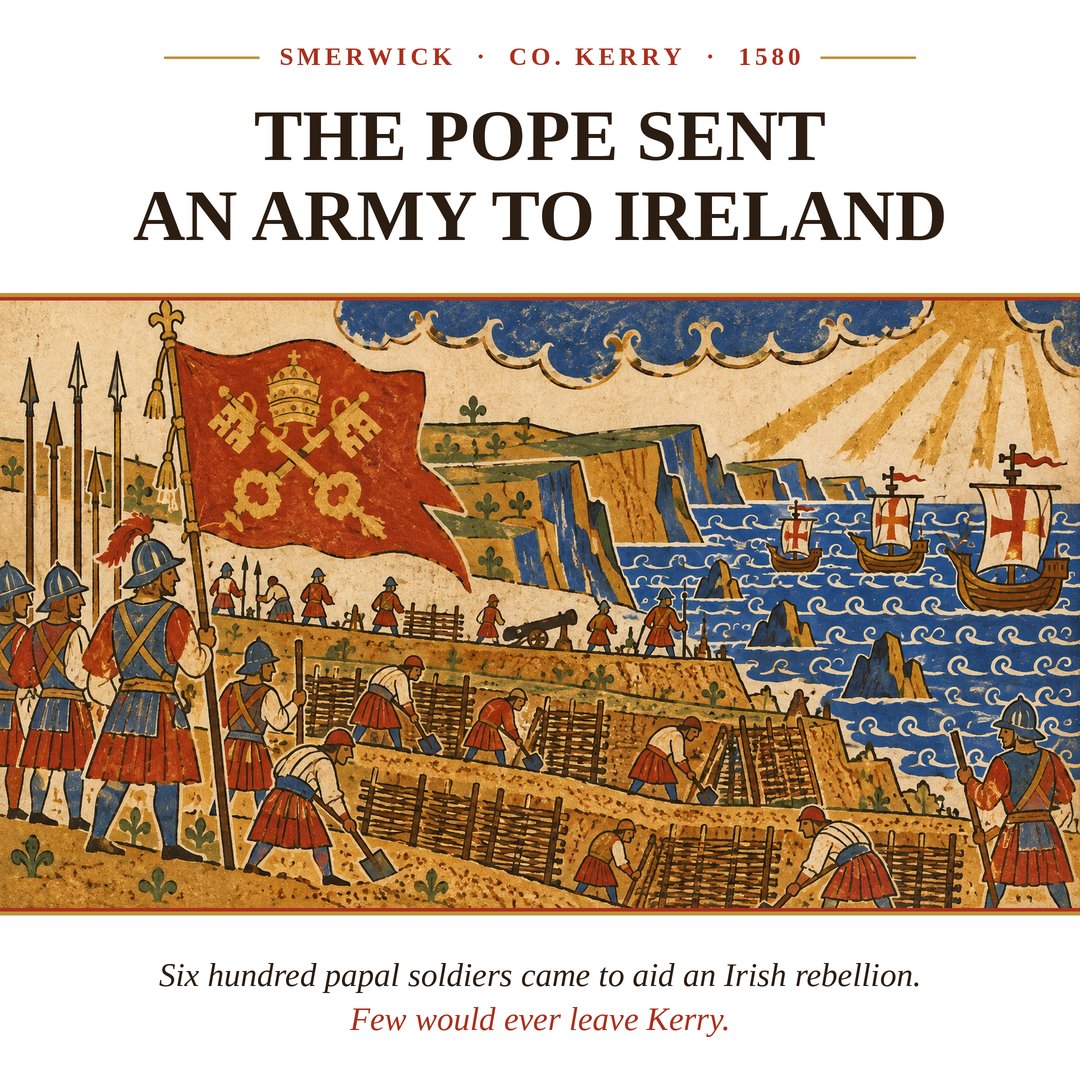
🇻🇦🇮🇪 The Pope sent soldiers to Ireland to fight English rule.
446 years ago this month, around 600 Spanish and Italian troops were dug in on the coast of Kerry, hoping to arm thousands of Irish rebels.
Read Below 👇
This Tony Cascarino goal is 37 years old today.
It’s a textbook back post header, but we’re really here for that ping out wide by Ronnie Whelan.
Rolls Royce of a pass, that.
@mehercle@Gerryxatrics@Civixplorer Big mistake Alan - They should have thought long term - Delayed Symptom Onset: Speaking two or more languages can delay the appearance of Alzheimer's and dementia symptoms by 4 to 5 years compared to monolinguals - @alzheimerssoc .
@WelshConserv@DarrenMillarMS If that's your argument, the people of Scotland and NI overwhelmingly voted to remain, but you dragged us out anyway. What would be your position if Wales had done the same ?
T. Llew Jones is widely regarded as one of the finest Welsh-language children’s storytellers of the 20c.
He is celebrated for his ballads and his adventure novels and short stories, filled with pirates, highwaymen and smugglers.
B. #otd in 1915.
https://t.co/B2O3mavFcF
The Éireann Cup was an often forgotten full-throttle motor spectacle that turned the Phoenix Park into one of Europe’s great racing circuits. From 1929 to 1931, the Irish International Grand Prix transformed the quiet avenues of the park into a thundering arena of Alfa Romeos, Bentleys, Maseratis and Mercedes. And the Cup was as much about politics as it was about speed.
In the mid-1920s, the Irish Free State was still reeling from the War of Independence and Civil War. The country’s international reputation was dogged by stories of shootings and political strife. It was WT Cosgrave, the President of the Executive Council, who saw an opportunity. When Edward White and Walter Sexton of the Royal Irish Automobile Club approached him in 1924 with the idea of staging a major international motor race in Dublin, Cosgrave backed them. He understood if Ireland could pull off such an event with international press looking on, it'd send a powerful message that our young Free State was modern, capable, and open for business.
The planning was colossal. The Phoenix Park was mapped into a 4.25-mile circuit that'd demand skill from drivers and precision from organisers. The government even moved the beloved corinthian Phoenix monument that stood in the middle of Chesterfield Avenue to clear the main straight. Grandstands 250 yards long were built along the avenue, turning it into a European motorracing arena.
The Irish Grand Prix was run as two handicap races. Friday’s Saorstát Cup was for the smaller engined cars (up to 1500cc). Saturday’s Éireann Cup was for the big machines over 1500cc and was the headline event. Each race stretched over 300 miles, demanding stamina from both man and machine.
The inaugural event in July 1929 was a triumph. Practice sessions were held in a closed park, with officials and mechanics and drivers working against the clock. WT Cosgrave himself dropped the white flag to start the Saorstát Cup, standing on the grandstand as twenty-two cars tore off down Chesterfield Avenue. And then came the Éireann Cup, with its spectacular Le Mans-style start as drivers sprinting to their cars as the crowd roared.
The hero of that first Grand Prix was Boris Ivanowski, a former Russian Guards officer who had fled the Revolution allegedly with a chest of jewels, which he used to fund his racing career. In a 1.5 litre Alfa Romeo, he won the Saorstát Cup and then, the next day, climbed into a bigger Alfa and won the Éireann Cup as well. His combined times meant he was declared the overall winner of the first Irish Grand Prix , first and third in the same event.
The international press hailed the races as “the best organised motor races ever to take place,” and Dublin basked in the glow of a rare piece of good news. Preparations for 1930 were even grander, attracting Europe’s best drivers, including the legendary Rudolf Caracciola in a supercharged Mercedes-Benz SSK. But the Irish weather and a concurrent railway strike kept the crowds away. Still, Caracciola dominated the Éireann Cup, while Giuseppe Campari pushed his Alfa Romeo hard for second place.
By 1931, the event had a mythic status, even if the weather was again unkind. The Saorstát Cup was won by Norman Black in an MG, while the Éireann Cup saw a fierce battle in the rain, eventually claimed by Sir Henry Birkin in an Alfa Romeo 8C 2300 LM.
But after 1931, the party was over. The government changed hands, and the incoming Fianna Fáil administration was not interested in subsidising what it dismissed as “a rich man’s sport.”
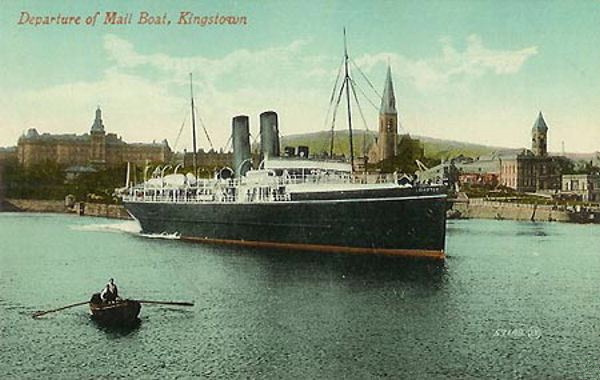
#OnThisDay 1918 The RMS Leinster was sank an hour after leaving Dún Laoghaire when she was torpedoed by German sub UB-123. Roughly 564 people died, including many soldiers returning from leave, making it the single biggest loss of life in the Irish Sea.
#Ireland#History#WW1