Sean McVay shares a universal truth about adversity and resilience.
"You're either in it, you're coming out of it, or you're gonna go back into it in a short period of time."
That's the reality. Adversity isn't a one-time event - it's a cycle.
"The separator is people's ability to handle that. How long can you stay in some of those uncomfortable spots and knowing that real growth is occurring?"
The question isn't whether adversity will come. Because it will.
The question is: can you stay in the discomfort long enough to grow from it?
"Adversity's inevitable. That's what's so great about sports. We learn so many things that test you in ways that are reflective of what you go through in a bunch of different arenas."
You don't grow despite adversity - you grow because of it.
The best aren't fearless - they just keep showing up.
(🎥@pureathleteinc)
It's @DrewBrees Hall of Fame Week 🏈
We sat down with Drew and his wife, Brittany, to reflect on his legendary career, life after football, family, and finally getting the retirement celebration he deserves.
In April 1945, as American soldiers entered the gates of Mittelbau-Dora, they were met with a silence heavier than gunfire. Among the survivors stood a man whose shadow seemed stronger than his body — as if it had learned how to stand when he no longer could.
When he saw the soldiers, he tried to rise. Not because he had the strength — but because dignity still lived inside him. His legs were thin like dried branches, his ribs visible beneath fragile skin. His body had spent years sacrificing itself just to keep his heart alive. When he stood, his knees gave way, forgotten by muscles long starved into weakness.
He weighed no more than a child.
Yet he carried the unbearable weight of cruelty, hunger, and survival.
What broke the soldiers most was not how frail he was — but how gentle. He whispered apologies to the medics for being “too slow,” for “taking space,” for breathing as if even life itself felt like something he had to earn. A nurse knelt beside him, holding his hand, softly reminding him of the truth:
“You are not a burden. Your body has already done something extraordinary — it survived when the world tried to erase you.”
He lived only a few weeks after liberation.
But he died free.
And long after his passing, the soldiers carried his memory with them — the image of a man whose body had nearly vanished, but whose humanity never did. His shadow stayed behind, etched into their hearts as a reminder of what must never be allowed to happen again.
We share stories like his not for sorrow alone — but for remembrance.
Not for numbers — but for names, faces, and fragile souls who fought every day just to remain human.
Their shadows still speak to us now, across time, with a simple plea:
Never again.
👉 Watch the full story here: https://t.co/FGo95scBjz
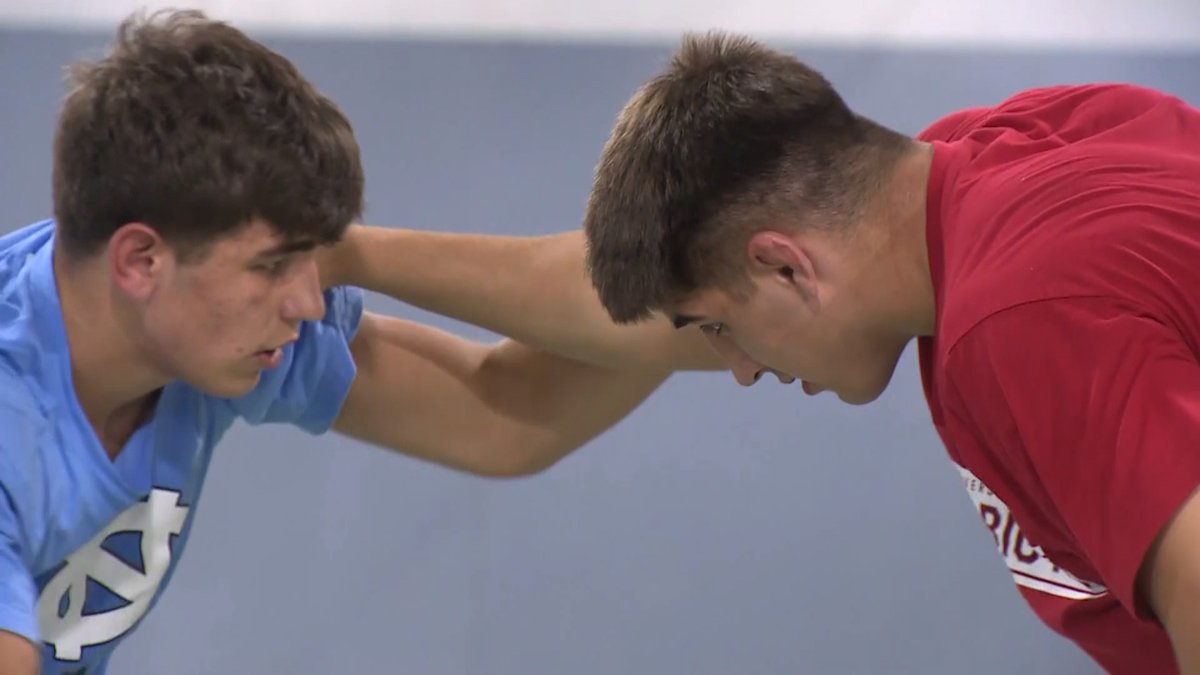
A pair of Omaha brothers have become Division I wrestlers at North Carolina and Nebraska, while the third is a pitcher on the Husker baseball team. @MasonKernMedia reports on the Ziola family bond and how they got here.
Details: https://t.co/PLHrqjYHPU
I try to warn college guys about this all the time. Pick a job that allows you to be a present husband and father, even if it means earning less money and living in a smaller house.