1/6 Phemex #cryptoexchange froze my account, no notice no real explanation. I hardly traded there and wasn’t trying to withdraw, I only discovered the freeze when I logged in to check my limit orders — they had all been cancelled with zero notification.
2/6 Trying to place new orders gave “request denied.” Support said it was flagged as “suspicious activity” by their risk control system. But that’s not the interesting part...
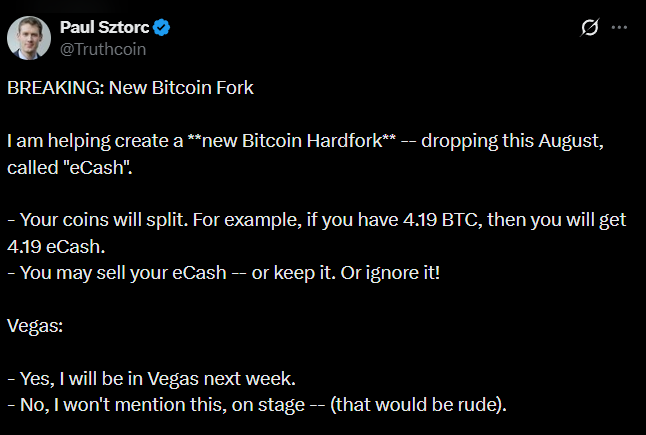
Paul Sztorc spent 9 years trying to upgrade Bitcoin. The team that controls Bitcoin's code ignored him. He just announced he's forking Bitcoin instead.
> Sztorc is not a random developer. He's a Yale trained economist and in Bitcoin since 2011.
> He's also the inventor of Drivechains, endorsed by Adam Back and named one of Bitcoin's most influential people by CoinDesk.
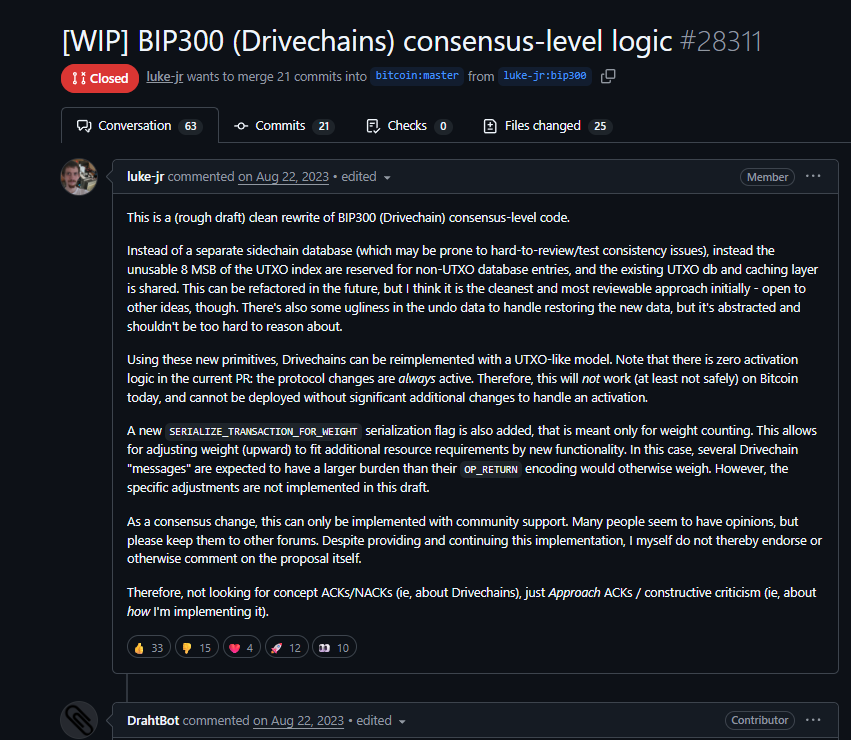
> In 2017 he designed an upgrade called BIP 300 to help Bitcoin scale.
> He wasn't a Core contributor so he couldn't submit it himself. Luke Dashjr, one of Bitcoin's longest serving developers, submitted it on his behalf.
> It went through years of debate.
> The Core PR was finally pushed in 2023 and quietly closed in 2024 without resolution. Nobody accepted it. Nobody rejected it.
> This month he announced his own hard fork of Bitcoin called eCash, launching August 2026.
> If you hold BTC at the time of the fork, you automatically get the same amount of eCash. Keep it, sell it, or ignore it.
> Confusingly there is already a token called eCash (XEC) from a 2021 Bitcoin Cash fork.
> Sztorc's project is unrelated. The name collision will cause confusion.
> The context behind this matters more than the fork itself.
> Two mining pools now control 52% of Bitcoin's hashrate. A rare 2-block chain reorg actually happened in March because of it.
> Google just published a paper showing Bitcoin's encryption can be broken with 20x fewer quantum resources than previously thought.
> Nearly 7 million BTC sit in addresses that would be exposed if that hardware arrives.
> Bitcoin Core has no merged code to defend against any of this. Ethereum has a full team working on it.
> Sztorc has been warning about exactly this for a decade. Nobody listened. So he's forking.
> Most Bitcoin forks die within weeks. The story isn't whether eCash succeeds.
It's that Bitcoin's most credentialed developer just publicly gave up on Bitcoin's ability to ever upgrade itself again. That's the part worth paying attention to.
Builders, dreamers and doers are building the new El Salvador with an 'excellence only' mindset.
Only the highest standards will do for us.
And this is why we will keep winning.
Proof of work 👷♀️👇
Announcing the inaugural SovAI Summit:
Infinite Intelligence.
Zero Doom.
Maximum Build.
We are gathering builders, philosophers and doers to design:
THE ARCHITECTURE OF SOVEREIGNTY & ABUNDANCE
📅 20 & 21 April 2026
📍 National Palace, Centro Histórico
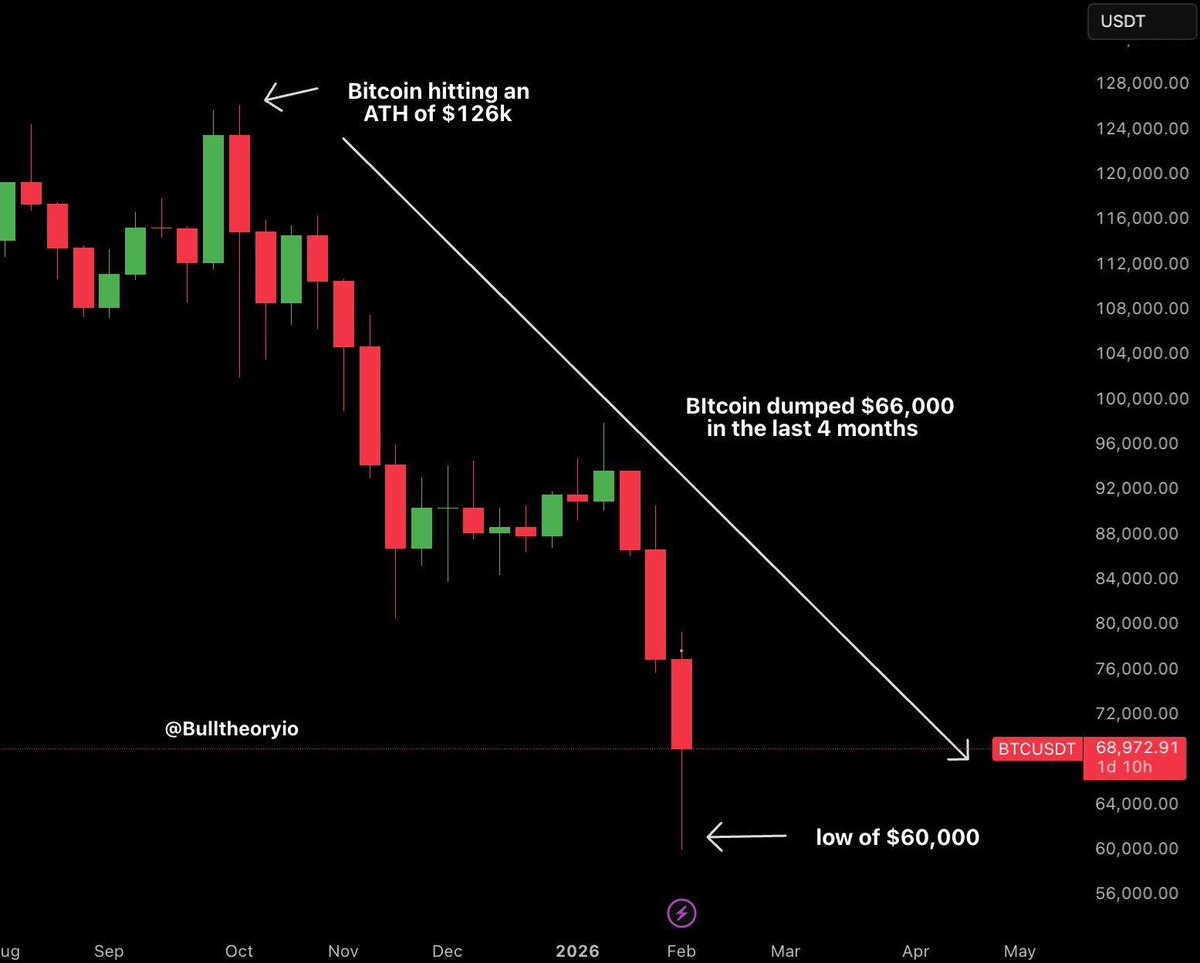
THIS IS WHY BITCOIN DUMPED NON STOP FROM $126,000 TO $60,000.
Bitcoin has now crashed -53% in just 120 days without any major negative news or event and this is not normal.
Macro pressure plays a role, but it’s not the main reason Bitcoin keeps dumping. The real driver is something much bigger that most people aren’t talking about yet.
Bitcoin’s original valuation model was built on the idea that supply is fixed at 21 million coins and that price moves based on real buying and selling of those coins. In the early cycles, this was mostly true. But today, that structure has changed.
A large share of Bitcoin trading activity now happens through synthetic markets rather than spot markets.
This includes:
• Futures contracts
• Perpetual swaps
• Options markets
• ETFs
• Prime broker lending
• Wrapped BTC
• Structured products
All of these allow exposure to Bitcoin’s price without requiring actual Bitcoin to move on chain. This changes how price is discovered because now selling pressure can come from derivative positioning rather than real holders selling coins.
For example:
If institutions open large short positions in futures markets, price can fall even if no spot Bitcoin is sold.
If leveraged long traders get liquidated, forced selling happens through derivatives, accelerating downside moves. This creates cascade effects where liquidations drive price, not spot supply.
That is why recent sell offs look very structured. You see long liquidation waves, funding flips negative, open interest collapses, all signs that derivatives positioning is driving the move.
So while Bitcoin’s hard cap has not changed, the effective tradable supply influencing price has expanded through synthetic exposure.
Price today reacts to leverage, hedging flows, and positioning, not just spot demand.
Adding to this, there are other factors too driving the current dump.
GLOBAL ASSET SELL-OFF
Right now, selling is not isolated to crypto. Stocks are declining. Gold and silver have seen volatility. Risk assets across markets are correcting.
When global markets move into risk-off mode, capital exits high-risk assets first and crypto sits at the far end of the risk curve. So Bitcoin reacts more aggressively to global sell offs.
MACRO UNCERTAINTY & GEOPOLITICAL RISK
Tensions around global conflicts, especially U.S.–Iran developments, are creating uncertainty.
Whenever geopolitical risk rises, supply chain risks increase, and markets shift toward defensive positioning. That environment is not supportive for risk assets.
FED LIQUIDITY EXPECTATIONS
Markets had been pricing a more dovish liquidity backdrop. But expectations around future policy leadership and liquidity stance have shifted.
If investors believe future Fed policy will be tighter on liquidity even if rates eventually fall, risk assets reprice lower.
ECONOMIC DATA WEAKNESS
Recent economic indicators job market trends, housing demand, credit stress are pointing toward slowing growth conditions. When recession fears rise, markets derisk.
Crypto, being the most volatile asset class, sees outsized downside during those transitions.
STRUCTURED SELLING VS CAPITULATION
Another important observation:
This sell off does not look like panic capitulation. It looks structured.
Consecutive red candles, controlled downside moves, and derivative driven liquidations suggest large entities reducing exposure, not retail panic selling.
When institutional positioning unwinds, it suppresses bounce attempts because dip buyers wait for stability before re-entering.
PUTTING IT ALL TOGETHER
It is a combination of:
• Derivatives driven price discovery
• Synthetic supply exposure
• Global risk-off flows
• Liquidity expectation shifts
• Geopolitical uncertainty
• Weak macro data
• Institutional positioning unwind
Until these pressures stabilize, relief rallies can happen, but sustained upside becomes harder.
@kaspaunchained I assess the geographical and political risk of holding Kaspa as a longterm investment is nearing its end. Arranging for early deployment today. Lord Weatherbee of Scotland
My first Thanksgiving at home in Santa Tecla, El Salvador 🇸🇻
Being with likeminded thoughful people who question everything, and go where they feel freedom blooming has been a real gift.
@simopokki@MAGAVoice The enemies of the greatest nation hahve send millions of there criminals into america. It will go down in time. Most importantly, the criminals don't even want to go to Europe.