Endocrinologists are important in caring for patients with #COVID19. “...some 30% to 40% of inpatients with COVID-19 have an endocrine-related disease: “When these people get admitted for COVID-19, their endocrine problems begin to impact their treatment...” @TheEndoSociety
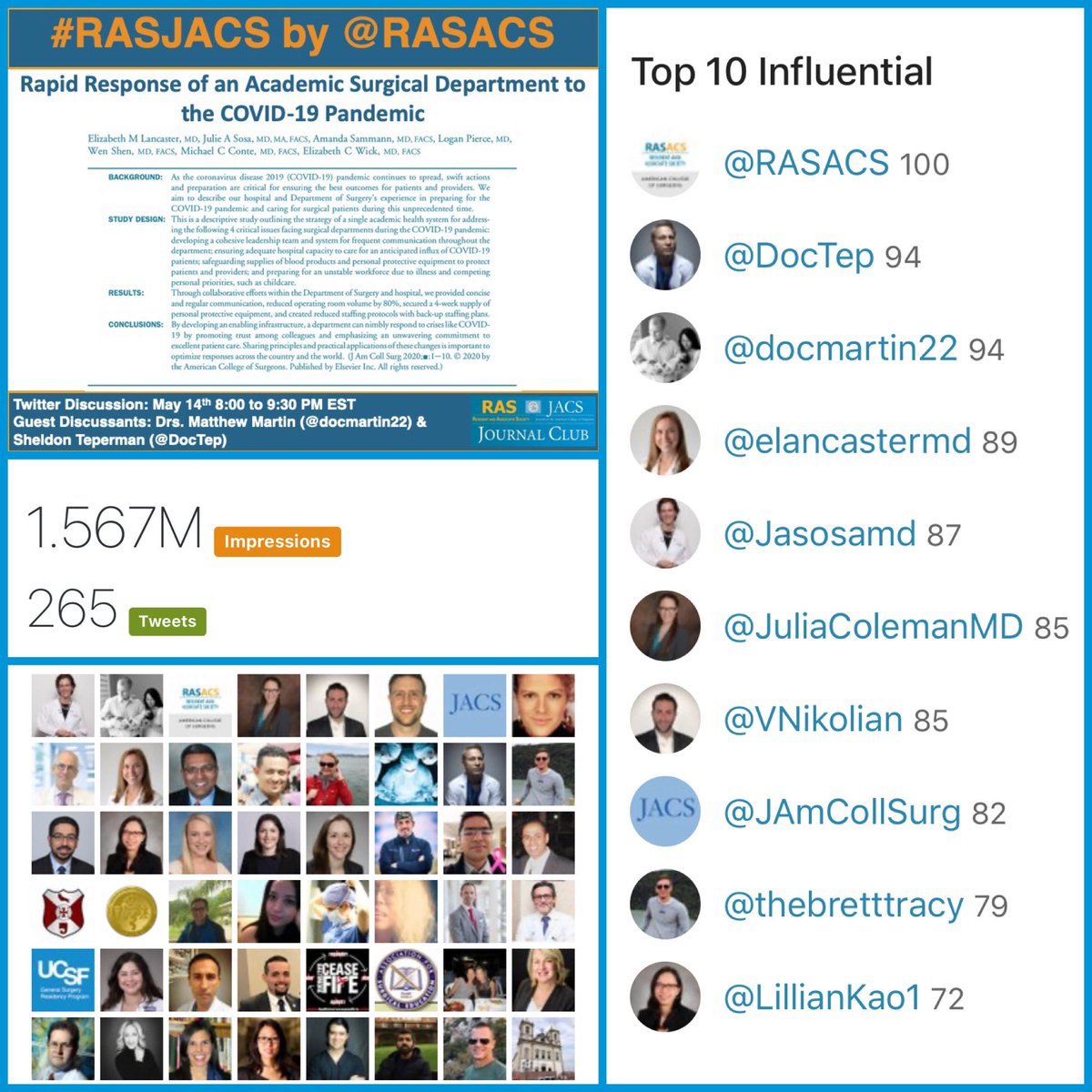
A great #RASJACS Journal Club last night. Fortunate to have discussion led by @docmartin22 and @DocTep. Thank you to authors @elancastermd and @Jasosamd for providing insights on their article. https://t.co/KETBW3BoTg
I absolutely love this idea!! So much can be learned from great outcomes just as they can from bad!! Congrats to @Jasosamd and colleagues on this innovative and inspiring concept!! Much needed right now!!! #MedEd
Flame retardants in your couch (BPDEs) have an eerie similar structure to thyroxine and are endocrine disrupters. High levels of exposure be associated with risk of thyroid cancer. Black plastic casings (check your laptop) contain them too. You ingest them on ur hands. @Jasosamd
At tomorrow's virtual Surgery Grand Rounds, we present: "COVID-19 Disparities Across the Nation: Opportunities to Move the Needle"
Speakers: @srijeeva@mlipnick @AliciaFMD @TraumaDocSF
Moderators: @TasceB@James_Iannuzzi
🗓️Wed, 5/20, 7 AM PT
Full Info⬇️
https://t.co/1qi0pT8rJi
All who were eligible for subtotal resection were also eligible for total resection, but not the other way around. Large pheochromocytomas e.g. are not good candidates for subtotal adrenalectomy. The risk of reoperation needs to be balanced with the risk of adrenal insufficiency.
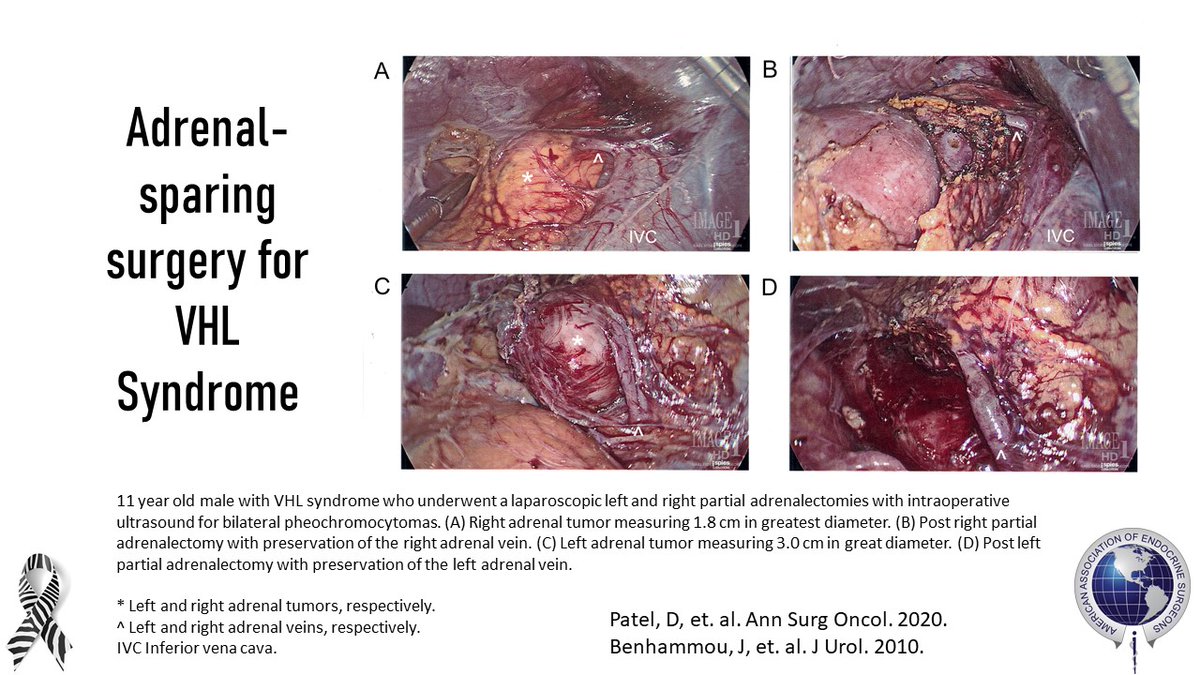
Partial adrenalectomies for VHL syndrome result in a rate of about 11% for steroid dependency, 11% chance of local recurrence, and 11% of contralateral recurrence over 9.25 years (median f/u) #AADAM2020 @NADF_President @TheAACE@TheEndoSociety@PheoPara@VHLAlliance
Occupational risks of surgery are formidable. For me, validation that not wearing loupes is ergonomically smart & saving my neck...for a little longer at least. @TheAAES@StanfordSurgery https://t.co/iHJ1ZMx6QX
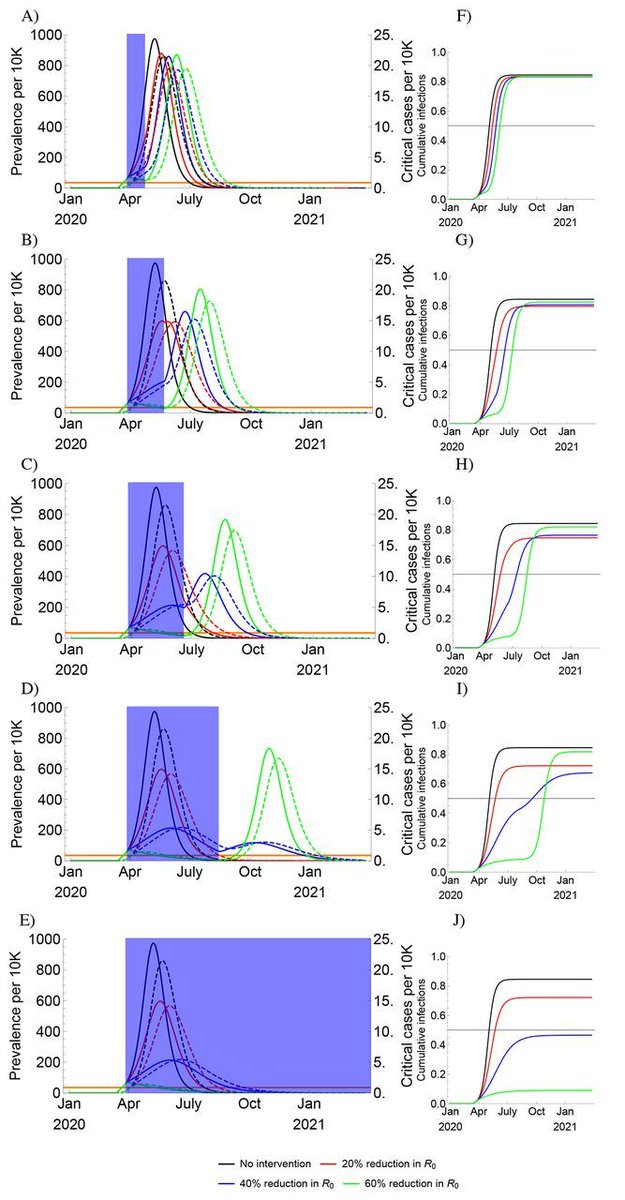
The recurrence of #COVID19 to 2025 will depend greatly on the duration of human immunity to the virus, a new modeling study reports. Social distancing may need to be maintained on and off into 2022 to avoid exceeding hospital care capacities, results show. https://t.co/3g0R4ZSCa9
Dr. Blaisdell was a special surgeon leader who commanded both respect and affection. I still remember his advice to me when I was a medical student applying to UC Davis residency, “Do what you are passsionate about, and do it well...” I will miss him. @PCSAsurg@AmCollSurgeons
For endocrine surgeons, my 3 take-aways from an informative editorial in J Clinic Endocrinol Metab by UB Kaiser, RG Mirmira and PM Stewart on the use of glucocorticoid during #COVID19 time.
"Our Response to COVID-19 as Endocrinologists and Diabetologists" https://t.co/JYSHuXz2dT
This is a large series and I agree subtotal adrenalectomy is an option sometimes for patients with hereditary pheochromocytoma. But, be careful with the problem of patient selection when retrospectively comparing total versus subtotal adrenal resection. @TheAAES@TheEndoSociety
In the Venn diagram, those eligible for focused parathyroidectomy belongs to a subset of those eligible for bilateral exploration. Patient selection and surgeon’s judgement are the keys to a successful focused parathyroidectomy for #PHPT or subtotal adrenalectomy for MEN2A.
Rule of thumb: Age 30-1%, 60-4%, 70-7% on abdominal scan will have an 1 cm or larger incidentaloma. No need to qualify it as “adrenal” because it is the original incidentaloma, a term coined by Dr. Glenn Geelhoed of George Washington University at the 1982 meeting of @TheAAES
The prototype was described by Dr. Lai Hsien-Yung an anesthesiologist from Taiwan reported on March21 (https://t.co/tL2rc8NDep) and registered under a Creative Commons license and free to the public. Safer intubation in #COVID19