@ASzigetvari Eh. Nur dann sollten wir das vielleicht nicht als „alle müssen beitragen“ verkaufen. Und: Bei Bildung überproportional zu sparen, ist schon bemerkenswert, weil Bildungsinvestitionen oft hohe Returns haben und oft selbstfinanzierend sind. https://t.co/PpZCtxLRZV
🇦🇹Forschung & tertiäre Bildung — Das sind wohl die berühmten Investitionen in die Zukunft aus den politischen Sonntagsreden — Danke für Nix ... https://t.co/w0QjC8DvHw
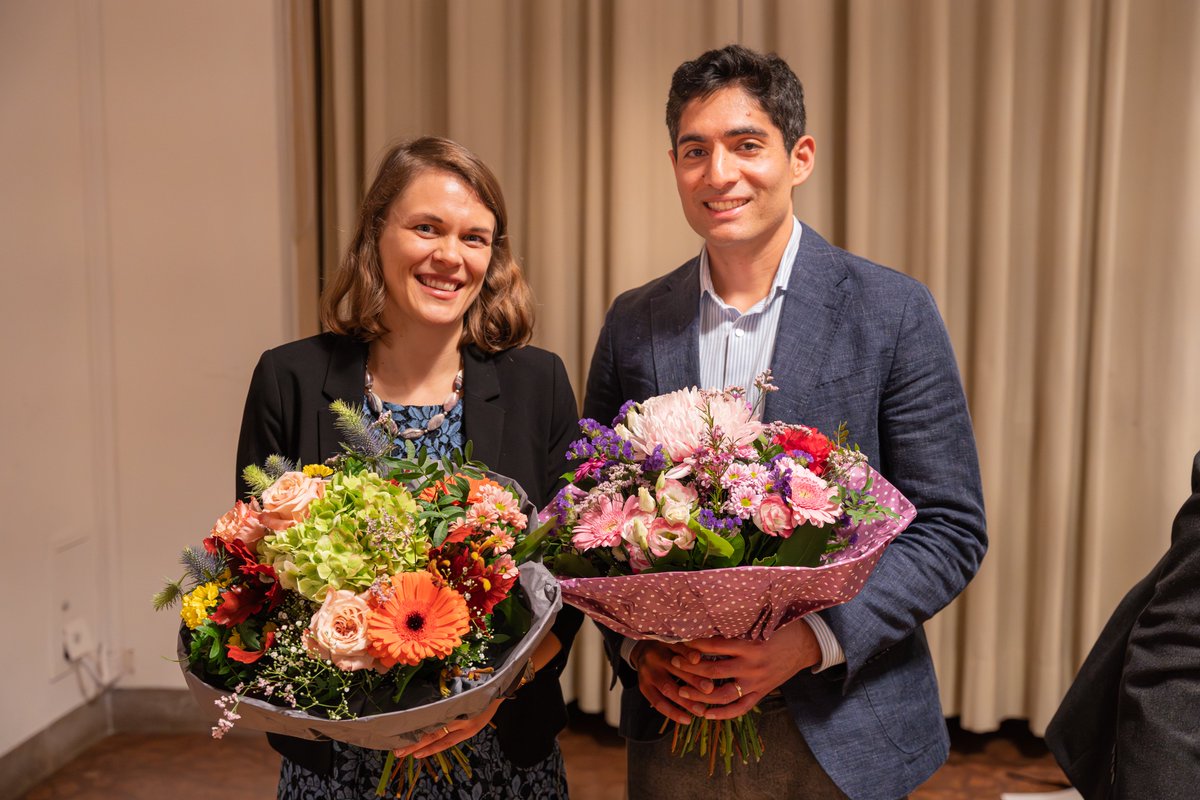
Der (sehr verdiente) Preis an Emanuel Hansen, @pierrecboyer und @fixbierbrauer wurde letzte Woche bei der Tagung des finanzwissenschaftlichen Ausschusses des @VfS_econ verliehen. War eine tolle Tagung, nicht nur wegen der Preise 😉
Die 68. Arbeitstagung des Finanzwissenschaftlichen Ausschusses des @VfS_econ in Ingolstadt: spannende Vorträge, intensive Diskussionen, zwei Preisverleihungen und Ingolstadt bei bestem Wetter genau zum 510. Jahrestag des Reinheitsgebots!
I'm hiring a PostDoc for 6 years JKU Linz
Focus on Health Services Research, Health Economics and interdisciplinary research with clinicians at the medical faculty of JKU
Deadline: 04/22/2026
Full job ad: https://t.co/QtBdDsrSkt
We have a new @camo_hku paper out (with Jin Li and @chang_sun_econ): "Toward a Bad Job Economy: AI Adoption, Agency Costs, and Job Design." We show that AI may not just replace jobs; it may make the jobs that remain worse.
A Market Design Proposal for Decoupling Carbon and Electricity Prices
by @WIFOat colleagues @B_Kasberger, Simon Finster, and Simon Rütten.
A rules-based system rather than ad hoc taxation of "excess profits".
https://t.co/IKtSLCnm8H
1/ In EU day-ahead electricity markets, CO2 allowance costs are largely passed through into the uniform clearing price. Result: higher consumer expenditure and large inframarginal rents (“windfalls”) for non-fossil generation.
Our Econ Department is pleased to announce the successful habilitation of Lisa Windsteiger in Economics. Her achievement further strengthens our department’s research and teaching in the fields of behavioral economics, public economics and political economy. Congrats, Lisa!
The European Commission reckons that by 2070 there will be barely two working-age adults on the continent for every person over 65. How will countries cope? https://t.co/pFrfKpij4A
🎉✨The inaugural lecture by @HaegeleIngrid & @francisawong took place on Nov 10✨🎉
Numerous faculty members officially welcomed the professors. Ingrid Hägele presented “The Role of Firms in Labor Market Inequality” and Francis Wong spoke on “American Financial Distress”.
You want to do a PhD in Economics?
Come join us here @USI_IDEP in beautiful Lugano to do economic research on real-world problems
We are a group of young applied economists who are research active & want to learn from & with you!
Apply here 👇
https://t.co/8Xi5SjZvow
Want to live and work in this beautiful mountain valley in Hawaiʻi?
@UHEROnews is hiring for two tenure track positions:
-> Public Finance/Taxation: https://t.co/H6wjXBPQMS
-> Macro/tourism/forecasting: https://t.co/Mk2T4BqvB4
More details below...
1/5
I have leftover funding for a PhD student for one year (ideally Sept '25 - Sept '26). Might be a good fit for someone wanting to delay going on the market. Please send interested students my way!
1/n
Wie wirken #Zölle wirklich?
Zölle verändern nicht nur Preise, sie greifen tief in Wertschöpfung, Einkommen, Spezialisierung & Standortentscheidungen ein.
Wissenschaftler untersuchen ihre Wirkung mit
- verschiedenen Modellen
- partieller & allgemeiner Gleichgewichtsanalyse
Ein paar Bemerkungen zum so genannten EU-US Zolldeal:
(1/10) Ein trauriger Tag für den Freihandel:
15% Zoll auf EU-Waren in den USA ist besser als 20 oder 30%, keine Frage. Aber der „Deal“ ist teuer erkauft. Vielleicht zu teuer.