LongCat-2.0 is now open source, and this one is big: a 1.6T total / ~48B active MoE built for agentic coding, with native 1M context. 🚀
🤖https://t.co/EttbLqB8kU
🏆 Coding: 59.5 on SWE-bench Pro, ahead of Gemini 3.1 Pro, GPT-5.5, and Claude Opus 4.6; plus 70.8 on Terminal-Bench 2.1 and 77.3 on SWE-bench Multilingual.
🧠 1M context: LongCat Sparse Attention keeps long project context usable with linear-scaling sparse attention.
⚙️ Efficient MoE: ScMoE + zero-compute experts dynamically activate ~33B to 56B params per token.
🛠️ Agent-native: MOPD routes across Agent, Reasoning, and Interaction expert groups for tool use, self-correction, STEM reasoning, and instruction following.
Pretrained from scratch on 35T+ tokens, with both GPU and NPU deployment support.
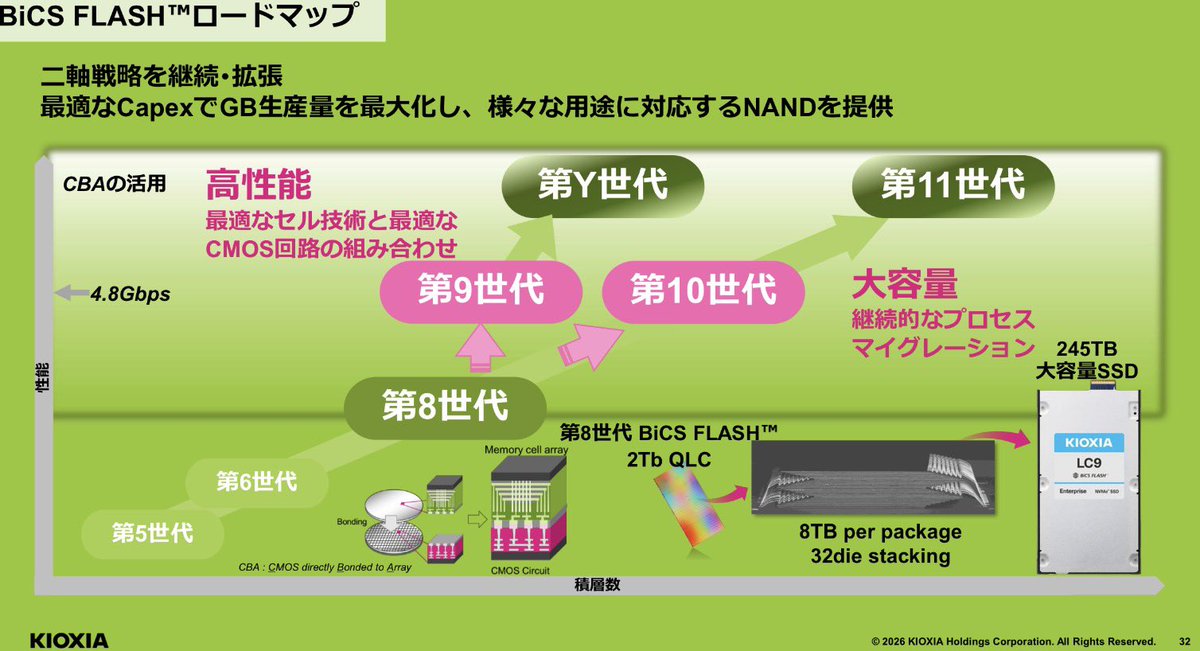
Memory as a share of Hyperscaler CapEx has drawn a lot of chatter, especially after MU earnings last week. Some market participants are shocked at how high it could be next year.
We published our initial view in late February, and many clients pushed back on our 30% number: "Memory is in the teens as a share of a server BOM. How could overall CapEx be that high?"
In May, after pricing rose even faster than expected, we responded directly: combine DRAM, NAND, and HBM, and memory spend in an Nvidia system clears 30% by YE26 and moves above 40% in CY27.
We expect this dynamic to be better understood in the coming months.
Love Qwen3.6-27B? NVIDIA just dropped the ultra-efficient NVFP4 version!
For anyone who wants to run Qwen3.6-27B but doesn't have the VRAM to spare, NVIDIA just published their official NVFP4 quantized build on Hugging Face.
The major upgrade here is the NVFP4 4-bit float format, which delivers huge VRAM savings by shrinking the model to about a third of the size of the standard BF16 weights.
URL👇