Thank you for visiting us. This page is currently in hibernation. For white-nose syndrome news visit https://t.co/CZNtNwAEi5 . For all bat and wildlife related social media please follow @USFWS.
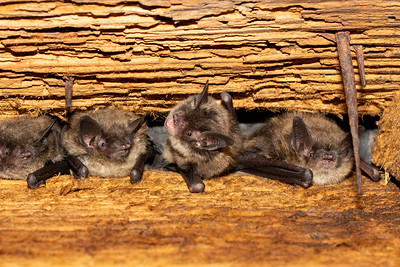
Photo credit: Jordi Segers / Canadian Wildlife Health Center
With the help of a USFWS grant, the Yakama Nation is working to survey their lands for bats as White-nose Syndrome advances into Washington state. https://t.co/meYGfUwvjq
Photo: The Yakama Nation’s open shrub-steppes. Credit: Mark Neutzmann/Yakama Nation.
Recently retired Carl Herzog left his mark in the world of bat conservation through his technical knowledge and critical mind. Read as colleagues nationwide thank Carl for his efforts as a scientist, mentor and friend. https://t.co/mBXoGwky1F
Photo courtesy of Katelyn Ritko
To study a bat, you must think like a bat, become the bat. Renee Lile and cohort at the University of Wyoming become nocturnal during their field season. Read about her experience researching northern long-eared bats in South Dakota: https://t.co/CePheWoRCB
2023 White-nose Syndrome Research and Conservation Grants are now open.
Applications are due June 25. More information at: https://t.co/7XWBYPM6Ar
📸 NPS
The 2023 State of the Bats report is out and experts agree – the next 15 years are crucial to their survival. If you are looking for ways to help bats, check out https://t.co/sjXCOg19E7
📸 Service biologist Ann Froschauer inspects a healthy big brown bat/USFWS
We continue to implement vaccine, treatment and prevention measures to stop the spread of the disease in conjunction with our partners. For the full press release: https://t.co/p6z7y2U2QU
📷: Ryan von Linden/NYDEC
Recently, Bent’s Old Fort National Historic Site Park Service staff found a Yuma Bat that tested positive white-nose syndrome. This is the first detection of the disease in a bat in Colorado.
The bat experts identified the next 15 years as crucial to the fight against white-nose syndrome, climate change and loss of habitat. Solutions include coordinated research and conservation, and opportunities for communities to create habitat and minimize disturbance to bats.
It’s #InternationalBatAppreciationDay ! Today, the North American Bat Conservation Alliance issued its State of the Bats Report. Nearly half of North American species are vulnerable to extinction.
Does #batweek have you batty over bats?
We aren't the only ones working to help bats. Across the world, individuals and landowners are doing their part to help preserve these incredible critters. Feeling inspired? Here's how you can take action: https://t.co/fBS3oQfOjR
Able to compete with the likes of Timon and Pumbaa, bats are insect-eating experts.
Recent studies estimate that bats eat enough pests to save over $1 bil/ year in crop damage & pesticide costs in the US corn industry alone and over $3 bil across all agricultural production.
Across the world, 1400+ species of bats help support our food systems for both people and wildlife. #batweek
An audio described version of this video is available at https://t.co/8Glfpp2wjG
Love your avocado toast? You can thank a bat for that!
DYK that bananas, cashews, dates, avocados, peaches, agave (tequila!), and figs all rely on bats for pollination? Bats also help distribute seeds to ensure plant survival and reduce pests that destroy agricultural crops.
...vampire bats tend only to feed on livestock & birds, lapping about a tablespoon of blood from a painless incision. Their saliva contains a protein called draculin that prevents blood from clotting and has been targeted as a potential treatment for stroke patients. #batweek
During the spooky season vampire bats like this ferocious fella tend to get a bad rap. Living exclusively in Central and South America these bats are sanguivores, meaning they feed exclusively on animal blood. Unlike their mythical counterparts...
The grants were awarded through the Bats for the Future Fund, a partnership among the National Fish and Wildlife Foundation and the Service, the Bureau of Land Management, Avangrid Foundation and Southern Company. https://t.co/owsKTI43LA
Good news for bats in the fight against WNS!
@NFWFnews awarded $478,000 in grants to slow or halt the impacts of WNS & promote recovery of bats affected by it. The grants will leverage nearly $126,000 in matching contributions to generate a total conservation impact of $604,000.
#BatWeek is coming! From pest control to pollination, #bats are key to a healthy ecosystem. Landowners play an important role in supporting them. Check out tomorrow's webinar (9/21, 1-2 p.m. ET) on how bat-friendly gardens and urban habitats can help. https://t.co/H873eerKFs
The tricolored bat has suffered extreme population declines due to white-nose syndrome, a deadly disease of hibernating bats. @USFWS proposes to protect it as endangered under the Endangered Species Act: https://t.co/Yk9vWTkjJY 📷: Pete Pattavina/USFWS