🚀 Exciting times at the Lunar and Planetary Science Conference this year!
USGS Astrogeology just wrapped up another incredible scientific conference where experts from around the globe gathered to share groundbreaking discoveries and ignite new ideas. From engaging presentations to networking opportunities, it’s all about pushing the boundaries of planetary science.
Lunar Mapping Program (LMAP) updates include new thermophysical and geomorphologic results and Planetary Geologic Mapping (PGM) updates are bringing increased accessibility with color vision deficient friendly color schemes. Software developments from our computer scientists include reaching users who are actively implementing our tools and providing new updates to the software to the community directly. Cutting-edge research in Mars and Moon exploration was also a hot topic - ever heard of Brain Terrain on Mars?
Check out the article linked below for more highlights and behind-the-scenes moments! 🌌✨
https://t.co/22O7OItcrM
📸 Geographer Sonya Bogle, right, handing out maps, a hot commodity at LPSC.
#LPSC2026 #LunarAndPlanetaryScienceConference
Happy Earth Day from our nearest neighbor, the Moon!
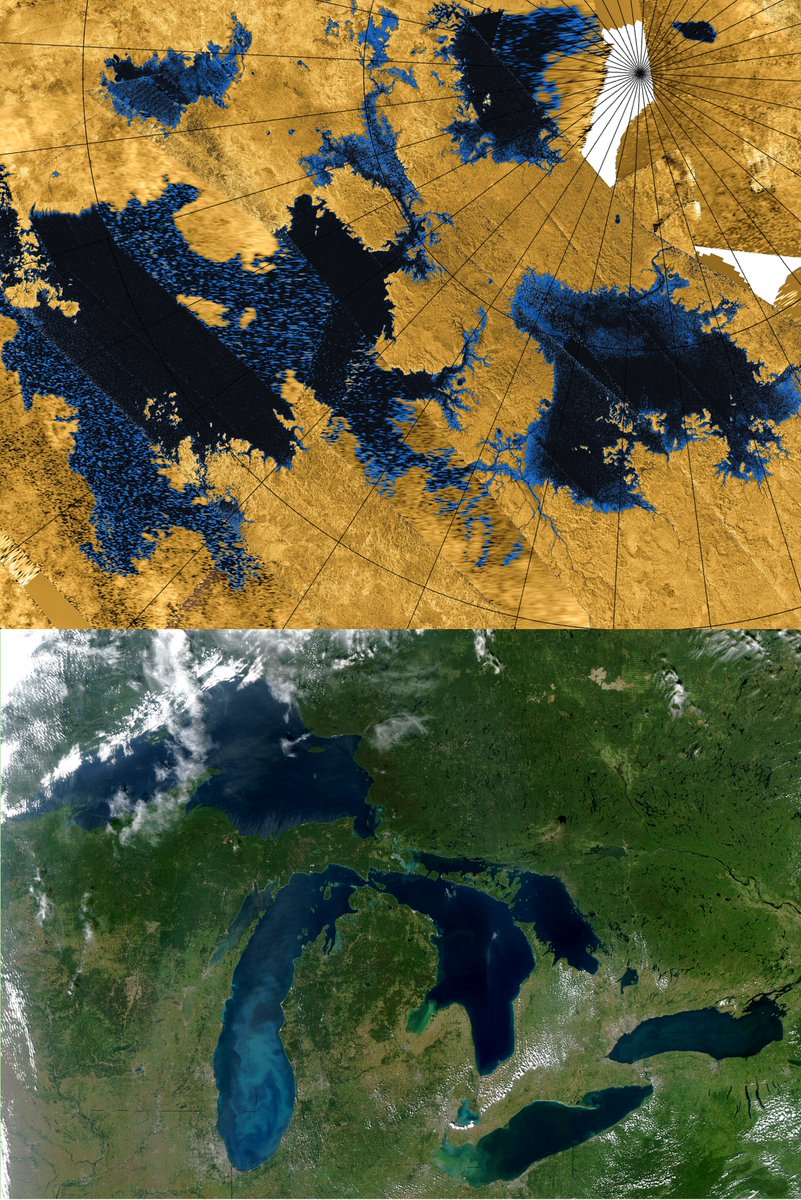
USGS Astrogeology studies all the planets in our solar system, and that includes ours too! These photos show a few of the different ways we research Earth features and processes.
The now-famous "Earth Set" photo from Artemis II as taken from the Moon shows a new perspective of our home: a crescent-shaped planet from the lunar horizon. We may forget that Earth is a planet within our Solar System, but it's a teacher and a guide into the universe.
In the field of Terrestrial Analogs, we compare features on Earth to those on other planetary bodies to learn more about how they formed. We also use Earth as a training ground, like with the Artemis astronauts descending into Meteor Crater for training - where else would they learn about features they may encounter on other planets and moons?
We don't just use Earth as a model for the rest of the Solar System - we can learn so much about Earth from the Moon, other planets, and asteroids. The building blocks of our planet can be found in asteroids, and our Moon is made of the same stuff - we can learn more about Earth by looking to the skies!
📸1: Earth Set" photo from Artemis II showing a crescent Earth setting over the lunar limb, image credit: NASA
📸2: Dark blue lakes on Saturn's moon, Titan, (top) from Cassini compared to The Great Lakes (bottom)
📸3: Artemis astronauts hiking below the rim of Meteor Crater during astronaut training with USGS Astrogeology, image credit: NASA
📸4: Image mosaic of the Near-Earth Asteroid, Eros. Image credit: NASA/JPL/JHUAPL
#EveryDayIsEarthDay #EarthDay
USGS Astrogeology: Where Dreams take Flight 🚀
Since the 1960s, the hallways of the USGS Astrogeology Science Center have served as a bridge between the dusty trails of Earth and the silent craters of the cosmos. It is a place where “ground truth” meets celestial ambition—a sanctuary for those who believe that to understand the heavens, one must learn the language of the stones beneath our feet.
Learn about Astrogeology's multigenerational dream making machine in our news: https://t.co/olo7KvOf0u
📸1: Eugene Shoemaker, founder of Astrogeology, with a rocket pack
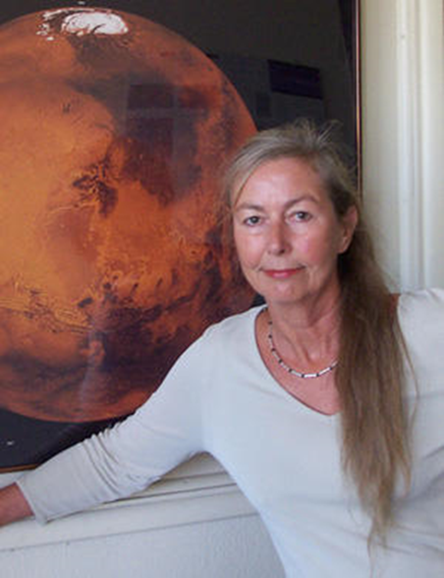
📸2: Astrogeology Scientist Baerbel Lucchitta in front of an image of Mars
📸3: Former Astrogeology scientist Lauren Edgar, now Artemis Astronaut Candidate
#SpaceHistory #LunarLegacy
Will we see you at the Lunar and Planetary Science Conference this week? 🚀
Find the USGS Astrogeology booth March 16 - 20 in The Woodlands, TX to see what’s new: explore our latest research, grab one of our fresh map releases, and check out updated fact sheets showcasing exciting developments. Whether you’re reconnecting or meeting us for the first time, visit our booth to discover the innovative products and services we offer.
What are you most excited to see at LPSC this year?
📸: Scientist Lori Pigue presenting at LPSC, 2018
#LPSC2026 #LPSC
Artemis II is set to launch soon, delivering humans farther into the space than we’ve ever been! Although we won't land on the Moon this time, we’re getting set up for future landings and beyond! Learn more in this link: https://t.co/b4wko2yfB0
Image credit: NASA/Josh Valcarcel
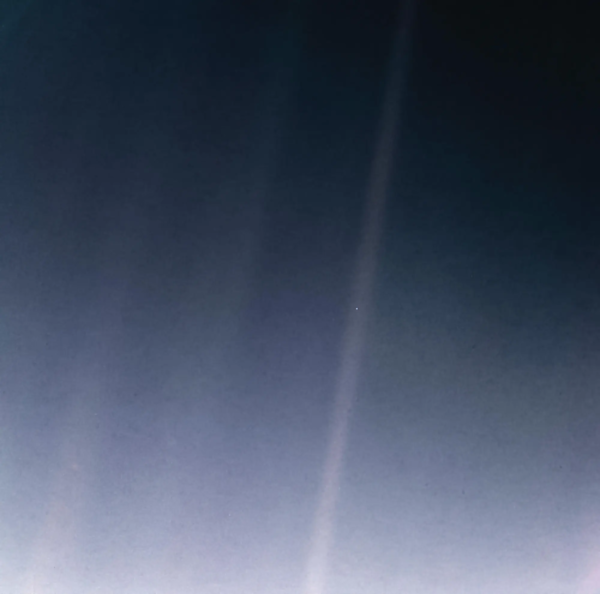
Have you seen this famous image, called the "Pale Blue Dot" and wondered where it came from? In this news article we give a shout out to the Voyagers of 2026: The Voyager spacecraft, still exploring and pushing into new frontiers! Read about Voyager here: https://t.co/55vuViiP5l
Happy Museum Selfie Day! Astrogeology has a few museum pieces and lots of displays to view if you find yourself in Flagstaff. Visit the link in our bio to schedule a tour, which are typically on Monday, Wednesday, or Friday at 10 am or by appointment. #MuseumSelfie
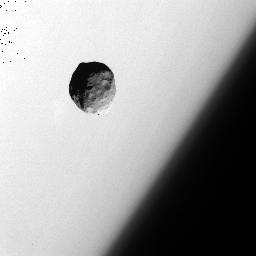
Happy January! January is named for the Roman god, Janus, which is also the name for one of the moons of Saturn. Find images of the moon Janus on the USGS PILOT website: https://t.co/kxtw3Ok7wO
#January#Janus#Saturn
#OnThisDay in 1968, Apollo 8 launched. This would be the first crewed spacecraft to leave the influence of Earth and the first human spaceflight to orbit the Moon. From lunar orbit was our first Earthrise photo taken by a person.
#Earthrise#Apollo#OTD#NASAHistory#Moon#Lunar
Meet the new Landsat Science Team! 🌍🛰️
The @USGS and @NASA have announced the Landsat Science Team for 2026–2030, supporting Landsat science priorities and trusted, publicly available Earth observation data worldwide.
🔗 https://t.co/s5pzsBzW09
When lava erupts from volcanoes, it leaves behind an empty magma chamber that often collapses to form a circular pit called a caldera. We see this process on Earth (like this one in Hawaii), Mars, and other bodies throughout our solar system!
#Hawaii#Mars#Venus
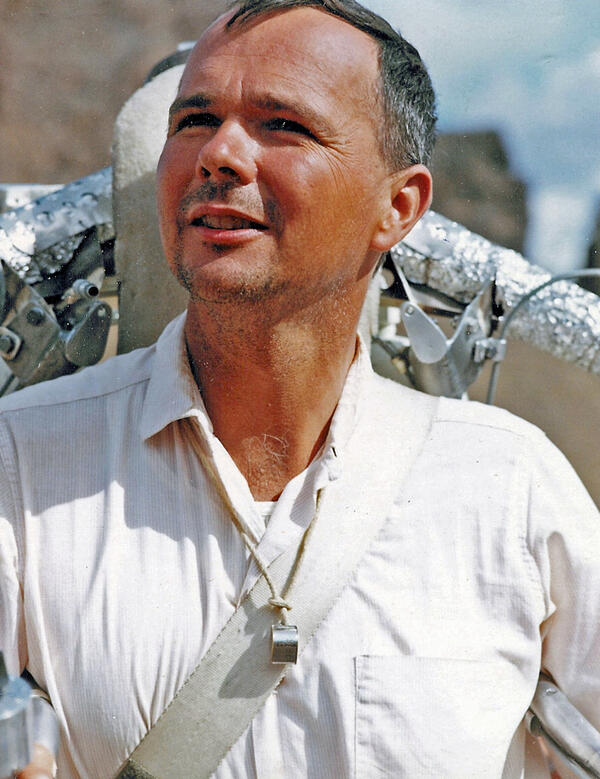
#OnThisDay in 1972, USGS Astrogeology conducted what was probably our farthest field trip to date when geologist-astronaut Harrison "Jack" Schmitt landed on the Moon. Jack started at Astrogeology in 1964, working in lunar geologic mapping and field methods.
#OTD#LunarLegacy
This week is #ComputerScienceEducation week! Whether you're just starting out or looking to brush up on skills, Astrogeology has resources to help on your software development journey! Take a look at our Software Docs here: https://t.co/6sdr2oJG3d
#ComputerScience#SoftwareDev
DYK Yellowstone National Park has over 10,000 thermal features? Keeping track of them, especially as they change, would be much harder without remote sensing resources like Landsat. Learn more on our latest Eyes on Earth podcast episode: https://t.co/eOnY2dyoUB
Why wait until college to study planetary science? Thanks to a grant from NASA and collaboration between USGS Astrogeology and our fabulous partners, elementary and middle schoolers can now get hands-on space learning experience FOR FREE! Learn more here: https://t.co/fVqQLpnerw
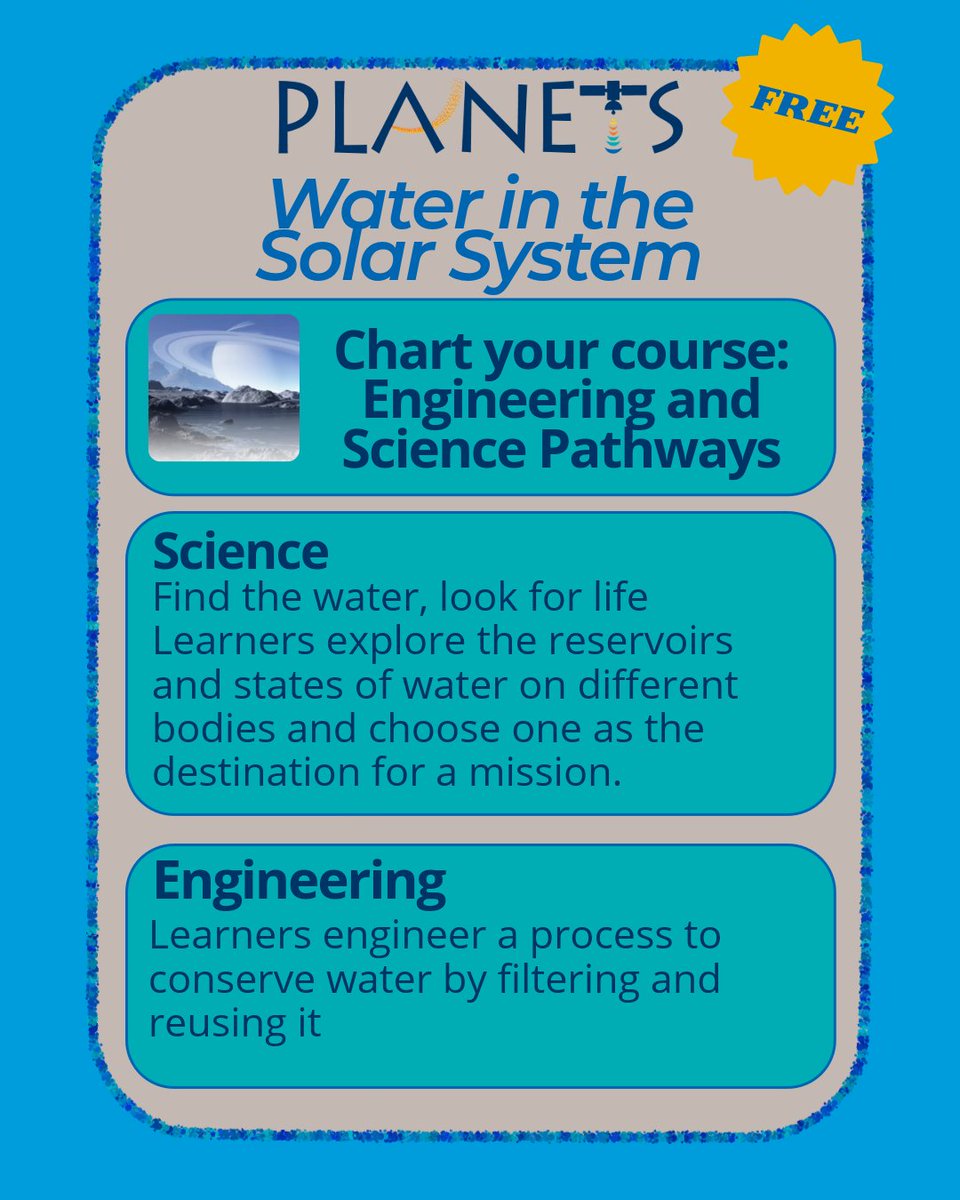
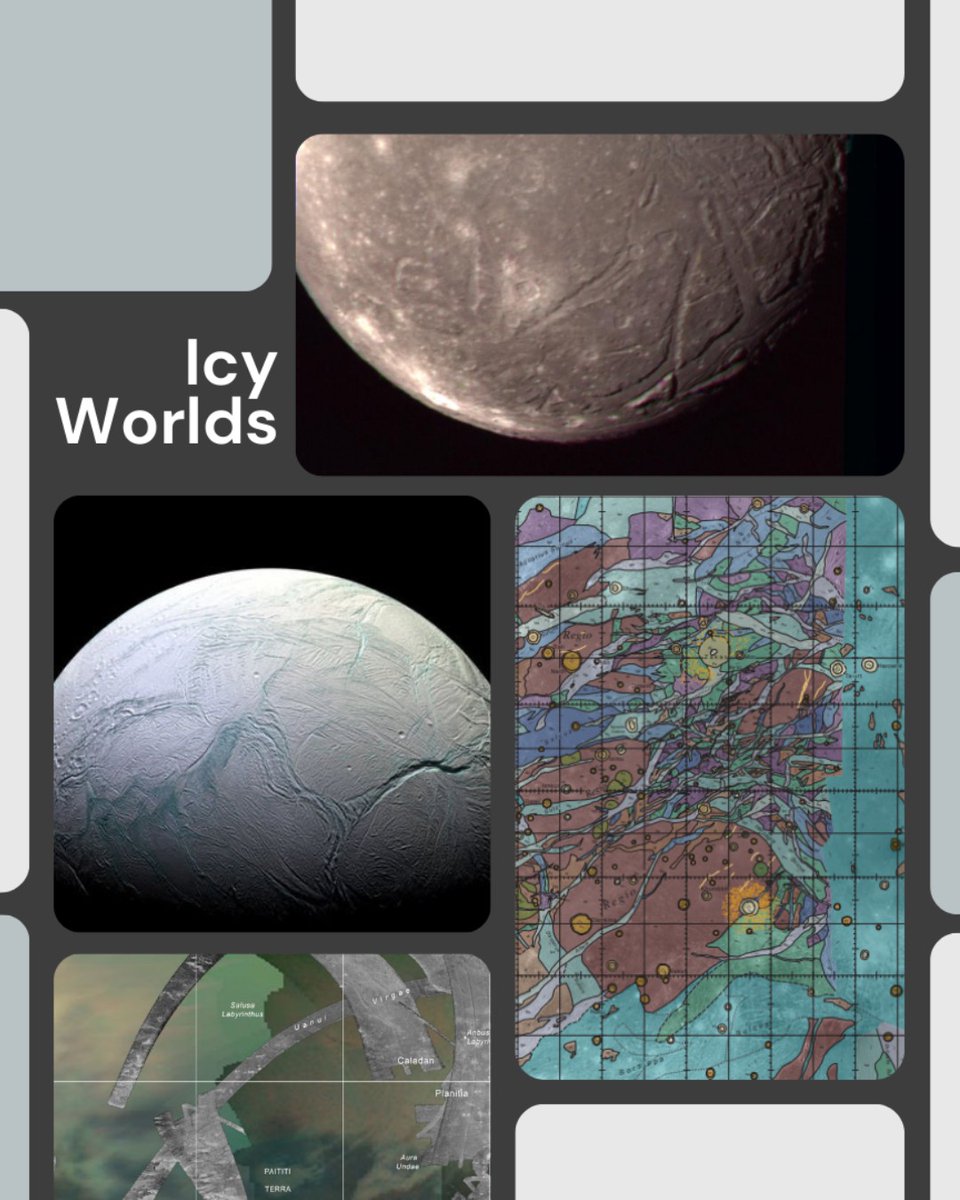
Looking for fun, space-themed educational materials for your Out-of-School-Time activities? Look no further than PLANETS, out now! This unit on Water in the Solar System for grades 6 - 8 explores the importance of water and where we might find it: https://t.co/TERAHTJEo3
Looking for fun, space-themed educational materials for your Out-of-School-Time activities? Look no further than PLANETS, out now! This unit on Space Hazards for grades 3 - 5 explores hazards all around us and hazards in space! Find Space Hazards here: https://t.co/shHBGaTBs1
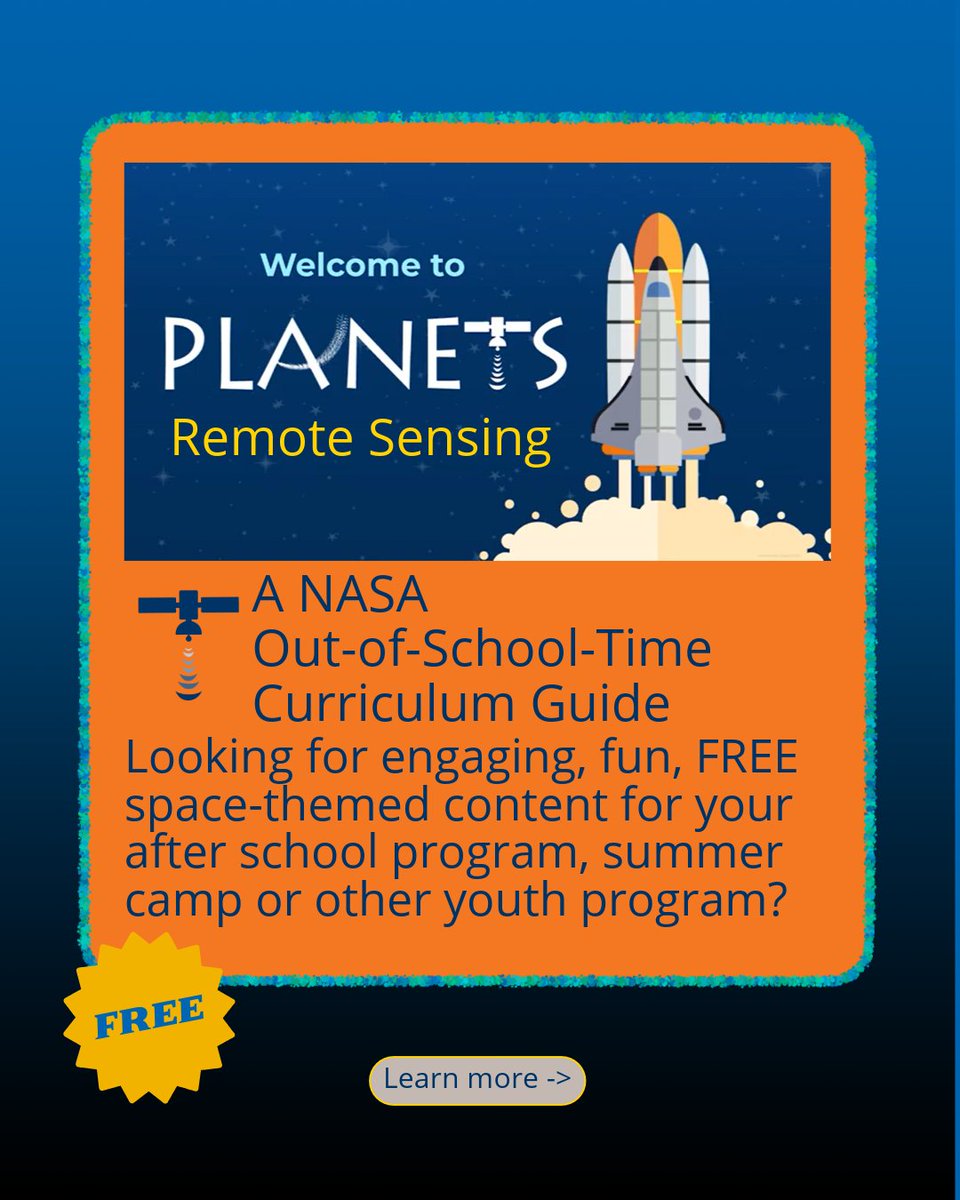
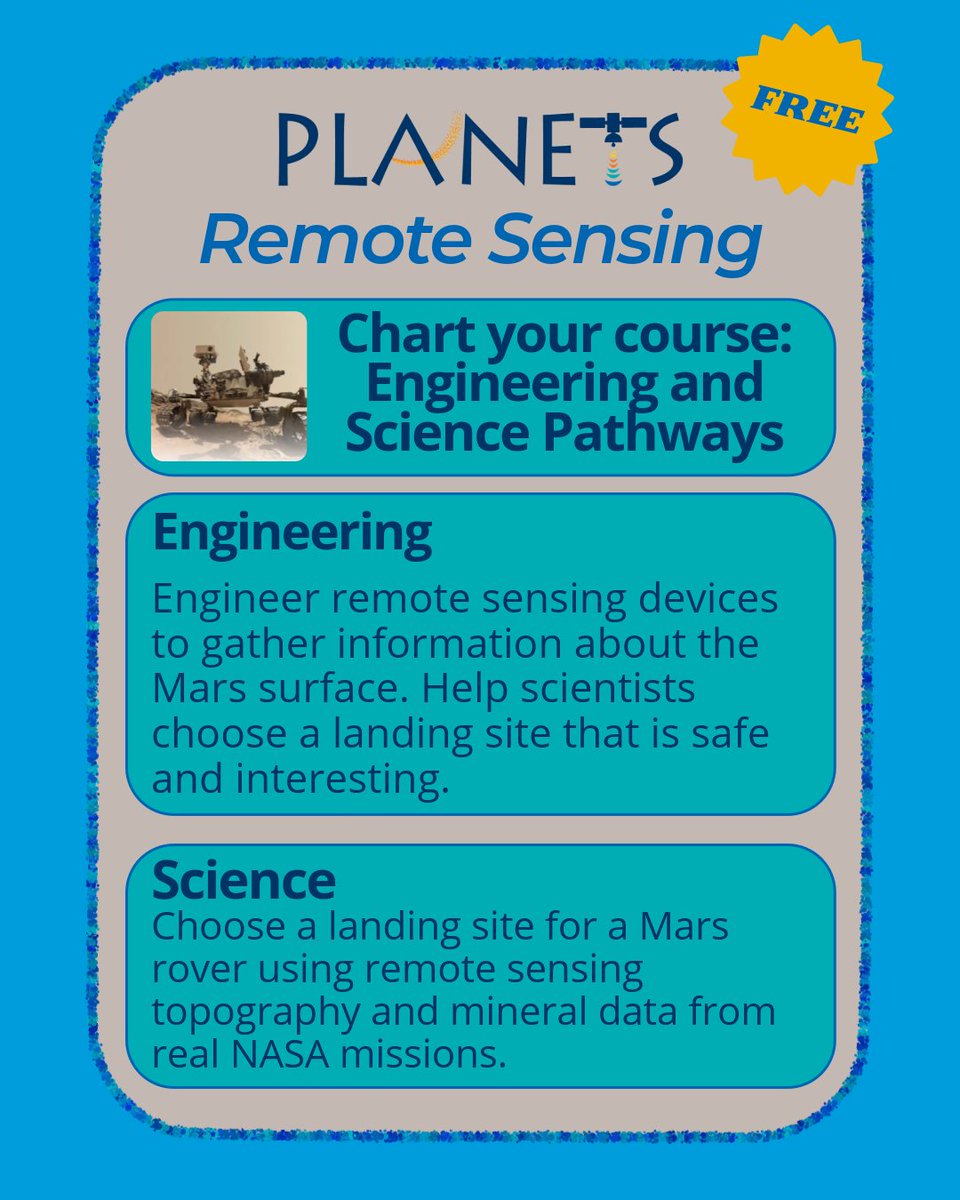
Looking for fun, space-themed educational materials for your Out-of-School-Time activities? Look no further than the PLANETS project, just released! This unit on Remote Sensing for grades 6 - 8 explores geology and geography of Mars. Check it out here: https://t.co/JJp9w3kGVN