The second debate took place in Freeport, Illinois #OnThisDay in 1858. When Lincoln asked him whether the people of a territory could lawfully exclude slavery prior to the creation of a state constitution, Douglas explained what became known as the Freeport Doctrine.
Trivia Tuesday: What was Lincoln's middle name?
a. Andrew
B. John
C. James
D. None of the above
Comment with your guess and we'll share the answer later today!
Lincoln wrote this in a public letter to James C. Conkling #OnThisDay in 1863. Lincoln wanted this message read at a major Union rally in Springfield, Illinois, to defend his Emancipation Proclamation and rally public support for the remainder of the conflict.
There are at least 130 known photographs of Abraham Lincoln. For #WorldPhotographyDay, you can view a collection of them in this book digitized by the University of Illinois. https://t.co/Dv8j2ELTOP
Do you have a favorite photo? Drop it in the comments!
Abraham Lincoln posed for roughly 130 photographs during his lifetime. If he wasn't the most photographed American of the nineteenth century, he was certainly in the conversation.
And yet people who knew Lincoln complained that pictures didn't quite do him justice.
During the presidential campaign of 1860, that mattered.
Voters were largely unfamiliar with the relatively unknown Republican nominee from Illinois, and many of the images circulating were not flattering.
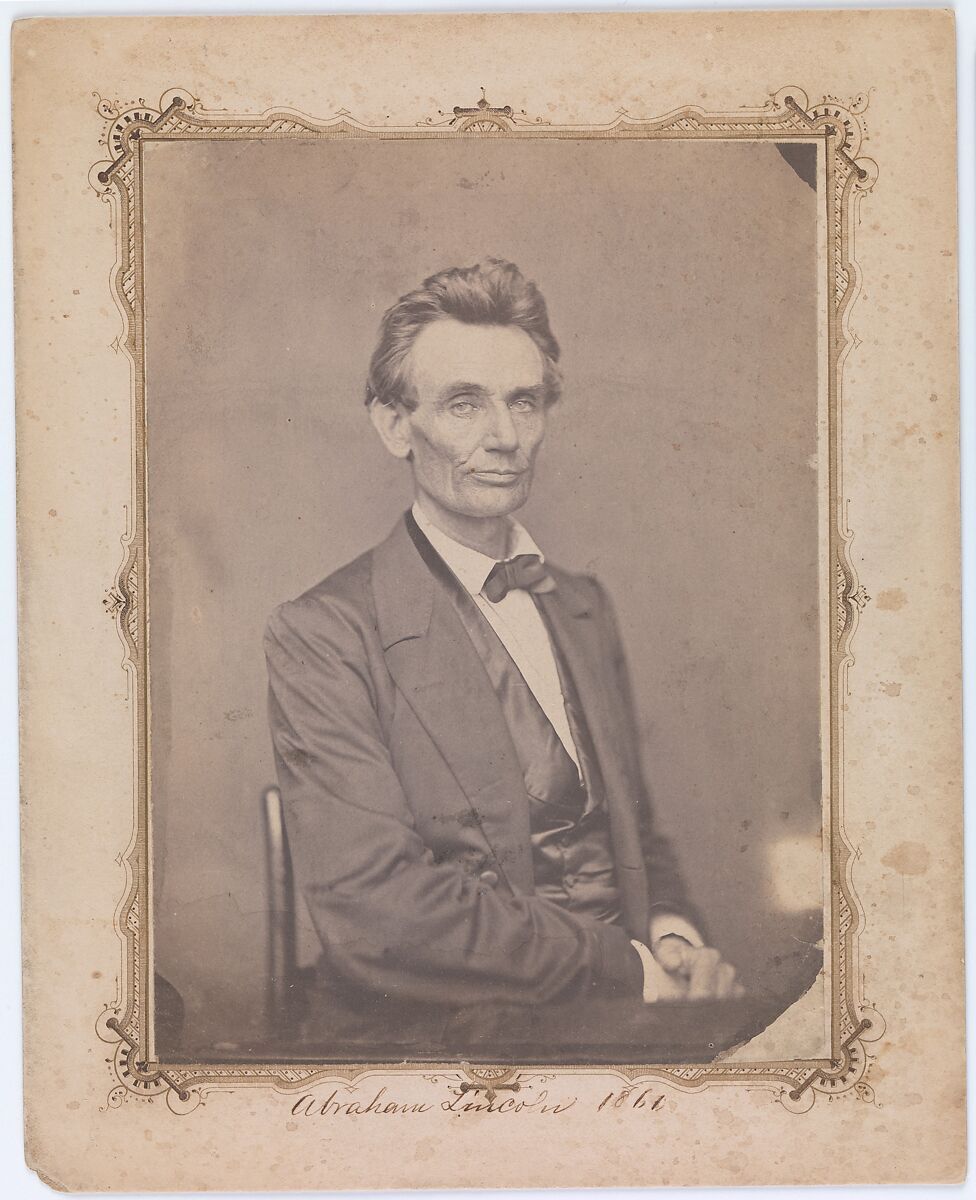
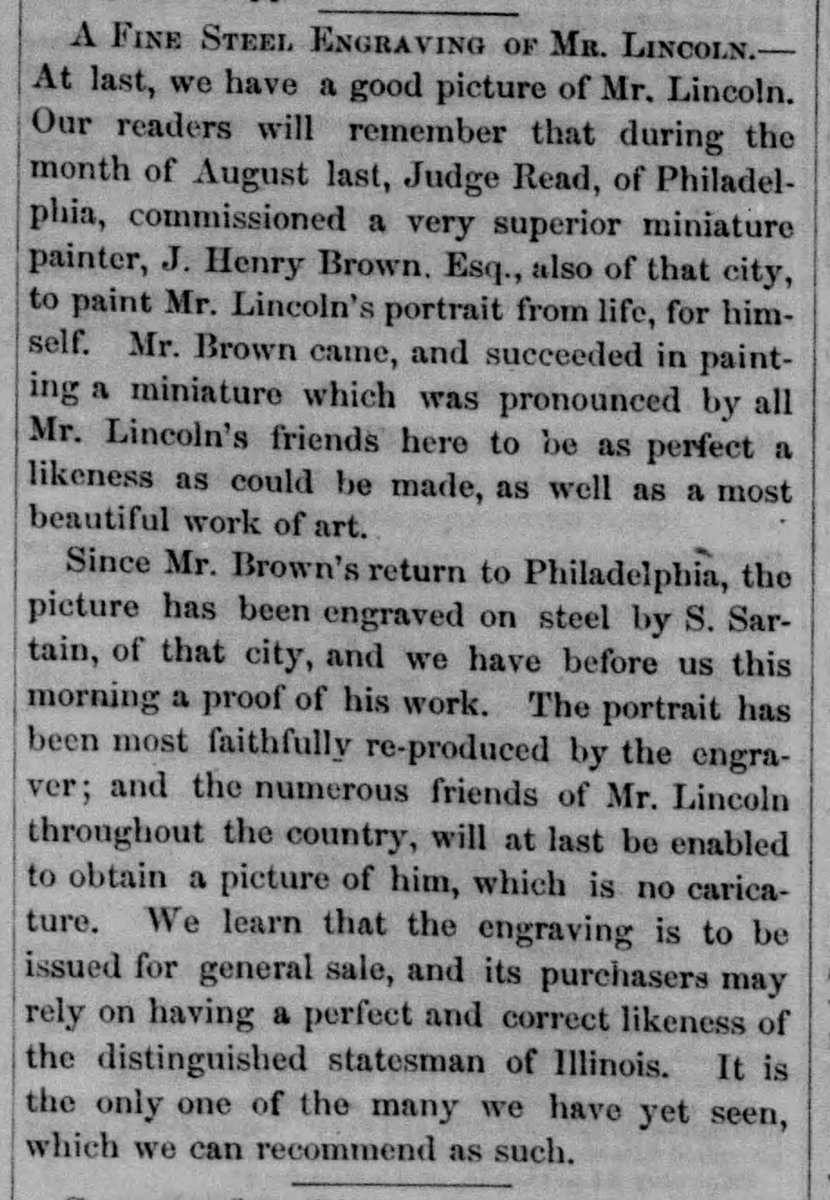
A Springfield newspaper would eventually greet one new image with relief, exclaiming, “At last, we have a good picture of Mr. Lincoln."
The story of that picture began in August 1860, when Philadelphia artist J. Henry Brown traveled to Springfield on commission to paint a miniature portrait of Lincoln.
On August 13, Brown found Lincoln at the State Capitol. Lincoln agreed to cooperate, and the two walked together to Preston Butler’s photography studio.
Brown preferred using photographs as guides for his miniature portraits, so he had a half-dozen ambrotypes taken of Lincoln before getting one that suited him. Just two of those ambrotypes exist today.
Then Brown began painting.
On August 20, 1860—166 years ago today—Lincoln gave Brown his second sitting. Brown arranged for his sittings to take place in Representatives Hall at the State Capitol.
For the next several days, Brown continued working on the miniature, using the ambrotype as a guide while Lincoln gave him a series of sittings.
Brown’s time around Lincoln allowed him to appreciate his facial qualities in a way others might not have noticed.
Brown thought Lincoln’s many "hard lines" often served as "a mask to the inner man."
Lincoln's "true character," he wrote, emerged only when he became animated in conversation or during the telling of one of his many humorous jokes or stories.
Brown wasn't the only person who believed Lincoln's appearance was difficult to capture.
John G. Nicolay, who served as Lincoln’s secretary from 1860 until the end of his life, wrote that "Lincoln's features were the despair of every artist who undertook his portrait."
Nicolay said Lincoln's face changed dramatically with his mood and expression. A static image could capture the features, but not necessarily the man.
“There are many pictures of Lincoln,” wrote Nicolay, but “there is no portrait of him."
Nevertheless, Brown came unusually close.
When his finished miniature was displayed at the State House, a Springfield newspaper called it "a splendid picture" and "a most faithful likeness."
Better yet, the portrait was soon engraved so people around the country could obtain a copy of what another Springfield newspaper called a picture of Lincoln "which is no caricature."
Brown captured Lincoln at a remarkable moment.
The August 13 ambrotype made for Brown's use is thought to be the last photograph ever taken of Lincoln without a beard. Less than three months later, Lincoln would be photographed with the whiskers he would wear for the rest of his life.
At that moment, however, Brown captured Lincoln when he was still just a clean-shaven presidential candidate, living among his longtime neighbors in Springfield.
His miniature captured Lincoln just before the familiar face of the Lincoln presidency began to emerge.
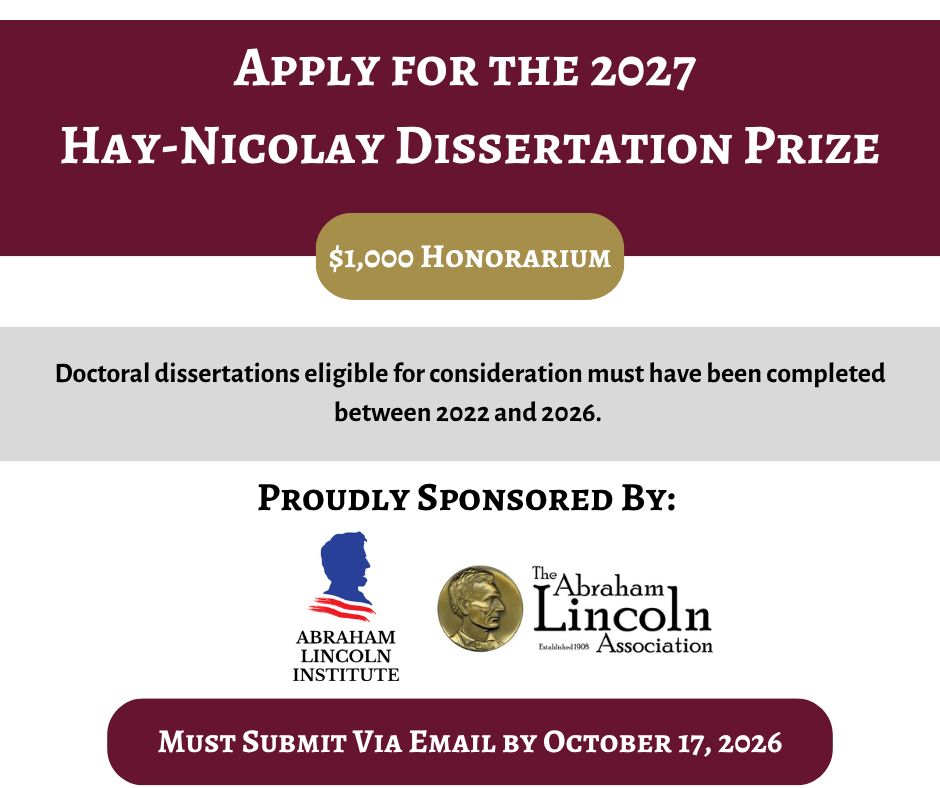
The Abraham Lincoln Association (ALA) and the Abraham Lincoln Institute (ALI) invite nominations and submissions for the 2026 Hay-Nicolay Dissertation Prize, which includes a $1,000 honorarium.
After this and other meetings with his cabinet, Lincoln continued to revise the proclamation up until he shared it publicly on January 1, 1863.
#abrahamlincoln#lincoln#EmancipationProclamation
#OnThisDay in 1862, Abraham Lincoln presented the draft Emancipation Proclamation to his cabinet. While he sought their feedback on the timing of the proclamation, he remained steadfast in its substance and tone.
By July 27, 1848, both major political parties, plus the Free-Soil Party, had made their presidential nominations, and the campaigns were underway. At the urging of Albert J. Beveridge, Lincoln addressed the House in favor of Zachary Taylor.
#abrahamlincoln#lincoln
#OnThisDay in 1864, Lincoln delivered an address at the Sanitary Fair, Baltimore, Maryland. The women organizing the events invited President Lincoln to preside over the opening ceremonies.
#OnThisDay in 1861, Union troops traveling through Baltimore were attacked by Confederate sympathizers. Lincoln responded by eventually suspending habeas corpus in key areas—an extremely controversial wartime decision. #abrahamlincoln#abrahamlincolnassociation#lincoln#civilwar
President Lincoln was assassinated by actor John Wilkes Booth #OnThisDay in 1865 while attending a performance at Ford's Theatre.
Among the historical records preserved by the National Archives is a police blotter that captures the reaction of a @DCPoliceDept officer on duty.
At 7:22 AM on April 15, 1865, Abraham Lincoln succumbed to the wound inflicted by John Wilkes Booth. Present with Lincoln when he died, Secretary Edwin Stanton famously stood still, sobbing, and solemnly remarked, “Now he belongs to the ages.” #lincoln#lincolnassassination
Join the Abraham Lincoln Association! Your generous contribution supports student awards, educational resources, and scholarship on Abraham Lincoln and his era. We're thankful for our ever-growing community of engaged Lincoln supporters and scholars. Join us today at: