Experts, environmentalists, journalists, and activists who have come together to share information about the environmental impacts of the war in Ukraine.
1/ 🙏 Support UWEC with your donation!
https://t.co/ablRfyNB7T
Against the backdrop of other important news, the #environmental consequences of the Russian #war seem to be taking a back seat. Yes, our era has seen a multitude of crises, but #Ukraine must remain a priority topic.
5/ The main risk is that rapid projects without environmental safeguards could destroy what remains of #Ukraine’s natural heritage.
🔗 Read more:
https://t.co/bMHFn1RIeK
1/ 🫣 Is environmental health receding into the background?
New recovery assessments for #Ukraine reveal a concerning trend: after progress in 2023–2024, attention to nature is declining again.
🔗 Read more:
https://t.co/bMHFn1RIeK
4/ In such cases, funding almost always pulls decisions toward simple and fast projects. Without strict rules, #environmental priorities systematically lose to economic ones – even when “green” goals are declared.
The Belgian media @lalibrebe spoke with UWEC co-founder Oleksiy Vasilyuk about seeking a balance between safe mine clearance, ecosystem protection, and #Ukraine's future recovery.
We've translated this material for you.
🔗: https://t.co/LCZNTVpP4d
3/ At the same time, the #ESPOO Convention could become an important post-war tool for coordinating ecosystem restoration, risk assessment and preventing new environmental crises in the #BlackSea and #Danube regions.
🔗 Read more on the UWEC website:
https://t.co/zCcwRRbVhU
1/ The #ESPOO Convention was a peacetime concept created to enable countries to assess the environmental risks of major projects in advance and prevent transboundary damage.
🤔 But what happens when war causes the damage?
🔗: https://t.co/zCcwRRbVhU
2/ Destruction of dams, pollution of rivers and the Black Sea, and mining of territories—all illustrate that existing international #environmental mechanisms are insufficient to respond to military threats.
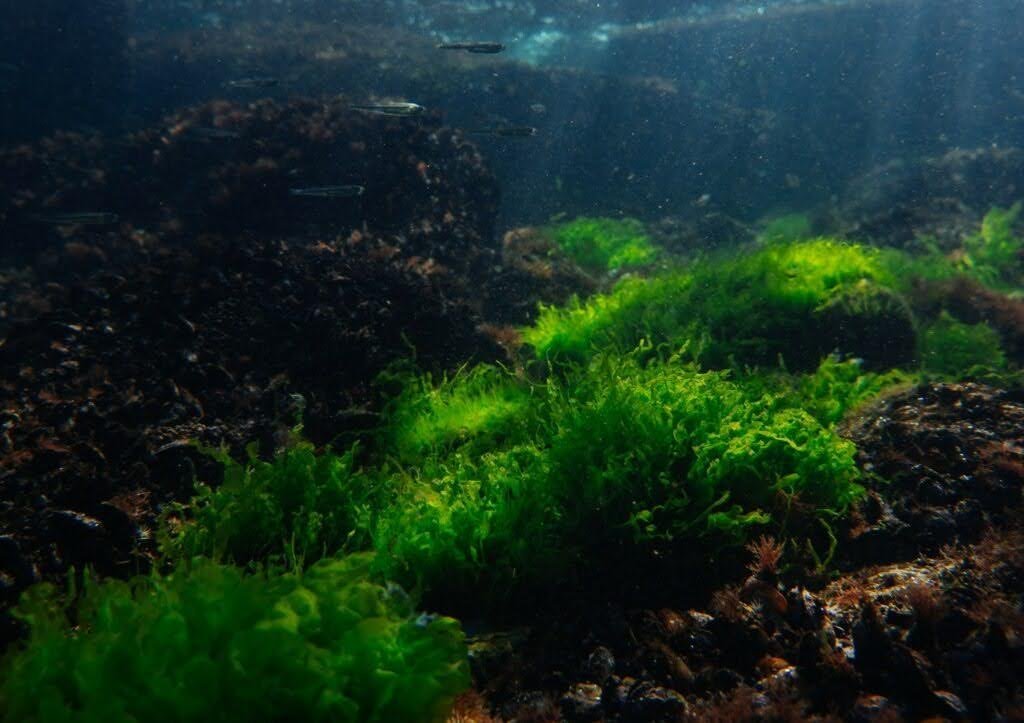
3/ To answer these questions and understand how aquatic biodiversity is changing, UWEC author spoke with Ukrainian biologists specializing in the #BlackSea for expert insights.
🔗: https://t.co/a5jp0iy4xn
1/ 🦐 How has Russia’s full-scale invasion of #Ukraine affected the spread of #invasive species in the Black Sea? Which alien species are most commonly found in the #Odesa region, particularly in the Black Sea?
🔗 Read more:
https://t.co/a5jp0iy4xn
2/ Do these “underwater migrants” pose threats to species typical of the #BlackSea ecosystem? Is the arrival of new species always a negative for all living organisms?
3/ Today, the greatest challenge is not just to mobilize billions but also to preserve nature. Without this, “green recovery” risks becoming simply rapid reconstruction accompanied by long-term loss. Balancing investment and nature is a key test for #Ukraine.
1/ 🧐 New wartime damage assessments show a shift from detailed analysis to rapid fund allocation. The latest #RDNA5 report is nearly three times shorter and has been turned into a financial planning tool rather than an in-depth assessment.
🔗 Read more:
https://t.co/bMHFn1RIeK
2/ The problem is that damaged ecosystems are reduced to general figures, while the “Build Back Better” principle becomes increasingly toothless. The faster the process, the more environmental wellbeing suffers.
1/ ☢️ It's been 40 years since the #Chornobyl Nuclear Power Plant disaster.
The topic of radiation remains a pressing issue.
🔗 Read more:
https://t.co/U0glhAKaTc
4/ Furthermore, biodiversity in the Exclusion Zone is growing despite the radiation, and this learning can potentially aid in restoring eastern #Ukraine. Left undisturbed, nature can regenerate.