Despite uncertainty over federal funding, the university’s scientific community continued to advance knowledge and improve lives. Find out how from our favorite #UWMadison research stories of 2025.
https://t.co/CJOQFCKLfl
Viruses in wetland soil play a more important role than previously understood and could even be indicators of ecosystem health, according to a new study by #UWMadison researchers.
https://t.co/JPC7bMofUK
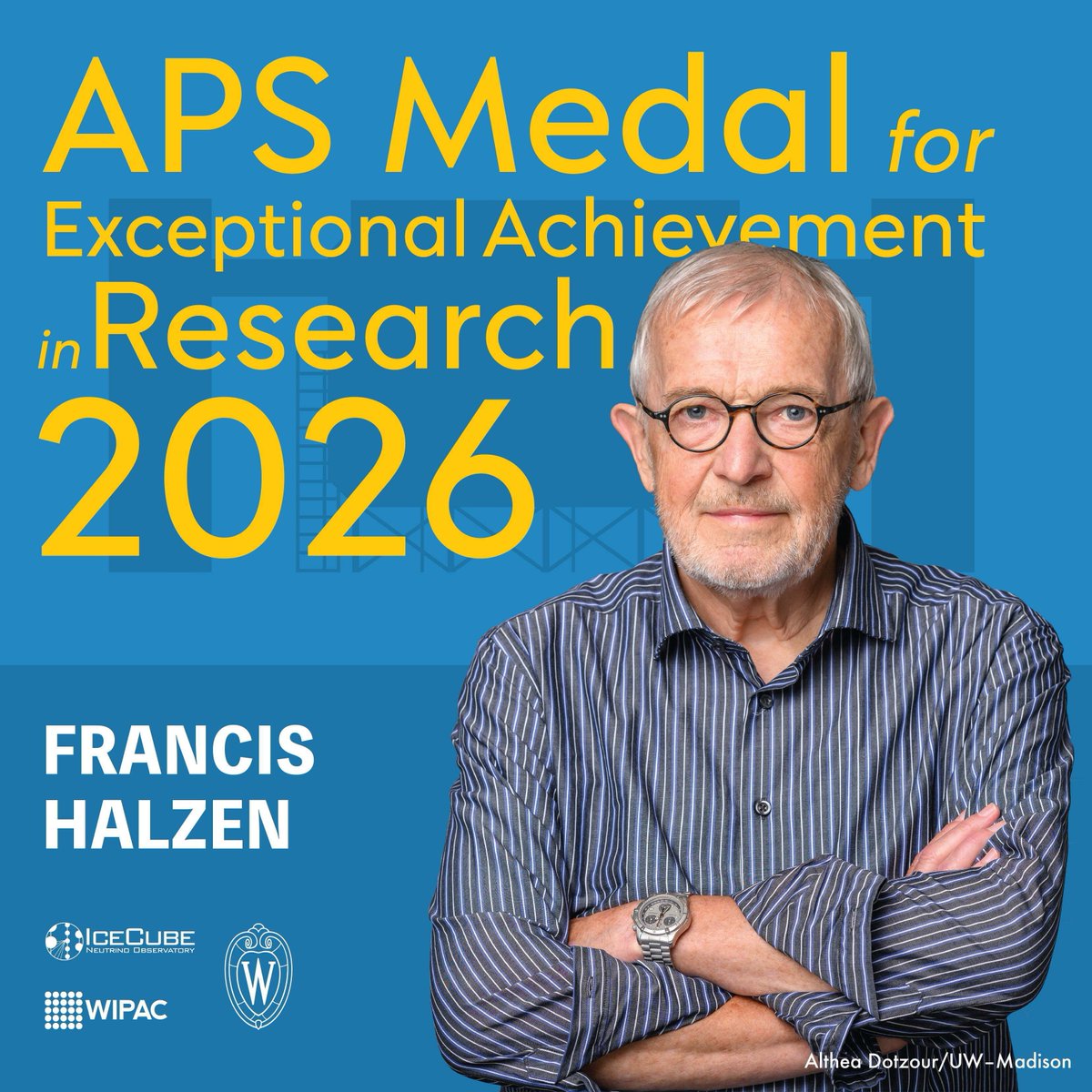
Congrats to IceCube PI Francis Halzen, recipient of the 2026 @APSphysics Medal for Exceptional Achievement in Research! 🏅
His leadership of IceCube and its discoveries have made significant contributions to the field of neutrino astrophysics.
https://t.co/dTna8SD2pt.
#UWMadison researchers have found a previously unknown pathway plants use to detect gravity and orient their growth. The study may one day open the door for improvements in crop cultivation.
https://t.co/entVxeDOR9
Anchoring helpful genes away from parts of their chromosomes that were more likely to be remixed made saltwater crustaceans better prepared to survive in freshwater ecosystems — like the Great Lakes.
https://t.co/RkTvVjIUal
New findings from @cijilim in @UWBiochem identify a protein as essential to maintaining the end-caps on chromosomes — helping doctors around the world connect a genetic mutation to their patients' illnesses.
https://t.co/m6btvt1g3K
This fall's Science Journalist in Residence, Cassandra Willyard, will be on campus this week. Join us Tuesday evening for a panel conversation about public health and personal freedom with UW experts Malia Jones and Lillie Williamson! 👇
This fall's Science Journalist in Residence, Cassandra Willyard, will be on campus this week. Join us Tuesday evening for a panel conversation about public health and personal freedom with UW experts Malia Jones and Lillie Williamson! 👇
Join us next Tuesday, Oct. 21, at 5:30pm for a free public conversation between Willyard and campus experts about the interplay — and occasional tension — between public health and personal freedom. The discussion will be held in 2520 Grainger Hall. Hope to see you there!
Join us next Tuesday, Oct. 21, at 5:30pm for a free public conversation between Willyard and campus experts about the interplay — and occasional tension — between public health and personal freedom. The discussion will be held in 2520 Grainger Hall. Hope to see you there!
We're excited to host Cassandra Willyard, an award-winning independent health reporter based in Madison, as this semester's Sharon Dunwoody Science Journalist in Residence! Willyard will be on campus next week to meet with students and researchers. https://t.co/7nfx24eWbt
From scorpion embryos to ancient quartz veins from the Baraboo Hills, @UWMadScience’s 2025 Cool Science Image Contest winners reveal how nature evolves in tiny steps over millions of years.
Explore the stunning visuals that make science beautiful: https://t.co/ri8rQawf5B 🧬🪨🔬
The @ctao_universe WIPAC team has been awarded a nearly $4M @NSF grant! ✨🎉
The WIPAC and WashU teams will use the funds to build and install ten cameras for the Small-Sized Telescopes to be located at the CTAO-South site in Chile.
https://t.co/JtCD3Jm6Uw
📸: Richard White
Antibiotic pollution is making things worse for frogs and other amphibians. #UWMadison scientists discovered that bacteria that could fight a deadly fungus may actually help it — if the bacteria has been exposed to antibiotics.
https://t.co/18f9XRXdzM
Have you heard somewhere that people may soon live to be 150 years old? Well, big gains in life expectancy may instead be on the wane. https://t.co/NMfCtPF0UV
#UWMadison chemists have developed a low-cost, eco-friendly way to recycle lithium from spent EV batteries without the waste or high energy costs of current methods.
See how this Wisconsin-born tech is catching the attention of global automakers ⏬
https://t.co/MZR6O6rJfd
A community-driven research project led by @UWMadEducation and @uwsmph researchers aims to identify the best way to measure COVID-19 brain fog in a clinical setting — something that has so far stymied many health care providers and patients.
🧠 Read more: https://t.co/u1GH7Fl6nq
When H5N1 avian influenza made a jump into dairy cattle in early 2024, the development prompted health and economic concerns. Since then, a team of researchers at #UWMadison has been working to answer important public health and food-safety questions. ⏬
https://t.co/vD6Mdvwzb6
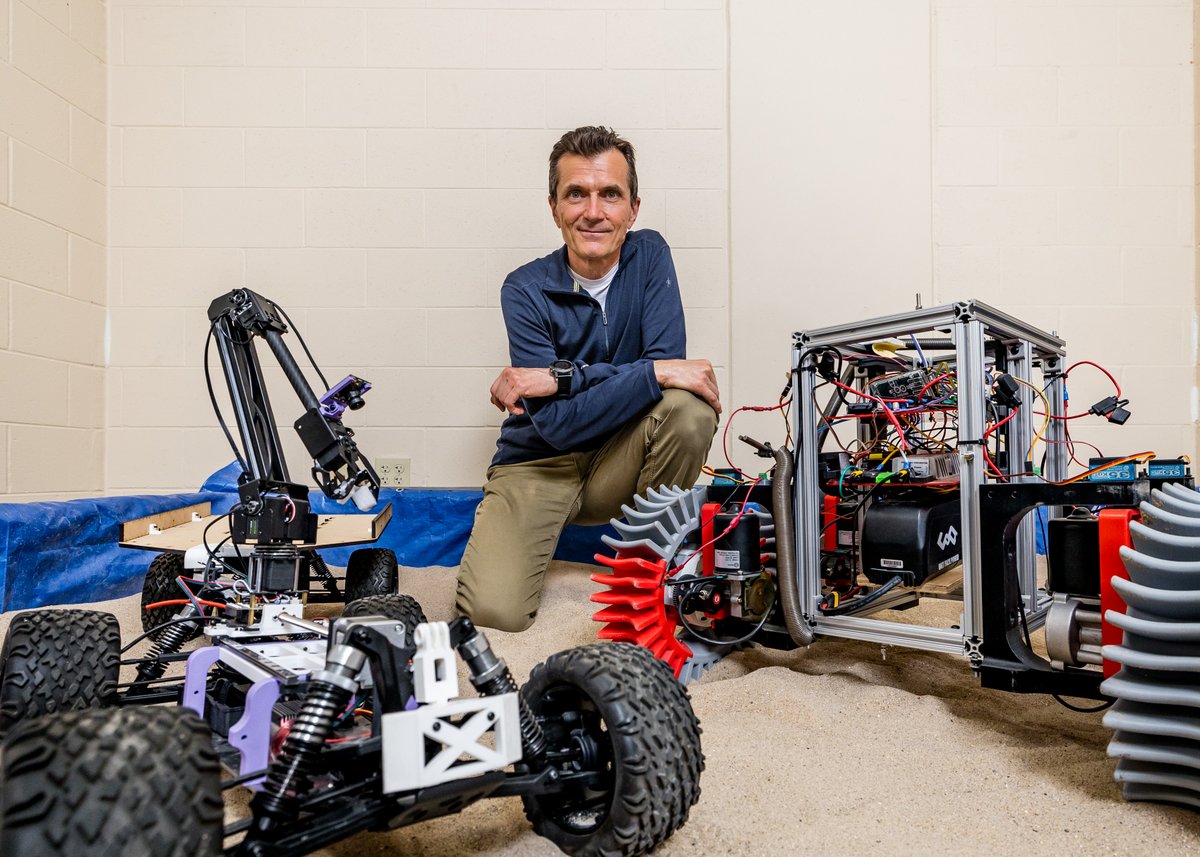
Using computer simulations, #UWMadison mechanical engineers have uncovered why robotic space rovers keep getting stuck. Their research tracks how a rover will traverse extraterrestrial surfaces in low gravity to prevent it from faltering.
Learn more: https://t.co/3pyG770rDM
Using artificial intelligence methods applied to satellite data, #UWMadison researchers have found that the world’s most strongly protected marine protected areas had little-to-no industrial fishing activity.
https://t.co/rzw9cxehJS
Thanks to a cutting-edge clinical trial supported by federally funded research at #UWMadison, transplant patients like Shawn Wiederhoeft and Barb Okey are returning to healthy lives without the need for anti-rejection medications.
https://t.co/lrBhAbiFHe