Our paper in Science is out! @Sour_Agrawal, @xiuhua_linwisc, @viveksusvirkar, and the rest of the team show human RPA is a telomerase processivity factor essential for telomere maintenance. This reshapes our thinking about telomerase regulation. https://t.co/qqIfPy0CNF
New in @NatStructMolBio! 🧬 We screened 730 RNA-binding proteins and found 281 that control circular RNAs, from how they’re made to how much protein they produce. Thanks to our collaborators at MSK, Columbia, and UCSD, and to my amazing lab, led by Tao Yu https://t.co/oVqkZ25hUp
We're hiring! The Biochemistry Dept is looking for a professor at any level to join our creative community. Candidates in all biochemistry areas will be considered. Apply by Oct. 15: https://t.co/FPjWCTZDLH
Join us on Aug. 4 for Bianca Chavez's PhD thesis defense! @_biancachavez's research in the @cijilim Lab examined how telomere loops help to protect telomeres from degradation. Learn more: https://t.co/pktCfGqxFi
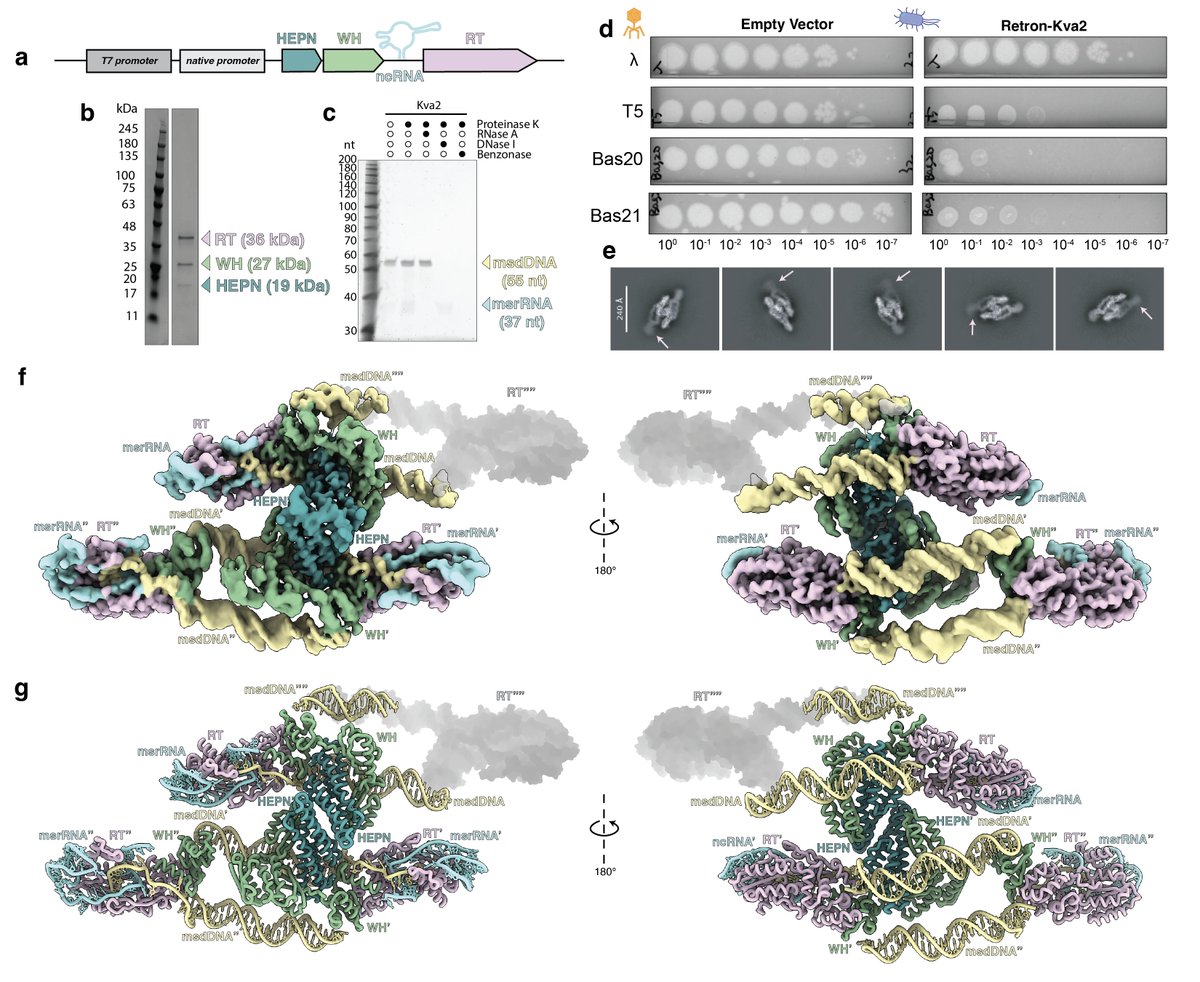
Thrilled to share our collab with @GraceHibshman and the Shipman lab! Type IX retron-Kva2 structure reveals phage detection via an HTH fold, not a primary sequence. We computationally designed triggers that program bacteria cell death, pointing toward designer antimicrobials.
For biologists using Claude Science, here is Motif, an AI-native molecular biology workbench plugin. Now, you don't need to leave Claude Science to view and operate on your sequences.
Motif gives the full power of Claude to your upstream mol bio workflows, such as asking Claude to: 1) fetch the genes in a target pathway and annotate them, 2) perform and view multiple sequence alignments using your preferred alignment tool, 3) design and label CRISPR-Cas guide sequences, and much more.
Motif was built as part of the "Built with Claude: Life Sciences" hackathon, and is an MIT-licensed, open source plugin.
Also, Claude made this demo video using HeyGen's Hyperframes and Elevenlabs TTS.
EMBO Workshop
Cellular and systems mechanisms of memory in health and disease
27 – 30 April 2027 | Singapore
https://t.co/HfdKCQSIa7
(cover image taken by Francesca Teo, UROPS student from our lab!)
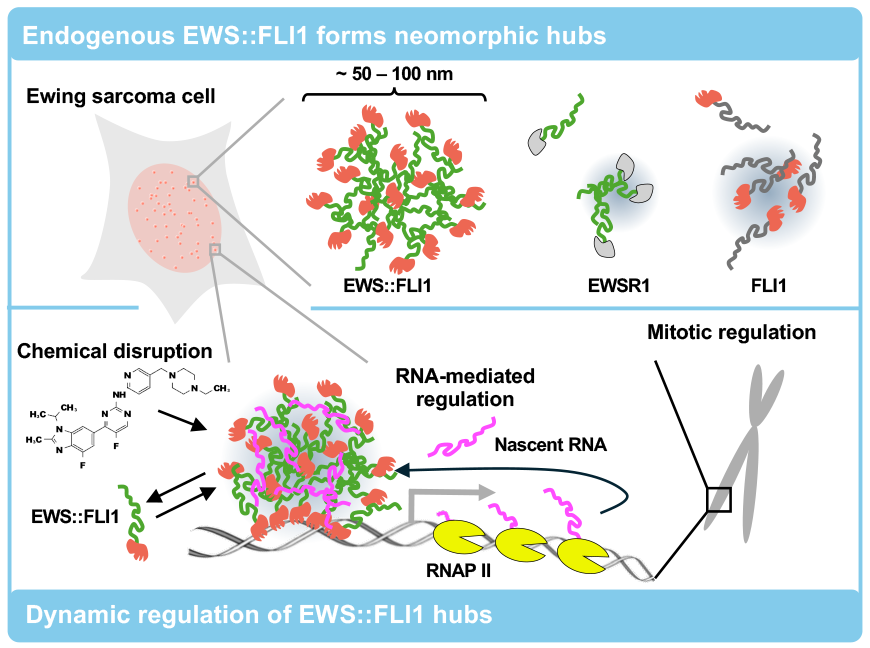
(1/5) Excited to share our new paper published in Advanced Science! We combined genome editing, super-resolution microscopy, and single-molecule tracking to investigate the endogenous oncogenic fusion transcription factor EWS::FLI1 in Ewing sarcoma cells. https://t.co/5yoaO99CNR
New paper from the #DasGuptaLab!
Using directed evolution, we discovered RNA enzymes (ribozymes) that catalyze RNA ligation with absolute specificity for RNA sequences terminating in a 3′-phosphate - a molecular signature of broken RNAs.
Kaitlyn continues to break barriers with her innovations for using LEA proteins to solve another major cryo-EM sample prep issue! This work should be of great interest to friends who are struggling with particle orientation bias. Another funtastic Lim X Grant collaboration!
1/5: Our latest preprint is out!
We show that LEA proteins can diversify particle orientations in cryo-EM, helping to overcome preferred orientation at the air-water interface (AWI).
https://t.co/iTVnftkoIZ
with @cijilim and @GrantCryoEMLab#CryoEM#LEAproteins
Research update: Distinct #RNA engagements define genome import (with the help of nsP2 #helicase) and replication elongation (of course by nsP4 #RNA#polymerase) in #alphaviruses#chikungunya
https://t.co/Zaj4rcSlZD
New work from Tahirov x Lim collaboration! @QixiangHe from my lab contributed the cryo-EM structures for this work. We are excited to help explain how anti-HSV drugs work and to guide their future development.
https://t.co/WSvcRpPn9E
@unmc@UWBiochem
On a gruelling hunt for rare associated molecules in your #cryoEM particle stack and not sure where to look?
Discover practical tips and tricks in our new case study using #CryoSPARC v4.7.1 where we find and refine a low-population interaction partner!
https://t.co/O38hK0KmjZ