Lucky to have seen some beautiful noctilucent clouds last night (3am, approx. 2 hrs before sunrise, 51.9N). BTW, the bright star in the right third of the image is Capella in Auriga (The Charioteer). @NLCalerts#NLC
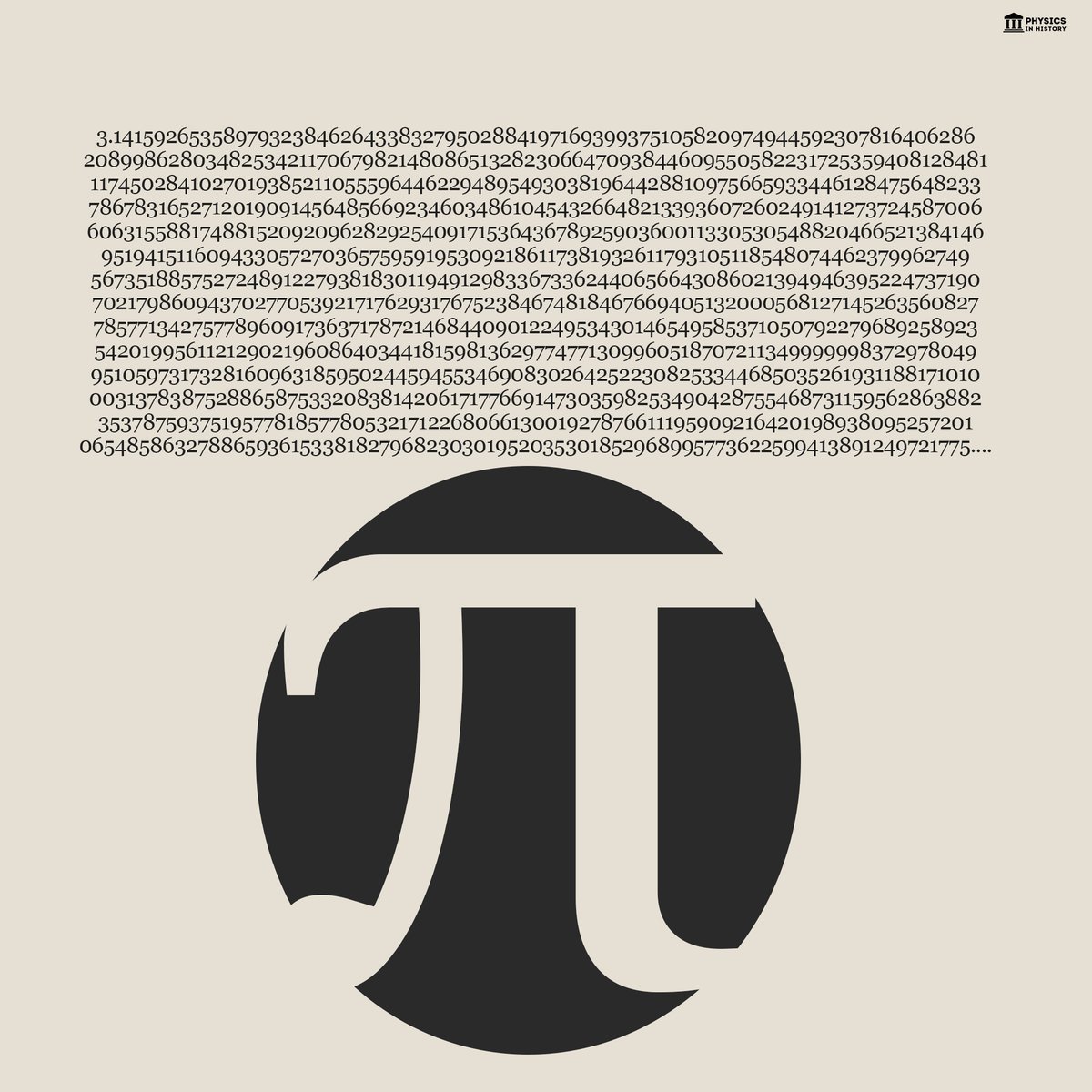
In Aug 2021,The University of Applied Sciences of the Grisons calculated π to 62,831,853,071,796 digits, adding 12.8 trillion new digits to the previous record. They used a high-performance computer with one terabyte of RAM and 510 terabytes of disk space. The calculation took 108 days and 9 hours to complete.
In March 2019 Iwao Emma Haruka from @Google cloud computing calculated the value of π to 31,415,926,535,897 digits using a program called y-cruncher. She then set the world record in 2022 by calculating up to 100 trillion digits of π.
The history of the computation of π is a long and fascinating one, dating back to ancient times. π is the ratio of the circumference of a circle to its diameter, and it is an irrational number, meaning that it cannot be expressed as a fraction of two integers. It is also a transcendental number, meaning that it cannot be the solution of any polynomial equation with rational coefficients.
Some of the earliest approximations of π were made by the ancient Babylonians, Egyptians, Sumerians, and Chinese, who used various methods to estimate the area or circumference of a circle. They obtained values ranging from 3 to 3.16. The first rigorous calculation of pi was done by Archimedes of Syracuse (287–212 BC), one of the greatest mathematicians of the ancient world. He used a method called exhaustion, which involved inscribing and circumscribing regular polygons around a circle and calculating their perimeters.
Many other mathematicians and scientists contributed to the computation of π over the centuries, using different techniques such as infinite series, continued fractions, arithmetic-geometric means, and Monte Carlo methods. Some notable names include Zu Chongzhi (429–501), who calculated pi to seven decimal places; François Viète (1540–1603), who derived an infinite product formula for pi; John Machin (1680–1751), who computed pi to 100 decimal places; Srinivasa Ramanujan (1887–1920), who discovered many rapidly converging series for pi; and John Wrench (1913–1990), who computed pi to one million decimal places using a desk calculator.
Today, computers have enabled the computation of π to trillions of digits, using algorithms such as the Chudnovsky algorithm, the Bailey–Borwein–Plouffe formula, and the y-cruncher program. These calculations are mainly done for testing the performance and reliability of computers, as well as for setting world records. However, for most practical purposes, only a few digits of π are sufficient.
@AustPlantPhenom@frederike_stock@scienceANU Hm, phenotyping Xmas trees. The results could soon become very topical again. But somehow the Xmas balls are missing, aren’t they? That will probably come in the next project phase. 😉
JOIN OUR TEAM! @AustPlantPhenom is seeking to recruit a Field Phenotyping Manager to establish a coordinated network of novel field phenotyping infrastructure across Australia. Find out more here https://t.co/DznX1cXgmp
Hiring a Mechatronics Engineer.
Excellent opportunity for PostDocs and PhD Students. Know anyone who might be interested? Get more information here: https://t.co/E9h2hAXaNm
#ScienceJobs
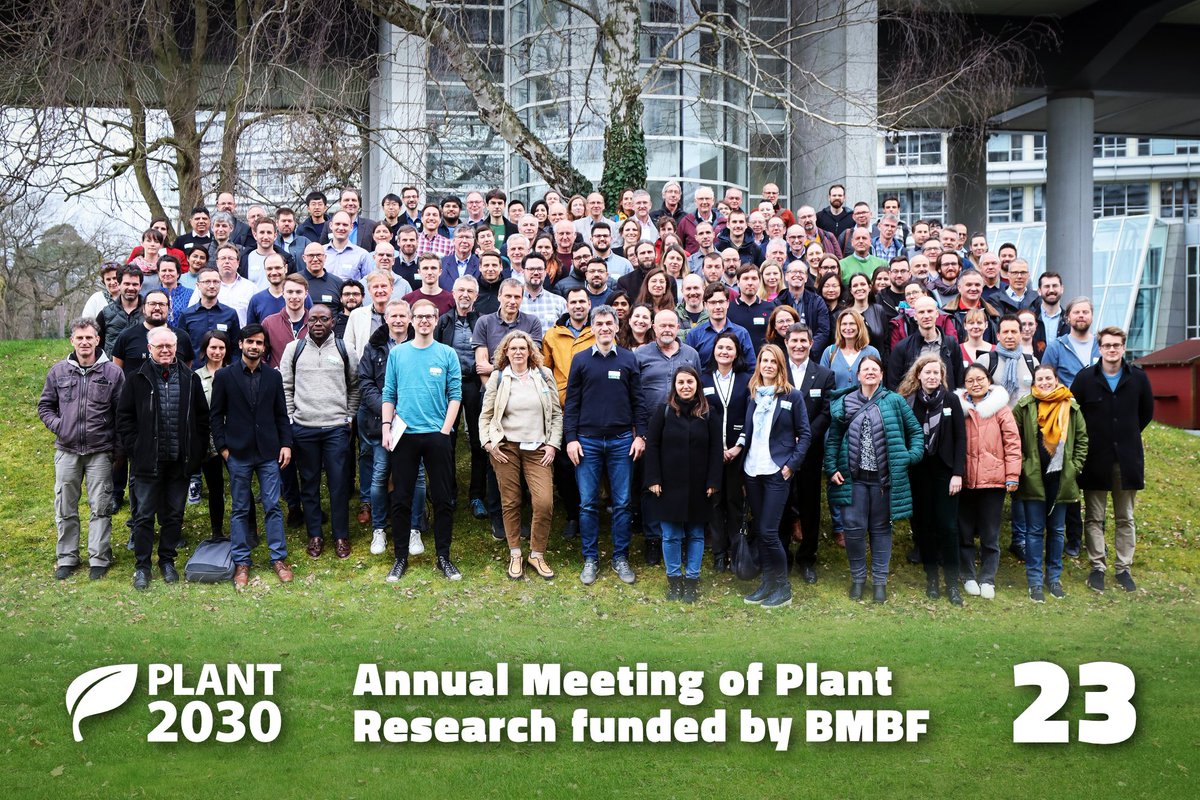
It was just wonderful to meeting colleagues and friends of the German crop plant research community at the annual convention in Potsdam. Thank you to @PLANT2030 for organising a great event. @Die_Blattmacher@Pflanzenwissen
APPF JOB ALERT! We have an awesome position available - Technology & Development Lead. Based at the @AgrifoodUoA you will be working on enhancing infrastructure such as drones, growth chambers & phenotyping. It’s cool tech stuff. Click here to apply: https://t.co/KJENjGzuHy
Safe travels & see you soon @UdoSeiffert! Prof Seiffert's been working with us to develop mobile sensor tech to assess plant nutritional (& stress) status based on biochemical composition. Using hyperspec & multispec measurements allows non-invasive, real-time info👍@_COMPOLYTICS
It’s so nice to be back on this beautiful Adelaide campus and to see all the familiar colleagues and meet some new ones. Thanks for hosting me again!
@waiteresearch@AustPlantPhenom
From hyperspectral to multispectral sensing – from simulation to reality: A comprehensive approach for…
Happy to share our new paper published at the European Symposium on Artificial Neural Networks in Belgium last week.
@HammerLabML @Fraunhofer_IFF
https://t.co/V7UJUGQVow
@_COMPOLYTICS And I got plants to decorate my office? Hardly. To calibrate and test the sensor for maize, of course. This work is done now. Let's see how long the poor plants will last as decoration under my care. #houseplant#indoorgardening
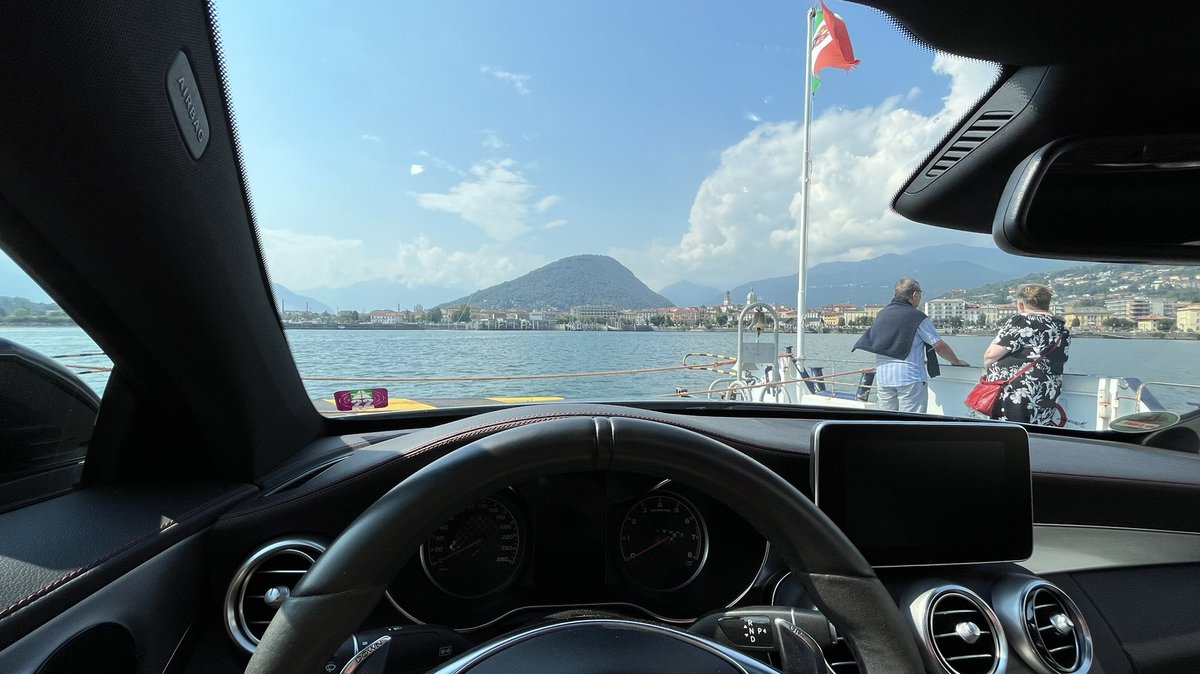
Just by chance, we had the front position on the car ferry across Lake Maggiore in Italy. As there is no front barrier, the edge is vanishing and it feels like you are driving a car across the lake. Kind of infinity ferry. Amazing!