@rangodabra@Ol0ye If you have to blame another race for your lack of development, and innovation after close to a century of them colonizationing you...
isn't that a sign of superiority?
DIRECT LINK BETWEEN POVERTY AND LITERACY/KNOWLEDGE
1. There is no country in the whole wide world with literacy level at 90% plus, that has any mass insecurity and poverty menace/issues.
2. Kicked out of the union with Mainland Malaysia, Singapore was a pariah state in 1965 with literacy level of 58-60%
3. With massive education reforms, SINGAPORE moved her literacy level speedily..and by 2005, [ 40 years after] had moved their literacy level to 95%/97%, and joined the league of first world countries..[they are way higher in all the HDIs, than the mainland Malaysians that kicked them out in 1965.
4. China did same thing ...they embarked on massive education reforms.. and moved literacy level there from 65% in 1980 to 93% in 2005, and 97% in 2020
They were also able to lift 765million people out of the poverty region within the same periods
6. The top 15 most industrialised, peaceful and secured countries in the whole world have literacy levels at above 85%
7. The bottom 10 highly indebted, most insecure , poverty stricken and troubled countries in the whole world have low/average literacy levels...
8. We must urgently amend the Nigeria Constitution and fiscal frameworks, to make it unavoidable compulsory for us to spend 30% [N3 out of every N10] borrowed or generated in this country, across all the tiers of Governments on Education..
NO PRAYERS , MIRACLES, CONSTRUCTION/COMMISSIONING OF SUPERHIGHWAYS, FLYOVERS, AND COASTAL ROADS WITHOUT FIXING THE KNOWLEDGE FOUNDATIONS OF NIGERIA FROM THE GRASSROOTS CAN FIX THIS LAND
The attached pics is alleged to be from a public school [ LEA Primary School, Kwaku (Kuje Area Council), Abuja ...within the FCT, a land being administered by loquacious drunken sailors/ road builders.
The tens of millions periodically wasted to invite Channels TV and Arise TV for live shows of road commissioning [ roads whose actual costs are allegedly usually over inflated by over 300% ] , would have been enough to build/construct 300 to 500 brand new desks in this school.
Shame of a nation
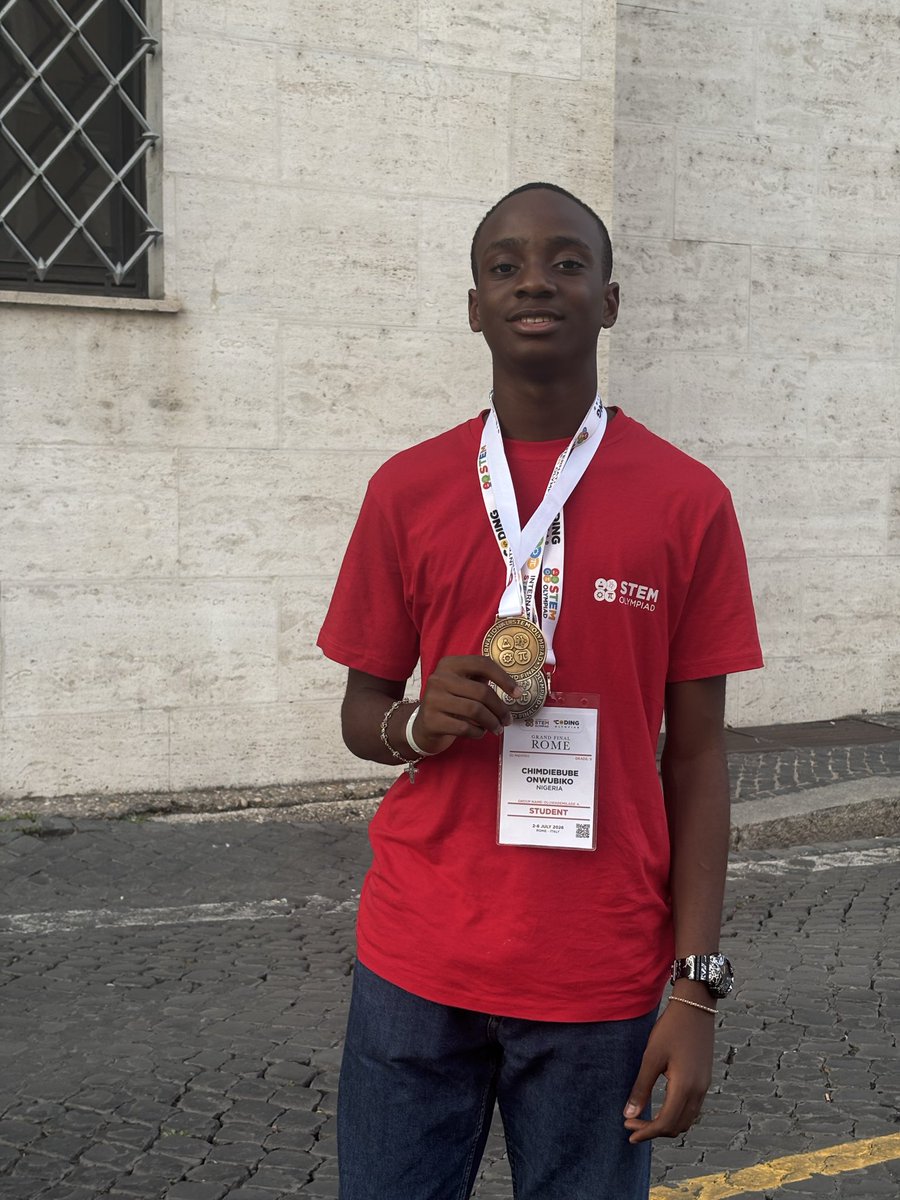
Chimdiebube Onwubiko won a gold medal at the International STEM Olympiad.
He is just 13 years old and currently in JSS3. He has finished _Engineering Mathematics_ by K.A. Stroud.
He has now proven himself on the world stage.
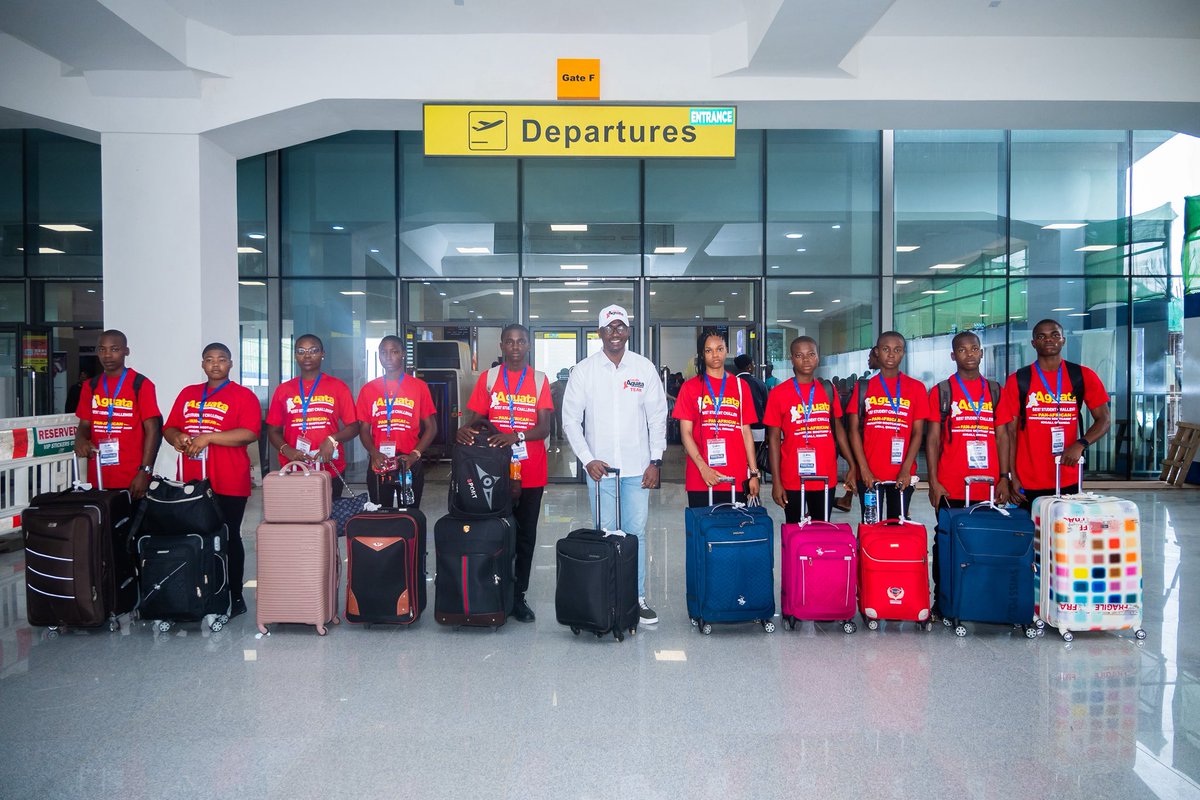
Earlier today, our Aguata champions were engaged in an immersion session, introducing them to the limitless world of possibilities through technology, and how they can become global citizens even from their rural schools in Aguata LGA.
At the 2026 Pan-African Innovation Boot Camp holding in the prestigious Ntare Louiselund International School, Kigali, our champions are sharing learning rooms with students from different countries, and as such, widening their world views.
They are no longer just finalists of our 2026 Aguata Best Student Challenge. Our focus is for them to see beyond Aguata local government area of Anambra State, Nigeria.
A step at a time, we will transform as many of our young people as possible.
Impossibility is Nothing.
@buezeofobuike Impressive! Let's keep the pace going.
I believe many of these kids will become a global talent in 10 years. My only concern is losing them to Lagos, Europe, and America due to a lack of infrastructural developments.
This is where we need to hold our SE governors accountable.
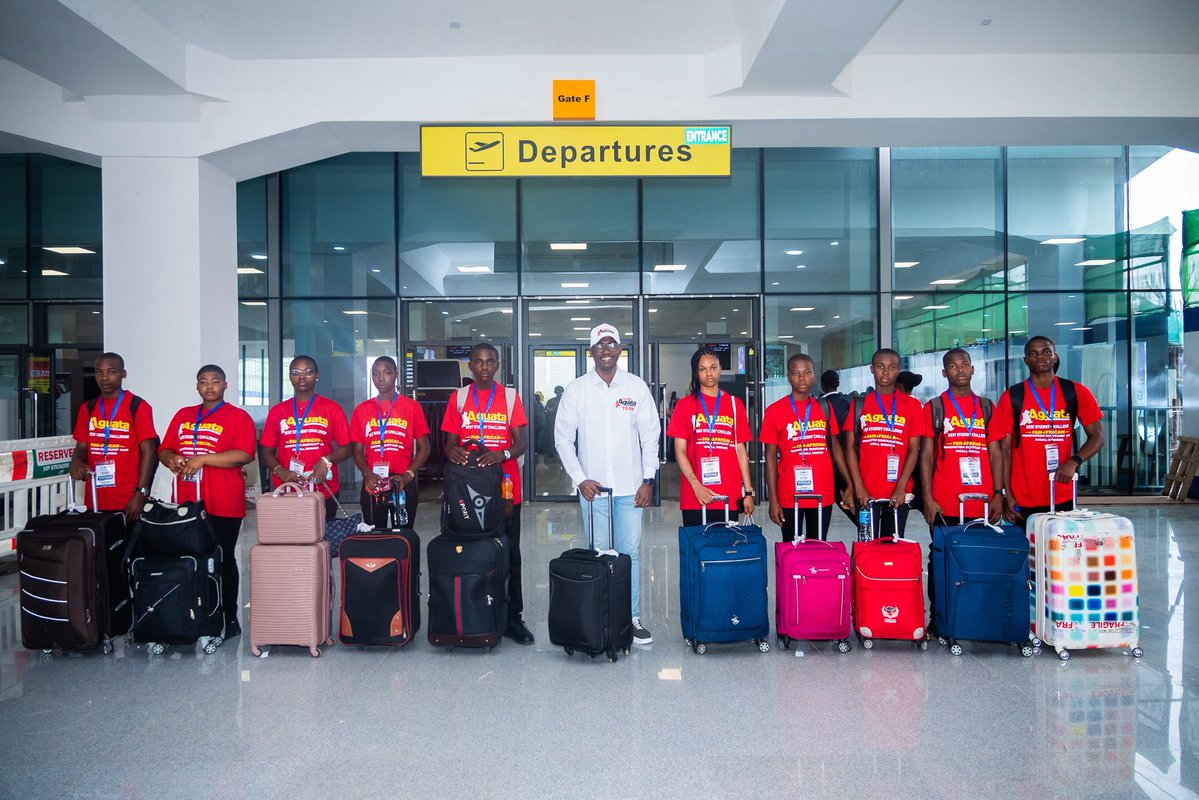
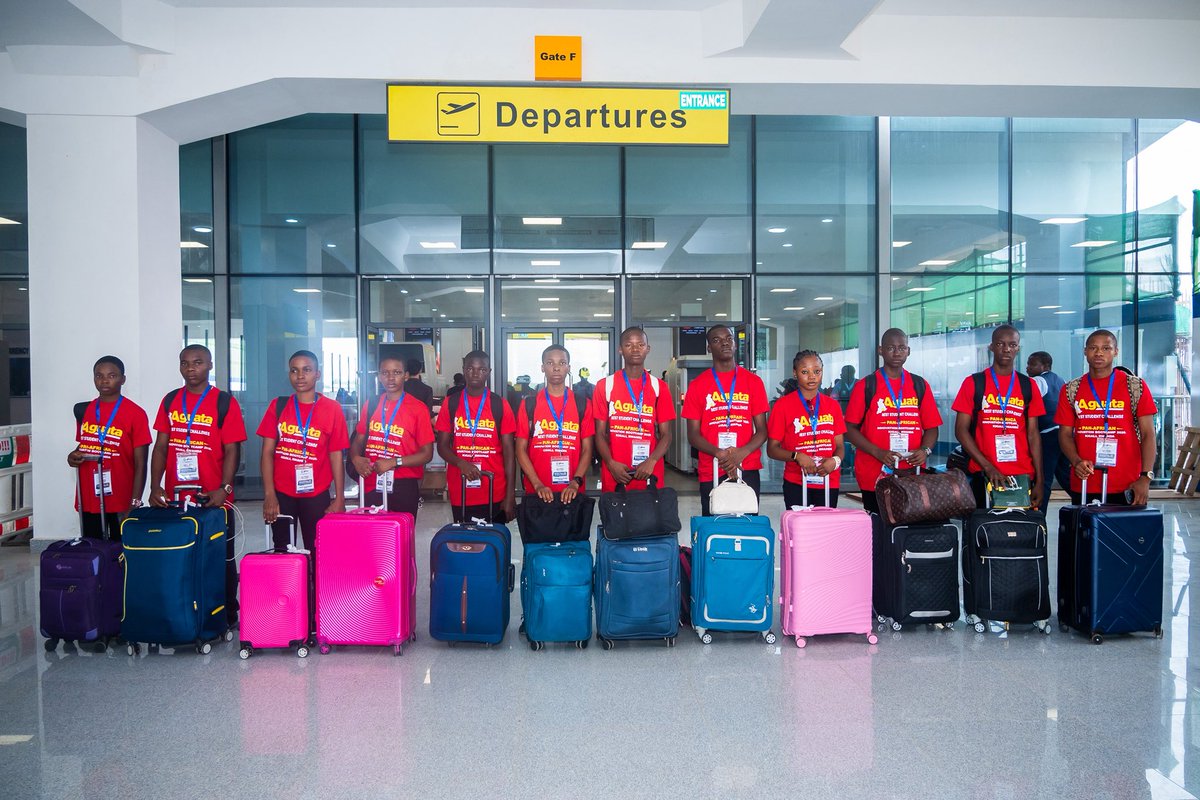
I am excited to share that the 2026 finalists of the Aguata Best Students Challenge are departing Lagos, Nigeria, to Kigali, Rwanda, for the purpose of engaging in a life-changing edhcational trip.
The twenty high-flying students will be joining numerous others from different parts of the world to participate in the 2026 Pan-African Boot Camp, holding in the Ntare Louiselund International School, Kigali, Rwanda
At the Boot Camp, our champions will be exposed to activities in the areas of robotics, AI, digital storytelling, etc , - aside the international exposure and networking.
The twenty Aguata champions are:
• Ejezie Sopuruchukwu Divine — St. Peter’s Secondary School, Achina
• Ezema Chisom Esther — Community Secondary School, Akpo
• Okoye Amarachukwu Juliet — Community Secondary School, Aguluezechukwu
• Agu Chisom Stella — Marius Scholar Secondary School, Uga
• Uduji Chioma Treasure — First Hill Secondary School, Ekwulobia
• Ejikeme-Eze Barnabas Kenechukwu — Christ the King Secondary School, Igbo-Ukwu
• Anumudu Eberechukwu Mary-Cynthia — Holy Name Secondary School, Umuchu
• Onuorah Onyedikachi Micheal — St. Anthony’s Secondary School, Ikenga
• Moses Vivian Chinyere — Urban Girls Secondary School, Ekwulobia
• Ejemeni Chinecherem Happiness — Mother of Christ Secondary School, Ezinifite
• Orazulume Chibueze Kingsley — Community Boys Secondary School, Igbo-Ukwu
• Agu Makuochukwu Karen — Holy Child Secondary School, Isuofia
• Dominic Chijindu Divine — Immanuel Model Secondary School, Nkpologwu
14. Okafor Chinemerem Blessing — Community Secondary School, Ora-Eri
• Uzozie Chikamso Rita — Holy Family Secondary School, Igbo-Ukwu
• Onyemaeze Chigozie Divine — St. Augustine Secondary School, Uga
• Okpara Onyekachi Johnson — All Saint’s Seminary, Ekwulobia
• Obinna Goodluck Obinna — Uga Boys Secondary School, Uga
• Okechukwu Onyinyechi Gift — Community Secondary School, Umuchu
• Ezeokeke Ugonna Kingsley — Aguata High School, Aguata
Without doubt, the trip and the boot camp experiences will shape the lives of our amazing and hard-working champions and as well place them on pedestals for greater accomplishments in the future.
Great thanks to our sponsors for providing all the necessary - particularly financial - support needed for impacting in the lives of our amazing students.
Big congratulations to our stars.
In Aguata LGA, Impossibility is Nothing.
@buezeofobuike Impressive! Let's keep the pace going.
I believe many of these kids will become a global talent in 10 years. My only concern is losing them to Lagos, Europe, and America due to a lack of infrastructural developments.
This is where we need to hold our SE governors accountable.
I took the boys and teachers to the Italian Parliament building in Rome, which is equivalent to the National Assembly in Nigeria.
The boys asked why everyone was walking freely and why the police were being so nice to us.
I told them that what you see in Nigerian government offices is Third World behavior.
If you’re leading your people well, nobody will want to kill you.
@Ssaasquatch If the war restarts the next hour and crude oil jumps from the current $71 to $80 or $85, I can guarantee you that they will increase pump price within 24 hours.
Swift in increasing price to justify market value but very slow in reducing price to justify market value.
A Japanese immunologist spent 20 years proving that the chemicals trees release into the air walk into your bloodstream, hunt down your stress hormones, and arm your immune system in ways no therapist or pharmaceutical has ever matched, and most of the data has been sitting in Japanese medical journals for two decades waiting to be translated.
His name is Qing Li.
He is a clinical professor at Nippon Medical School in Tokyo and the president of the Japanese Society of Forest Medicine. The Japanese government has been funding his research since 2004, and the body of work he has produced is the reason forest bathing is now an officially prescribed clinical therapy in Japan and Korea.
The story actually starts in 1982, when the Japanese Ministry of Agriculture, Forestry and Fisheries coined the term shinrin-yoku to describe the practice of slow, mindful walking in a forest. They did it for a practical reason.
Japan was urbanizing fast, stress-related illness was climbing, and the country had thousands of square kilometers of forest sitting unused. The idea was to give people a reason to walk into the trees... They had no idea what was actually happening to the human body during those walks until Qing Li ran the first proper experiment in 2005.
He took twelve healthy adult men on a three-day, two-night trip to a forest park. They walked for a few hours each day. Nothing strenuous. No prescribed routes or breathing exercises. They simply walked slowly through the trees, breathing the air, looking at the forest.
Li drew blood and urine samples before the trip, on the second day, on the third day, on day seven after returning home, and again on day thirty.
The numbers that came back from the lab were not what anyone expected.
The activity of a specific type of immune cell called the natural killer cell, which is the cell your body uses to hunt down cancer cells and virus-infected cells before they can spread, had jumped by roughly 50 percent during the forest trip. The actual number of natural killer cells circulating in the bloodstream had increased significantly.
Three different anti-cancer proteins that those cells produce, called perforin, granzymes, and granulysin, had all risen sharply. And the effect did not disappear when the men went home. The immune boost was still measurable on day seven and was still partially present on day thirty.
Two hours a day in a forest had upgraded the immune system for a full month.
Li ran the same experiment with women a year later and found nearly identical results. Then he ran it with a control group who took a three-day trip through an urban area with the same amount of walking, the same hotel quality, and the same diet.
The urban group showed no measurable change in natural killer cell activity at all. The forest was doing the work, not the vacation.
The mechanism turned out to be a class of airborne molecules called phytoncides. Trees produce these compounds to defend themselves against insects, bacteria, and fungi. Pine, cedar, oak, and cypress trees release them in particularly large amounts, especially in warmer weather and after rainfall.
When you walk through a forest, you are inhaling those molecules into your lungs and absorbing them through your skin, and once inside your body they appear to directly stimulate the production and activity of the very immune cells Li was measuring in his lab.
Roughly 50 percent of the health benefit of a forest walk, according to Li's data, comes from the chemistry of the air itself. The other half comes from what the forest is doing to your nervous system.
This is where it stops being only about the immune system and starts being about stress.
A separate Japanese research team measured cortisol, the body's main stress hormone, in 84 participants across 35 different forest sites. They drew samples before and after a 30-minute walk in each forest and compared them to control walks in matched urban environments. The cortisol levels of the people who walked in the forest were lower than the cortisol levels of the people who walked in the city by a significant margin. Their heart rates were lower. Their blood pressure was lower.
The activity of their parasympathetic nervous system, which is the part responsible for rest and recovery, had gone up. The activity of their sympathetic nervous system, which is the part that drives fight or flight, had gone down.
Then a researcher at the University of Michigan named MaryCarol Hunter ran the cleanest version of this experiment ever done. She recruited participants from a city and told them to take a nature pill three times a week for eight weeks.
They were free to choose the time, the place, and the duration of the nature experience, as long as it was outside, in daylight, and free of phones, conversations, and aerobic exercise. They sent her saliva samples before and after each session so she could measure cortisol changes accurately and rule out the normal daily drop in stress hormones that happens to everyone.
The result was that participants experienced a 21.3 percent drop in cortisol per hour spent in nature, with the biggest payoff happening between minutes 20 and 30 of the walk.
After that, the cortisol kept dropping, but more slowly. The threshold dose for measurable stress relief was just 20 minutes outside in something that looked and felt like nature.
What none of this means is that nature is a substitute for therapy or for medication when someone genuinely needs them. Therapy treats different things than a walk does, and Li himself has been careful in interviews to call forest bathing a complementary intervention rather than a replacement for clinical care.
But what the research has settled is that the human body has a physiological response to being among trees that operates on the same biological systems modern medicine is trying to reach with drugs and clinical protocols, and that response is fast, measurable, and free.
The strangest part of Li's work is the implication he keeps repeating in interviews. The average person now spends more than 90 percent of their life indoors. Their cortisol stays elevated. Their natural killer cells stay sluggish.
Their parasympathetic nervous system rarely gets a chance to take over. The system that was tuned by millions of years of life under a canopy of trees is being asked to run permanently inside a box made of drywall and screens.
Your body has not forgotten what it is supposed to do in a forest. It is waiting for you to walk into one.
If you genuinely believe a company is worth far less than the market thinks, then you should profit from that belief by shorting the company rather than criticizing and discouraging people not to invest in the company.






![emekabk21's tweet photo. DIRECT LINK BETWEEN POVERTY AND LITERACY/KNOWLEDGE
1. There is no country in the whole wide world with literacy level at 90% plus, that has any mass insecurity and poverty menace/issues.
2. Kicked out of the union with Mainland Malaysia, Singapore was a pariah state in 1965 with literacy level of 58-60%
3. With massive education reforms, SINGAPORE moved her literacy level speedily..and by 2005, [ 40 years after] had moved their literacy level to 95%/97%, and joined the league of first world countries..[they are way higher in all the HDIs, than the mainland Malaysians that kicked them out in 1965.
4. China did same thing ...they embarked on massive education reforms.. and moved literacy level there from 65% in 1980 to 93% in 2005, and 97% in 2020
They were also able to lift 765million people out of the poverty region within the same periods
6. The top 15 most industrialised, peaceful and secured countries in the whole world have literacy levels at above 85%
7. The bottom 10 highly indebted, most insecure , poverty stricken and troubled countries in the whole world have low/average literacy levels...
8. We must urgently amend the Nigeria Constitution and fiscal frameworks, to make it unavoidable compulsory for us to spend 30% [N3 out of every N10] borrowed or generated in this country, across all the tiers of Governments on Education..
NO PRAYERS , MIRACLES, CONSTRUCTION/COMMISSIONING OF SUPERHIGHWAYS, FLYOVERS, AND COASTAL ROADS WITHOUT FIXING THE KNOWLEDGE FOUNDATIONS OF NIGERIA FROM THE GRASSROOTS CAN FIX THIS LAND
The attached pics is alleged to be from a public school [ LEA Primary School, Kwaku (Kuje Area Council), Abuja ...within the FCT, a land being administered by loquacious drunken sailors/ road builders.
The tens of millions periodically wasted to invite Channels TV and Arise TV for live shows of road commissioning [ roads whose actual costs are allegedly usually over inflated by over 300% ] , would have been enough to build/construct 300 to 500 brand new desks in this school.
Shame of a nation](https://pbs.twimg.com/media/HMrxeo9W8AAYTWq.jpg)