Consolidated 🧵 of all the youth lacrosse practice upgrades I share — I’ve noticed a ton of bookmarks so I wanted to get them all in one place.
I’ll periodically update with any new posts.
You can both adjust these principles to great success at the HS & NCAA levels and/or extrapolate these ideas to other sports (many of the ideas have been inspired from beyond lacrosse).
As we turn to the summer circuit, we want to share some lacrosse-specific advice for 𝗱𝗲𝗳𝗲𝗻𝗱𝗲𝗿𝘀.
These skills are controllable and attainable.
Breaking down four defensive skills for players to prioritize this summer in today's "𝗪𝗲𝗲𝗸𝗹𝘆 𝗧𝗵𝗼𝘂𝗴𝗵𝘁" 🧵👇
PRINCIPLES IN ACTION featuring Boston Cannons
📑 Looking To Become A Principles Based Offense? 👇
▫️Attack The Mismatch (Trigger)
▫️Draw 2 ➡️ Move It ➡️ Dominos
▫️Don’t Let 1 Cover 2 (w/ Magnetic Cut 🧲)
▫️Fireball: Keep It Hot In Dominos 🔥 (3 Second Rule)
This is a great example of using analytics to inform your principles of play. As you can see, the longer it is in the shot clock, the lower the field goal percentage.
As a coach, you have to ask yourself, “How do I slow the other team down?” And one of the ways you can do this is by tagging up on a shot attempt.
Tagging up: offensive players will crash the glass by “tagging” the player closest to them. This allows the offense, which is going to defense, to match up already.
This slows down transition offenses by “choking” the ball and making it more difficult for players to throw outlet passes. It will also slow the other team’s offense down if they rely on one player to initiate their offense.
🎥/🎬: @NBA
"The things we talk about most relative to 𝙥𝙧𝙞𝙣𝙘𝙞𝙥𝙡𝙚𝙨 show up in whatever schemes we run." ✅
Princeton offensive coordinator Jim Mitchell on why starting with principles allows offensive creativity & variability.
@TigerLacrosse@CoachMitchLax
Full podcast 🎙️👇
What is a high press in football?
Most people think it’s just:
• Running a lot
• Closing defenders down
But that’s not pressing, that’s chaos.
A real high press is a coordinated tactical system 🧵
Ideally, you should be able to explain your practice activities in 30 seconds or less. This is one of Mike MacKay’s concepts; “the rule of 30.” Learn more in this blog...
https://t.co/S7luFXqYD2
Every offensive coordinator knows the deal. We’re in the back half the season, so we know people are looking for new 𝗘𝗠𝗢 𝗹𝗼𝗼𝗸𝘀.
We've got you covered 🤝
Breaking down five looks from college teams in our latest "𝗖𝗼𝗮𝗰𝗵𝗲𝘀 𝗖𝗼𝗿𝗻𝗲𝗿" newsletter 🧵👇
A powerful reminder from Scott Hackett-Dalgliesh of @rpimlax that real growth comes from the questions you’re willing to ask.
Not everything has to be complex to be effective. Sometimes the edge is in doing the basics, but better, longer and more intentionally.
The best coaches challenge their thinking:
➡️ How can we be more efficient?
➡️ What’s frustrating us, and why?
➡️ Are we training habits we actually want to see in games?
What you emphasize in practice eventually shows up under pressure. So keep it simple, stay intentional, and question everything.
Do. Your. Research.
I’ve been talking job search with a lot of ADs as part of our big job search study (results coming soon!). The biggest mistake coaches make in the app/interview process is just not researching the school/program enough.
And that includes a lot of things…🧵
The player development pyramid is a perfect tool for structuring rotations, clarifying roles, and balancing development with winning.
Save this to try in your next game.
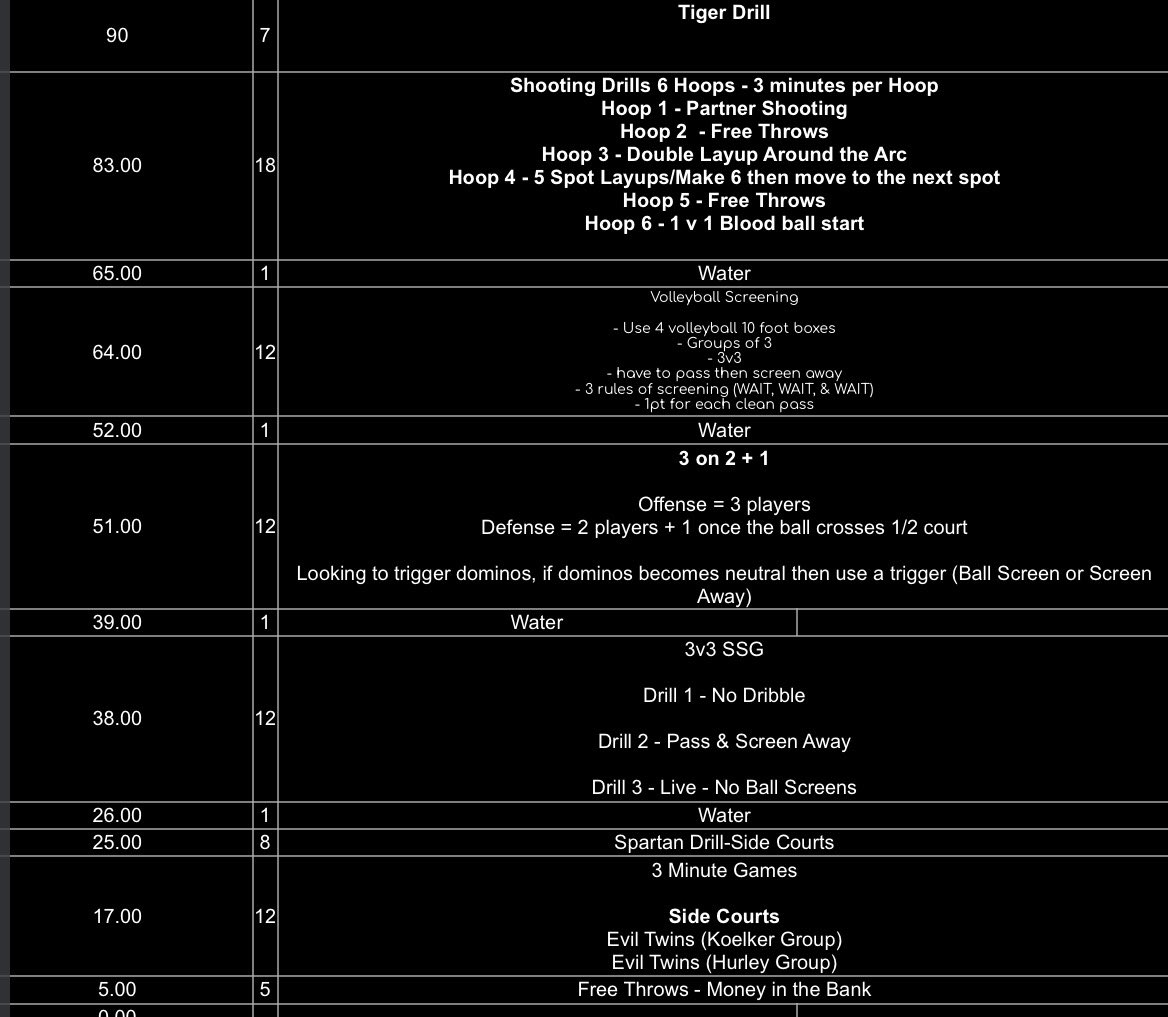
Tried something new this year. The first 20 minutes of practice we dedicated to shooting drills and 1v1 play. We had 6 different drills go at once. This allowed players to be engaged from drill to drill without being stagnant. Kids enjoyed it and did well with it.
🎯 Constraints aren’t about playing with random rules, but shaping behaviors.
We must think about what we're trying to accomplish with a constraint, and what the expected (or unexpected) consequences are!
Upgrade your youth lacrosse developmental approach towards kids that have big physical advantages relative to their peers.
Your job is to make sure this kid develops in a well-rounded, long-term focused way.
Think of the giant middle school midfielder that alley dodges through multiple kids to score a bunch of goals.
He most likely won’t be able to get away with this for much longer so how can we help him?
A non-exhaustive list of things you can do:
▪️ From an overall perspective, this is another reason why unpadded small net/tennis ball games are so valuable. Level the physicality playing field
▪️Introduce constraints that incentivize him to score in different ways without the ball in practice/games
▪️Constraints in practice & games to do things that require scanning/vision
▪️More natural side wing dodging over wrong side alley dodging
▪️Small goals in practice
▪️Have him sometimes practice with a girls stick
▪️Don’t allow him to wear cleats
▪️Do some practice activities on an unswept gym floor
What else?
In this drill, the defense is stationary and can try to steal the ball with active hands.
Offense must explode on the first step and find a straight line to the rim. If offense gets bumped off their line, their score does not count.
This constraint helps players to be more aggressive with initiating contact on drives to the rim.
@Brian_Kelly19 Small goals. It teaches shooters what a good shot looks like and requires accuracy/deception to score. I think everything builds off that.