@OddWildlife That's what makes the story so remarkable. Even after surviving the ocean, the hardest part still wasn't over. Most people would have given up long before reaching that point.
THEIR SHIP SANK IN THE MIDDLE OF ANTARCTICA... BUT NOT A SINGLE MAN WAS LEFT BEHIND.
In 1914, explorer Ernest Shackleton and a crew of 27 men set out on an expedition to cross Antarctica.
They never got the chance.
Their ship, Endurance, became trapped in thick sea ice. For months, they watched as the pressure slowly crushed the wooden ship that had been their only way home.
When it finally disappeared beneath the ice, they were left alone in one of the most unforgiving places on Earth.
With no rescue coming, the crew survived for months on drifting ice before climbing into small lifeboats in a desperate search for safety.
Shackleton then made an extraordinary journey across more than 1,300 km (800 miles) of the Southern Ocean to bring back help.
It took months.
But he came back.
Against every expectation, all 28 men survived.
More than a hundred years later, the Endurance expedition is still remembered as one of the greatest stories of leadership, resilience, and survival ever recorded.
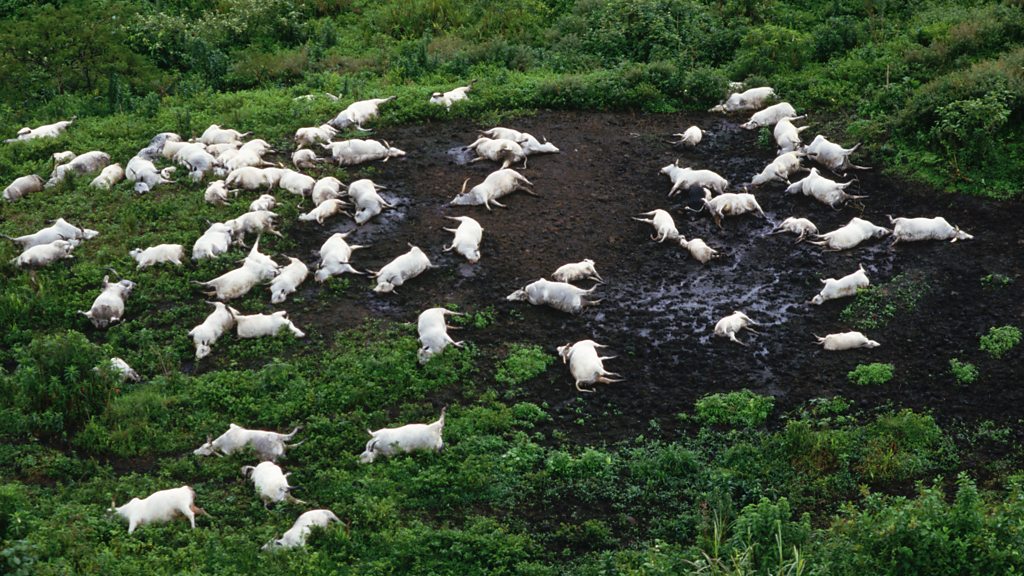
@OddWildlife That's what makes it so terrifying. Most natural disasters give people at least a chance to react. In Lake Nyos, there was nothing to see, hear, or run from.
AN ENTIRE VILLAGE WENT TO SLEEP... AND NEVER WOKE UP.
On the night of August 21, 1986, something terrifying happened at Lake Nyos in Cameroon.
Without warning, the lake released a massive cloud of carbon dioxide.
Because the gas was invisible, odorless, and heavier than air, it spread silently across nearby villages while people were asleep.
By sunrise, around 1,700 people and thousands of animals had died.
There were no explosions.
No fire.
No warning.
Scientists later discovered that carbon dioxide had built up deep beneath the lake for years before suddenly erupting to the surface in a rare event known as a limnic eruption.
It remains one of the deadliest natural disasters most people have never heard of.
@OddWildlife I know what you mean. Looking at his face, it's hard to remember you're seeing someone who lived over 2,000 years ago. It makes history feel surprisingly personal.
THIS MAN DIED OVER 2,000 YEARS AGO... AND HIS FACE STILL LOOKS ALMOST ALIVE.
In 1950, workers cutting peat in a Danish bog made an unexpected discovery.
Lying beneath the surface was the body of a man who had died more than 2,000 years earlier.
His skin, facial features, and even the stubble on his chin were astonishingly well preserved.
He became known as the Tollund Man.
Scientists believe he lived during the Iron Age and was likely hanged before being placed in the bog.
The cold, oxygen-poor water and acidic peat slowed decomposition, preserving his body in remarkable detail.
More than two millennia later, looking into his face still feels like looking at someone who simply fell asleep.
NINE HIKERS WENT INTO THESE MOUNTAINS... NONE OF THEM MADE IT BACK.
In February 1959, a group of nine experienced hikers set out to cross the Ural Mountains in the Soviet Union.
Everything went according to plan until they reached a place now known as Dyatlov Pass.
When the group failed to return, rescuers began searching the area.
What they found raised more questions than answers.
The hikers' tent had been cut open from the inside.
Footprints showed they had left in the middle of the night, some without boots, others wearing almost nothing despite temperatures below -25°C (-13°F).
The first bodies were found beneath a large cedar tree.
Months later, the remaining hikers were discovered under deep snow.
Some died from hypothermia.
Others had devastating internal injuries that puzzled investigators for decades.
More than 60 years later, the exact sequence of events that night is still debated.
Whatever happened on that mountain was terrifying enough to make nine experienced hikers abandon the only shelter they had.