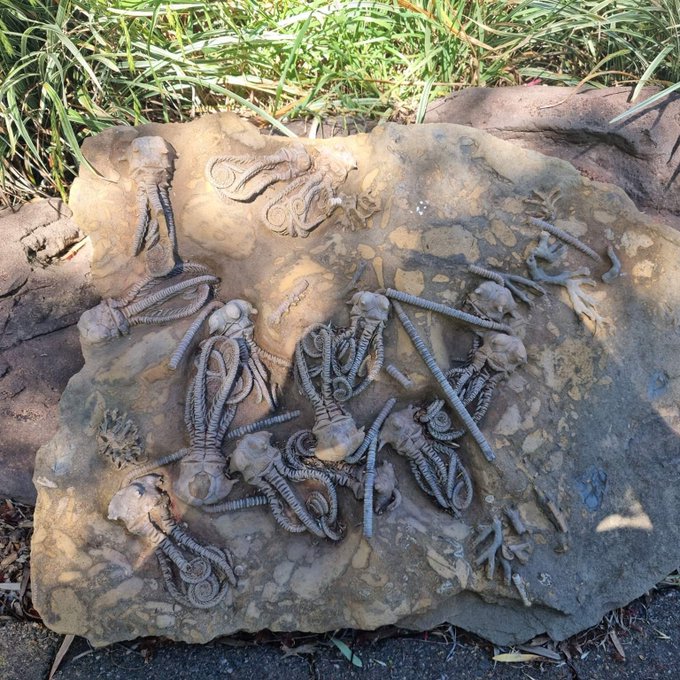
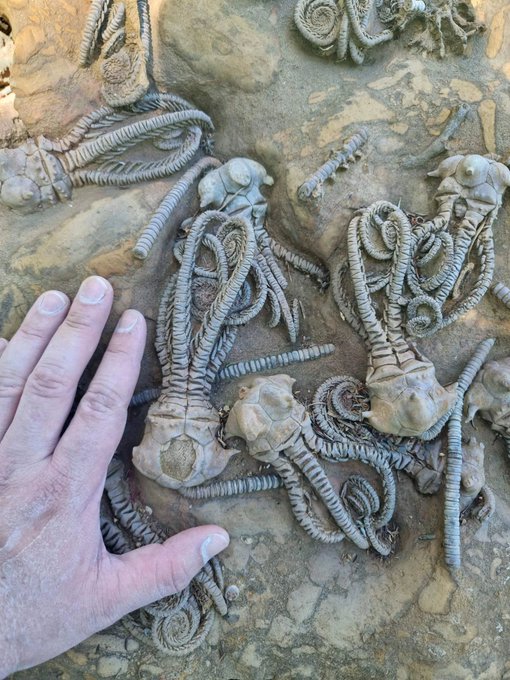
THESE 280-MILLION-YEAR-OLD FOSSILS LOOK ALIEN
These fossils belong to Jimbacrinus bostocki, an extinct marine animal that lived around 280 million years ago.
Although they resemble strange creatures from another planet, they were actually ancient relatives of today's starfish and sea urchins.
Their long, feather-like arms were used to filter tiny food particles from the ocean, while their stalks anchored them to the seafloor.
One of the most bizarre and fascinating fossils ever discovered from Earth's ancient oceans.
THIS KITTEN GOT A SECOND CHANCE TO WALK
A homemade wheelchair gave this tiny kitten a new chance at life.
Built using simple materials like rulers, clips, and Hot Wheels parts, the tiny chair helps Gelato move around while slowly rebuilding strength in his back legs.
With patience, care, and a little creativity, this little fighter is learning to walk again.
One of the most heartwarming examples of how humans can change an animal’s life.
@UncoverWithMe Exactly! Evolution is a master of adaptation. What looks simple at first can become an incredibly specialized tool for survival over millions of years.
@UncoverWithMe It's hard to imagine the mental strength it took to keep going after losing the only way home. This is one of the greatest survival stories ever told.
@OddWildlife Another wild detail is that their skin changes color with temperature. In freezing water they can look almost white as blood is drawn inward, then turn pink or reddish when they warm up on land.
@OddWildlife That’s an incredible adaptation. Nature turned a simple tongue into a highly specialized hunting tool — millions of years of evolution at work.
@UnFMtnOlcay Absolutely! The more we learn about animals, the more we realize how creative evolution can be. Every adaptation tells a story about survival.
THIS MONKEY TRANSFORMS AFTER BECOMING ALPHA
Male mandrills can physically change when they rise to the top of their social hierarchy.
When a beta male becomes the alpha, his body slowly begins to transform. His face develops brighter colors, his rump and scrotum turn a vivid blue, and his testicles grow larger.
These changes signal his dominance and help increase his chances of attracting mates.
One of the most dramatic examples of how status can reshape an animal’s body.