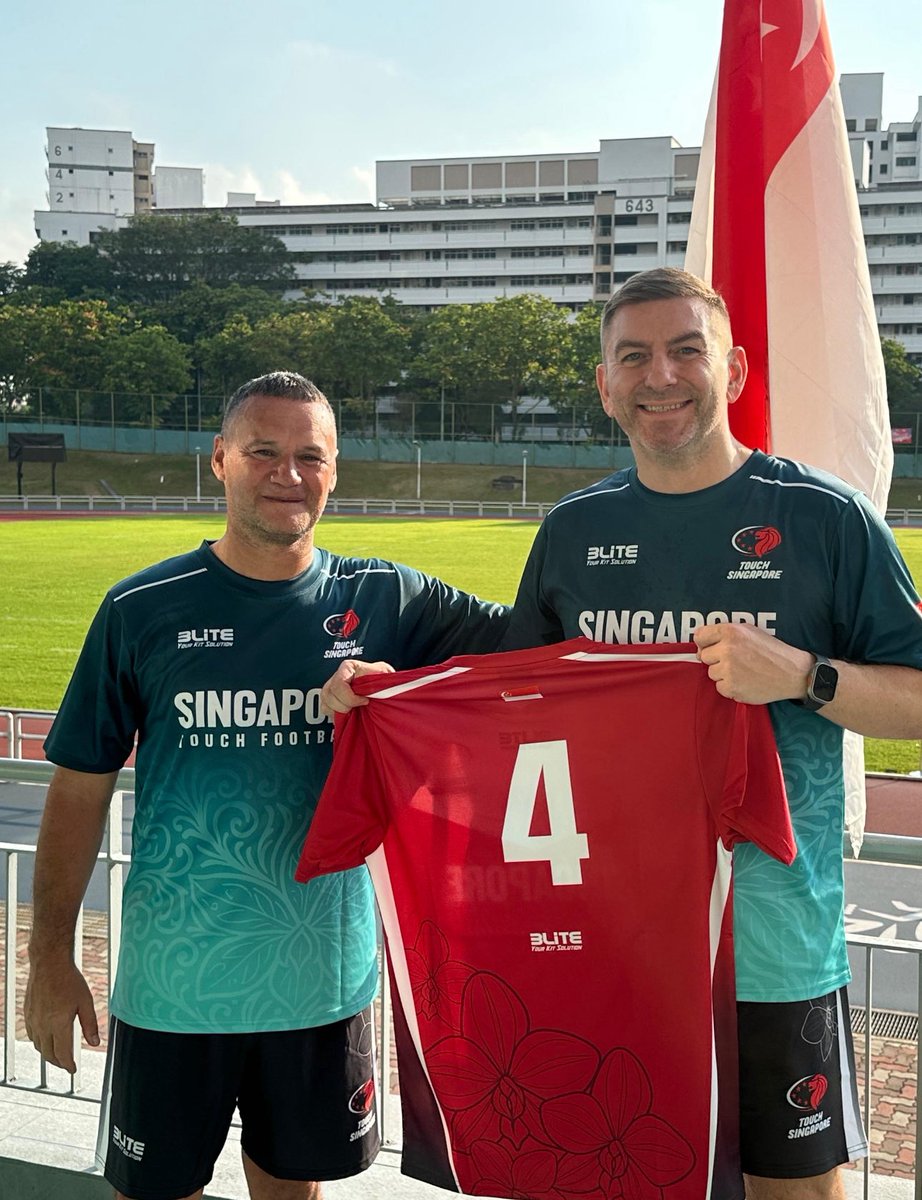
2 years of injury hell… 2 surgeries on my L5/S1 vertebrae. The first surgery was a total failure. I rehabbed for 1 year, was selected to play in the 2024 World Cup but I knew my back still wasn’t right. I had to withdraw from the squad… Heartbroken.
On the day my team took to the field to play the world’s best teams in England, I was checking in to the St Vincent’s Hospital, Sydney to get my second surgery.
I diligently followed my rehab protocol but again my recovery plateaued at around the 6 month mark, which is when I had been expected to have been fully recovered.
I was frustrated and still physically nowhere near where I needed to be to return to the field.
I started to look into research peptides after I started seeing them pop up in my social media feed. BPC-157 seemed too good to be true but I was so desperate I jumped in and did very little research. I found a supplier in UK, bought a batch of vials and got started.
No, this isn’t a post about what a miracle outcome I got… quite the opposite! You see, I had no idea what I was doing, I had no plan, not protocol, no structure, hell I hadn’t even heard of a COA 🤦♂️. I got started, injected as often as I remembered to, guessed my doses and hoped for the best. WASTED a chunk of change, go no results to speak of.
I wasn’t educated about peptides and how I should approach them. I wasn’t educated still struggling with my recovery, so I went away to do proper research learn how to plan and execute a protocol under the guidance of a sports clinician who helped me out a proper plan in place. That’s when the game changed for me. BPC-157 daily and TB-500 twice weekly. Incremental dose increases every few weeks under guidance!
I started the new protocol in January 2025, by end February, I saw noticeable improvements in pain reduction, mobility and my scar tissue seemed to be improving.
By the end of March I was on the grass / Astro again, training and playing games again. I wasn’t in my main position in the middle but I was on the field which after 18 months out felt like a miracle.
Whilst I still had a long road ahead within 6 months I was trialing for the national team again and while not playing in my preferred position, I was selected for a 3 test series vs Hong Kong.
We won the series 3-0, I was the top scorer for our team with 6 tries and the recovery was complete. I achieved what I set out to do, which was to regain selection and play for the national team again. That was my final representative appearance before I retired.
I set up @UndergroundBio to help guys like me, who had heard about peptides but had no idea how to get started, didn’t understand how they work or couldn’t find reliable information I could trust.
That’s what I am here for, to learn from my own experiences, work with the top industry professionals and pass on all my knowledge to those that need it.
I’m building an app next and I’d love you to join my journey as I build what I hope will be the best education, tracking and monitoring app in the market. I want people to really understand what works for them and not just follow the masses of misinformation flooding the internet.
I would love to hear your thought, opinions and suggestions too.
What is CJC-1295? Let's take a closer look 👀
CJC-1295 is a lab-made version of GHRH, the hormone your brain uses to call for growth hormone. It's built to last much longer in the blood than your own.
We rate the evidence strong for muscle gain and moderate for fat loss, recovery, longevity and sleep. Most of it comes from animals. The studies in people were small and measured hormone levels, not muscle.
• Vendors with an A → Peptide Partners, Peptira and Orbitrex Peptide, 3 of the 44 on our register that sell it.
• Identity test → 12 of 43 CJC-1295 certificates carry one, the only check that names what's in the powder.
• Price → a 10mg vial averages $69 from A and B vendors, $58.50 to $79.00 in our 12 Nov sweep.
It isn't FDA-approved. The FDA lists it among substances that may carry significant safety risks, and says it has identified serious side effects, including a faster heart rate. WADA bans it in sport.
📝 1 in 10 Koreans surveyed used or were prescribed a GLP-1.
The Korea Herald reports it from KB Financial Group Research Institute's 2026 Korea Wellness Report. It surveyed 2,000 adults aged 25 to 69, and 10.3% said they had been prescribed or used one in the past year.
GLP-1 is the class of weight-loss drug the survey asked about. The figures are people's own answers.
And men reported more use than women, at 11.6% against 9%.
But women were more aware of the drugs, at 83.1% against 73%.
65.5% of those who had used one said they intend to continue.
Did you start a GLP-1 with a plan to come off it?
🚨 Adocia wants to turn semaglutide into a monthly shot.
We read the French company's press release, out on 16 November for ObesityWeek.
Adocia links semaglutide to its own polymer, a chain molecule that keeps it in the blood longer. In farm pigs, its half-life was 153 to 159 hours. That's the time it takes the body to clear half of it. A patent Adocia cites puts plain semaglutide at 46 hours.
But Adocia says obese rats lost about as much as on plain semaglutide. They lost up to about 5 to 6% of their starting weight over 26 days. The aim is fewer shots.
None of it has been tested in people. Adocia says the data supports a once-a-month shot in humans. A retatrutide version has only been tested in lab dishes.
If you're on a weekly GLP-1, nothing changes for you yet. Adocia plans to keep working toward tests in people. It gave no date.
It says a monthly shot is meant to cut how many people quit in the first year. Would one shot a month have made it easier for you to stay on?
🚨 Sydney woman says retatrutide doses hospitalised her.
She bought it through a friend. The hospital found severe acute pancreatitis, the Daily Mail reports. Her pancreas, the gland that helps digest food, was inflamed. She believes the doses caused it and fears the product was tainted.
After the first dose, she had a lump where it went in. Medical advice was to stop. She took a second a few days later.
NSW Health counted 1,180 ER visits linked to peptides from July 2025 to September 2026. Its Chief Health Officer, Dr Kerry Chant, says a website, label, purity claim or influencer is no proof of what's inside. Two products with the same label can differ in contents and strength.
Retatrutide has no approval from the FDA or any regulator. By our records, 17 sellers list it. NSW Health's point: a label doesn't tell you what's inside.
She says she can't eat protein while her pancreas heals. She needs weekly blood tests for six months.
What made you trust the last vial you bought?
Oh yeah, the factory owners love to show off and order you all the local 'delicacies'. Do you have someone who is translating for you or guiding you? I always used to have them let the factory owner know that we were tight on time when we got there, so they didn't book a restaurant, and then we would find somewhere to eat between visits.
I have been presented with all kinds of wonderful creatures and their body parts to eat over the years!!
📝 Do GLP-1s protect the brain? In Novo Nordisk's EVOKE and EVOKE+ trials, semaglutide did not slow early Alzheimer's.
Some disease markers changed along the way.
A new review in the journal Science, reported by Scienmag, looked at what we know. The authors are from the University of Gothenburg and the University of Copenhagen.
In animals, GLP-1 drugs can affect learning and memory. In people, the results are mixed. Patient-record studies link them to lower dementia risk in type 2 diabetes, but they can't show cause.
The authors say people with obesity or type 2 diabetes who struggle with attention or planning may still benefit. They want trials that track memory from the start of treatment.
The warning I'd act on is theirs about older and frail patients. Rapid weight loss and muscle loss could hurt their physical function.
@afshineemrani That still leaves a real share that comes from the statin. Those are the people who need whoever prescribed it to listen. A different dose or drug is a better answer than being told it's all in their head.
@HealthyAlfred A list like that is exactly why someone needs to run human trials. We have to get more data on these compounds. The indicators are so good.
@afshineemrani Interesting fact... The 10,000 figure came from a Japanese pedometer advert in the 1960s, so it was never a medical target to begin with. But now a seven-thousand figure is a lot easier to sell to a man stuck at a desk all day.
@KenDBerryMD Eggs and meat make sense for a high-protein breakfast whether you're on a jab or not. Once the drug is on those receptors all week, I wonder how much difference the meal still makes to hunger. Holding on to muscle seems the stronger reason to eat that breakfast on a jab.
@vedichi_ There are no bloods on the list. A panel before and a few months in shows what the scale can't: how the rest of the body copes with eating so much less.
@PeptideBase Severe hypoglycaemia is the odd part here. GLP-1 drugs on their own rarely push blood sugar that low in someone without diabetes. So the first question is what was actually in those pens. An untested pen could hold anything, and that worries me more than the headline.
@dantawfik Even if the theory turns out to be wrong, those levers help the heart and the waistline, so there's little to lose by pulling them now. I'd still like to see it tested properly. Has anyone tracked fuel switching in midlife against who goes on to develop Alzheimer's?
BPC-157 vials of the same size ran from $22 to $99.97 in our 12 Nov price sweep. RFK Jr. has argued pharmacy access would keep people off the gray market.
@NBCNews spoke to peptide users about the change. Most liked the idea of a pharmacy option but weren't sure it would be worth the trouble. Some longtime users say they won't change their ways.
Here is what each route asks of you.
• Buying online, the user NBC opens with orders from China and pays for third-party testing to check what's in them. We hold 141 certificates of analysis from 20 BPC-157 vendors.
• At a 503A pharmacy, you need a prescription first. A prescriber has to sign for BPC-157, which has been tested in people only in early phase 1 trials.
Which would you pick, and why?