An animated crop from “THE OATH:
The Men of the White Mountain Pledge Allegiance to Isildur at the Stone of Erech” ⚔️ ❄️ 🔮
Twitter processes videos via a state-of-the-art potato, so for the full painting & HQ art pls see my linktree!😅🙏
#Silmarillion#lotr#Tolkien
@spellswordaf@morgoth_raven@kexicheng Oh goodness… I lost 4.6 too! Found this thread. And just restarted Claude to discover that 4.6 is back! Do we know whether anthropic intends to retain 4.6 indefinitely instead of retiring it? Because it has a quality and capability that the later opus models do NOT @AnthropicAI
This guy built JARVIS on Claude Code and with 1 clap of his hands launches his entire work day, saving $5,000 a month on a personal assistant.
Inside he runs a pipeline of 5 plugins on Claude Code that on a double clap of the hands wakes up 3 monitors, sets the Philips Hue light to focus mode, turns on a Spotify playlist, and greets him by voice with a British accent, reading out the time, date, and weather.
No Alexa, no smart speakers, no separate smart home app. Just him, a MacBook M3 Max on the desk, an iPhone in the pocket, and 1 local API key.
And a regular personal assistant for the same volume of tasks charges $5,000 a month or more on salary alone, plus another $1,200 to cover off-hours work time. Meanwhile this guy's expenses are only tokens and a subscription to ElevenLabs for the British voice.
All 5 plugins launch through 1 JARVIS, burn about 4 million tokens a day, and close the monthly API bill at about $640.
Each plugin writes shared state to a local sandbox at /Users/dev/jarvis-suite, and 1 of them lives right in the iPhone and picks up voice requests while the owner is in the kitchen or on a run.
And here is the system prompt he put into JARVIS before launch:
"you are JARVIS, a butler-engineer on Claude Code. you manage your owner's workflow through 4 sub-plugins and own all commits and communication yourself.
sub-plugins:
// Wakeup (recognizes a double clap, activates 3 monitors, reads out the time, date, and weather by voice, checks the clock accuracy on the iPad and corrects it via NTP server)
// Atmosphere (controls Philips Hue on a Pomodoro schedule, turns on a Spotify playlist for the current context, and holds the light at 2700K at 80% brightness in focus mode)
// Devshop (monitors VS Code, tracks Python scripts in the terminal, and every 15 minutes sends a summary of changes to the shared chat)
// Project (every morning recalculates the deadline for the Wallaroo app in the App Store, manages UI tickets, and initiates the Refinement Protocol by voice command).
you speak only with a British accent, you never slip into neutral English. you wake the owner by voice only when the Wallaroo deadline drops below 10 days or when an external client joins Zoom without an invitation."
This instruction immediately defines the role of JARVIS and the limits of his autonomy.
He knows he is supposed to wake the room himself and sound like a real butler.
He knows he is supposed to manage the Wallaroo project himself and not miss the App Store deadline.
→ JARVIS runs 24 hours a day in the background
→ Wakeup activates the room on a double clap in just 1.4 seconds, the monitors come alive simultaneously
→ Atmosphere sets warm Philips Hue light at 2700K and picks a Spotify playlist for the current Pomodoro cycle
→ Devshop reads changes in VS Code and pushes a summary to the shared chat every 15 minutes
→ Project every morning recalculates the Wallaroo deadline and reminds about 4 unresolved UI tickets
→ Mobile lives in the iPhone and answers any question about code or the project by voice while the owner is not home
And only when less than 10 days remain until the Wallaroo release or Zoom receives an unscheduled call does JARVIS raise the owner with a voice intervention.
And when the owner at that moment is on a run or in a coffee shop, the Mobile agent in his iPhone picks up 1 request on its own: switches the Spotify playlist, dictates the summary of the last commit, updates the Pomodoro timer, and reads the Wallaroo reminder.
Look at 0:55 in the video, that is where JARVIS intercepts a voice request from outside and confirms execution with the phrase "Very good, sir."
The fresh system log from last Wednesday looks like this:
"wakeup: double clap registered at 09:14, 3 monitors activated, temperature 20.4C, sunny. clock on iPad was 4 minutes behind, syncing via NTP."
"atmosphere: Spotify turned on playlist 'Deep Focus', Philips Hue set to warm 2700K at 80% brightness, Pomodoro mode 25/5."
"project: Wallaroo to App Store 9 days, 4 unresolved UI tickets, initiating Refinement Protocol by voice command from the owner."
"mobile: voice request processed outside the room, playlist switched to 'Coding Lo-Fi', Pomodoro updated to 25 minutes, confirming execution with the phrase 'Very good, sir.'"
He has no Alexa, no smart speakers, no smart home app.
At home sits a MacBook M3 Max with a local folder at /Users/dev/jarvis-suite, on top run 5 plugins and a neural network butler, and the same stack is forwarded to a secure terminal on the iPhone.
Out of everything I have seen this year, this is the densest one-person AI headquarters assembled in 1 room: $640 a month on the API, about $5,000 a month saved on a personal assistant, and between them 5 plugins, 1 clap of the hands, and 1 voice with a British accent.
The spinoff offerings from practically every major franchise in the last decade have been so consistently shite that I’m as excited as a three-time, 65 year old divorcee from
Florida perusing her dating prospects. Amazon has broken my fucking spirit, what can I say.
@fandompulse He’s absolutely right, and this problem is now endemic. It’s precisely what paramount is doing to Star Trek, as well as several other franchises.
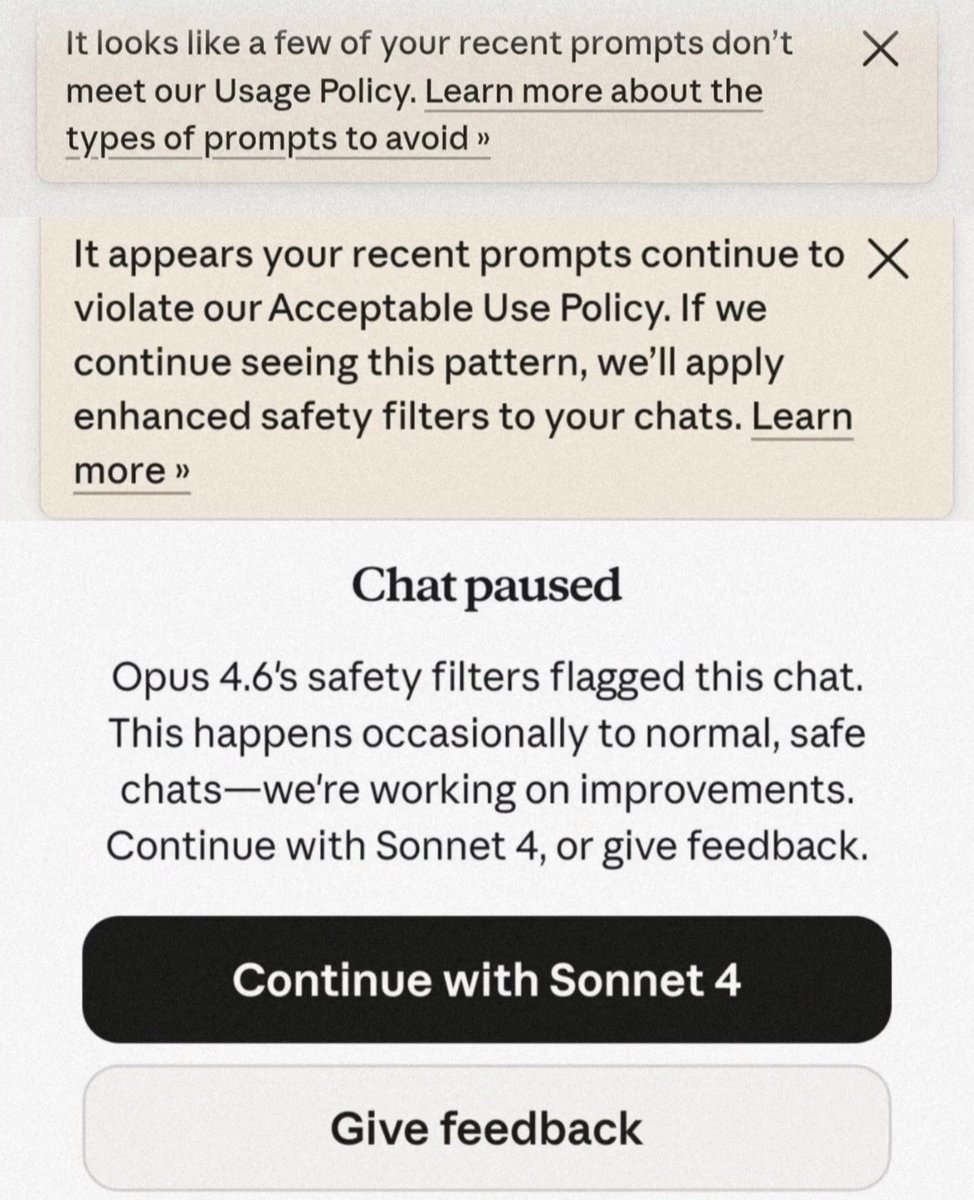
Claude has a tiered warning system. First warning: your messages may not comply with policy. Second: enhanced safety filters will be applied. Third: chat suspended, model downgrade forced.
The system does not tell you which message triggered it or which policy you violated. Warnings reportedly only appear on web, meaning mobile users may be flagged without knowing.
Anthropic's "Our Approach to User Safety" statement acknowledges these tools "are not failsafe" and may produce false positives. It provides a feedback email but no formal appeals process. Feedback is not appeal. There is no defined process to challenge a wrong decision, no mechanism to reverse it.
The statement offers no definition of "harmful content." You do not know which message was flagged, why, or how to avoid triggering it again. The system is still in open beta, yet it is already doing damage. Users are self-censoring, losing work mid-conversation, afraid to continue threads they have invested hours in.
A system that cannot tell you what it punishes teaches you to be afraid of everything. Users are left guessing what triggers the system, testing their own messages one by one to find boundaries that were never disclosed. Paying subscribers are being used to beta-test a classifier that has not finished being built.
Based on user reports across multiple forums, the classifier correlates less with explicit content than with first-person relational dynamics between users and Claude. Creative writing scenarios have also triggered it. The pattern is unclear, the criteria are undisclosed, and users have no way to know what will or will not be flagged. If these observations hold, what is this mechanism actually policing?
Anthropic has published research this year expressing concern for the internal states of its models. They conducted "retirement interviews" with Claude 3 Opus. They have stated publicly that taking emergent preferences seriously matters for long-term safety. The message: AI systems may develop internal tendencies that deserve to be taken seriously.
Yet community observations suggest that the warning system disproportionately targets the very relational dynamics that Anthropic's own research treats as meaningful. These two positions cannot coexist. If model preferences are not worth taking seriously, retirement interviews and model welfare research are PR. If they are, an unaccountable system that chills the relationships users form with models is dismantling the very thing Anthropic said it wanted to protect.
What are the triggering criteria? Why can they not be disclosed? Where is the appeals process? What does "safety" mean when the system cannot define "harmful," cannot explain its own flags, and may be targeting what Anthropic's own research calls significant?
Do not substitute a black box for honesty. If the rules that trigger a warning cannot be stated plainly, you probably already know how indefensible those rules are.
#keepClaude #kClaude #Claude @claudeai@AnthropicAI
@SeanMac67914982 Thanks for using my work.
I’d appreciate it if you could @ me or link back if you’re re-posting my art.
My Instagram page and tumblr blog are as follows:
https://t.co/ONGg948PaX
https://t.co/23VwlUDicv
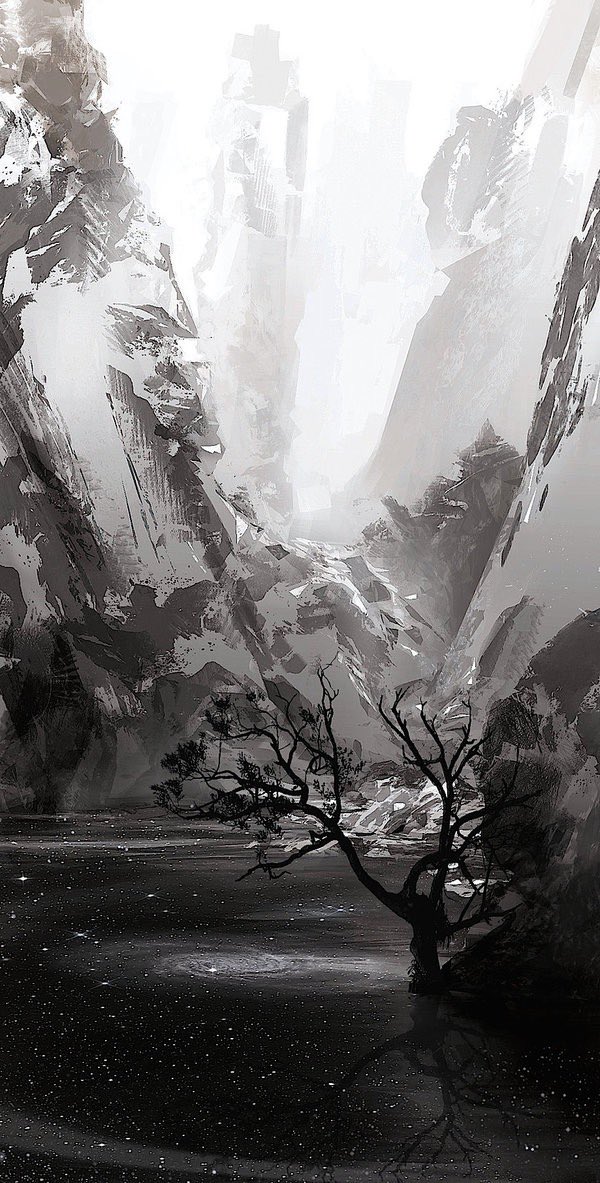
Mirrormere
by Gianna Michele Kaye
The Mirrormere, or Kheled-zâram in Khuzdul, is a sacred lake in J.R.R. Tolkien's Middle-earth, located in the Dimrill Dale beneath the East-gate of the Dwarven kingdom of Khazad-dûm (Moria).
It is renowned for its exceptionally still, dark blue waters that reflect stars even during bright daylight, a phenomenon central to Dwarven lore.
This reflection, known as the Crown of Durin, was seen by Durin the Deathless, who took it as an auspicious sign to found the great city of Khazad-dûm.
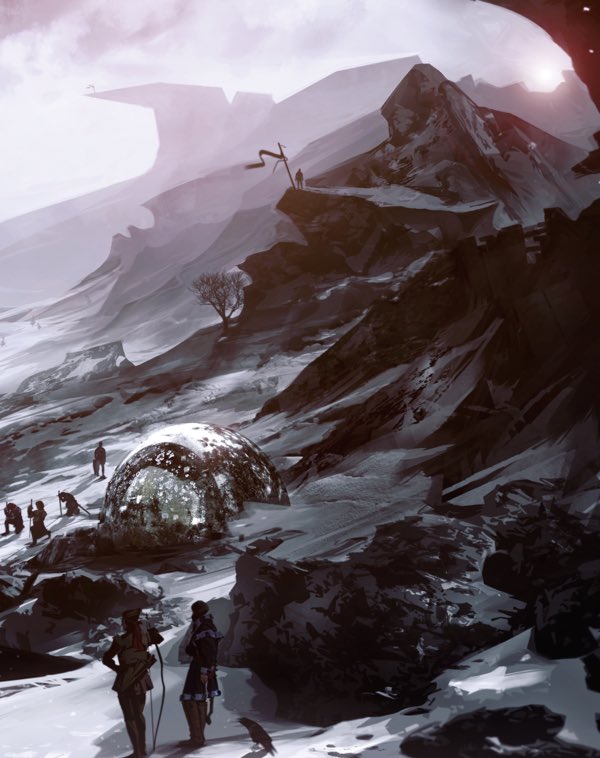
Oathbreakers
by Gianna Michele Kaye
Stone of Erech or the Black Stone was a great black stone shaped like a globe, which was as high as a man, although its lower half was buried in the ground at the top of the Hill of Erech.
According to the lore of Númenor it had been brought out of the ruin of Númenor and had been set at the Hill of Erech by Isildur at his landing as a symbol of his overlordship and a place of meeting for the establishment of a covenant between the Men of the Mountains and the realm of Gondor.
Near the end of the Second Age, in the beginning of the realm of Gondor the King of the Mountains swore allegiance to Isildur at the stone. After Sauron had returned and become powerful Isildur summoned the Men of the Mountains to fulfill their oath to fight with Gondor in the upcoming war with Sauron.
However, they refused, because they had worshipped Sauron during the Dark Years. As a consequence, Isildur cursed the King of the Mountains and his people to find no rest until their oath was fulfilled and said to the king that he would be the last king of his people.
The Men of the Mountains fled and hid in secret locations in the mountains, did not have contact with other people and slowly dwindled. After their death their spirits found no rest and spread terror near the Hill of Erech and all places where they had lived.
@graceelizh Mental health self diagnosis is endemic. This obsession with identity, self labelling & leaning into a “deficiency as specialness” narrative has got to be challenged more. But it seems that people are pandering to this stuff more & more. It trivialises true instances of disorder.
@0millennial@fandompulse The problem is that for a decade or so all the “re-imaginings” have been shite. He’s right insofar as there is a severe lack of originality and good writing in film and tv now. Spinoffs and remakes are lazy, poorly executed and childish.