Level 1 Trauma Center located in West Philadelphia.
This account is dedicated to the academic work, research, and development of the Trauma Center at Penn.
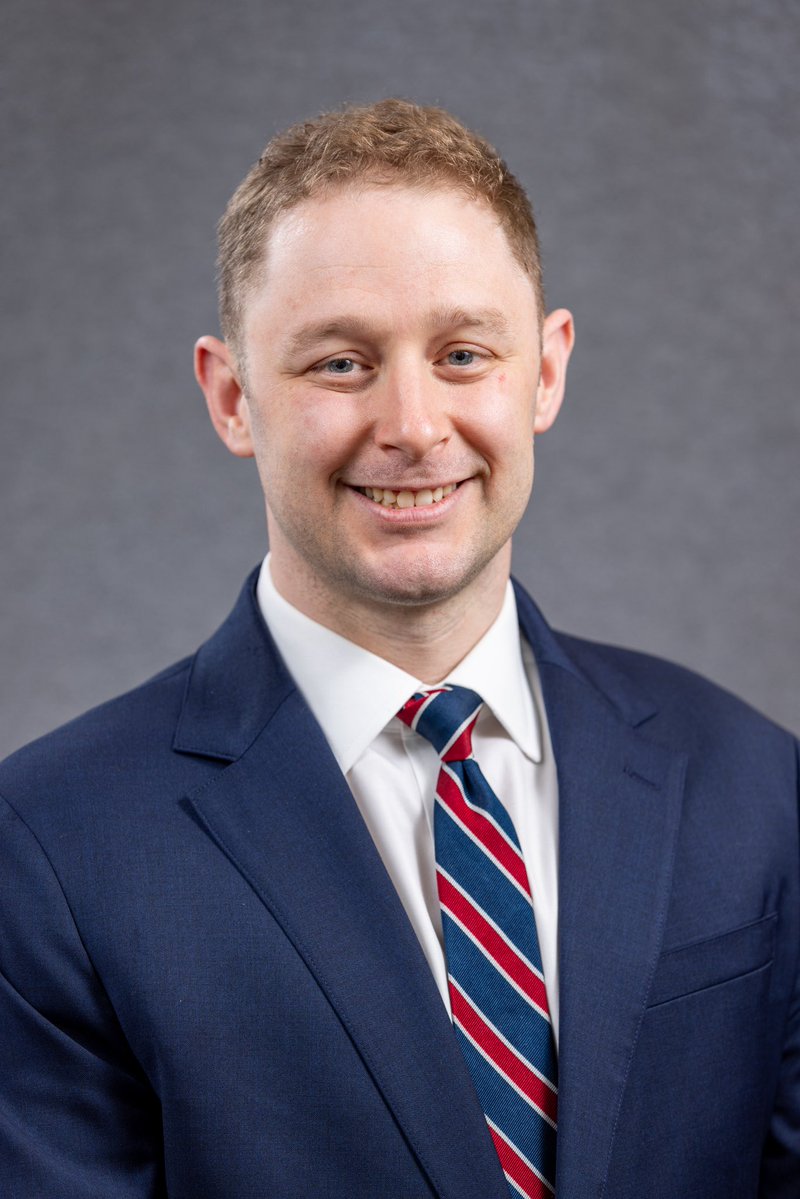
We would like to welcome Michael Weykamp, MD, MS to the Division of Trauma as an Assistant Professor of Surgery on the Clinician Educator track. He will focus the majority of his time at the Philadelphia Veterans Affairs Medical Center.
For more: https://t.co/CPhZiSWOhq
We would like to welcome Lieutenant Commander Justin Frisenda, DO to the Division of Trauma as an Adjunct Assistant Professor of Surgery. For more on Dr Frisenda, please visit:
https://t.co/Dg59prYa84
In >400,000 trauma patients, Dr. Allan E. Stolarski and colleagues at @PennTrauma use their Field AI Triage (FAIT) model predicted transfusion needs from no blood → massive → ultra-massive transfusion (>20 units) using data available early at the point of injury in our newest work in Injury International Journal of the Care of the Injured
https://t.co/XktqQ1snEP
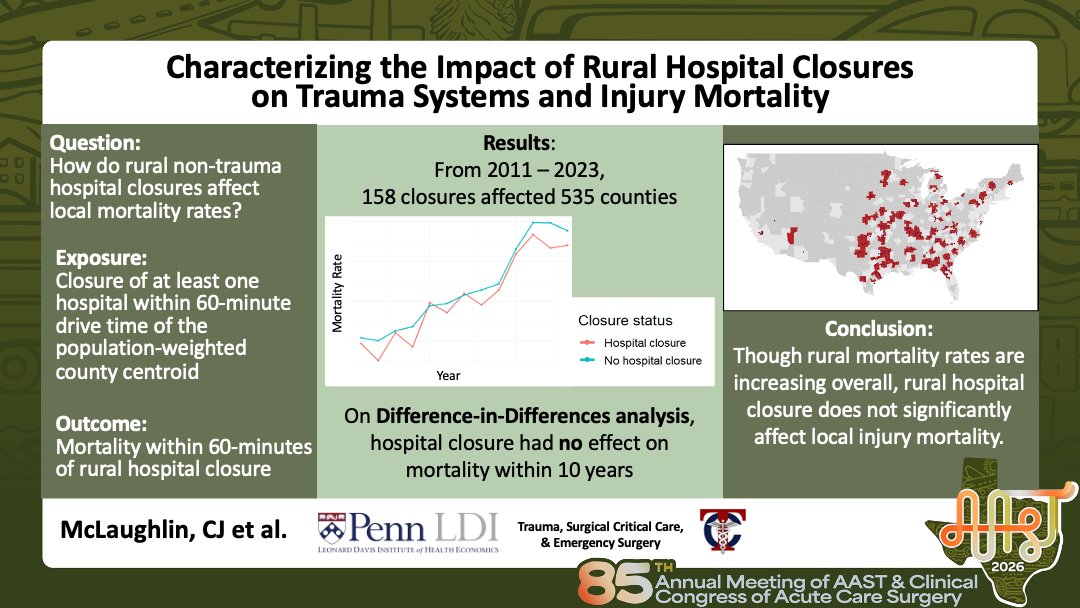
Rural trauma deaths are rising, but analysis of 158 rural hospital closures found no increase in county-level injury mortality. Improving rural trauma systems remains essential.
@UPennTrauma@pennsurgery@PennLDI#ruralhealth#trauma
New survey data reveal strong support for an @estesonline Trauma Traveling Fellowship, with 71% of European trauma surgeons interested in applying and 47% of centers willing to host. Addressing funding, institutional permissions and hands-on training opportunities will be key to its success. https://t.co/afTE3AAjwh
#TraumaSurgery #SurgicalEducation #GlobalSurgery #MedEd
Advanced practice providers play an expanding role in acute care surgery. A national survey of ACS programs (including @UpennTrauma’s @neilsmd) found 96% have daytime APP coverage, but fewer than half provide nighttime coverage. Findings highlight opportunities to better define APP staffing, training, workload & clinical roles across trauma, SCC and EGS.
https://t.co/IAnkdqlKbA
#AcuteCareSurgery #TraumaSurgery #CriticalCare #EmergencyGeneralSurgery #APP #SurgicalCare
New research in @JTraumaAcuteSurg examines surgical stabilization of rib fractures (SSRF) in patients with COPD. While SSRF showed no mortality benefit and increased resource utilization, early fixation (≤72 hrs) was associated with shorter ICU & hospital stays—and less mechanical ventilation in patients without flail chest.
https://t.co/CXvzi7g2Gu
#TraumaSurgery #SSRF #COPD #RibFractures @upenntrauma
Congratulations @garybassmd for his role in development of the Extended Postoperative Complication Score (EPCS) that combines patient physiologic vulnerability with postoperative complication severity. Developed through multidisciplinary Delphi consensus, EPCS enables more meaningful outcome comparisons across elective, urgent & emergency surgery.
https://t.co/SIL30G8uuX
#Surgery #SurgicalOutcomes #PatientSafety #EmergencySurgery #TraumaSurgery #EPCS #ClinicalResearch #SurgicalQuality
Our newest Trauma & Surgical Critical Care Fellows kicked off the year with our annual trauma bay obstacle course. Led by faculty, they trained in cricothyroidotomy, thoracotomy, chest tubes, REBOA, tourniquets, pregnancy & trauma, and weapon safety. #PennTrauma
Think Shark Tank but for trauma surgery. 🦈
Future Trauma Leaders took the stage to pitch innovative projects and refine them with guidance from trauma experts.
Learn how @acsTrauma is investing in the next generation of surgical leaders: https://t.co/OKaKF7BtNJ
The roots of modern combat casualty care stretch back to the American Revolution. This new article co-authored by @Upenntrauma’s own Dr Jeremy Cannon explores how fragmented medical command, supply shortages, and leadership challenges shaped battlefield medicine—and the lessons that still matter for military medical readiness today. 🇺🇸
#CombatCasualtyCare #MilitaryMedicine #TraumaSurgery #MedicalHistory
https://t.co/8UfwlpD2sx
Congratulations to our very own Patrick Kim, MD, MHCI, FACS!
Dr. Kim, Vice Chief of the Division of Traumatology, Surgical Critical Care and Emergency Surgery at Penn Presbyterian Medical Center, was honored with the William Hanson Award at the June Semiannual HUP Medical Board Meeting.
The William Hanson Award is presented annually to a physician who has demonstrated outstanding contributions to the Medical Board and its committees. This recognition reflects Dr. Kim’s dedication, leadership, and commitment to advancing patient care and supporting the mission of the Medical Board.
Please join us in congratulating Dr. Kim on this well-deserved honor! 👏
#PennMedicine #PennPresbyterian #TraumaSurgery #HealthcareLeadership #PhysicianLeadership #MedicalExcellence #SurgicalCriticalCare #EmergencySurgery
This Saturday, @UPennTrauma’s Elinore Kaufman, MD, MSHP will be a guest panelist for a Fireside Chat on Community Violence Intervention. Please head to the @PhilArtMuseum and support this great cause!!
On a recent @ahahospitals podcast, Elinore Kaufman (@UPennTrauma/ @PennSurgery) & UPHS COO Michele Volpe share how hospital-based violence intervention programs are helping patients heal physically, emotionally & socially after traumatic injury https://t.co/HWo1szC6fz
Elinore Kaufman, MD, medical director of the Penn Trauma Violence Recovery Program, & Michele Volpe, UPHS chief operating officer, joined a @ahahospitals podcast to share how hospital-based violence intervention programs are helping patients heal physically, emotionally, and socially after traumatic injury.
https://t.co/S2Sn3sQxQW
Thank you to the 150+ attendees who joined us for the 14th Annual John P. Pryor Memorial PennTRAC Conference.
An extra big thank you to our speakers—your expertise and dedication made this an outstanding day of learning. 👏
#PennTRAC#TraumaEducation#TraumaCare
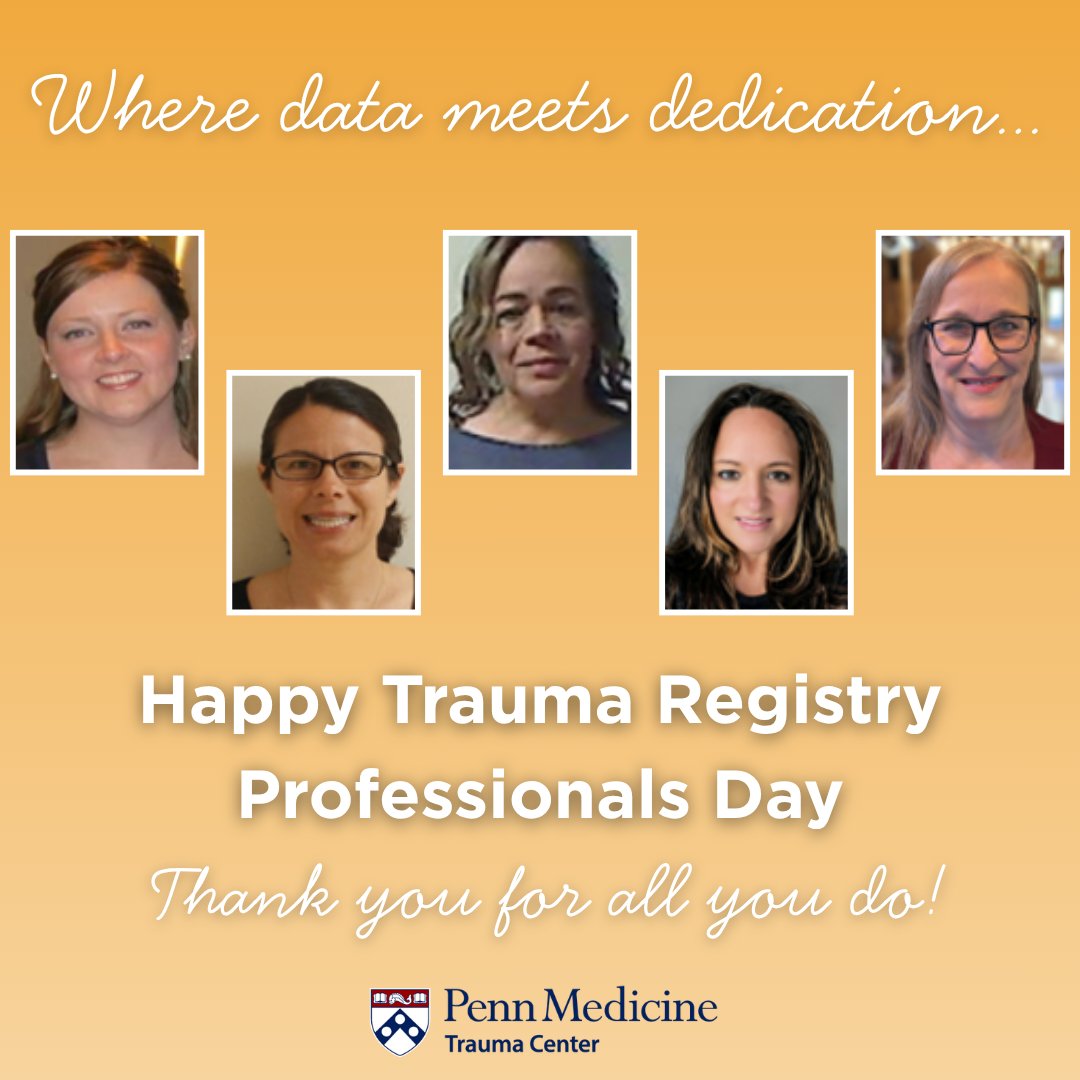
Today is Trauma Registrars' Day. Alicia, Lauren, Lizette, Denise, Danielle, and Erin work behind the scenes making sure every patient is accounted for, and what they learn shapes our injury prevention work in the community. Penn Trauma is better because of them. 💙
Early tranexamic acid improved learning & memory outcomes post-TBI, but benefits were much stronger in males vs females in this model. Highlights the need for sex-specific approaches in neurotrauma care.
#TBI#Neurotrauma#TXA#BrainInjury
https://t.co/1DCz0RQXnx