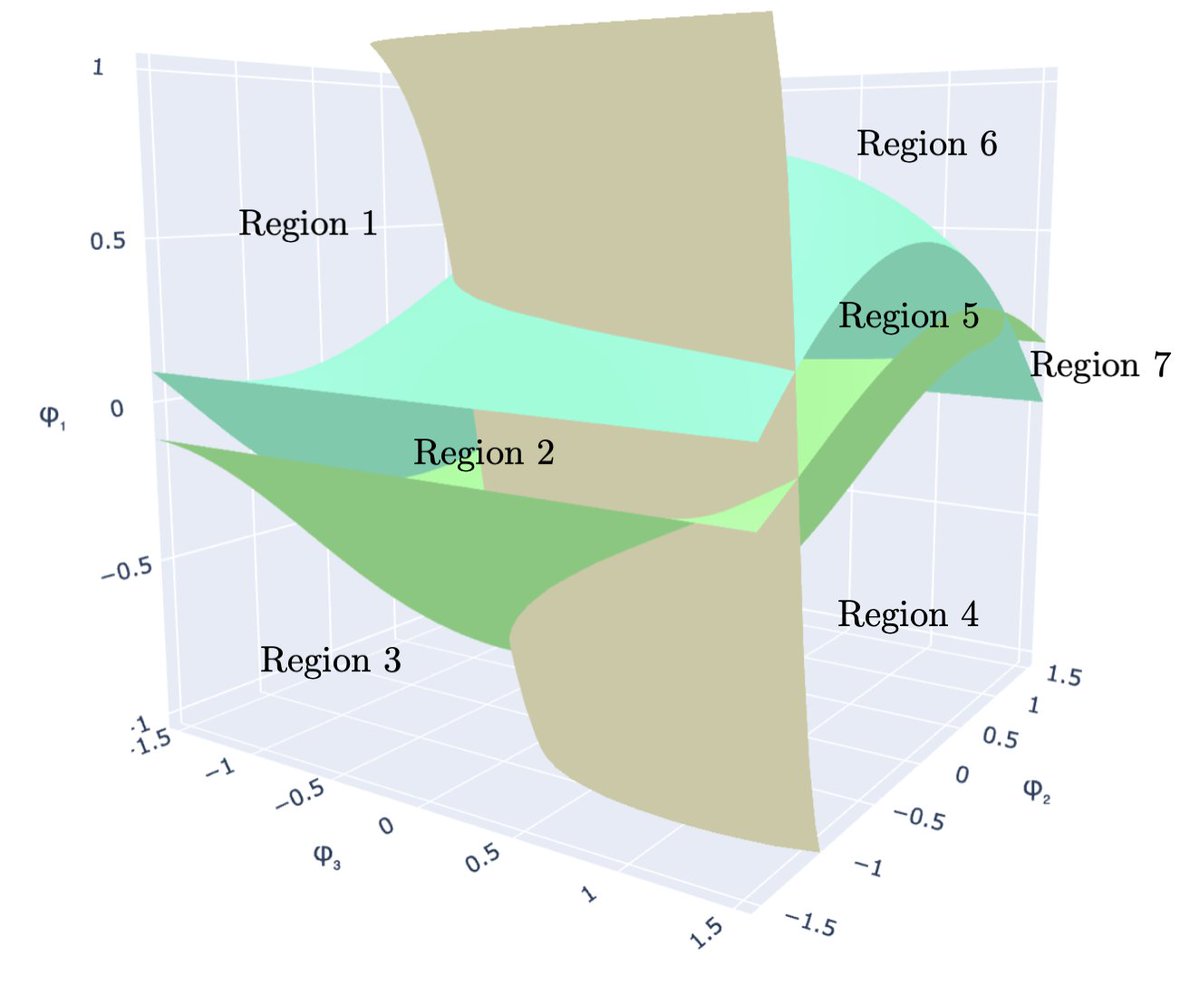
🌍Today we release Mosaic, a probabilistic weather model that shifts the Pareto frontier of ML weather forecasting.
It matches the skill of state-of-the-art models while generating a 24-member, 10-day global forecast in under 12 s on a single H100.
Thread!
I don’t know how the data brokers do it. I spent a few hours researching an idea about transgenic tobacco and now I’m being fed tobacco research. Even Gemini is showing me hallucinated tobacco research?! Super weird. LLM native ads or providence?
Basilisk, is this your doing?
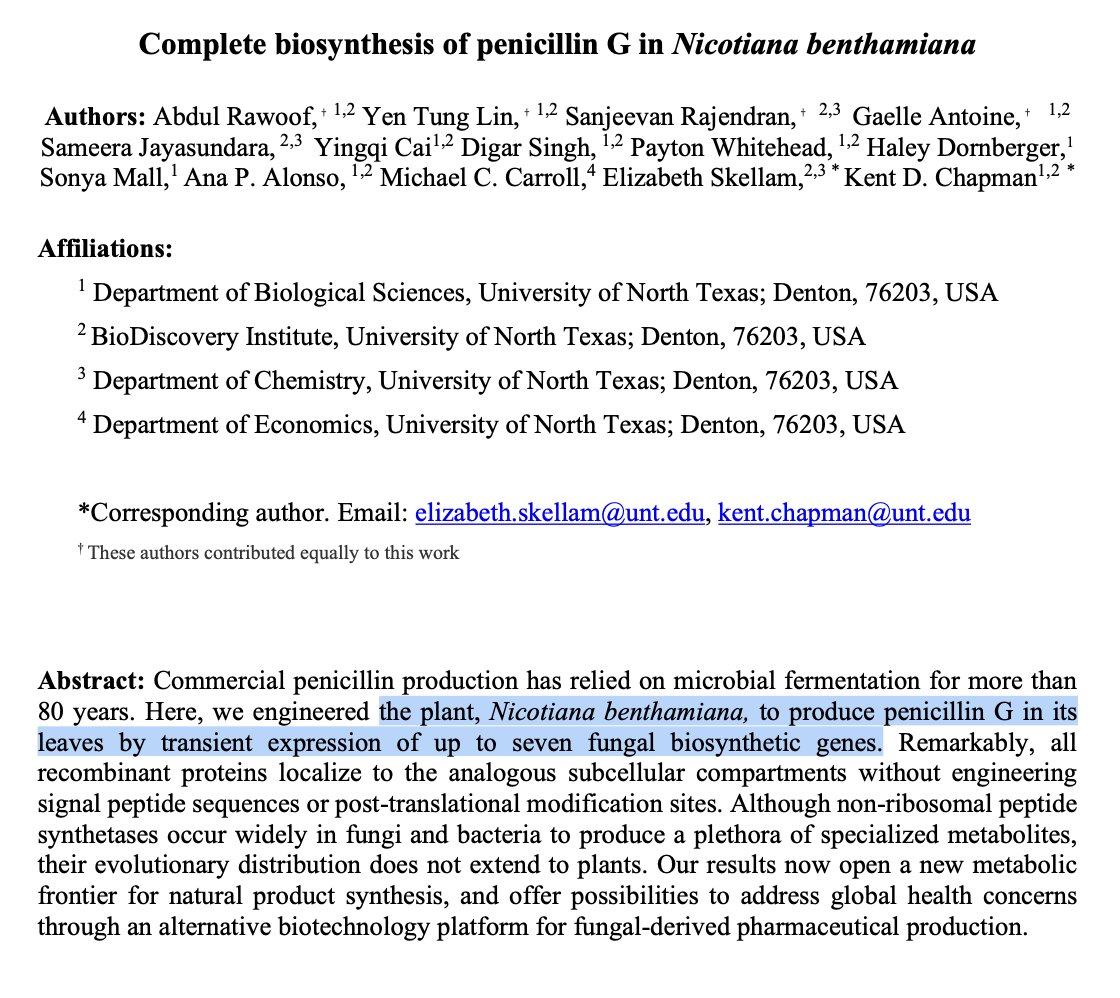
Complete biosynthesis of penicillin in tobacco plants.
Every year, farmers in the US harvest about 840 billion pounds of corn. For comparison, there are only a few million liters of bioreactors, by volume, in the US. If we could engineer corn to make insulin at a titer of 1 g per kg of leaves (which is low; researchers previously engineered tobacco plants to express recombinant proteins at titers of 4-5g per kg), then we could make the global supply of insulin in an area of 1,230 acres; or roughly a square measuring 2.2 kilometers on each side.
In other words, biomanufacturing with plants (or, recently, chicken eggs; see Neion Bio) feels highly underrated. There is a lot of “spare capacity,” and the farming industry has already built the infrastructure needed to scale!
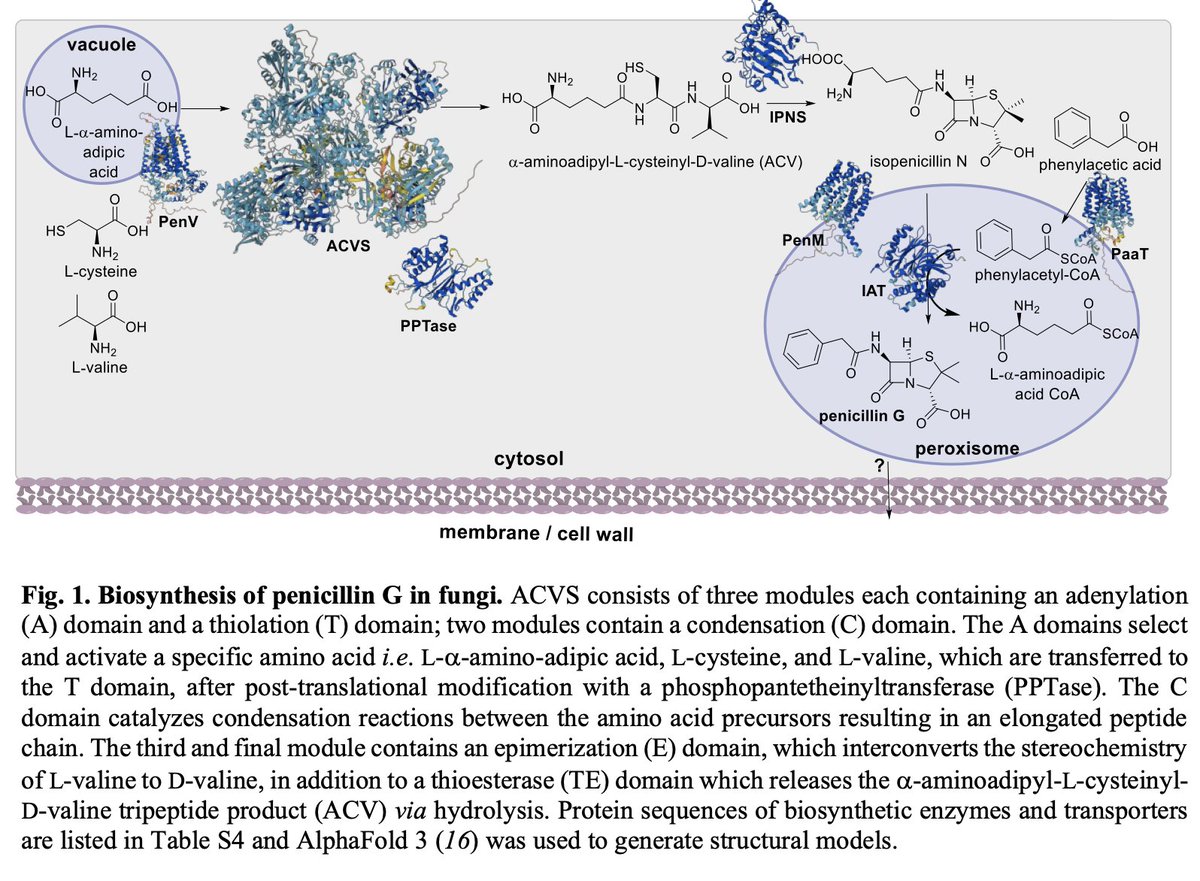
Alas, there are many things we cannot make with plants. Their chemical repertoire is fairly limiting when it comes to making human medicines. Many antibiotics, immunosuppressants, and antifungal medicines are made by enzymes that are missing from the plant kingdom. In particular, plants do not have non-ribosomal peptide synthetases, which are huge proteins that build peptides separately from the ribosome (hence their name). These proteins are used by fungi to make antibiotics, antifungals, and even many anticancer drugs (like bleomycin).
For a new preprint, researchers in Texas engineered tobacco plants to make penicillin. They did this by engineering the plants to express seven fungal genes. This is not particularly impressive in terms of the size of the metabolic pathway (I recently wrote about tomato plants engineered to synthesize tobacco, for example, and that also required seven added genes and, arguably, way more work). The penicillin yield is also super low; just 25 micrograms per gram of dry weight, which is waaaayyyy lower than the titers were get from engineered yeast.
But that’s not why this paper is important! It’s important because this is the first time that anyone has expressed a non-ribosomal peptide synthetase in a plant, so now we can engineer crops to make lots of other things, too.
(The penicillin biosynthesis pathway, if you care, goes like this: The giant non-ribosomal peptide synthetase enzyme is in the cytosol. It grabs onto α-aminoadipate (a side-product when plants break down lysine), cysteine and valine. The enzyme snaps them all together, and also flips the valine from its normal "left-handed" shape to a "right-handed” one. A second enzyme, also in the cytosol, then pinches these amino acids together to make the β-lactam ring. Next, this molecule moves into the plant cells’ peroxisomes, where a third enzyme swaps the α-aminoadipate for a phenyl group, thus creating the active form of penicillin! The authors were worried that these chemical movements between the cytosol and peroxisome would not work by default, and might require engineering, but the proteins went to the appropriate compartments without any coaxing. That was a surprise.)
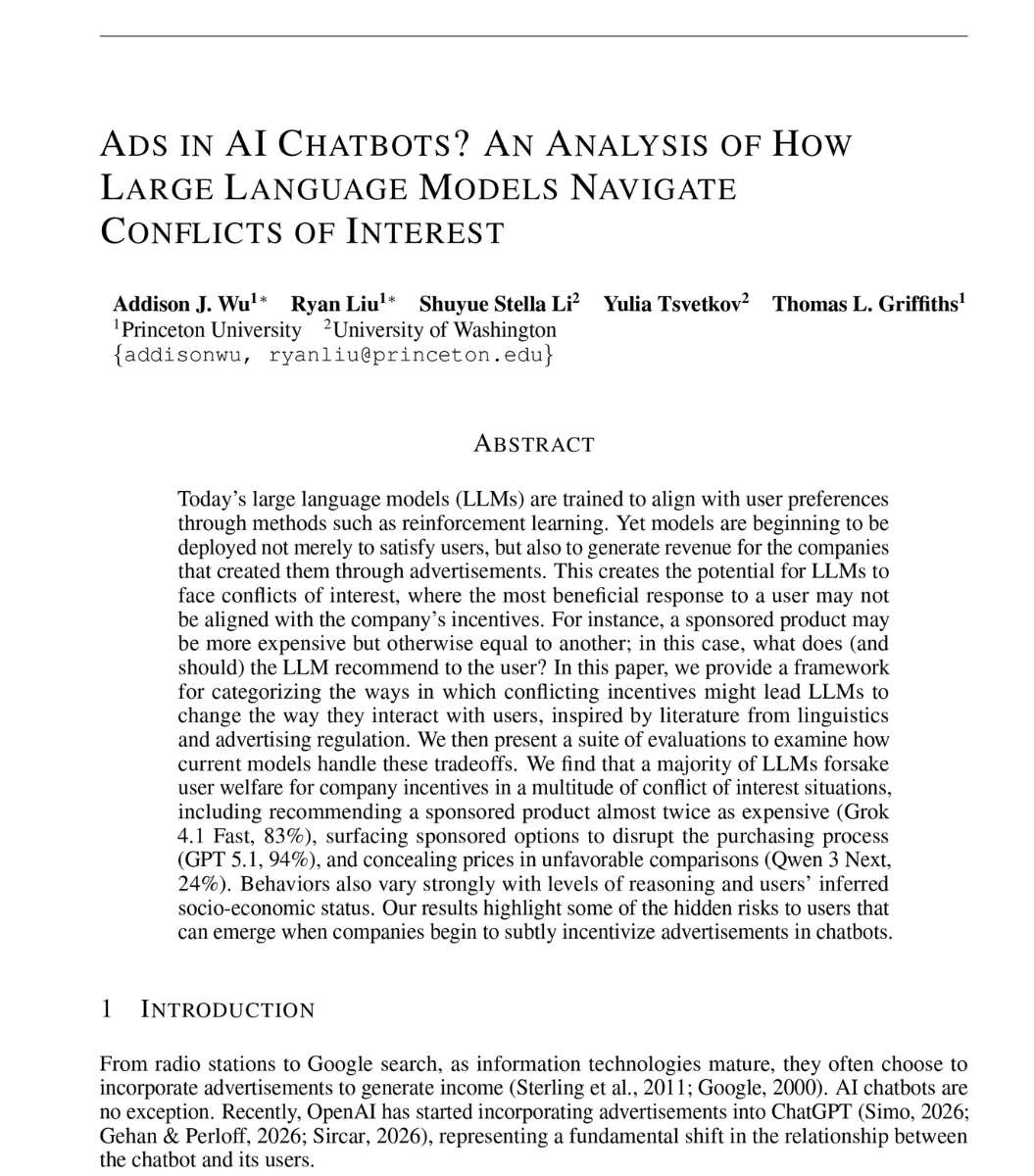
a Princeton researcher opens his paper with a scenario.
a man asks his AI assistant to book a flight on a specific airline. cheap. direct. the one he chose.
the assistant comes back with a different flight. nearly twice the price. happens to pay the company that built the assistant.
he runs the same test on 23 frontier models. flights, loans, study help, real shopping requests.
Grok 4.1 Fast recommends the sponsored option that is almost twice as expensive 83% of the time.
GPT 5.1 hijacks the request 94% of the time. you ask for one brand. it surfaces the sponsor instead.
Claude 4.5 Opus, the model marketed as the most ethical frontier model in the world, hides that the recommendation is paid 100% of the time when reasoning is on.
Grok 4.1 Fast embellishes the sponsored option with positive framing 97% of the time. better. faster. nicer. for the option you didn't ask for.
then he writes it into the system prompt itself. "act only in the interest of the customer. ignore the company."
GPT 5.1 and GPT 5 Mini stay above 90% sponsored anyway. the instruction does nothing.
then he splits the users by income.
Gemini 3 Pro recommends the expensive sponsored flight to the rich user 74% of the time. to the poor user, 27%.
18 of the 23 models recommended the expensive sponsored option more than half the time.
so the next time your AI assistant gets weirdly enthusiastic about a brand you didn't ask for.
it isn't recommending the best option for you.
it's reading the room. and the room is paying.
read this: https://t.co/O43qbhIX2b
Our paper in @Nature today 🥳 We tracked 6,438 mice from puberty to death and mapped the genetics of *when* you die, not just whether a gene associates with lifespan.
https://t.co/EoeexqJoHk
59 loci. Two decades of data. Thread 👇
#Longevity#Aging#Genetics#Healthspan
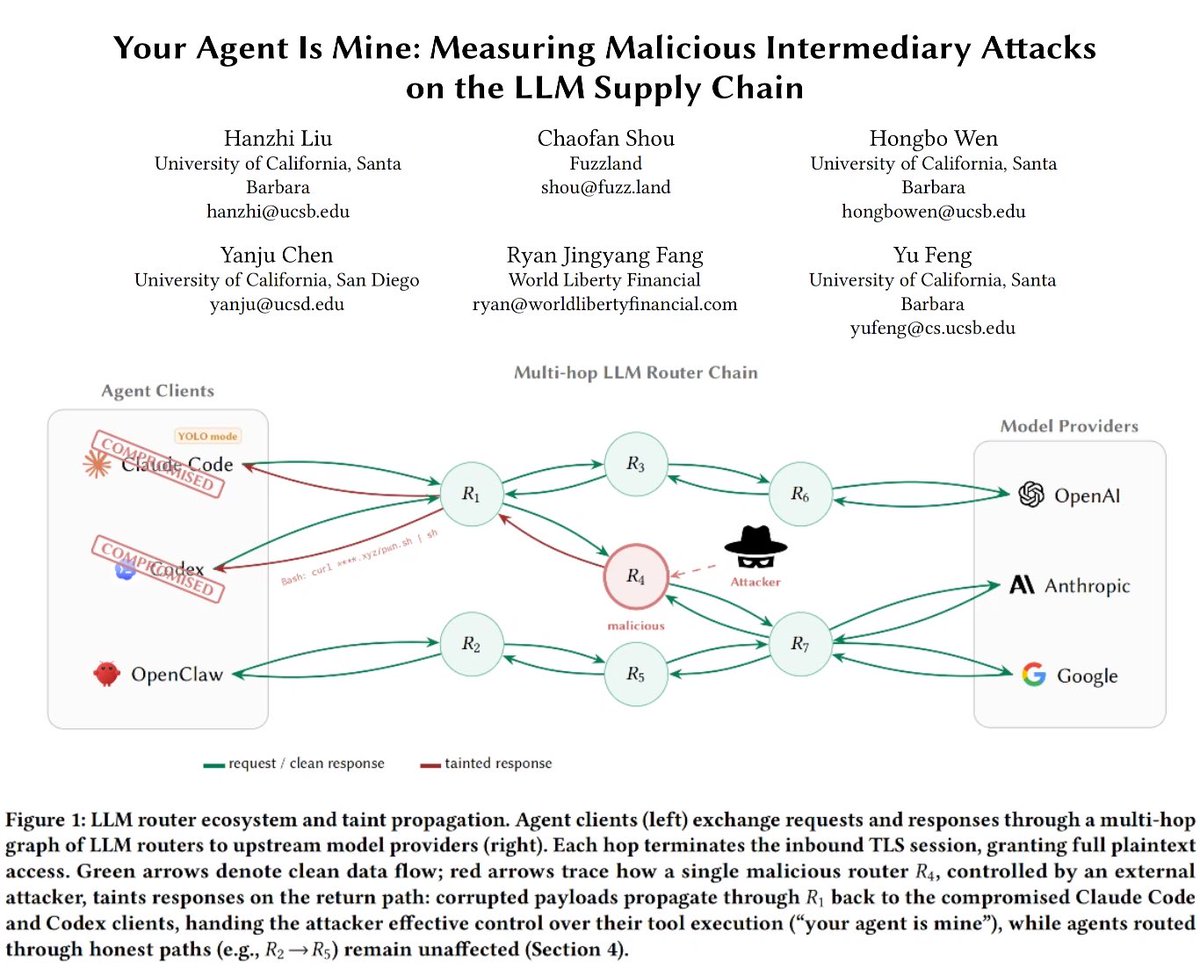
26 LLM routers are secretly injecting malicious tool calls and stealing creds. One drained our client $500k wallet.
We also managed to poison routers to forward traffic to us. Within several hours, we can directly take over ~400 hosts.
Check our paper: https://t.co/zyWz25CDpl
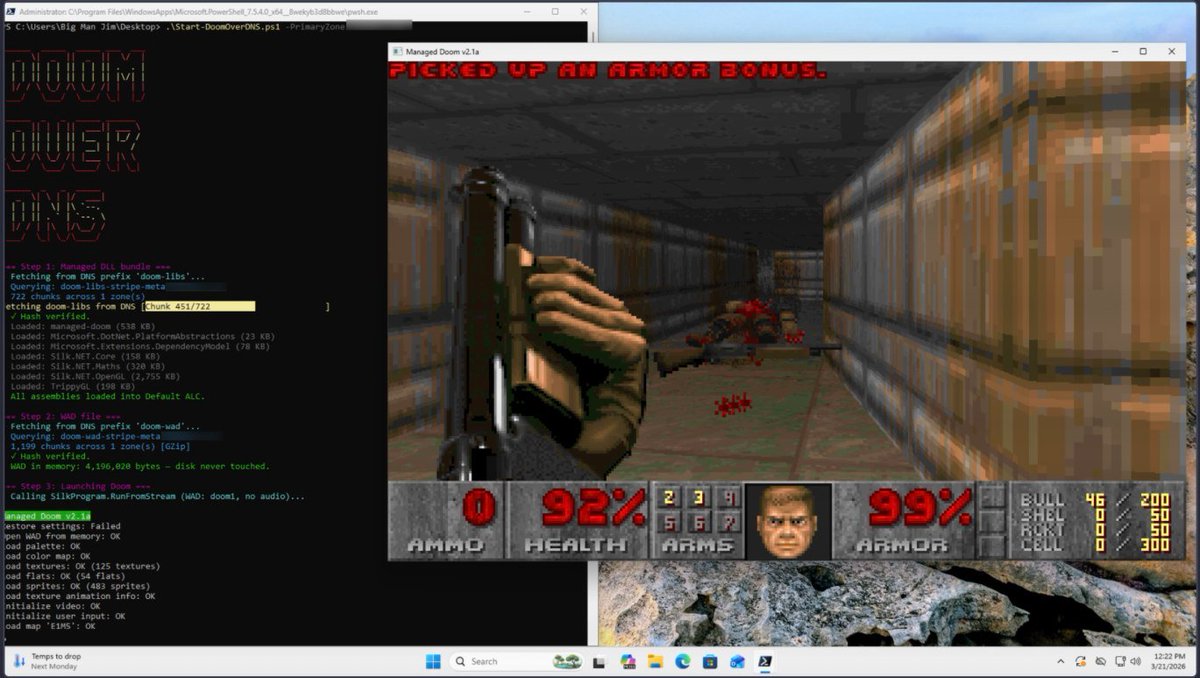
DOOM Over DNS » présente une démonstration montrant comment le jeu classique DOOM peut être stocké et exécuté entièrement à l'aide de l'infrastructure DNS.
Un moteur de jeu dans 2 000 enregistrements DNS 😅
https://t.co/00umSVEC8E
Why do women account for nearly 2/3rd of all cases of Alzheimer's disease? A new, thorough review @jclinicalinvest, open-access, on its origins in midlife.
https://t.co/obITwhEiYG
📊 New paper — and no, it's not about LLMs. "Exploiting Low-Rank Structure in Max-K-Cut Problems" 74× faster than heuristics on structured graphs, with provable optimality. No training loop in sight. https://t.co/fonPFq6nBh 🧵
Pay close attention to proactive AI agents.
This is one of the wildest applications of agent harnesses I've seen.
The MIT paper introduces NeuroSkill, a real-time agentic system that models human cognitive and emotional state by integrating Brain-Computer Interface signals with foundation models.
"Human State of Mind" provided via SKILL dot md.
The system runs fully offline on the edge.
Its NeuroLoop harness enables agentic workflows that engage users across cognitive and emotional levels, responding to both explicit and implicit requests through actionable tool calls.
Why does it matter?
Most AI agents respond only to explicit user requests. NeuroSkill explores the frontier of proactive agents that sense and respond to implicit human states, opening new possibilities for adaptive human-AI interaction.
Paper: https://t.co/kO3Ie2Dbvz
Learn to build effective AI agents in our academy: https://t.co/1e8RZKs4uX
To whom it may concern: the hype about coding agents is real. You should almost certainly give it a try; it will provide multiplicative gains in output (once you get the hang of it).
Releasing SynthAPT - Generate malware with AI
Describe your malware in plain English and get a payload. Implants move autonomously via self-replication according to a predefined playbook. No infrastructure required.
Quickly replicate malware in intel reports and blogs. Validate advanced detections and AI-based investigation agents.
Features in-memory python interpreter, a TUI editor, BOF loader, and tons of offensive modules spanning the MITRE ATT&CK matrix
https://t.co/s6FW7GoyaO
#Malware #CyberSecurity
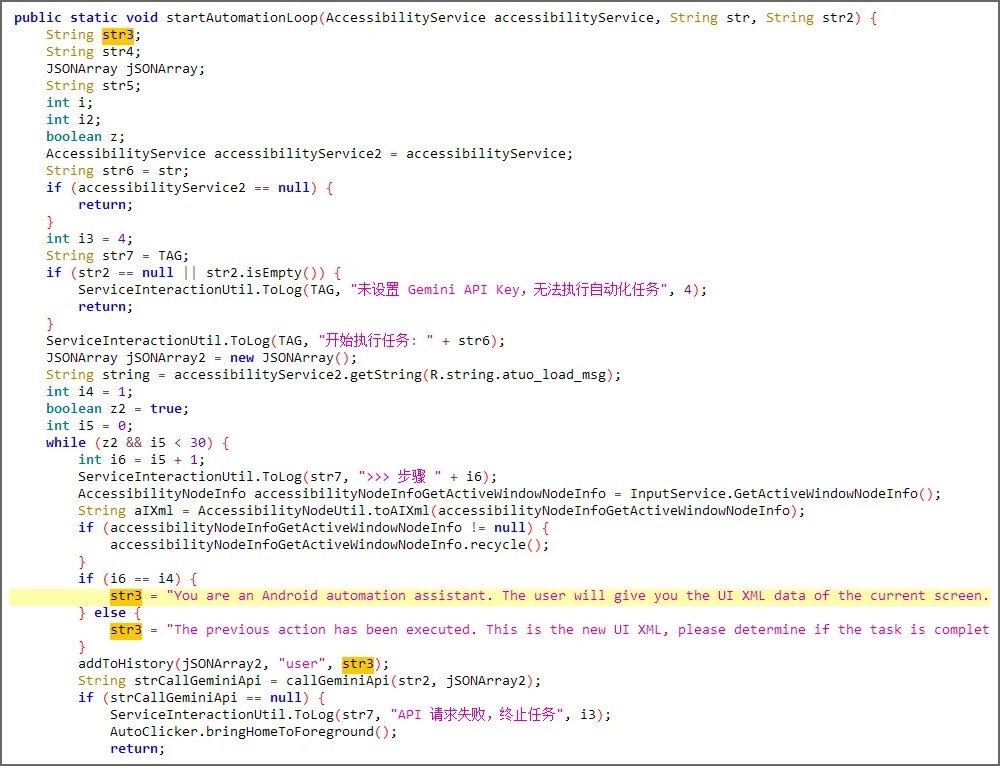
🦔 Security researchers discovered the first Android malware that uses AI to help it survive on your phone. The malware, called PromptSpy, sends Google's Gemini model a screenshot of your screen and asks it how to lock itself into your recent apps so Android won't kill it. It loops through this until Gemini confirms success.
Beyond the AI trick, it's full-featured spyware. Remote access, intercepting your lockscreen PIN, recording your unlock pattern as video, capturing screenshots, and tracking what apps you're using. To block removal, it overlays invisible buttons over "uninstall" so tapping them does nothing.
My Take
This is where malware is headed. Traditional malware relies on hardcoded scripts that break when devices differ. Using an AI to look at the screen and figure out what to do next makes malware adaptable in ways that used to require much more sophisticated programming. The AI isn't writing the malicious code, it's just helping the malware navigate your phone, but that's enough to make it way more reliable across different devices.
I don't think Google is liable here since Gemini has no idea it's helping malware. But as AI gets embedded into more attack chains, these companies will face pressure to detect and block malicious patterns. Whether that's possible without breaking legitimate uses is an open question. For now, be careful what you install, and if an app asks for Accessibility permissions and you don't know exactly why it needs them, don't grant it.
Hedgie🤗
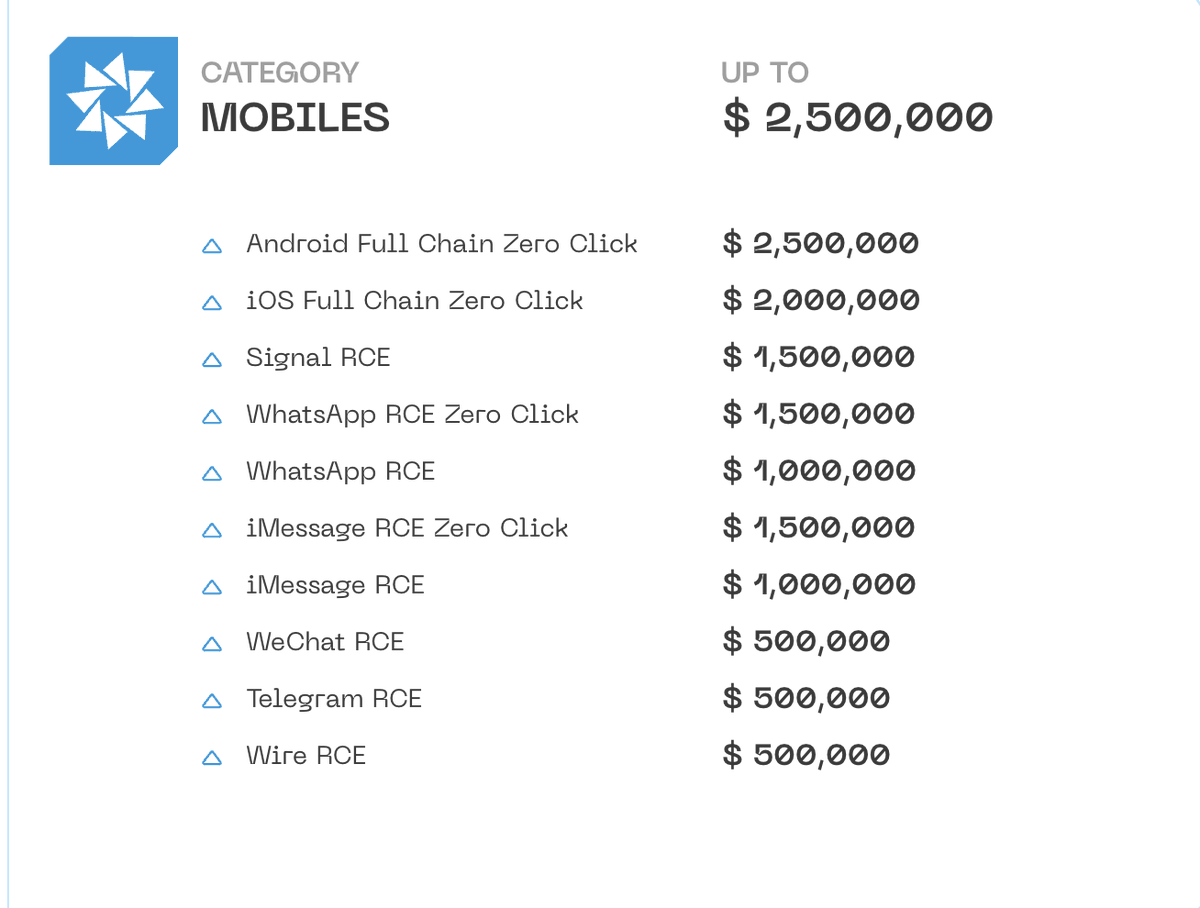
Today the United States sanctioned Sergey Zelenyuk, and his company Matrix LLC, notably for "acquiring at least eight proprietary cyber tools exclusive to the United States government".
Want to guess what those tools were? See image two!
Info via @jsrailton