Crazy fact:
Starship will attempt a LEO mission after 13 full-stack flights and three major generations, V1 to V3.
New Glenn reached orbit on its maiden flight. That is a real achievement.
But getting to orbit is only the first gate.
If SpaceX only wanted LEO, the path could have been much shorter. Starship was designed from day one for the final goal: a fully reusable system, booster recovery, Ship reentry and landing, then orbital refueling.
That requires learning safely, step by step, and iterating through real flight data.
New Glenn still has to prove that BE-4 can be reliable and scalable over a high flight rate. If that problem is not fully solved, it may still face its own long road.
Sometimes designing for the final destination looks slow at first.
Slow is fast.
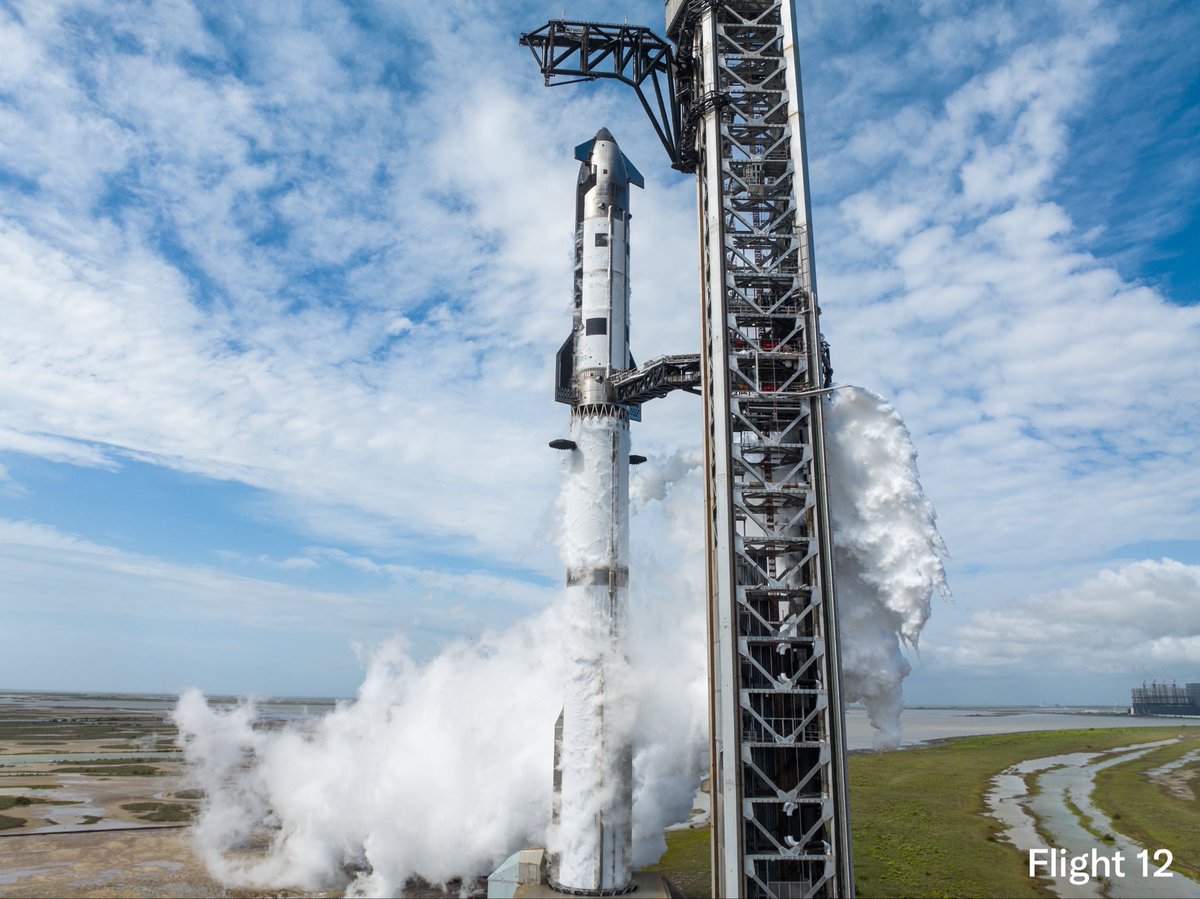
📸By the way, during Flight 13, several protective casings were intentionally left off Booster 20. So, I don’t rule out the possibility that B21 will take off without them🤔
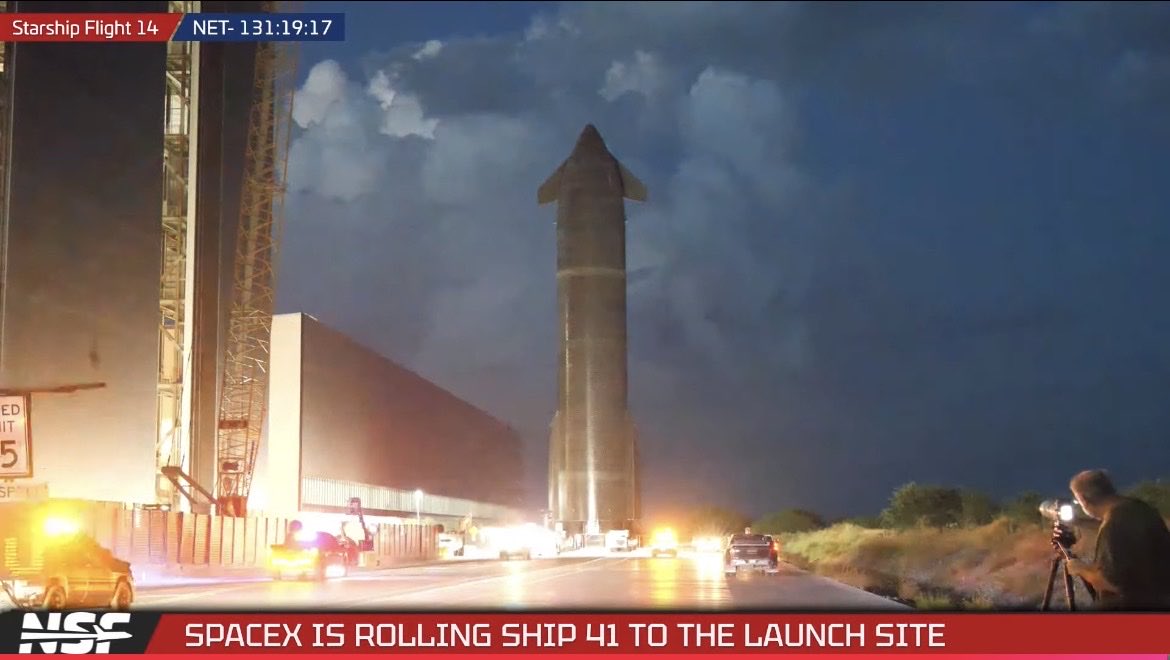
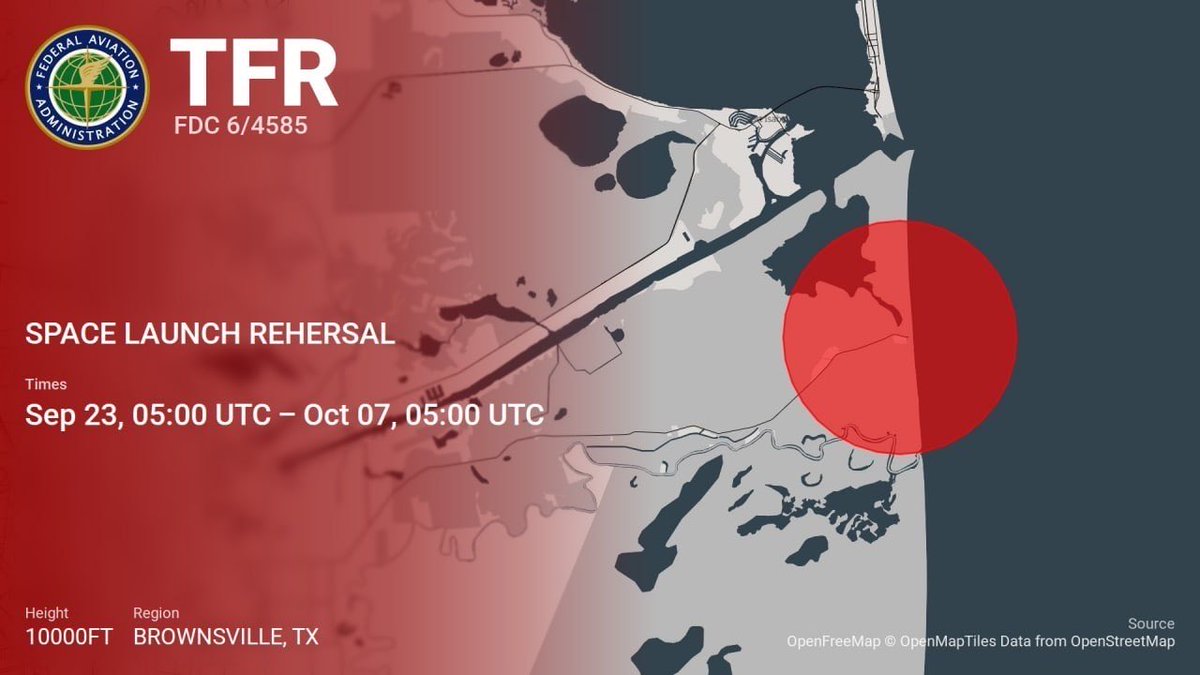
📸My opinion: we will see the full stack V3 again in a couple of hours. Ship 41 will be moved to Pad 2 and installed on top of B21. Then, according to the TFR, a WDR test will be carried out. I don’t see the need to return them to the hangars, as they are fully ready for flight❗️
T-144:00:00
📸6 days until launch of Starship flight 14 (Starlink group 31-1).
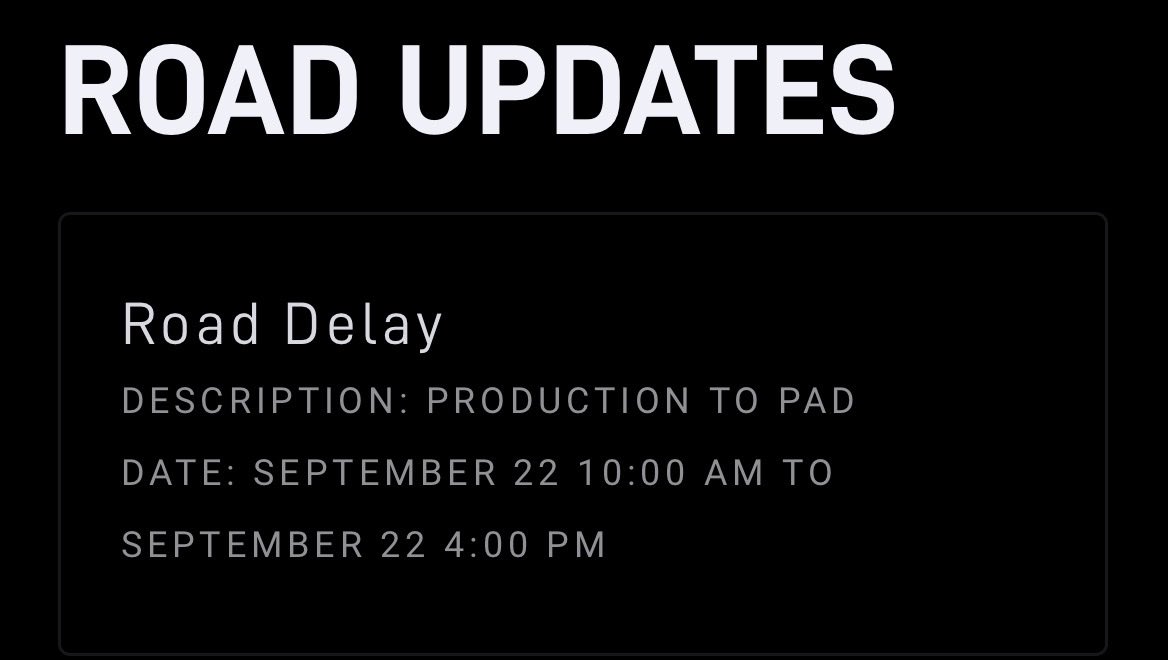
Starlink V3 is loaded into Ship 41, Booster 21 on launch pad 2. There are road closures for rolling out S41 and TFR for the WDR test from September 23 to October 7. We are still waiting for FAA😂
Starlink V2 satellites have 3 laser terminals. V3 will have 6.
Future AI1 compute satellites could plug into that same network, linking with Starlink through lasers and turning Starlink + Starmind into one giant orbital system.
If the constellation gets dense enough, it could look like a Dyson sphere slowly forming around Earth.
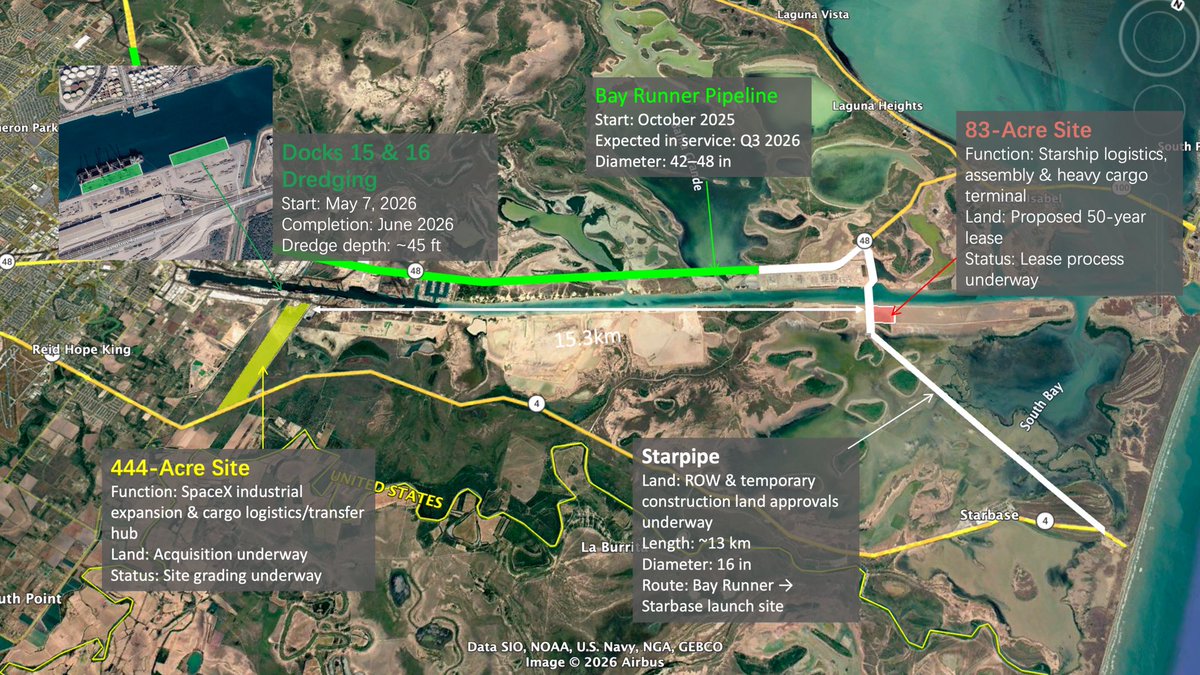
Starpipe is moving forward.
The natural gas pipeline, being developed by SpaceX affiliate Lone Star Mineral Development, will be about 13 km long and 16 inches in diameter. It’s expected to connect with the Bay Runner pipeline on the north side of the Brownsville Ship Channel, cross the channel, and run all the way to Starbase.
The port section is already moving through ROW approvals: about 9.25 km long, 30 ft wide, with a roughly $1 million channel-crossing fee and about 1.9 acres of permanent surface facilities.
The pipeline will end near Starbase’s propellant infrastructure area.
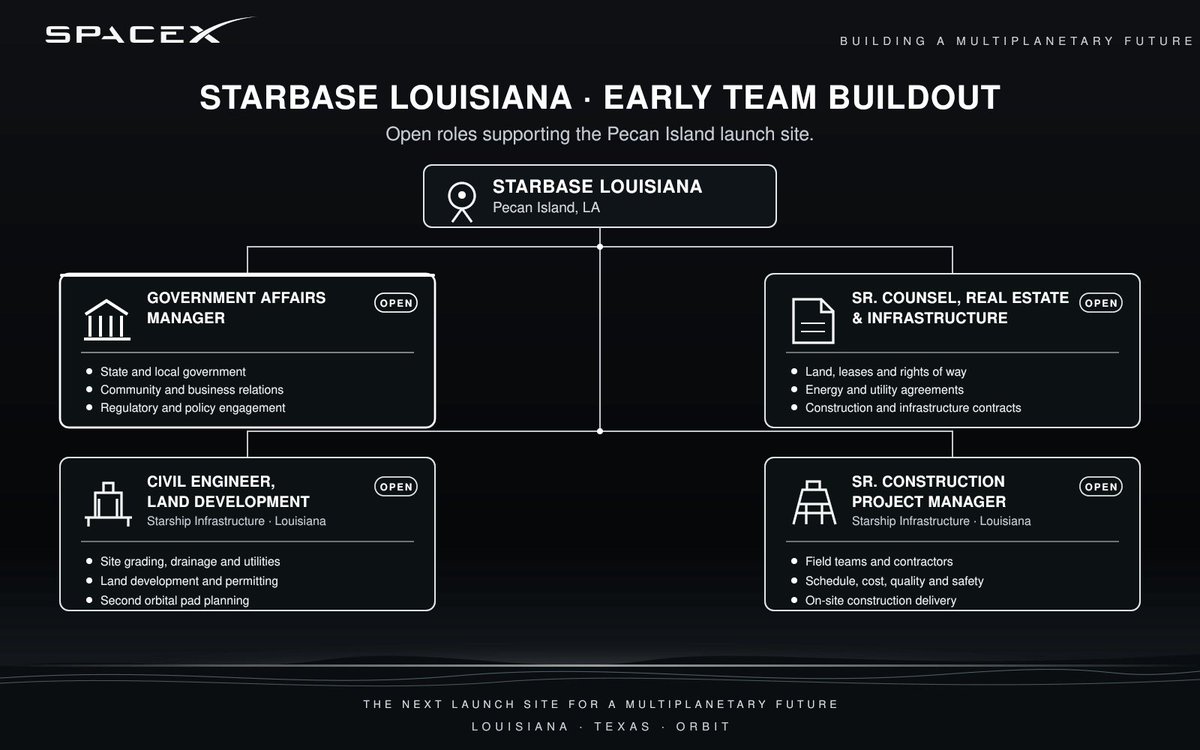
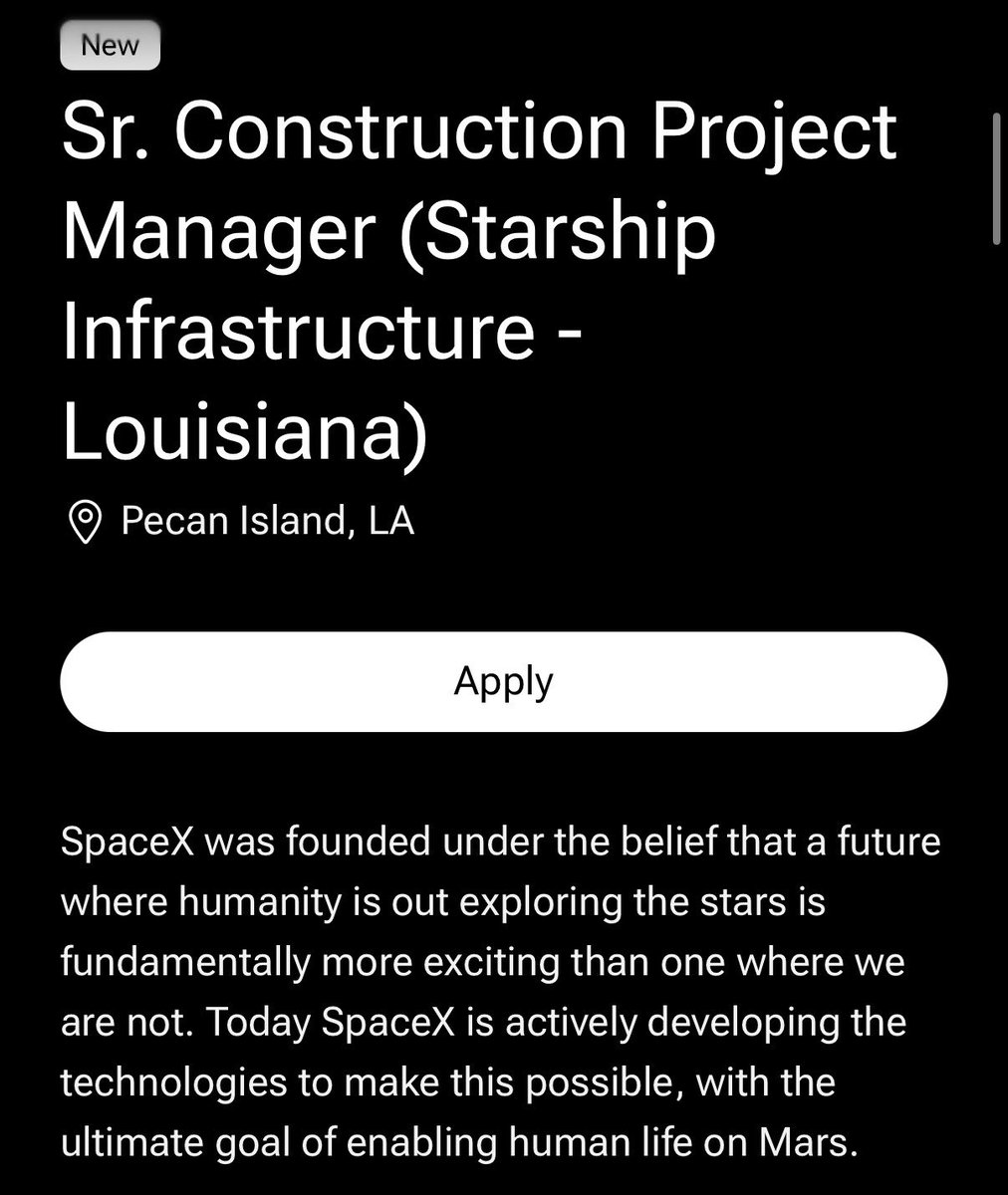
SpaceX is hiring a Senior Construction Project Manager for Starbase Louisiana.
The role will run on-site construction, contractors, safety, quality, schedule, and budget. It starts at Starbase, Texas, then relocates to Louisiana in early 2027.
The Government Affairs Manager position is still open, so they likely have not found the right person yet.
SpaceX’s eventual Starship launch network:
Starbase, Texas: 2 pads
Florida: 3 pads
Starbase Louisiana: 10 planned pads
Now imagine just three pads reaching an average cadence of one Starship launch per month in 2027.
That would mean 36 launches a year.
At 80 tonnes to LEO per launch, Starship would deliver 2,880 tonnes to orbit, that is about 1,440 new V3 satellites in a single year, roughly 1.6 to 1.8 times the capacity of today’s entire Starlink network.
Once Starship becomes routinely and fully reusable, the cadence could go much higher.
@LunarCitizens Starship will dominate the entire space transportation market once it reaches key milestones in its test program. Full and rapid reusability and orbital refueling.
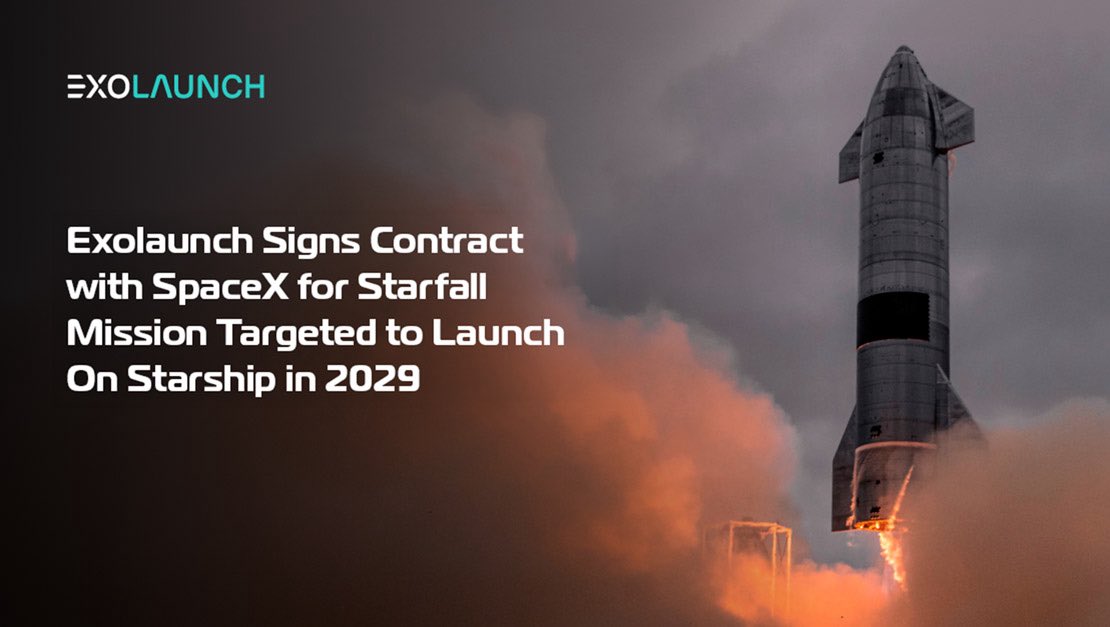
Starship’s second booked commercial customer.
Exolaunch has signed with SpaceX for a 2029 Starfall mission on Starship.
The Starship commercial era is starting to take shape.
This is everything happening at the Port of Brownsville.
A Starship logistics and transfer hub is now taking shape, connecting Starbase with Cape Canaveral in Florida and the future Starbase Louisiana.