KCMO families spend thousands per year to own a car - a kind of regressive tax to access jobs and basic services. Having safe mobility options expands opportunities for residents to invest in themselves and their neighborhoods instead of fuel, insurance, and auto loans.
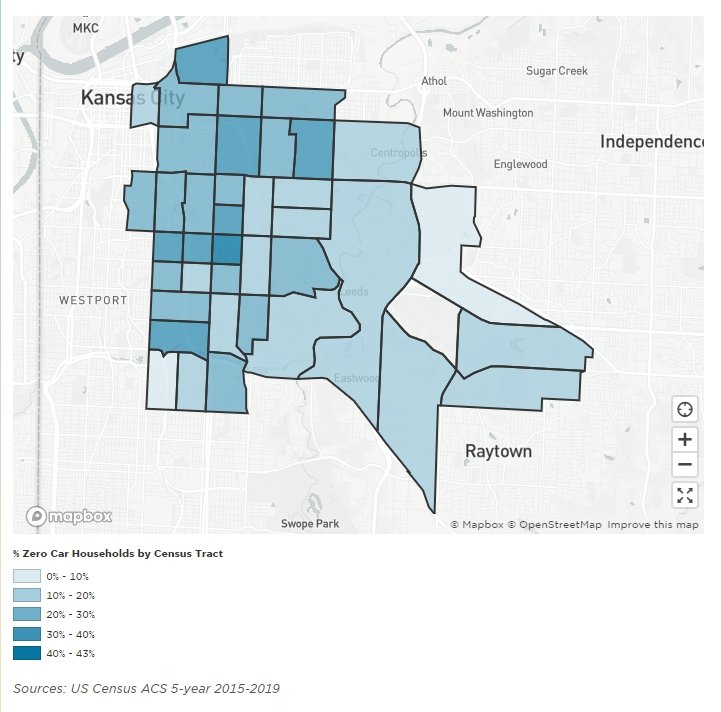
More than one in five KCMO 3rd District households have no access to a car. In many census tracts it's more than a third of households. In some it's more than four in ten. What should community-serving infrastructure look like in a neighborhood where 4 in 10 don't drive?
Let me be clear: American highways were too often built through Black neighborhoods on purpose—dividing communities, adding pollution, and making pedestrians less safe.
This is your periodic reminder that outdoor vehicle storage takes up more land in Downtown Kansas City than every other use combined. Not counting thousands of street and podium spaces.
Kansas City's 1923 zoning map. Interesting that the River Market and Columbus Park had more permissive zoning than Downtown and the Crossroads. It's the opposite today. https://t.co/UxPZC0HJyu
Here is a rough sketch of how some well-known streets balance different uses and users, with some help from @streetmix. In a way, each street has its own #streetdna sequence that influences how it looks and functions.