Optimal Local Therapy After Systemic Response in Muscle-Invasive Bladder Cancer.
#IBCG26 What is the optimal local therapy after systemic response in #MIBC? @SimaPorten, @WesKassouf, and @gdgrass join @pjhensley11 to discuss surgery, radiation, and surveillance options. #WatchNow > https://t.co/RhHXxy08i1 @UroDocAsh
Navigating novel treatment options in nonmuscle-invasive #BladderCancer for #Nurses and #APPs. Samantha Steinke, APRN, MSN-FNP, BSN, RN & Brenda Martone, MSN, ANP-BC, AOCNP @NorthwesternMed address coordination within the expanding #NMIBC treatment landscape. Novel intravesical agents are supported by manufacturer-provided education covering side effects and administration workflows.
#WatchNow > https://t.co/KZYPgbcYp2 @NUFeinbergMed@LurieCancer
OPTION-DDR and personalized platinum chemotherapy in HRR-mutated #mCRPC. Michael Ong, MD, FRCPC @OttawaHospital joins @zklaassen_md to discuss OPTION-DDR, a phase 3 randomized trial of 236 patients comparing docetaxel plus carboplatin against docetaxel alone in HRR-mutated metastatic castration-resistant prostate cancer. Overall survival is the primary endpoint, with radiographic progression-free survival and quality of life as secondary endpoints. #WatchNow > https://t.co/oiKGYzTDFH
Assessing Bladder Compliance: Current Methods and Their Limitations in Clinical Practice.
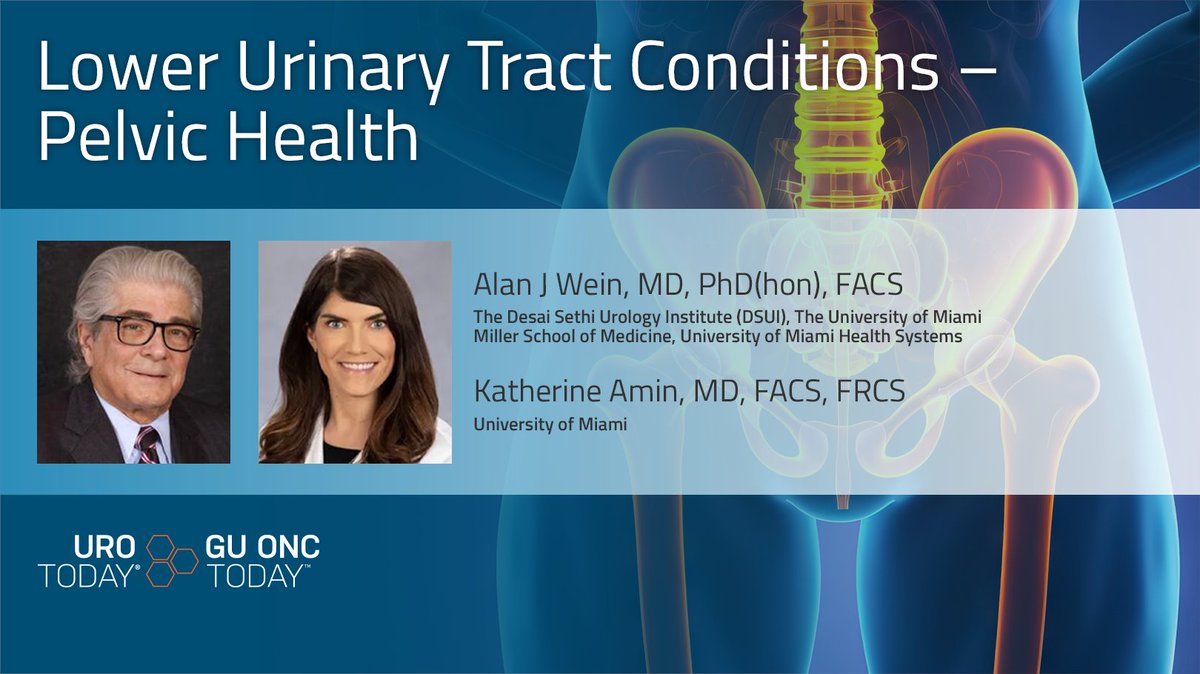
Can bladder compliance alone predict upper tract risk? @icuptoo joins Alan Wein, MD, PhD(hon), FACS, to discuss current #Urodynamics methods and their limits, noting that compliance is an inexact standalone metric and standardized measurement is a priority. #WatchNow > https://t.co/Z4tqHy4LVr
Cretostimogene Grenadenorepvec in BCG-unresponsive #NMIBC with CIS and the BOND-003 trial. #JournalClub discussion with @RKSayyid@UAUrology and @zklaassen discussing BOND-003 Cohort C, a single-arm phase 3 trial of intravesical cretostimogene grenadenorepvec in 112 patients with BCG-unresponsive CIS non-muscle-invasive bladder cancer. #WatchNow > https://t.co/nyzE8NqwBf
Shared Decision-Making in #BladderCancer Care from the Patient Advocacy Perspective.
What do patients want clinicians to understand? Patient advocates @BCAN_Research, Michelle Colero, and Lori Funk-Cirefice join @pjhensley11 to discuss shared decision-making, communication and priorities in #BladderCancer care. #IBCG2026 #WatchNow > https://t.co/j0wxoi43pn @WorldBladderCan@IBCG_BladderCA@UroDocAsh
Video Urodynamics vs Conventional Urodynamics in Neurogenic Lower Urinary Tract Dysfunction.
Video or conventional #Urodynamics in neurogenic LUTD? Michael Guralnick, MD, FRCSC @MedicalCollege joins Alan Wein, MD, PhD(hon), FACS @dsui_miami_uro, to discuss when adding fluoroscopy is preferred in evaluating neurogenic lower urinary tract dysfunction. #WatchNow > https://t.co/T9U0LD11Lv
Modern Perioperative Systemic Therapy Approaches for Muscle-Invasive #BladderCancer.
Perioperative #MIBC in 2026: how do we choose among the new systemic strategies? @PGrivasMDPhD & @DrRosenbergMSK join @pjhensley11 to discuss modern perioperative systemic therapy approaches. #IBCG26 #WatchNow > https://t.co/PeXyfvaaGb @UroDocAsh@IBCG_BladderCA
Bringing minimally invasive #OAB procedures into the office: @arianasmith23@PennMedicine joins Alan Wein, MD, PhD(hon), FACS @dsui_miami_uro to review how to integrate them into clinic workflow. #WatchNow > https://t.co/a4nrh14nmk
Clinical Decision-Making with ctDNA in #BladderCancer Practice.
Can ctDNA guide escalation or de-escalation in #MIBC? Seth Lerner, MD, FACS, @apolo_andrea, and Jeffrey Ross, MD, Dec (HC), join @shilpaonc to discuss clinical decision-making with ctDNA in bladder cancer practice. #IBCG26 #WatchNow > https://t.co/O8KBXBsOwA @UroDocAsh
Navigating novel treatment options in nonmuscle-invasive #BladderCancer for nurses and APPs - Samantha Steinke, APRN, MSN-FNP, BSN, RN & Brenda Martone, MSN, ANP-BC, AOCNP @NorthwesternMed address coordination within the expanding NMIBC treatment landscape. Novel intravesical agents are supported by manufacturer-provided education covering side effects and administration workflows. Since some treatments require infusion capacity beyond urology's usual space, Nurse Steinke's practice has started coordinating with campus infusion teams, establishing communication pathways as adoption increases. #WatchNow > https://t.co/KZYPgbcYp2 @NUFeinbergMed@LurieCancer
Restricted Mean Survival Time Analysis of First-Line IO Combinations in Advanced RCC.
How much survival do first-line IO combinations add in advanced #RCC? @yuish_uro joins @PBarataMD to discuss a restricted mean survival time analysis of 4 phase 3 trials; ipi-nivo was most cost-effective per month gained. #WatchNow > https://t.co/xBDcLcftKD
Comparison of Aquablation with TURP in Benign Prostatic Hyperplasia.
Is aquablation the new go-to for #BPH? @dsui_miami_uro joins Alan Wein, MD, PhD(hon), FACS to compare aquablation with TURP and highlights its better preservation of ejaculatory and sexual function. #WatchNow > https://t.co/ridPgfwJBk
Intravesical Gentamicin Instillations for Recurrent Urinary Tract Infections.
Recurrent #UTI in neurogenic bladder: Anne Pelletier Cameron, MD, FRCSC, URPS @UMich joins Alan J. Wein, MD, PhD(hon), FACS @dsui_miami_uro to discuss intravesical gentamicin, which cut lab-proven symptomatic UTIs from 3.9 to 1.1 per year. #WatchNow on UroToday > https://t.co/mOEs5wPh3I
ROBUST III Trial Results in Short Bulbar Urethral Strictures.
3-year ROBUST III results for recurrent #UrethralStricture: Sean Elliott, MD @UMNews joins Alan Wein, MD, PhD(hon), FACS @dsui_miami_uro to discuss the drug-coated balloon, with 71.9% of men free from repeat intervention at 3 years. #WatchNow on UroToday > https://t.co/floOl1uhJP
Proactive adverse event management for talazoparib plus enzalutamide in metastatic APMS. @CaPsurvivorship@DanaFarber joins @neerajaiims@huntsmancancer to discuss anemia management in the TALAPRO-3 regimen. The trial added talazoparib to enzalutamide in HRR-mutated metastatic hormone-sensitive prostate cancer, achieving 52% rPFS risk reduction. Dr. Morgans recommends an anemia panel at baseline to identify correctable causes before attributing low hemoglobin to treatment. #WatchNow > https://t.co/5dTknzXZHv