Esto NO es un juego nativo.
Es una web.
Corre en el navegador con WebGL y Three.js, sin descargas, y va fluido hasta en móvil.
Web: https://t.co/lwRzk1ggXr
Haces de mensajero repartiendo cartas y paquetes por un planeta diminuto, con multijugador y todo.
Lo lejos que ha llegado el desarrollo web es una LOCURA.
10 GITHUB REPOS SO GOOD THEY PROBABLY SHOULDN’T BE FREE:
1. OmniRoute — One endpoint for 231 AI providers with token compression and automatic fallback
[https://t.co/hn6WmIgjDM]
2. OfficeCLI — Control Word, Excel, and PowerPoint from one command line
[https://t.co/xU8e2FUq9J]
3. System Prompts Leaks — System prompts from Claude, GPT, Gemini, Grok, Cursor, Copilot, and more
[https://t.co/OS0J1XTxs5]
4. OpenCut — Free open-source CapCut alternative that runs in your browser
[https://t.co/XQsJyIYw1n]
5. AI Job Search — Claude Code agent that analyzes jobs, adapts your CV, and writes cover letters
[https://t.co/HX9L2Z3uae]
6. Meetily — Fully local meeting transcription and summaries using Whisper and Ollama
[https://t.co/4U5vZF6tKz]
7. Vibe-Trading — Build and execute trading strategies using natural language and AI agents
[https://t.co/0rudpZZjZq]
8. Strix — Open-source AI vulnerability scanner for finding and fixing security issues
[https://t.co/aAohRRcOK3]
9. Superpower — Self-hosted AI workspace
[https://t.co/jbo9ZwmHRV]
10. Firecrawl — Turn any website into clean, LLM-ready data
[https://t.co/SekT0HjA7S]
🚨Architects are going to hate this.
Someone just open-sourced a full 3D building editor that runs entirely in your browser.
No AutoCAD. No Revit. No $5,000/year licenses.
It's called Pascal Editor.
Built with React Three Fiber and WebGPU -- meaning it renders directly on your GPU at near-native speed.
Here's what's inside this thing:
→ A full building/level/wall/zone hierarchy you can edit in real time
→ An ECS-style architecture where every object updates through GPU-powered systems
→ Zustand state management with full undo/redo built in
→ Next.js frontend so it deploys as a web app, not a desktop install
→ Dirty node tracking -- only re-renders what changed, not the whole scene
Here's the wildest part:
You can stack, explode, or solo individual building levels. Select a zone, drag a wall, reshape a slab -- all in 3D, all in the browser.
Architecture firms pay $50K+ per seat for BIM software that does this workflow.
This is free.
100% Open Source.
Your GitHub profile is your second resume.
Make it count.
Build your README
https://t.co/z0VMAh66qW
GitHub Stats
https://t.co/Mkt8xA36n3
GitHub Streak
https://t.co/GhQgTi0zvf
https://t.co/unp8S8LA5k
https://t.co/wz3bwEt916
Capsule Render
https://t.co/Xw4Q2d7NDM
GitHub Trophies
https://t.co/Pa3FllQN80
Profile Summary
https://t.co/yCmL8vHUZB
Visitor Badge
https://t.co/bybfWkbREJ
Make your GitHub profile stand out.
Bookmark this.
NopeCHA is an open-source CAPTCHA automation tool that provides its own API and browser extension for solving challenges across multiple services.
- Supports reCAPTCHA, hCaptcha, Turnstile, GeeTest, PerimeterX, AWS WAF, and FunCAPTCHA.
- Available as a browser extension for Chrome and Firefox.
- Offers Python (PyPI) and JavaScript (NPM) packages for API integration.
- Includes configurable mouse speed, solve-status diagnostics, and pass-rate tracking.
Best accounts to follow from each frontier lab to stay constantly up to date
Anthropic
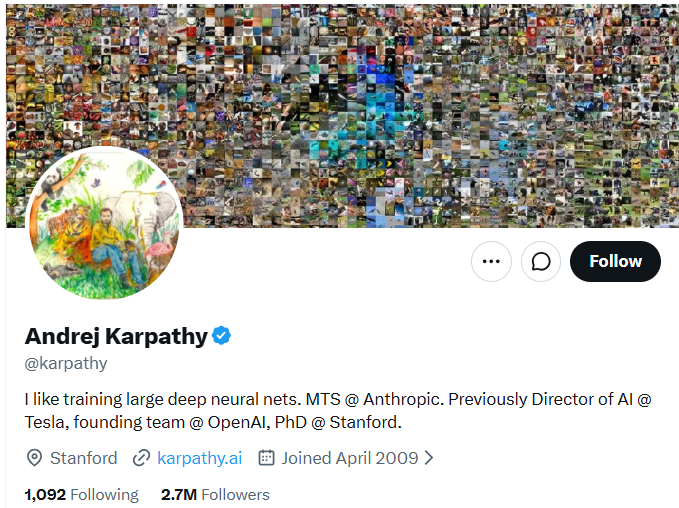
@karpathy
- must-follow account for AI; recently joined Anthropic
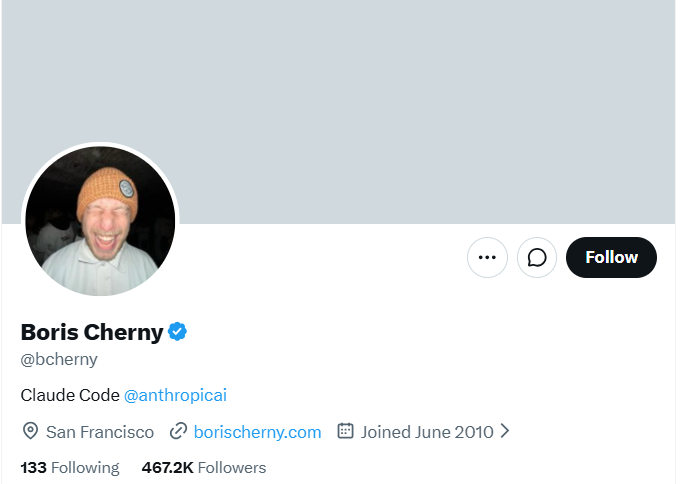
@bcherny
- Claude Code creator, always shares great tips
@trq212
- also a Claude Code developer; writes amazing articles on CC
OpenAI
@polynoamial
- works on reasoning research, shares a lot of technical details
@gabriel1
- Sora developer, great career path
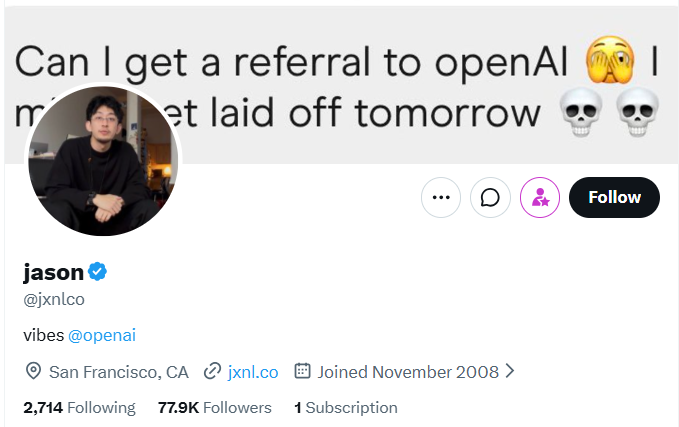
@jxnlco
- works on dev experience, shares a lot about Codex
Google AI
@OfficialLoganK
- all the major Google Gemini and AI Studio updates
@ammaar
- product and design; shares great things about vibe-coding in Google AI Studio
@fofrAI
- cool use cases for generative models
Cursor
@leerob
- the loudest voice behind Cursor updates
@ericzakariasson
- shares great insights on using Cursor
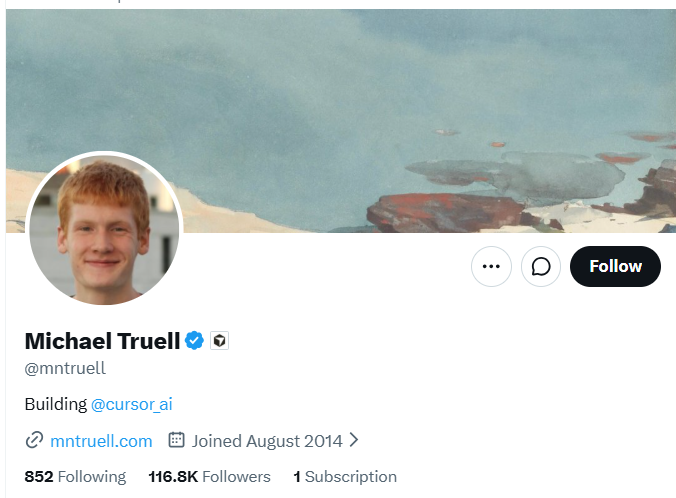
@mntruell
- Cursor’s CEO; major releases and usage updates
xAI
@milichab
- recently joined xAI, shares updates on Grok
@skcd42
- also covers major Grok releases
@ai_explorer25
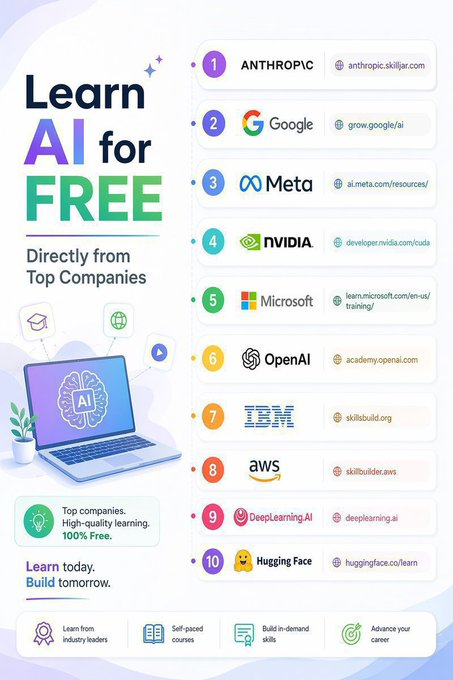
- covers all ai content and free resources
You're in an AI engineer interview at Apple.
The interviewer asks:
"Siri processes 25B requests/mo.
How would you use this data to improve its speech recognition?"
You: "Upload all voice notes from devices to iCloud and train a model"
Interview over!
Here's what you missed:
Modern devices (like smartphones) host a ton of data that can be useful for ML models.
To get some perspective, consider the number of images you have on your phone right now, the number of keystrokes you press daily, etc.
And this is just about one user: you.
But applications have millions of users, so the amount of data is unfathomable.
The problem is that data on modern devices is mostly private.
- Images are private.
- Messages you send are private.
- Voice notes are private.
So it cannot be aggregated in a central location to centrally train ML models.
Federated learning smartly addresses this challenge.
The visual below depicts the core idea:
- Instead of aggregating data on a central server, dispatch a model to an end device.
- Train the model on the user’s private data on their device.
- Fetch the trained model back to the central server.
- Aggregate all models obtained from all end devices to form a complete model.
This setup ensures private data remains exclusively on the user’s device.
Furthermore, federated learning distributes most computation to a user’s device, reducing computation requirements on the server side.
This is how federated learning works!
Of course, this is easier said than done since there are many challenges to federated learning:
- Client devices are constrained with limited RAM, battery-powered, and actively used (so can't hog resources). How do we train within these limits?
- Say we have trained the model somehow. How do we aggregate different models received from the client side to get a central model?
- [IMPORTANT] Privacy-sensitive datasets are always biased with personal likings and beliefs. For instance, in an image-related task:
↳ Some clients may have several pet images.
↳ Some clients may have several car images.
↳ Some clients may love to travel, so most images they have are travel-related.
↳ How do we handle such skewness in client data distribution?
I'll cover the solutions to these challenges in a separate post.
👉 Over to you: What are some other challenges to Federated learning?
____
Find me → @_avichawla
Every day, I share tutorials and insights on DS, ML, LLMs, and RAGs.
An Israeli settler from the Jew Klux Klan clubbed an elderly woman while she was harvesting olives in Turmusaya north of Ramallah
The woman is now reportedly in the ICU and the Zionist youth terrorist is unpunished as usual
Our biggest misfortune is that our neighbor's media is so ignorant, they even claimed this Indian vlogger to be Bangladeshi, amplified misinformation from RW X accounts.
𝐔𝐧𝐥𝐨𝐜𝐤 𝐀𝐢𝐫𝐝𝐫𝐨𝐩 𝐑𝐮𝐥𝐞𝐬 — 𝐁𝐢𝐠 𝐃𝐫𝐨���� 𝐈𝐧𝐜𝐨𝐦𝐢𝐧𝐠! 🏆
The #Airdrop is right around the corner, and now’s the moment to pay attention to what affects how many tokens you can collect!
🌳 For all our 𝗹𝗼𝘆𝗮𝗹 Seedizens, this is your chance to step up and climb the rankings even higher.
🌱 For 𝗻𝗲𝘄 Seedizens, it’s the perfect time to jump in and grab your share — there’s much more coming after the listing!
🚨 𝐁𝐮𝐭 𝐡𝐞𝐫𝐞’𝐬 𝐭𝐡𝐞 𝐜𝐚𝐭𝐜𝐡: if you haven’t logged in for over 30 days, your #SEED is at risk of being burned before the drop. So don’t wait—get back while you still can!
Keep going, #Seedizens! 💪🏻






![_avichawla's tweet photo. You're in an AI engineer interview at Apple.
The interviewer asks:
"Siri processes 25B requests/mo.
How would you use this data to improve its speech recognition?"
You: "Upload all voice notes from devices to iCloud and train a model"
Interview over!
Here's what you missed:
Modern devices (like smartphones) host a ton of data that can be useful for ML models.
To get some perspective, consider the number of images you have on your phone right now, the number of keystrokes you press daily, etc.
And this is just about one user: you.
But applications have millions of users, so the amount of data is unfathomable.
The problem is that data on modern devices is mostly private.
- Images are private.
- Messages you send are private.
- Voice notes are private.
So it cannot be aggregated in a central location to centrally train ML models.
Federated learning smartly addresses this challenge.
The visual below depicts the core idea:
- Instead of aggregating data on a central server, dispatch a model to an end device.
- Train the model on the user’s private data on their device.
- Fetch the trained model back to the central server.
- Aggregate all models obtained from all end devices to form a complete model.
This setup ensures private data remains exclusively on the user’s device.
Furthermore, federated learning distributes most computation to a user’s device, reducing computation requirements on the server side.
This is how federated learning works!
Of course, this is easier said than done since there are many challenges to federated learning:
- Client devices are constrained with limited RAM, battery-powered, and actively used (so can't hog resources). How do we train within these limits?
- Say we have trained the model somehow. How do we aggregate different models received from the client side to get a central model?
- [IMPORTANT] Privacy-sensitive datasets are always biased with personal likings and beliefs. For instance, in an image-related task:
↳ Some clients may have several pet images.
↳ Some clients may have several car images.
↳ Some clients may love to travel, so most images they have are travel-related.
↳ How do we handle such skewness in client data distribution?
I'll cover the solutions to these challenges in a separate post.
👉 Over to you: What are some other challenges to Federated learning?
____
Find me → @_avichawla
Every day, I share tutorials and insights on DS, ML, LLMs, and RAGs.](https://pbs.twimg.com/media/G6LaPGMacAIhMhk.jpg)