Harare → Chirumanzu in a Mk4 1.6 🛣️
I tweet: Zim road trips, World Cup CAT times, fuel math that saves you $
Blue Water Security | 230km is my therapy
#ZimDriv
Finished *Hijack* S1. Idris Elba negotiated for 7hrs on a plane ✈️
Meanwhile Zupco conductors negotiate for 7hrs to get $1 from Chitungwiza 😂
Who’s the better negotiator? Be honest 👇 #Hijack#ZimTwitter
Unpopular opinion: Monday traffic in Harare is worse than a 4AM World Cup loss 😭
Chitungwiza congestion hurts more?
Be honest 👇 #ZimTwitter#WorldCup2026
Current status: Chikwanha shops, Castle Lite, 1hr to kickoff ⚽
If your Saturday doesn’t sound like this, are you even in Zim? 🇿🇼
Show me your setup 👇 #WorldCup2026
England 🏴 have suffered a serious blow after a large quantity of their team equipment was stolen before their World Cup opening match.
Players’ boots, training kits, coaching staff gear, footballs, and match-day uniforms are all reported missing.
The England camp is now working with local police to recover the stolen items or find replacements so training can proceed as planned.
Kansas City Police confirmed: “Two subjects of interest have been taken into custody pending further investigations.”
Saturday Night = World Cup Night 🇿🇼⚽
CAT times for tonight:
10PM: Qatar vs Switzerland
1AM: Brazil vs Morocco 🔥
4AM: Haiti vs Scotland
7AM: Australia vs Türkiye
I’m definitely pulling an all-nighter 1am Brazil vs Morocco 🙄
7/7 FINAL WORD
Dema → Mapiravana → Dema on 45L is doable in a Mk4 1.6 if you drive smart.
Tag a friend who’s always “running out” on that road 😂
Save this thread for your next trip.
Questions? Drop them below 👇 🇿🇼
How I do Harare → Mapiravana on 45L of fuel 🇿🇼🧵
Mk4 1.6. Full tank. 480km round trip. Empty light back on.
Here’s the exact route, costs, and lessons so you don’t get stuck at Mvuma 👇
3/7 THE FUEL MATH
Filled up with 45L in Dema on empty.
Got back to Dema with empty light on.
$45L ÷ 480km × 100 = 9.4L/100km$
That’s 10.7km/L.
At $1.60/L = $72 for the trip. 3 tollgates = $6. Total $78.
6/7 WHY 9.4L/100KM IS GOOD
Most 1.6s do 11-12L/100km on mixed tar/gravel.
Tips: Clean air filter, 2.2bar tyre pressure, no harsh braking.
Your car is only as good as how you drive it. The road respects calm drivers.
5/7 WHERE IT GETS TRICKY
1. Beatrice toll at sunrise = queue. Budget 15min
2. Mvuma fuel is $$$. Fill in Harare
3. Chirumanzu gravel has no airtime. Download offline maps
4. 7°C at night in June. Pack a jersey
4/7 SPEED + ROAD TIPS THAT SAVED ME
- 90-100km/h on A4 tar. 120km/h drinks fuel
- Coast down hills past Featherstone. Free km
- Gravel from Mvuma: 60km/h max or you’ll shake the car apart
- Windows up past trucks = 5% better consumption
A MUST READ
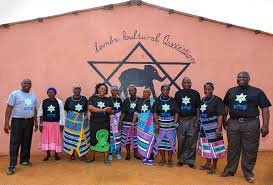
The Musoni clan (also known as vanaMusoni or part of the vaShavi) is a branch of the VaRemba (Lemba or VaMwenye) people in Zimbabwe. They primarily use the Mbeva (mouse) totem—sometimes described as a dual totem with Hwesamasango (solitary mouse)—and are found mainly in Buhera district as well as other areas such as Gutu (e.g., Chitsa), Mberengwa, Masvingo, Guruve, and scattered locations in Midlands and Mashonaland.
Their historical background is tied to the broader VaRemba/Lemba story, which combines rich oral traditions, distinctive cultural practices, and modern genetic evidence pointing to ancient Semitic (Jewish/Abrahamic) origins rather than purely local Bantu roots.
Origins and Migration (Oral Tradition and Legend)
VaRemba oral histories trace their male ancestors to Jewish traders or merchants who left Judea (ancient Israel) roughly 2,500 years ago. They first settled in Yemen (and parts of Oman), where they lived in or established a place called Sena (hence sometimes called VaSena, “people from Sena”). Over time, conditions prompted a sea migration to Africa. They traveled using monsoon trade winds, under leaders whose names survive locally as Suleiman/Seremani and Zaid/Saidi.
Some traditions link the praise name “Musoni” itself to “monsoon” (the winds that carried them) or possibly to pre-Islamic sects. Upon reaching southern Africa (via routes through present-day Mozambique and trading networks linked to Great Zimbabwe-era commerce), they settled among local groups while maintaining endogamy and core customs. In Zimbabwe they became known as VaRemba, VaMwenye (“foreigners/owners” or “people of the owners”), or Mushavi (merchants/traders).
This migration and settlement likely occurred over several centuries, with intermarriage into Shona society while preserving a distinct identity through 12 core “houses” or clans (e.g., names like Tovakare, Seremani/Suleman, Hamisi, Sadiki, etc.).
Adoption of Shona Totems and Identity in Zimbabwe
Once in Zimbabwe, the VaRemba adopted local Shona customs, including totems (mutupo). The Musoni branch specifically reveres the Mbeva (mouse) totem, reflected in praise poetry such as:
“Maita musoni
Muzungu vasingarimi, vasibati nyama
Vanovetera yabva pamoto, vasengwengwe
… VaRemba, Vamwenye, Vaera mbeva …”
This poetry explicitly identifies Musoni people as VaRemba and Vaera mbeva. In some contexts or dialects they are also linked to the Zhou totem (here referring to a mouse/rat rather than elephant). In Mberengwa they are more often called vaShavi with the Zhou totem; in Buhera, Gutu, and similar districts they are vanaMusoni with the Mbeva totem.
The mouse totem carries symbolic meanings of wisdom, adaptability, and survival; one folk explanation is that ancestors followed mice to discover better food sources or safe paths.
Distinct Cultural and Religious Practices
These set the VaRemba (including the Musoni clan) apart and echo Abrahamic/Jewish traditions:
Male circumcision for all boys (a long-standing practice that has helped reduce HIV transmission rates in their communities).
Dietary laws — no pork, no unclean meats, and kosher-like rules (e.g., separating foods, preferring halal-style meat). Many Musoni/Mbeva people still avoid pork and the mouse itself.
Sabbath observance (historically strict, though now often syncretised with Christianity or Islam).
Endogamy — traditional preference for marriage within the 12 Lemba clans/houses to preserve identity.
Use of Semitic-influenced names (Hamisi, Seremani, Sadiki, etc.) and a sacred prayer language mixing Hebrew and Arabic elements.
Calling God Nwali in some older traditions.
Many VaRemba today are Christian (some with Muslim influences), but they retain these customs as markers of heritage. Strict rules once included excommunication for marrying outsiders, though urbanisation has relaxed some practices while still discouraging full assimilation.