@fatheranthoni Leaders are put in position to address simple issues like this, why are you trying to say is an attitudinal problem. If people in authority can't just apply their "common sense" to make money from our indiscipline then they don't derserve to hold any leadership position.
@Citi973 How about deploying a taskforce to deal with sanitation issues & traders selling on walkways or shoulders of our road. Even closer to your headoffice is always filthy with some pungent smell . Unnecessary talking with no concrete action.
@JDMahama@FelixKwakyeOfo1@joyce_bawah . Your minister and security agencies are sleeping on the job. The influx of these illegal immigrant is becoming a national security concern.
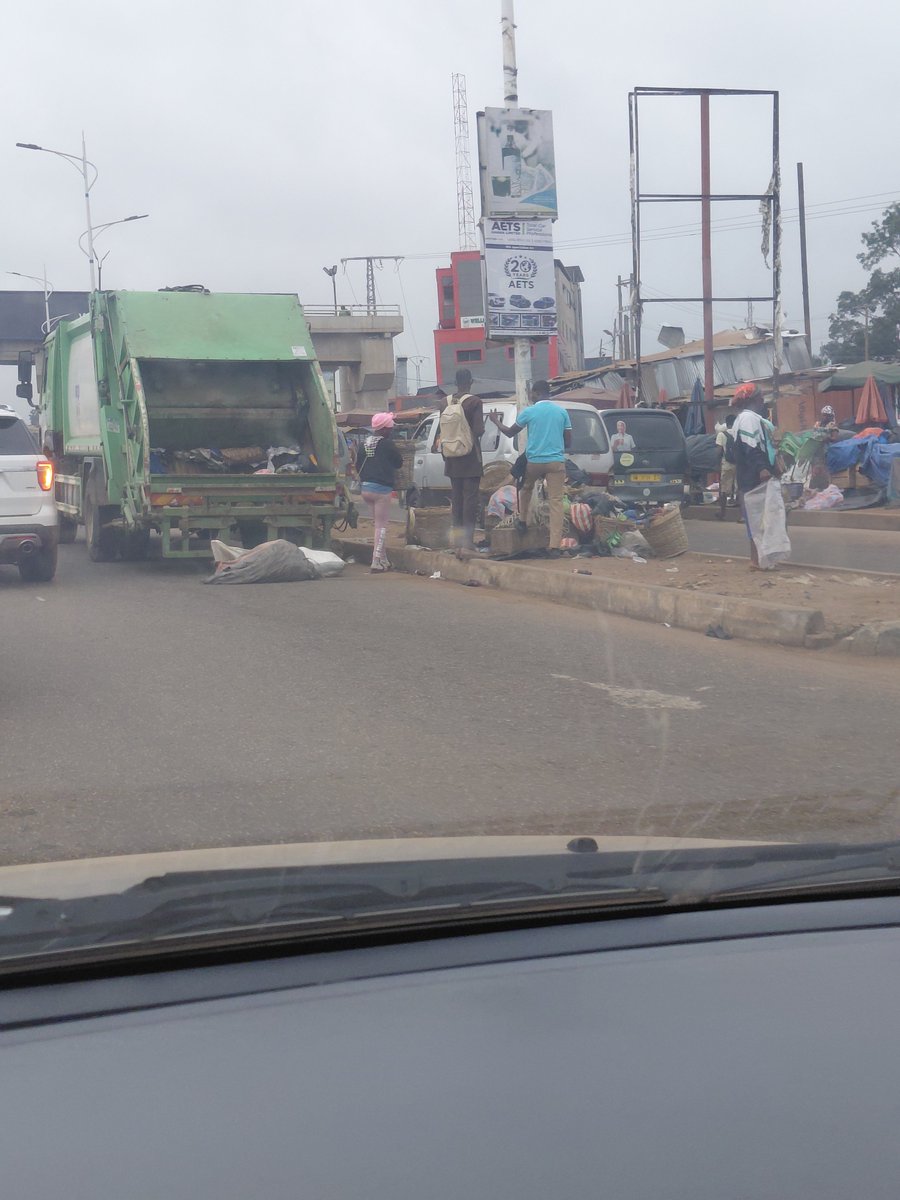
The most reckless, indisciplined,& useless MMDA in Accra. From people dumping refuse on the median of the road, traders selling on the walkways & service lane, vulcanizers destroying the road with dirty oil, etc. The MCE is incompetent & the central gov't needs to step in.
@Is_haqq It can be done but with at least 10 contractors with the military playing a role in it. Some contractors could focus on the main road in lots & others only on the bridges exclusively. Doing it in 24hrs with a 10 hr shift system will translate into 4 or more yrs of normal 8-5pm.
Dear @GhPoliceService@DVLAGhofficial please let’s deal with the owner and the truck driver. Enough of the menace. 🤦🏽♂️ GE-5551-23 is the registration number and that’s a video evidence. I have done my part . Thank you
1. The biggest obstacle to building a functioning Ghanaian state may well be the state itself, particularly our civil and public service.
2. For years, political leadership has been so consumed with accessing and distributing the spoils of office that it has neglected the less glamorous work of actually governing institutions: setting standards, demanding performance, supervising implementation and maintaining a professional public service.
3. Into that vacuum has grown an enormous unelected bureaucracy that often exercises power without meaningful supervision or accountability. Ministers come and go. Governments change. But the bureaucracy remains, develops its own habits, protects its own interests and, in too many places, decides for itself what government policy will actually mean in practice.
4. The irony is that elected governments are blamed for everything the state does, while often exercising remarkably little control over the machinery through which they are supposed to govern.
5. This is not an argument for politicising the public service. Quite the opposite. Enough of that destructive intermeddling has actually worsened the service.
6. Instead, Ghana needs a fiercely professional, politically neutral and technically competent public service. But independence from partisan interference cannot mean independence from standards, supervision, performance and accountability.
7. You cannot build a developmental state when the permanent machinery of government can ignore elected authority, frustrate policy, resist reform and suffer virtually no consequences for institutional failure.
8. Our politicians have spent decades trying to capture the state. In the process, they forgot to govern it.
9. Ghana remains largely ungoverned! All I see around is turfs and fiefdoms that function under capture and bend to the will of the more audaciously corrupt!
Shalom
Please note that the man who slapped the pastor, while he was in police custody, is a BIG man.
In Ghana we don’t arrest Big men nor put them in handcuffs. Neither do we punish the police for abuse of citizen rights.
Please note that the man who slapped the pastor, while he was in police custody, is a BIG man.
In Ghana we don’t arrest Big men nor put them in handcuffs. Neither do we punish the police for abuse of citizen rights.
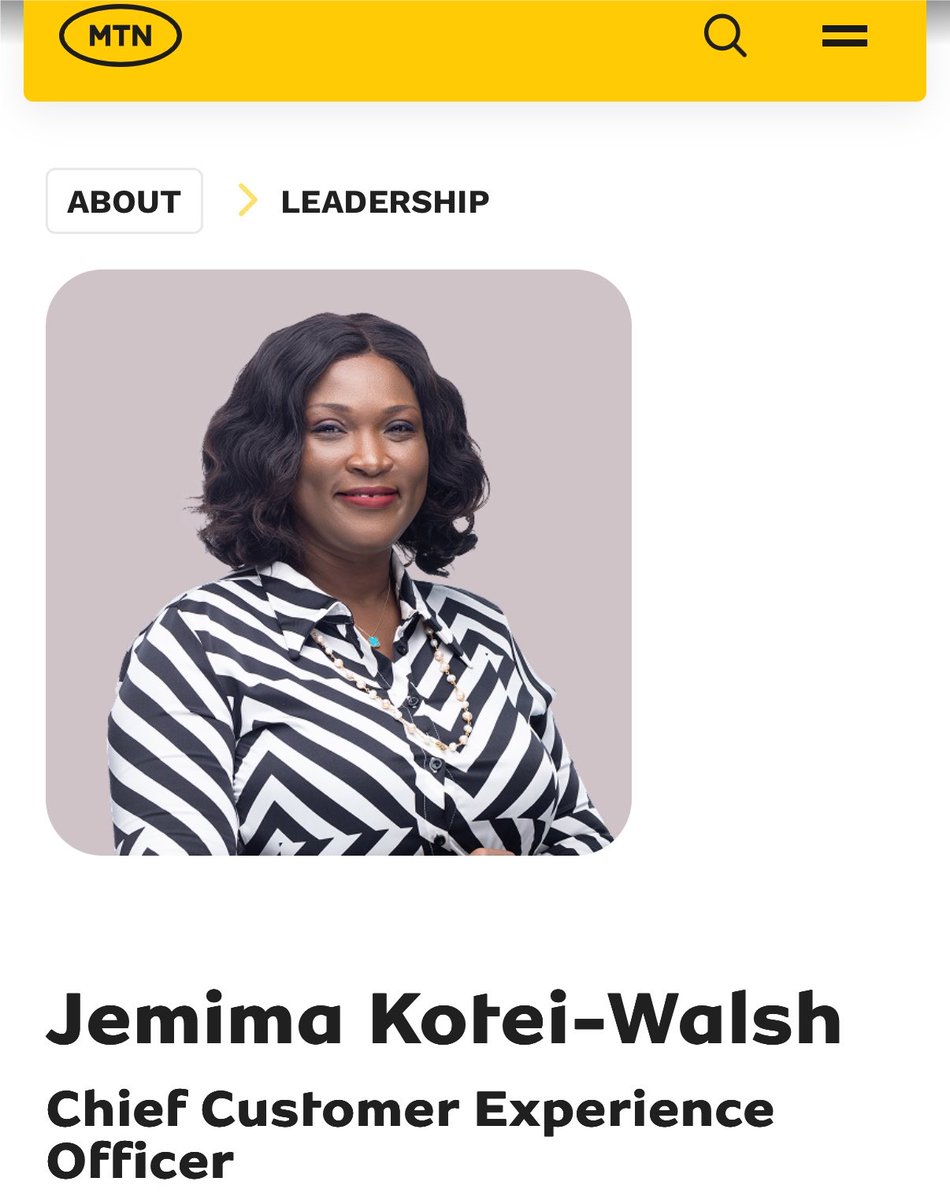
Good morning @MTNGhana’s Jemima, please go on a working visit to most of your outlets in Accra today like East Legon and experience what we customers experience from you..the crowded situation of customers, the average waiting time of over 30 minutes and overall bad customer service quality..I entreat you to go and experience it all..
I wasn’t familiar with Ebi Bright’s game. It’s rare to see a political appointee write so critically and honestly about the office they still hold.
She has written honestly about the constraints assemblies face. The Coordinating Director who runs the assembly is not the assembly’s employee. The finance officer answers to the Controller and Accountant-General. Roads wait on the Ministry. Education and health staff belong to GES and GHS.
It got me thinking. Electing MMDCEs is only a starting point.
We are about to spend a referendum and a whole election cycle on how the political head is chosen, and almost nothing on what that person will be able to do the morning after they win.
It also makes the government’s plan for electing assembly heads sound even more ridiculous. The president nominates five. A vetting committee cuts it to three. The people then vote among the three. We are designing an election where the ballot is filtered before it reaches the voter, for an office that cannot query its own finance officer. It is a longer route to the same appointment, and it leaves every structural problem intact.
The government also rejected several of the CRC’s key recommendations on local government and decentralisation, including the recommendation that central government stop spending a district’s common fund allocation on its behalf. It wants to keep the ability to run programmes like DRIP off the top, and to keep deducting sanitation payments at source to Zoomlion.
And consider what we are electing them to control. For instance, the DACF “guidelines” from the finance ministry direct assemblies to spend 25% of their allocation on 24-hour economy model markets. Every assembly. Whether or not a market is what that district needs most. An assembly drowning in refuse, or watching its shoreline collapse, still commits a quarter of its development money to a nationally chosen project. That is the whole paradox in one line item. The money is transferred to the assembly but the decision is not.
The structures are the thing.
Assemblies should be autonomous. They should prepare their own budgets and execute them. They should make their own resource allocation decisions and answer for them at the ballot box and to the Auditor-General, not to a queue of approvals in Accra.
Central government keeps what only the centre can do. Transfers, on a statutory calendar. Education, health, national security, standards, cross country highways etc.
Assemblies take full control of sanitation, water, inner roads, drains, markets, local planning and enforcement. The things residents actually judge them on.
Until then we will only elect mayors and DCEs but accountability at the local levels won’t change much.
Who at the MMDAs gave this stupid idea that median of the road should be used as a dumping site. Why can't people in authority apply their common sense.
A doctor has recounted how he saved a patient experiencing the onset of a stroke by treating them within the critical 4.5-hour window. According to him, it was a lesson from one of his lectures that enabled him to quickly identify the condition and refer the patient for emergency treatment.
He said the patient received TPA, a clot-dissolving medication, and recovered within hours, with facial weakness resolving and the ability to walk restored.
The doctor described the outcome as remarkable, saying he never thought the treatment was available in Ghana.
@aristotledada@MichaelKAllotey A classical example of why the MMDAs are useless, who in their right frame of mind will allow people to dump refuse on median of our roads for trucks to collect it every morning. This is the mess happening at madina & other areas in Accra. COMMON SENSE WE NO GET.