The U.S. NSF Ocean Observatories Initiative's cabled observatory in the NE Pacific. Design, construction, early operations led by University of Washington
The OOI Regional Cabled Array team is preparing over 100 instruments to be installed during the upcoming August -September expedition, including the high definition camera atop Axial Seamount, the most active underwater volcano off Oregon.
Inspecting the mechanical anchor of the OOI Cabled Shallow Profiler mooring at Slope Base (2900 m) the ROV encountered a unique group of animals: flytrap anemones, galatheid crabs, sea cucumbers, and Bathydoris aioca, a large (~30 cm) deep-sea nudibranch! #NSFfunded@NSF @UWOcean
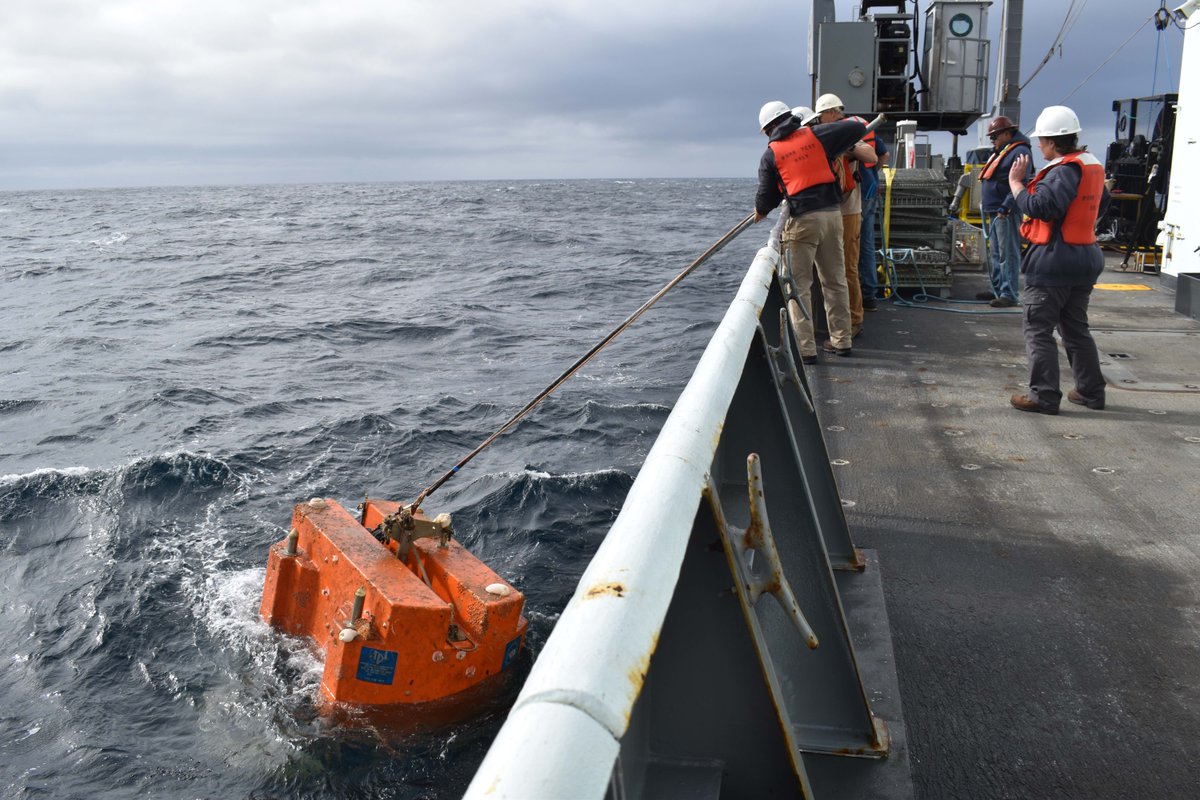
Recovery of the OOI Cabled Slope Base Shallow Profiler mooring. The platform normally sits at 200m depth, stable instruments on one side and the profiler pod and winch on the other. The mooring is being turned for the first time since deployment in 2014! #NSFfunded@NSF @UWOcean
This clip of ROPOS ROV video from dives R2330 and R2331 (compiled by UW student Leilani Combs) shows some of the aggressive behavior by the blue sharks we encountered during the OOI Oregon Offshore Deep Profiler deployments. Credit: UW/NSF-OOI/CSSF #NSFfunded@NSF @UWOcean
A pycnogonid (sea spider, a kind of arthropod) recovered along with other macrofauna samples from the ASHES hydrothermal vent field on Axial Seamount, while we conducted our OOI work. This individual is carrying eggs below its body, so it is a male. #NSFfunded@NSF @UWOcean
In case you missed it yesterday, watch RCA's Chief Scientist Mike Vardaro and student Andrew Paley be interviewed aboard the @rvthomasgthompson about exploring Axial Seamount: https://t.co/fChySl8iOg.
@NSF, #nsffunded, @VISIONSops, @UWOcean, @Echinocrepis
We had a stowaway on Leg 3 of the OOI RCA O&M cruise! This bold adventurer even joined us in the main lab to inspect our operations. They ate some suet provided by the crew and then ventured on their way, hopefully to continue their migration. #NSFfunded@NSF @UWOcean
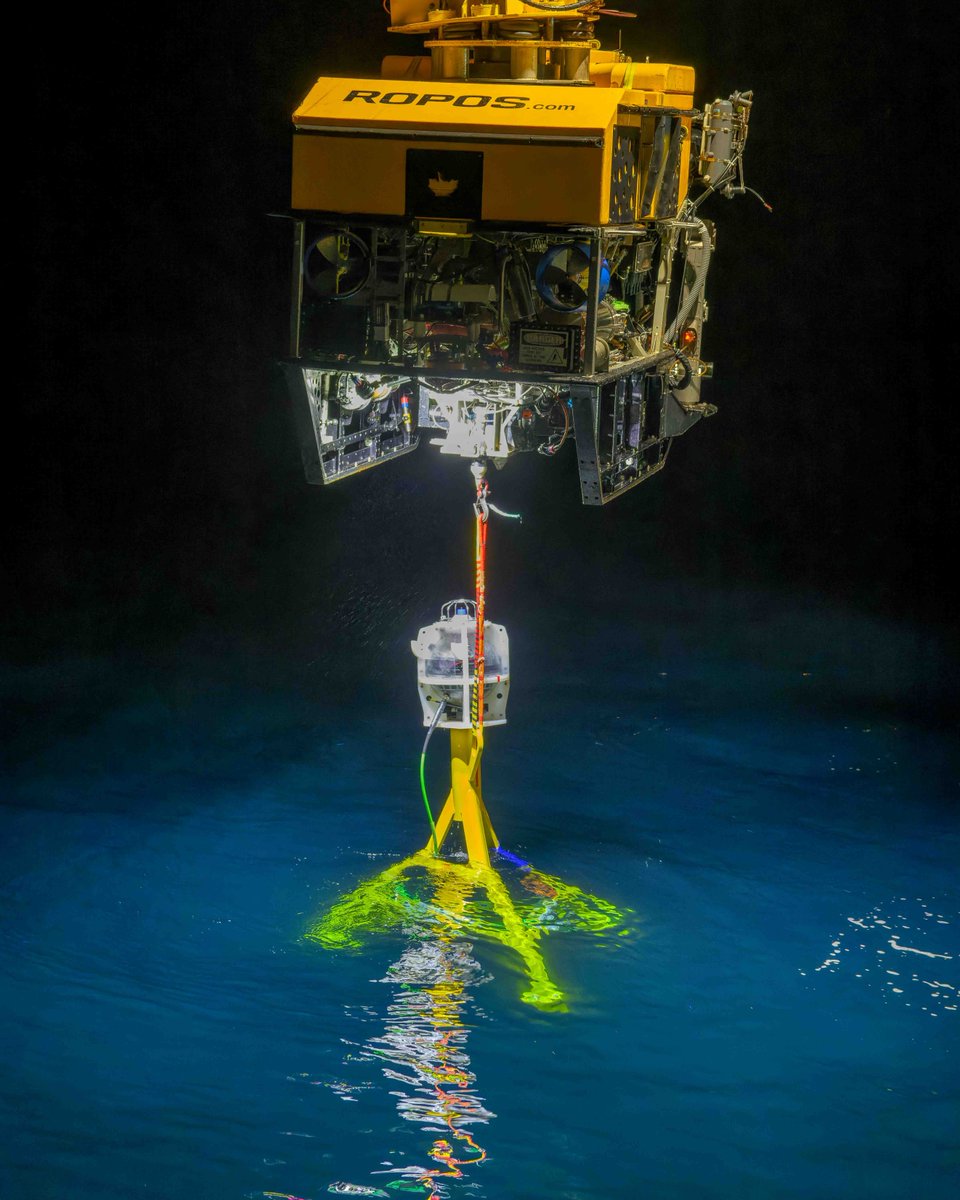
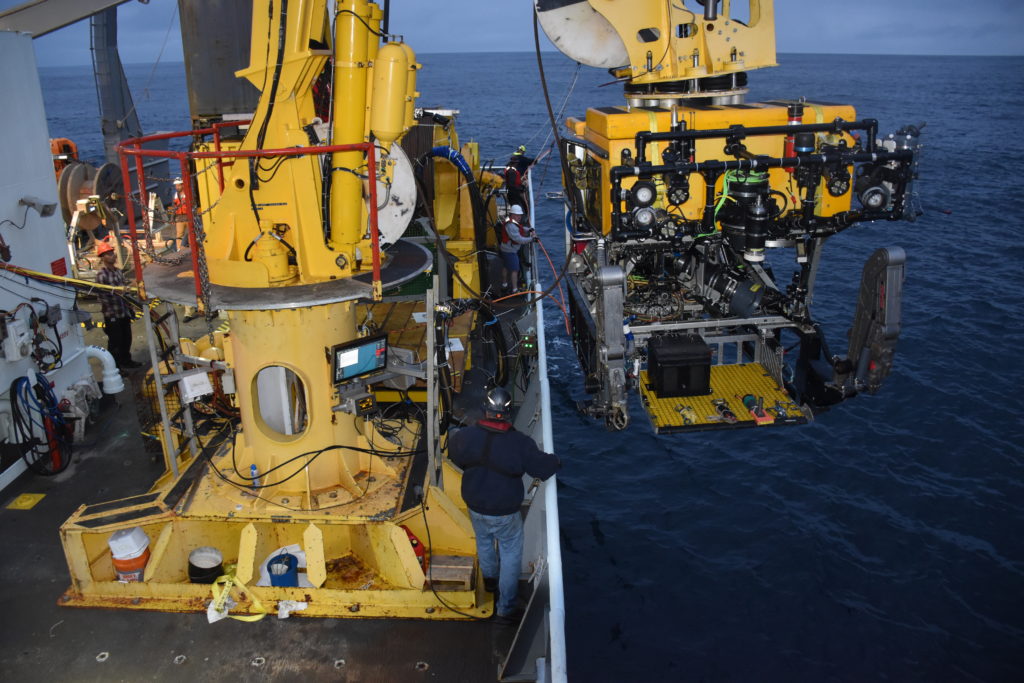
ROPOS launching with one of four experimental sonar tripods to be plugged into the OOI Cabled Array! They were developed by UW researchers to accurately measure stresses that precede an eruption of Axial Seamount, a subsea volcano off the coast of Oregon. #NSFfunded@NSF @UWOcean
The R/V Thompson encountered a "fogbow" this morning between ROV dives at the base of Axial Seamount. It was pretty bright, and hopefully a good omen for continued successful deployments on our OOI RCA O&M cruise! #NSFfunded@NSF @UWOcean
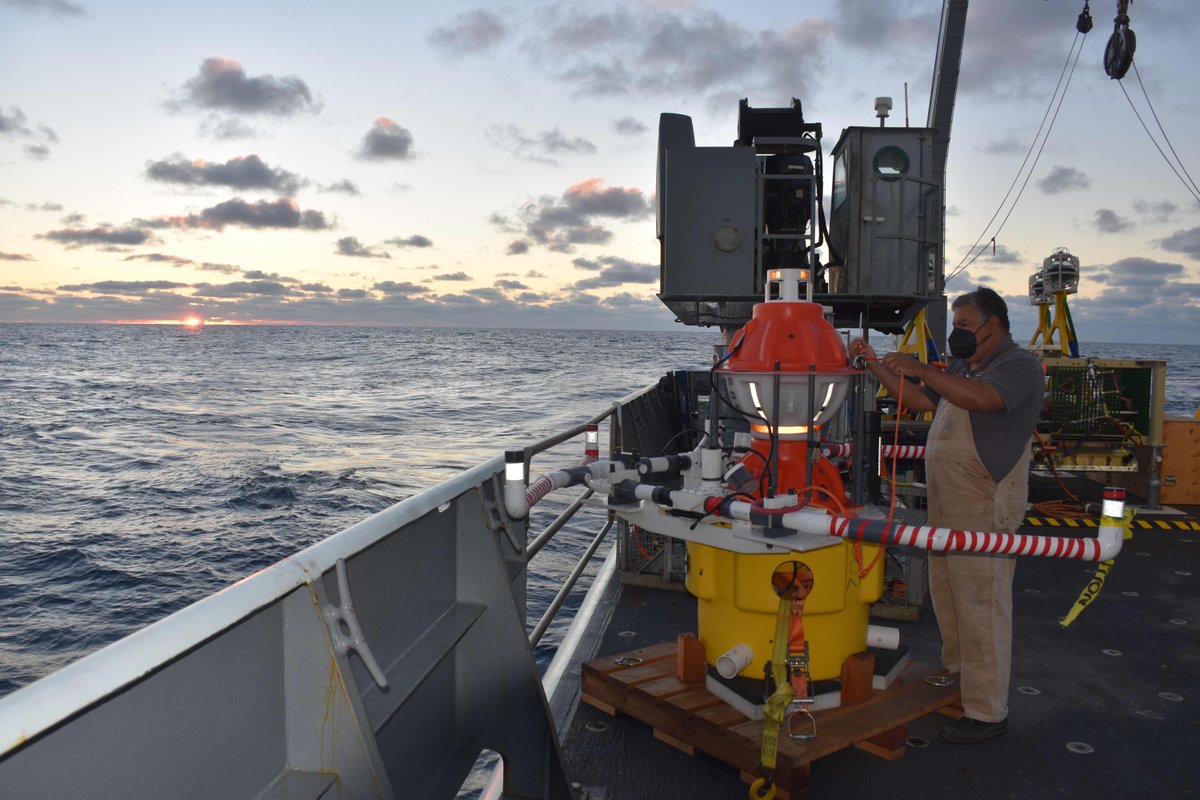
UW-APL engineer Paul Aguilar up at sunrise to prep the Axial Base Horizontal Electrometer Pressure-Inverted Echosounder (HPIES), a novel OOI instrument measuring horizontal electrical field, pressure & acoustic travel time from seafloor to sea surface. #NSFfunded@NSF @UWOcean
ROPOS is currently running a series of dives to swap out the OOI deep profiler vehicles after a year in the water. A specialized ROV frame places the new vehicle on the cable and removes the old one to bring it back to UW for cleaning and refurbishment. #NSFfunded@NSF @UWOcean
The OOI Oregon Offshore deep profiler mooring, which hosts a vehicle that moves up and down the cable taking measurements, has a large float at the top for buoyancy. Apparently it is also an irresistible attachment point for a whole biofouling ecosystem! #NSFfunded@NSF @UWOcean
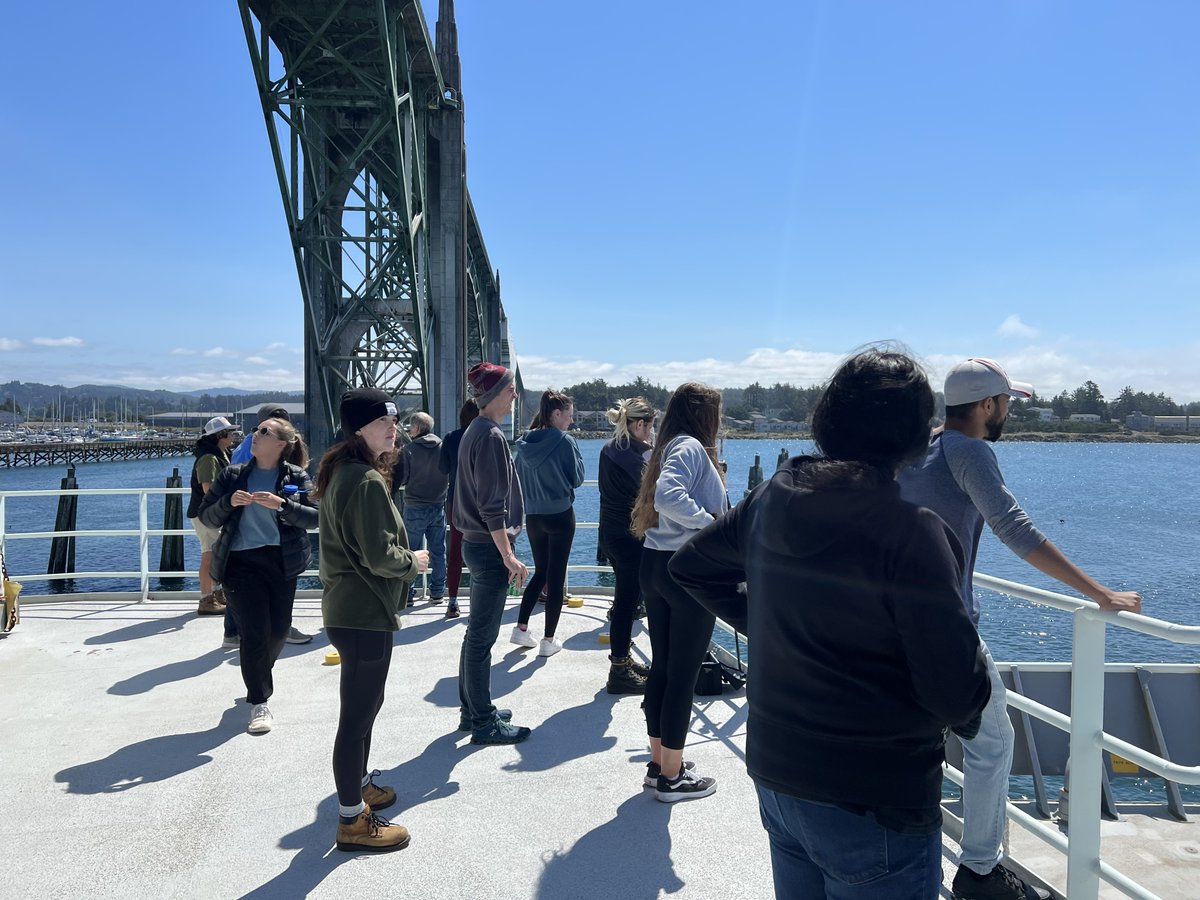
A new journey begins: Leg 3 of the NSF-funded Regional Cabled Array expedition is now underway. A new group of 11 students joins the cruise. Using the "eyes" of ROPOS, they will get to visit the largest and most active underwater volcano off our coast - Axial Seamount. @UWocean.
An OOI PI-deployed camera captured the ROPOS ROV peeking over a gas hydrate mound. The striped pole was originally deployed in a cavern and is now buried in sediment, demonstrating the dynamic nature of this site. Credit: Y. Marcon, MARUM/University of Bremen @NSF @UWOcean
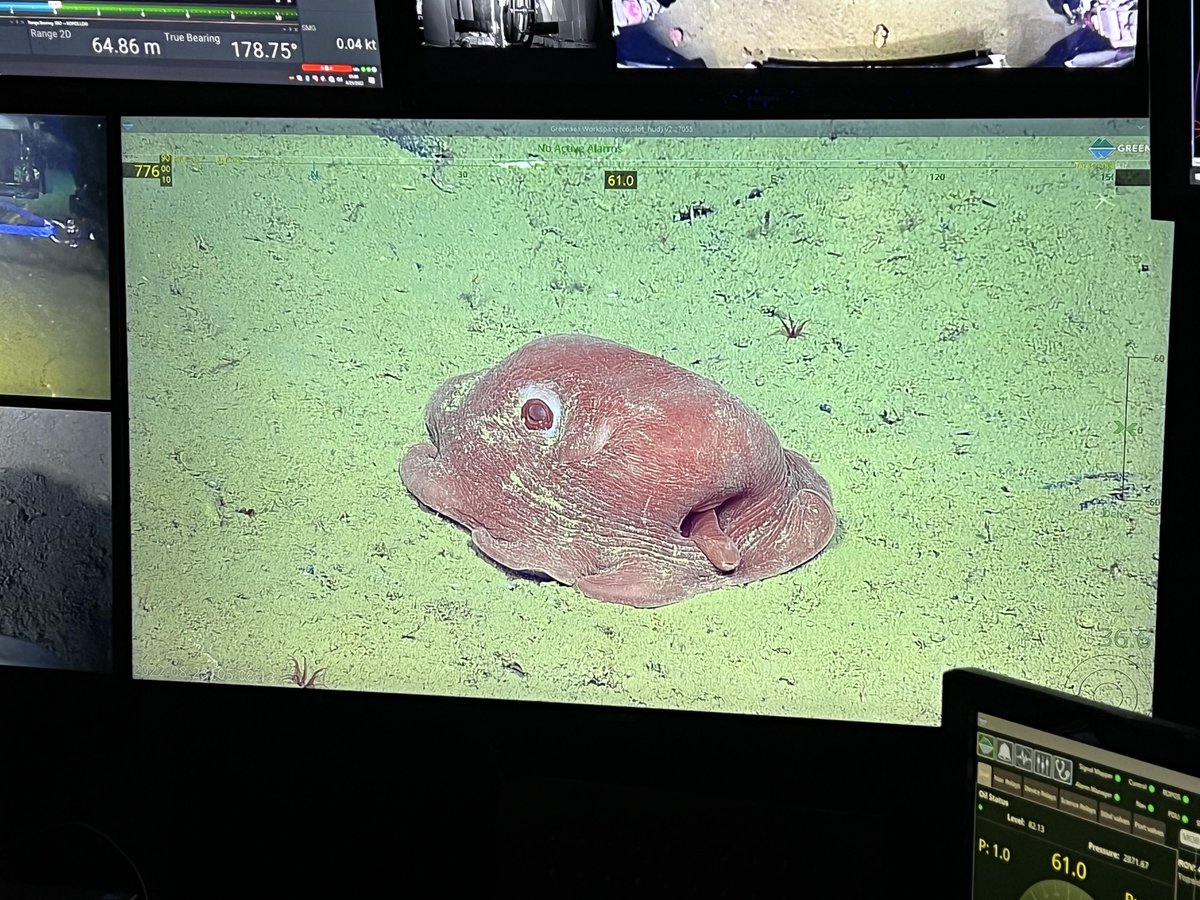
We saw a Dumbo octopus at Southern Hydrate Ridge!!! Oh, and we also have successfully deployed 100% of the equipment planned for Leg 2 of the OOI RCA O&M cruise. Double win. #NSFfunded@NSF @UWOcean
A curious Brown catshark has shown up repeatedly while we've been working at Southern Hydrate Ridge on the OOI RCA O&M cruise! Here it is again, as we survey the site and manage the seafloor cables (orange loops) that send real-time data back to shore. #NSFfunded@NSF @UWOcean
Naturally occurring methane bubbles form a plume in the water column above white and orange bacterial mats at Southern Hydrate Ridge (off the Oregon coast). OOI sonar and cameras attempt to measure the amount of methane released at this site over time. #NSFfunded@NSF @UWOcean
After a year deployed in 80 meters (~260 ft) of water (and being hit by a log!) our Oregon Shelf camera has a little bit of growth on it. That's why ROPOS is holding a brush: to clean off the lens and lights, so it can keep taking photos for another year! #NSFfunded@NSF @UWOcean
The underwater state-of-the-art robotic vehicle ROPOS will soon be diving at a highly active methane seep site -Southern Hydrate Ridge - hosting novel microbial communities sustained by methane and hydrogen sulfide. #NSFfunded@NSF@oceanobserv @UWOcean