Excited to share my first PhD chapter, which was just published in @NatureComms !!
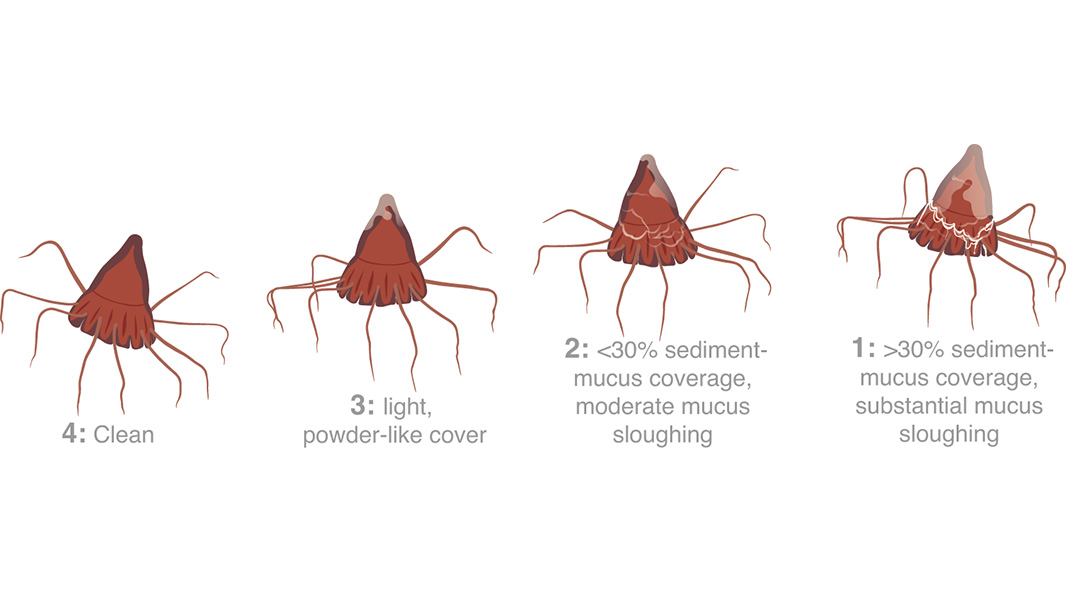
Read more about the impacts of mining plumes on the helmet jellyfish #Periphylla here:
https://t.co/21XnuEgolX
@iAtlanticEU@GEOMAR_en@LeniHauss
First paper of 2024! 🪼
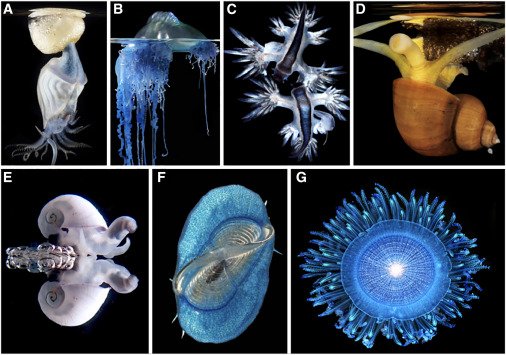
Very excited to announce a ✨️BEAUTIFUL✨️project published in @CurrentBiology with @RebeccaRHelm.
Within, we use phylogeny and ancestral reconstructions to better understand the evolution of organisms on the ocean's surface.
https://t.co/0hYy99cnje
Deep sea mining may pose a threat to the largest and least explored habitat on the planet—the deep pelagic ocean—and some organisms living within it, including pelagic jellyfish, suggests a @NatureComms paper. https://t.co/xMxLMhR09G
Research done by iAtlantic scientists that examines the effects of sediment plumes on jellyfish living in the water column has been making headlines from @nytimes to @BBC. Read about the implications of @VIStenvers' work: https://t.co/ZILFA8YJce
Species-specific responses to deep sea mining are unclear. Stenvers et al. show that elevated temperatures & simulated sediment plumes cause physiological stress in a cosmopolitan deep-sea jellyfish
@LeniHauss@LaraSchmittmann@Ute_Hentschel @CharlotteHav1
https://t.co/0h2ID4VTEM
My co-authors and I investigated the effects of mining-induced sediment plumes on the midwater jelly #Periphylla and made this video to explain the main findings. Read all about it on @NatureComms https://t.co/21XnuEgolX
Deep-sea mining and warming trigger stress in a midwater #jellyfish: Researchers have investigated the effects of experimental sediment plumes. The results of the study under #GEOMAR leadership are published today in @NatureComms. https://t.co/Mg1233MGEo
Published today: Experimental mining plumes and ocean warming trigger stress in a deep pelagic jellyfish. With @VIStenvers , who also put together below video. @iAtlanticEU @GEOMAR_en https://t.co/bmfafoddXs
All are very welcome to create their own PhD project in my Duke Biology lab in in vision/signaling/camouflage/biophotonics/navigation. Stipend ($38,500 USD) is guaranteed for six years via TA/RA/fellowship. Current one-bedroom rent is ~$1600. DM me if interested. #scitwitter
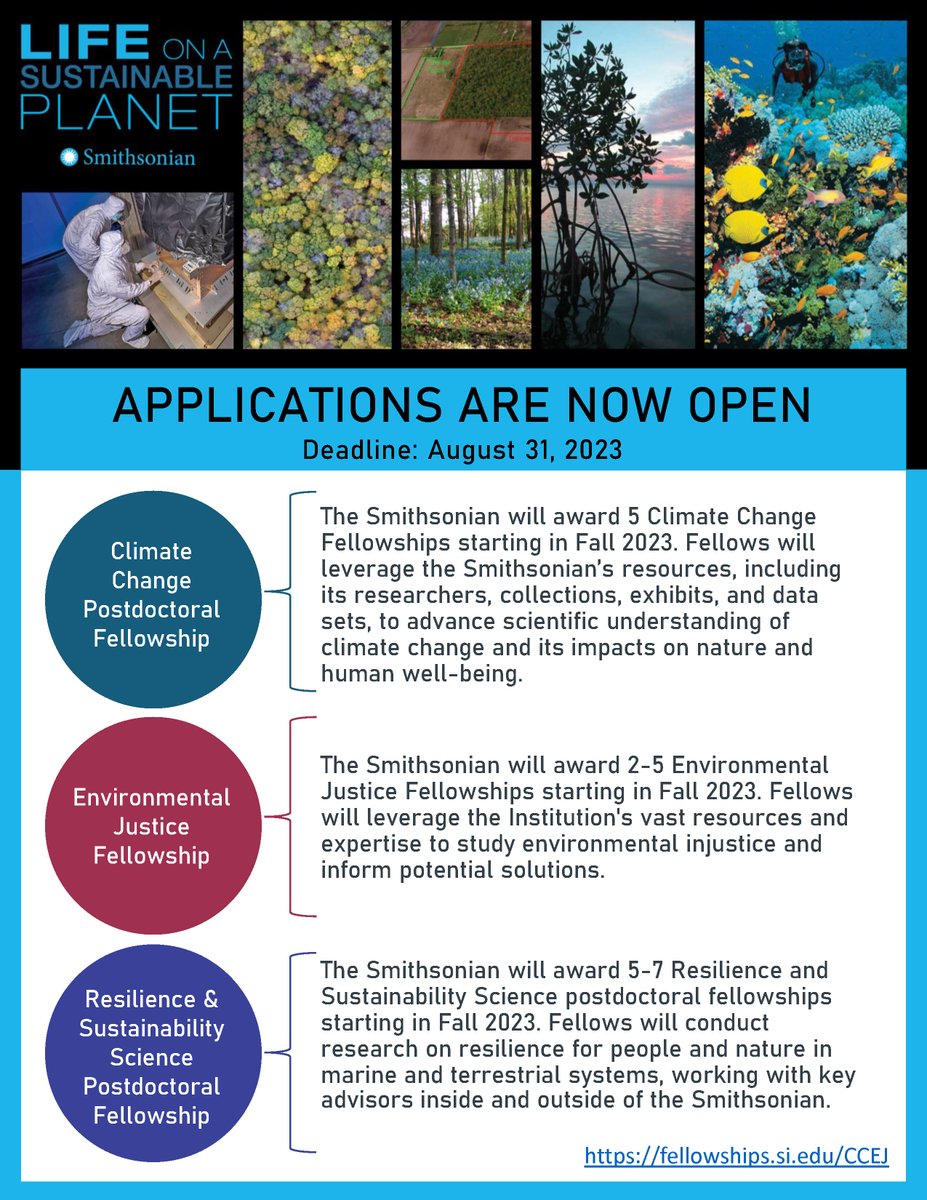
New Smithsonian fellowship opportunities in Climate Change, Environmental Justice and Resilience & Sustainability Science. See: https://t.co/5L58DYF9hu
Polynoidae is the most species-rich family of Aphroditiformia (scale worms), with over 900 species. A new study presents a transcriptome-based phylogeny that emphasizes relationships between taxa and provides insights into the origin of enigmatic lineages. https://t.co/FwvqBIanyH