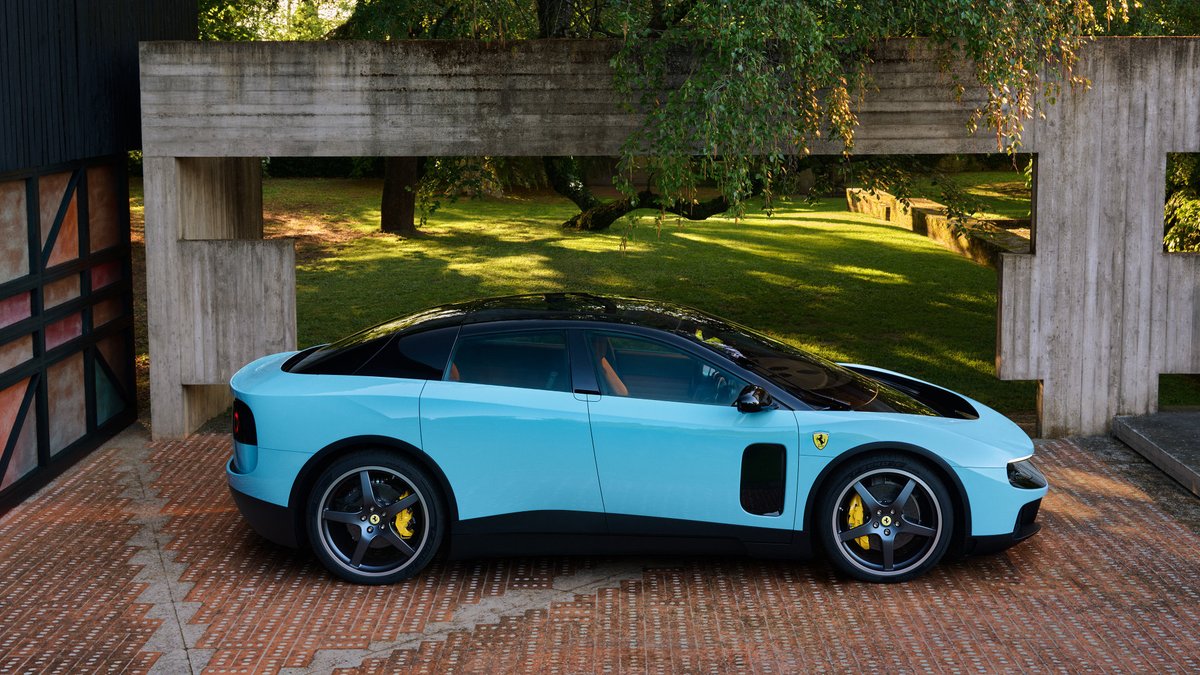
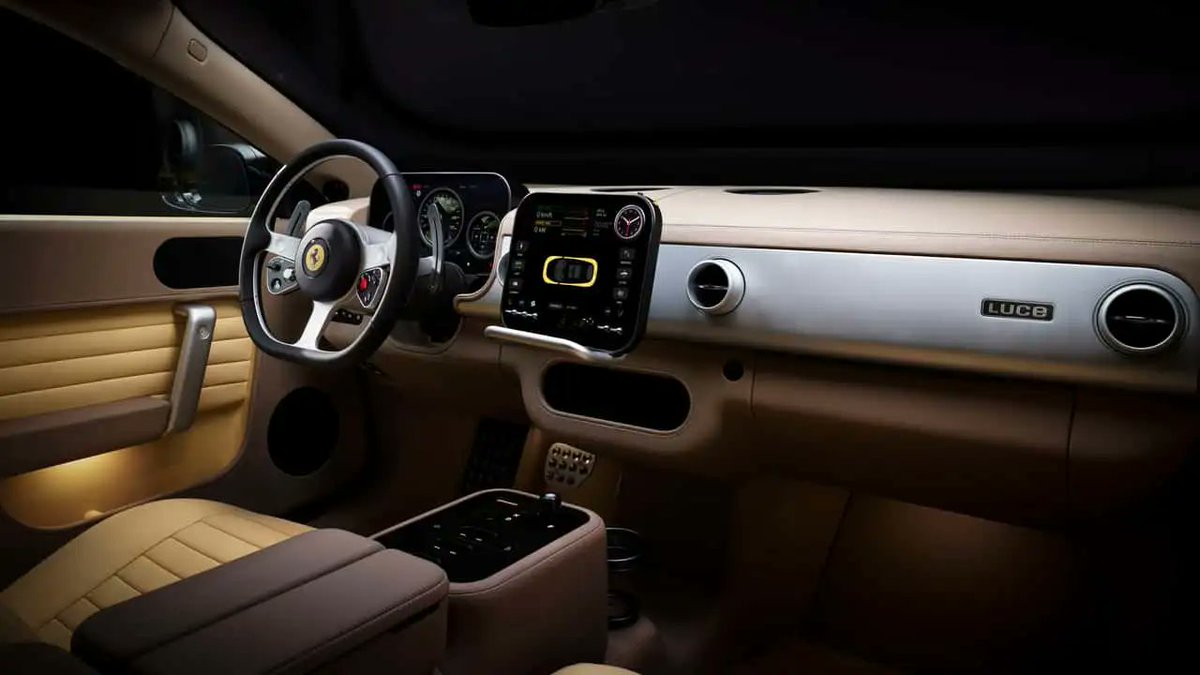
Ferrari has just officially unveiled its first ever all-electric car, called the Ferrari Luce.
• Starting price: $640,000
• Interior co-designed with Apple's former head of design, Jony Ive
• Range: 280 miles (expected EPA)
• Peak charging speed: 350kW
• 122 kWh battery
• 1,050 horsepower
• 0-60mph: 2.4s
• 800v
• Four-door four-seater
• Four electric motors
• OLED screens
• Weight: 4,982 lbs
• Front motors spin to 30,000 rpm, rears hit 25,500 rpm
• Car uses an accelerometer to capture real vibrations from the electric motors & rear chassis. An algorithm filters out unpleasant frequencies and amplifies only the more “musical” sounds. This can be heard inside and outside the car.
• Paddle shifter on steering wheel changes how aggressively torque is delivered, with five different levels
• The trunk has 21.1 cubic feet of space, the largest luggage capacity the company has ever offered
• 197.6 inches long, about as long as a Tesla Model S
U.S. deliveries start in Q2 2027. More photos in the thread below:
For folks who are in the weeds building ai products and more importantly trying to drive adoption in the real world (moving past fancy demos), this is an obvious statement.
For everyone else, it’s a big statement.
Back to building.
Improving core experiences almost always pays off more than shipping new features. Product teams know this. But I guess “we made X better” doesn’t land in a keynote demo / sound nice on investor calls :)
Microsoft is retiring Teams’ pandemic era Together Mode. The company wants to focus on improving video quality and performance instead of gimmicks https://t.co/rraVXAIUpc
A common plea from customers is for “one cohesive system that works across apps and workflows”. We have more work ahead but the path is clear.
Read more about our plan for a simplified system: https://t.co/qZADeRJMCT
Also came across @apeelsciences in the book — an invisible, plant-based coating that doubles the shelf life of produce , tackling a problem I didn’t fully appreciate: one-third to half of all food produced worldwide goes to waste. their mission deeply resonated
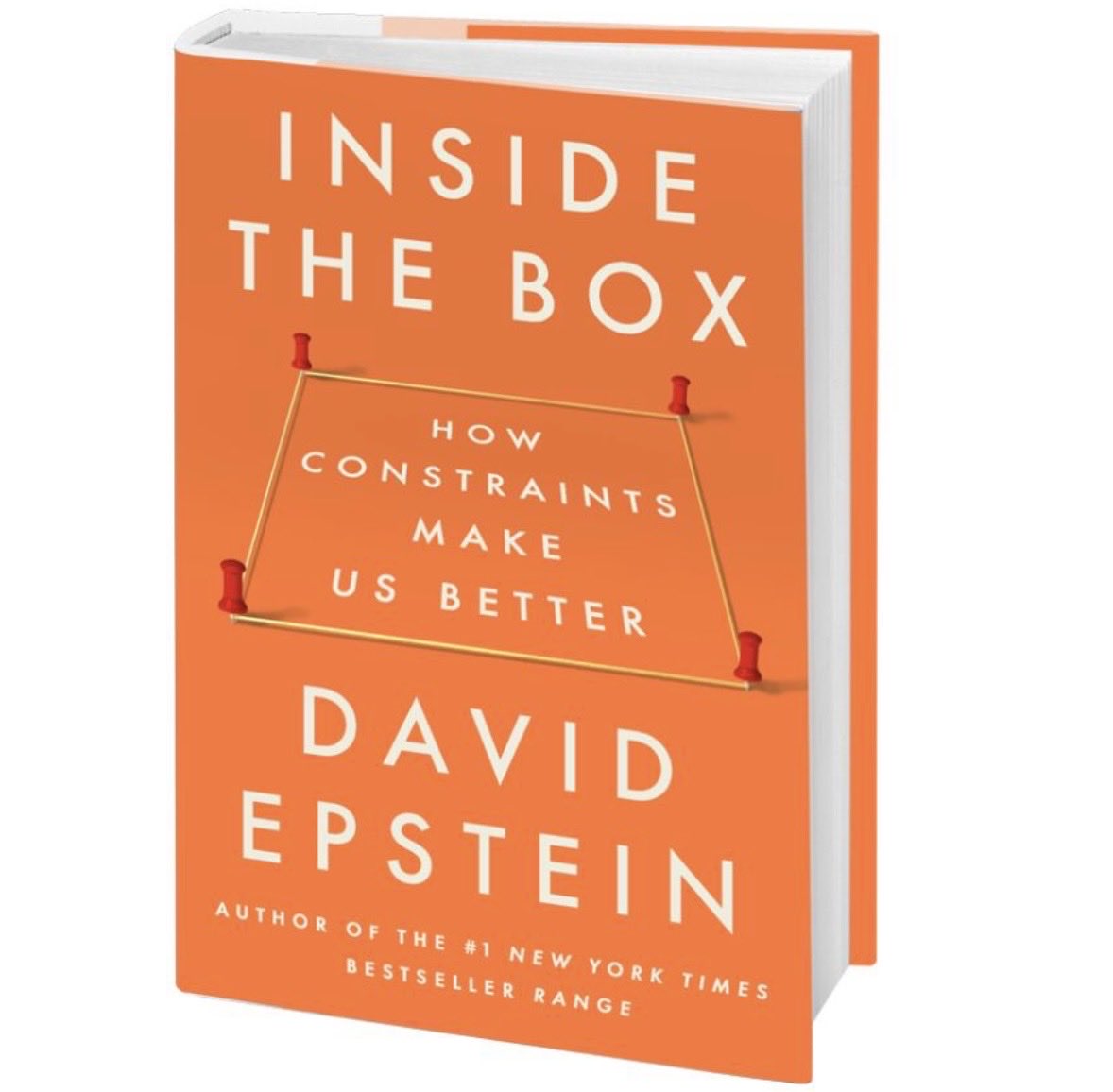
Loved Range by David Epstein so picked up Inside the Box. 5 lessons for builders
1.Constraints don’t limit creativity — they create it. Total freedom leads to familiar, mediocre work.
2.Successful problem solvers shrink the problem space first. Unsuccessful ones try more.
If you don’t have constraints, then make up constraints.
After @generalmagicmov many of us walked away realizing the same thing: Big visions fail when the problem space is too big.
My friend @DavidEpstein captures this beautifully in his new book, Inside the Box: How Constraints Make Us Better.
At General Magic, we were trying to build the future all at once. The vision was extraordinary. Too extraordinary. The technology, infrastructure, interfaces, networks, batteries, displays, and user behavior all needed to evolve simultaneously. We were building everything, but for who?
When we built the iPod, we didn’t try to reinvent everything. We focused on one clear problem: people wanted their music collections with them everywhere they went. That focus forced hard decisions: no endless feature list, no bloated interface, and no trying to please everyone. We constrained the team size. We constrained the timeline. We constrained what version one needed to be. The famous scroll wheel itself came from working within constraints. We needed a fast, intuitive way to navigate thousands of songs on a tiny screen with limited hardware resources. Constraint drove simplicity.
The same thing happened on the iPhone. We used internal “heartbeats” aka aggressive prototype deadlines to force learning cycles. The first versions were wrong. Then the second versions were wrong in different ways. But the deadlines forced us to stop, regroup, simplify, and learn before complexity spiraled out of control.
At Nest, we took it even further. Before the product was done, we built the prototype of the packaging first. Literally the box. Why? Because the box forced clarity. If someone saw this thing sitting on a shelf for five seconds, would they immediately understand: what problem it solved, why they needed it, and why it was different? The constraint of the box forced the team to prioritize what actually mattered.
That’s what David gets exactly right in this book! Constraints are not creativity killers. They are creativity filters. The best teams shrink the problem space. They create boundaries that force learning, prioritization, iteration, and clarity.
That’s the pattern. You shrink the problem until it becomes solvable. Then you move.
Great book, David. Everyone building products, companies, or creative work should read this one.
Today we're releasing Personal Computer.
Personal Computer integrates with the Perplexity Mac App for secure orchestration across your local files, native apps, and browser.
We’re rolling this out to all Perplexity Max subscribers and everyone on the waitlist starting today.
We’re launching full-length, on demand practice exams for standardized tests in @GeminiApp, starting with the SAT, available now at no cost.
Practice SATs are grounded in rigorously vetted content in partnership with @ThePrincetonRev, and Gemini will provide immediate feedback highlighting where you excelled and where you might need to study more.
To try it out, tell Gemini, “I want to take a practice SAT test.”
@BlasMoros@wabi waiting for my invite! Thought of a cool idea while working out -- Smart to-do app that automagically creates a to-do list for me by looking through my email, slack, calendar etc.