🎼 🎶 This beautiful arati has all the top Maharashtrian singers singing... Composed by Salil Kulkarni ....Jai Ganesha🙏🙏
Absolutely mesmerizing.
Thanks Upjeet @Upjeet7 for this aarti 🙏🙏
A sight worth waiting 12 years for! 💜 The rare Neelakurinji is blooming again across the hills near Munnar, turning the Western Ghats into a spectacular carpet of purple. The last mass bloom was in 2014; the next is expected only in 2038.
Incredible India! 🇮🇳
An incredibly sweet Raksha Bandhan ad from Dabur Real (conceived in-house)! But, like the one I wrote about earlier this week, the brand connect is near zero and is even forced at times (when the juice is shown as part of a juice drinking session, or used as a gift), but the writing gets two things really, really well.
The first is the very fact that an ad actually shows a differently abled child. And the writing placed this girl in the most normal way without drawing attention to her the way Titan did a few months ago (see: https://t.co/HAeDgdrVHK). She is just herself and everyone in the family just accept her the way she is, the way it should be. I could just imagine a similar child identifying herself/himself when they see this ad and feel totally 'seen' and included in the mainstream. That's beautiful.
The second is the fact that despite the ad being largely predictable (I could guess what the little boy was up to, but that's also perhaps a factor of me seeing way too many ads day after day - your mileage may vary), the way he explains why he was doing what he was doing (secretively) is absolutely wonderful. The choice of his reasons is so well written and thought out.
Like that other ad (from earlier this week: https://t.co/xhlIYo7hXo), the brand connect is very weak. You could replace that brand with a tablet/iPad brand or seller/retailer... or a brand that offers internet connectivity (Airtel, Jio, ACT, etc.) and the same narrative would fit in perfectly. Ideally, I'd have loved to see the product being the enabler of the sentiment/emotion depicted in the narrative, but such writing requires a lot more thought from the ground up. And for topical (days) narratives, such expectations seem too much these days.
But what Real does within that limitation is lovely, as in they chose to tell a really heartfelt story in context of Raksha Bandhan.
#advertising #marketing #rakshabandhan
We send missions into space, build world-class airports and run sleek Vande Bharat trains. And then millions of Indians commute like this every day. It’s risky, dangerous and unacceptable. India cannot aspire to first-world infrastructure while accepting this as normal. 😱
A 20-year-old Deaf & Mute girl travels 90km from Kanpur to meet CM Yogi, who responds with kindness by providing a cochlear implant for her treatment, education support, & family housing.
Following the successful surgery in early 2026, Khushi can now hear and speak, saying, "Thank you, Yogi ji".
Ek hi dil hai Yogiji kitni baar jeetoge. ❤️
Chennai recently cleared the Perungudi dumpyard using bio mining tech from @BluePlanet_Env
If 50 years of garbage can be reinvented, then there’s hope for India’s waste problem and room for many more such growth stories…
#MondayMotivation
Congratulations to our Indian Women’s Kabaddi Team for making the nation proud by winning the Kabaddi World Cup 2025! They have showcased outstanding grit, skills and dedication. Their victory will inspire countless youngsters to pursue Kabaddi, dream bigger and aim higher.
On the night of May 20, 2025, a little girl in a faded pink frock fell asleep on her mother’s lap at Chhatrapati Shivaji Maharaj Terminus. Her parents, simple people from Solapur, had come to Mumbai for her father’s treatment. They were exhausted. Just for a moment, the mother closed her eyes.
When she opened them, her daughter was gone.
Six months.
Six months of walking from police station to police station.
Six months of showing the same crumpled photograph to strangers on trains, in slums, in orphanages.
Six months of the father not sleeping, the mother not eating, both of them growing hollow-eyed, whispering the same name into the dark: “Aarohi… Aarohi…”
In Varanasi, a thousand kilometres away, a tiny girl with no memory of her real name was learning to call herself “Kashi.” She had been found crying near the railway tracks in June, barefoot and terrified. The orphanage gave her food, a bed, and a new name. She smiled easily, because children always do, but sometimes at night she clutched the edge of her blanket and asked for “Aai” — Marathi for mother — and no one understood.
Back in Mumbai, the police refused to close the file. They printed posters with Aarohi’s face, stuck them on every platform from Lokmanya Tilak Terminus to Bhusawal to Varanasi Cantt. They ran newspaper ads, knocked on doors, begged journalists for help. Six months is a long time for hope to stay alive, but some officers carried her photograph in their shirt pockets like it was their own child.
Then, on November 13, a local reporter in Varanasi saw the poster. Something clicked. He had seen a girl who spoke Marathi words in her sleep. He made a phone call.
The next morning, a Mumbai Police inspector sat in front of a laptop in Varanasi and opened a video call. On the screen appeared a little girl in a pink frock — the same colour she was wearing the day she vanished. The mother, standing behind the officer in Mumbai, saw her daughter and collapsed without a sound. The father just kept repeating, “That’s my Aarohi… that’s my baby…”
They flew her back on Children’s Day — November 14.
When the plane landed, the entire Mumbai Crime Branch was waiting. They had bought her balloons and a new frock, sky blue this time. But the moment the little girl stepped out and saw the sea of khaki uniforms, she did something no one expected.
She ran.
Not away — toward them.
Tiny legs pumping, arms outstretched, she threw herself at the nearest officer and laughed — the purest, clearest laugh that had been missing from the world for half a year. The officer, a tough man who had seen everything, felt his eyes burn. He lifted her high, and she wrapped her arms around his neck like he was family.
Her parents were crying too hard to walk. So the policemen carried their daughter to them.
The mother touched her face again and again, as if checking she was real. The father fell to his knees and pressed his forehead to his child’s tiny feet, sobbing words no one could understand except God.
And the little girl? She just kept smiling, looking from her parents to the officers and back again, completely unaware that she had turned an entire police station into a sobbing, laughing, praying family.
Six months of darkness ended in one hug.
Aarohi is home now.
The kidnapper is still out there, but that is tomorrow’s fight.
Today, a mother is singing lullabies again.
Today, a father is smiling in his sleep.
And somewhere in Mumbai, there are policemen who will never forget the weight of a four-year-old girl in their arms — the weight of an entire life returned.
Sometimes the uniform doesn’t just catch thieves.
Sometimes it carries lost children all the way back to their mothers’ hearts.
In 2013, Nokia was crumbling.
They got crushed by Apple. Sales plummeted. Bankruptcy seemed inevitable.
Until they made ONE bold move that transformed Nokia into a $24B a year cash cow.
Here’s the fascinating story of Nokia’s comeback 🧵
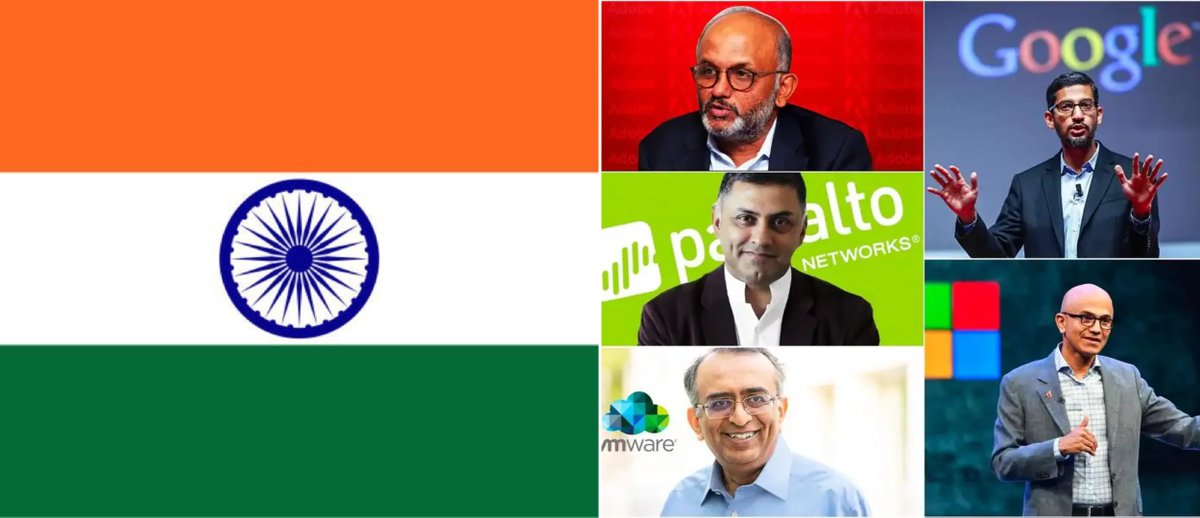
This is India:
- 11% of Fortune 500 CEOs
- 90+ unicorn founders are Indian-born
- 1/3 of all engineers in Silicon Valley are from India
Why have they all left India to succeed?
Here's the hidden truth about the world's most controversial brain drain 🧵: