Because Wikipedia is non-profit, while AI is the tech industry's newest investment darling, there will naturally be overwhelming messaging about how good AI is. Once enough people believe it, you may also feel pressured to accept it just to avoid being left behind by society. That's how the game plays.
That said, neither Wikipedia nor AI LLM should be trusted completely. The only way to avoid being led around by them is to develop your media literacy.
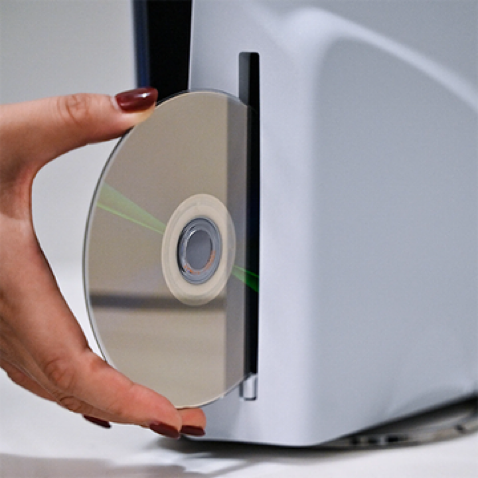
Some PlayStation players are planning a PSBlackout from August 23–30, but a lot of fans don’t think it’ll make much difference.
The idea is don’t log into PSN, don’t play online, and don’t buy anything from the PlayStation Store for a week.
Some gamers think not enough people will join for Sony to notice and they wont do anything
If you have a Gmail account, you need to read this.
Google's AI now scans your emails and attachments, bank statements, tax files, medical letters, all of it. It turned on by default, and there's a class-action lawsuit over how.
Here are 5 moves to shut it off, the switch is hidden in two places:
So if I purchase a DVD and digitize it, that’s copyright infringement. But if an AI company buys my book and scans it to train their system, that’s perfectly fine? Once again, corporations are allowed to play by their own rules. I’m so sick of the hypocrisy.
They are.
This reminds me of one of the saddest stories on the internet, the years long effort to offer 25 million books, including many thought long gone, for free for every person, available at every library.
They got sued into oblivion, and it’s dead on a server.
Qué triste pensar que si el 6 de agosto se aprueba la nueva ley de tierras, casos como este serán comunes de ver y no habrá a quien acudir ni como reclamar.
If there was a study showing a sharp decline in sunburns, we would all naturally conclude that was because people aren't going outside as much as they used to. That's not to imply that sunburns are a good thing, but at least a few sunburns are an expected consequence of people going outside in large numbers. It's a diagnostic indicator of a societal trend.
Similarly, if you notice that fewer bugs splatter on your windshield during the summer than in previous years, you would conclude this is because there are fewer bugs. Bugs splattering on your windshield is not a good thing, but a healthy ecosystem has a lot of bugs, so when the number of bugs splattering on your windshield declines, that's a bad sign.
Now, in a healthy society, you would expect at least a few teen pregnancies, not because they're a good thing, but just as a natural consequence of a culture in which people are socializing offline in large numbers and dating. So when teen pregnancies fall below the rate at which women over 40 are having babies, that's probably indicating something far worse than teen pregnancies.
Some people tout this as a policy success, but sex education and access to contraceptives alone don't account for all of it. We've also seen sharp increases in teenagers and young adults reporting loneliness and having never been involved in romantic relationships, and declines in partying or even just casually hanging out with friends. If they're not getting pregnant, it's mostly because in-person interactions aren't happening.
When a symptom disappears, that doesn't necessarily mean the system got healthier. That could mean the activity that caused the symptom just stopped altogether. A dead man doesn't cough.
The idea of adults turning world to shit and then giving up on life, choosing to wait for the rapture, pulling up the ladder and abandoning their children is not new but only became more relevant with time unfortunately
btw anthropic's internal document on this literally said "we don't want it to be known that we are working on this.”
it was called project panama.
here's exactly what happened:
1: anthropic concluded that books were the cheapest way to build a world-class model because they gave claude curated facts, structured arguments, compelling stories, and writing “an editor would approve of.”
2: once anthropic decided it needed books at enormous scale, its first solution was piracy.
it downloaded 7m+ books from online libraries including libgen. the judge later wrote that although anthropic had legal ways to buy them, it chose piracy to avoid what dario amodei called the “legal/practice/business slog.”
3: that piracy created a massive legal risk.
so in february 2024, anthropic hired tom turvey, the former head of partnerships for google books, to find a legally safer way of obtaining “all the books in the world.”
4: turvey first contacted major publishers about licensing their catalogs.
those attempts didn’t produce agreements, so anthropic chose a route that required no publisher permission: buying millions of physical books through distributors and used-book retailers.
5: within about a year, anthropic spent tens of millions acquiring and scanning millions of books, including many rare and 1/1 titles. one vendor proposal targeted 500,000 to 2 million books in six months.
6: to scan that many books within months, the vendors physically dismantled them.
a hydraulic cutter removed each spine. the pages were trimmed to size, fed as loose sheets through high-speed industrial scanners, and converted into searchable PDFs. the paper remains were then sent for recycling.
7: these PDFs were fed into claude as training data.
the complete collection became a private, searchable anthropic library that the company planned to “store forever.” the scans aren’t available to the public and were never open-sourced.
So AI labs are buying old books by the pallet, slicing them apart, scanning the pages, and pulping what's left. The orders are keyed to ISBNs and blind to scarcity. Nobody in the pipeline checks whether the book being shredded is one of the last copies on earth. Some of them probably are. 1/6
Terrifying thread.
Due to a legal ruling which lets AI companies off the hook for copyright infringement as long as they destroy the original book, they're buying up millions of rare books, scanning them as AI training data, and then destroying them.
🦔AI companies are bulk-buying rare books, scanning them through high-speed machines that cut the spines off, and shredding the originals. A service called ISBNdb facilitates orders of up to a million books and keeps buyers anonymous. Pre-2022 books are premium because they're free of AI-generated text. A federal judge ruled the practice is fair use because eliminating the original means only one copy exists at a time. Anthropic hired the former head of Google Books partnerships to obtain "all the books in the world."
My Take
This got to me. A bookseller told 404 Media that rare books with almost no surviving copies are being fed into this pipeline. Books that survived wars, fires, and centuries of handling are being shredded so an AI can learn to write a better marketing email.
ISBNdb's website literally says "'AI company destroys two million books' is not a headline that generates sympathy," and they still built an entire business around making it happen quietly. They offer NDAs as a feature. They coach clients to call it "digital preservation."
I've covered AI companies scraping the internet, torrenting libraries, and stealing music. This is worse because it's irreversible. You can re-upload a website. You can reprint a bestseller. You can't replace the last three copies of an 18th-century botanical text once someone shreds them for training data. And the judge said it's legal. So it's going to accelerate.
"We shred rare books and offer NDAs so nobody finds out" is a legitimate business model in 2026. What a timeline.
Hedgie🤗
la estan haciendo mierda a rosalia por un rt pelotudo y ayer estaban todos viendo la velada de IBAI que contribuyó activamente a la campaña anti argentina alla ustedes