Sources
Kendall, “Use of FPIF Contracts in Development and Production,” Defense AT&L, Mar–Apr 2013: https://t.co/XaYRxsquJz
Air & Space Forces, Kendall: KC-46 Might Have Worked Better If Not Fixed-Price (2022): https://t.co/Dl4l471OJz
CSIS, Avoiding Terminations, Single-Offer Competition, and Costly Changes with Fixed-Price Contracts: https://t.co/2qumurkun9
Boeing 10-Q filings (KC-46 EMD contract and reach-forward losses 2014–16): https://t.co/xpG8DMoelB
AIN, U.S. Tanker Acquisition Caps Pentagon’s Liability (2011): https://t.co/hTqaiNnGqI
Australian Aviation, EADS won’t go it alone on KC-X (2010): https://t.co/eYktK5BTx9
Northrop Grumman KC-X statement (2010): https://t.co/cjHXETHlAy
CRS RL34398, Air Force KC-46A Pegasus Tanker Program: https://t.co/6h5Q9fSU39
Aviation Week, Boeing Takes $2.76B Hit (2022): https://t.co/I2FPLPDRDi
Aviation Week, Boeing Reports New KC-46 Charge (2026): https://t.co/JMt49Hf8fu
Air & Space Forces, Boeing Takes First KC-46 Charge Since 2024: https://t.co/OMKFzDHUPS
Defense News, Cautionary tale: How Boeing won a US Air Force program and lost $7B: https://t.co/j5NbAtXbhB
Defense One, KC-46 boom-vision upgrade slips to summer 2027: https://t.co/dJ29BWuqtp
Air & Space Forces, New KC-46 RVS Slips to Summer 2027: https://t.co/A1v7HJ5ocT
Federal Times, Boeing defense unit 2023 charges: https://t.co/G2QMFRyQzm
SpacePolicyOnline, Boeing’s Starliner Losses Reach $2 Billion: https://t.co/vysDo4YjCm
Breaking Defense, Boeing to log $1.7B in defense losses (Q4 2024): https://t.co/p0Lfb9w0dB
Breaking Defense, VC-25B $280M charge (Jul 2026): https://t.co/pnxflqYVCi
Air & Space Forces, Boeing Loses $1 Billion on VC-25B, T-7A; Calhoun Pledges to Rethink Lowball Bids: https://t.co/5AQwj8dKF0
Breaking Defense, Northrop logs new $477M loss on B-21: https://t.co/3E9GZucrUZ
TWZ, Northrop Grumman Loses A Billion Dollars On The B-21: https://t.co/h9JVmcdicv
Defense One, Price of each B-21 likely going up: https://t.co/sYRbjt2mto
Breaking Defense, Lockheed records $1.6B in losses (Q2 2025): https://t.co/BYpnFp6TR5
Defense Daily, Lockheed classified “P958” program charges: https://t.co/rHDAQGnhbB
Flightglobal, A-12 ruling: https://t.co/22fqnxdnhq
Air & Space Forces, The A-12, Settled At Last (2014): https://t.co/2WAJN8xcgN
AIN, 20-Year Legal Battle Over Canceled A-12 Ends: https://t.co/H70pV3XFNS
GlobalSecurity, C-5 History: https://t.co/ybEJNWe3tE
Time, Lockheed’s Rough Ride with Rolls-Royce (C-5A settlement): https://t.co/kd3Zv2qgpe
DFARS FPI(F) rule, 2011: https://t.co/SQpWUO3Bfo
Wiley via Legal500, EO makes fixed-price the default (Apr 2026): https://t.co/GQIcvv2hKj
DoD RFO class deviation, FAR Part 16: https://t.co/2CD2CwTgkq
Defense One, Hegseth unveils acquisition overhaul (Nov 2025): https://t.co/ztKynKhQ1R
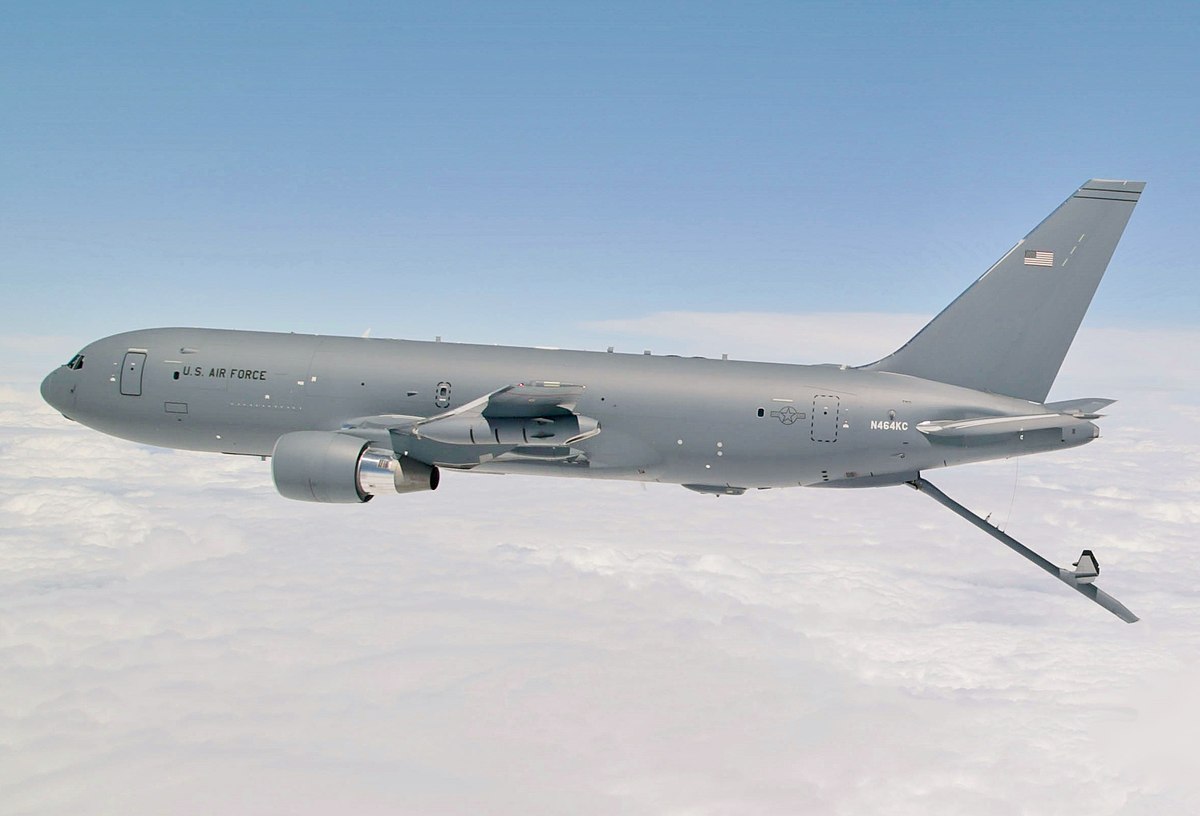
Fixed-Price Development: What the KC-46 Actually Taught the Pentagon (and What Washington Is Doing With That Lesson in 2026)
Back in Dec 2023 I did a short thread on fixed-price contracts after a lot of people online were praising them off the back of KC-46 (“Boeing ate the overrun, taxpayer protected, win”). That thread was me barely informed and stitching quotes together, so this is the proper version. Short answer: fixed-price is a good tool for production and a bad tool for immature development. KC-46 is the clearest proof, but it’s far from the only one. And in 2026 the US government has actually written that distinction into policy.
he 2026 Policy Picture
This is where it gets current. The administration is pushing hard toward fixed-price: Hegseth’s November 2025 acquisition overhaul, then the April 30, 2026 Executive Order “Promoting Efficiency, Accountability, and Performance in Federal Contracting,” and the FAR Part 16 rewrite DoD adopted on March 16, 2026. The EO makes fixed-price with performance incentives the default. Any non-fixed-price contract above a threshold needs personal sign-off from the agency head or a political appointee, and each agency had 90 days to try to renegotiate its 10 largest non-fixed-price contracts.
But look at the carve-out. Research and development or pre-production work on major systems is exempted. DoD implementation guidance reserves cost-type contracts for basic research and major-system development. In other words, the policy has more or less absorbed the KC-46 and A-12 lesson: push fixed-price hard in production, commercial buys and mature tech, but don’t force it onto the immature development of a big platform.
Industry is already pricing this in. L3Harris said in 2023 it passed on two programs because of fixed-price risk. Boeing and Northrop leadership have both said publicly they won’t repeat the bid strategy. The risk now is a different one: political pressure to apply “default fixed-price” to programs that legally fall inside the exemption but look mature on a slide.
Bottom Line
Fixed-price is great for production and stable designs. Kendall’s own data put the average overrun at a little under 10% for early production and nearly 30% for EMD.
Fixed-price development “protects the taxpayer” only in the narrow accounting sense. KC-46 cost Boeing about $9.5B and cost the Air Force years of capability.
The contractor’s bid behaviour matters as much as the contract type. Every disaster in this thread (C-5A, A-12, KC-46, the 2018 Boeing set) was a buy-in on an optimistic technical story.
Even fixed-price production fails if the lots are priced during development (B-21, T-7A).
KC-46 met every one of Kendall’s five criteria and still went wrong. If a militarized airliner from the world’s biggest aerospace prime couldn’t make fixed-price development work, nobody should be signing one for a sixth-gen fighter, a new bomber or a hypersonic program. As of 2026 the rules finally say so; whether they hold under budget pressure is the next thing to watch.
If I were to hazard a guess the South Korea offering has best chance , followed by a Connie restart , dropping the Mogami because few months back I heard they were really unsure on this . F-110 is nice ( the recent flight ii version shown at trade show ) but has medicore range more or less
The New Six Frigates: The U.S. Navy is combing the international market for a new small surface combatant. USNI News traveled to Euronaval to review some of the designs under consideration.
https://t.co/APIgNDzTQR
An NPS thesis in June 2026 reveals and analyzes various problems with the M10 Booker program. Written by Army acquisition officers and supported by test reports from the US Army OTC, it is well worth reading. This post provides a brief summary of the key findings.
@noir_2207 If you read about program it's such cluster fuck between a bazillion program depts and changing suppliers , it's miracle program even survived lol
Some context: the Army has wanted a Future lower tier interceptor for a while. Something to cover the gap between where PAC-3 MSE tops out and where THAAD starts. IBCS and LTAMDS had to come first so Patriot could engage threats at those higher altitudes, ranges and velocities on its own. Additionaly, Patriot launcher had to integrate with THAAD so THAAD could launch these additional lower cost interceptors and expand its envelope. Both of those things are now well on their way. The Army first wanted this future interceptor “by the late 2020s,” then 2030. If LT-FI kicks off next year and gets funded this time, we can expect it to finally reach the troops by the early to mid 2030s. Or about half a decade late to need. If not longer.