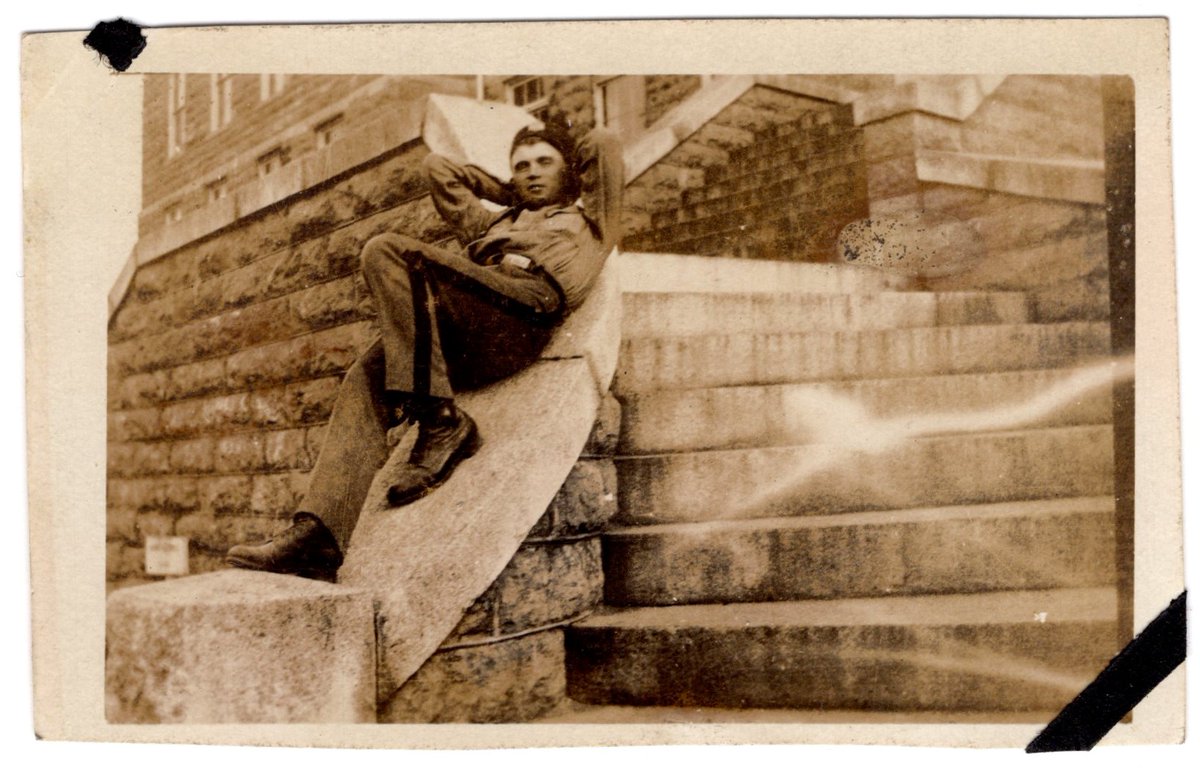
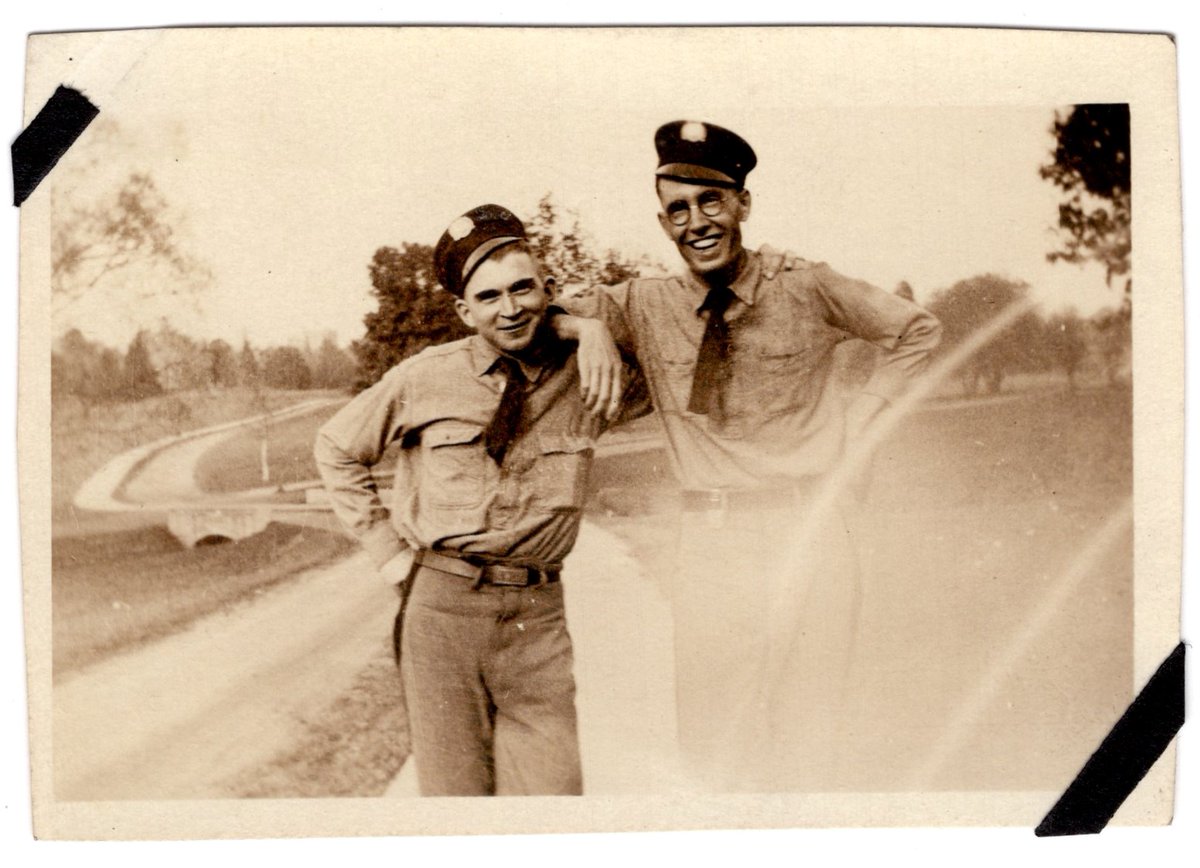
This is Mon Spencer Owyang, a Chinese American doughboy who served in the US Army during the First World War. I purchased this photograph in March 2022 and was able to recently reunite this photograph with his family! (1/4)
Soldiers operating machine guns had one of the lowest average life expectancies once behind their gun: 15 min
📷 #OTD July 26, 1918, unidentified American machine gunner w/ captured German MG08 Maxim water-cooled machine gun in a nest near Citadel Hill, Grandpre, Ardennes, France
WW1 in the Headlines:
Last week firefighters in Slovenia were prevented from penetrating into a wildfire due to the fire setting off unexploded ordinance from the First World War.
https://t.co/ESjesPs1Mt
10 July 1918.
Two men of the 7th Australian Light Trench Mortar Battery operate a Stokes mortar, established in a machine gun post on the new front line, just east of Villers-Bretonneux
left to right: 1916 Lance Corporal A J Ellis and 2700 Private Arthur Lawler.
IWM E(AUS)2677)
In memory of Corporal Jack O’Brien, a soldier from New England’s Yankee Division. Ironically, his name is inscribed in the logo of the Chicago Cubs prevalent during 1918. He must have been
a Cubs fan.
#ww1#blackandwhitephotography
Once America entered the war the US Committee on Public Information worked with songwriters and publishers to produce and promote propagandistic songs to encourage support of the war effort among the American population. (3/3)
In the 1910s much of the American population either didn't read or didn't read English. But, some could get their news from songs. Songwriters would read newspapers, and then compose songs within hours based on what they read that morning. (1/3)
By the afternoon their music would be for sale on the streets! By night musicians would be playing those songs in bars for the ready and willing ears of their listening public. (2/3)
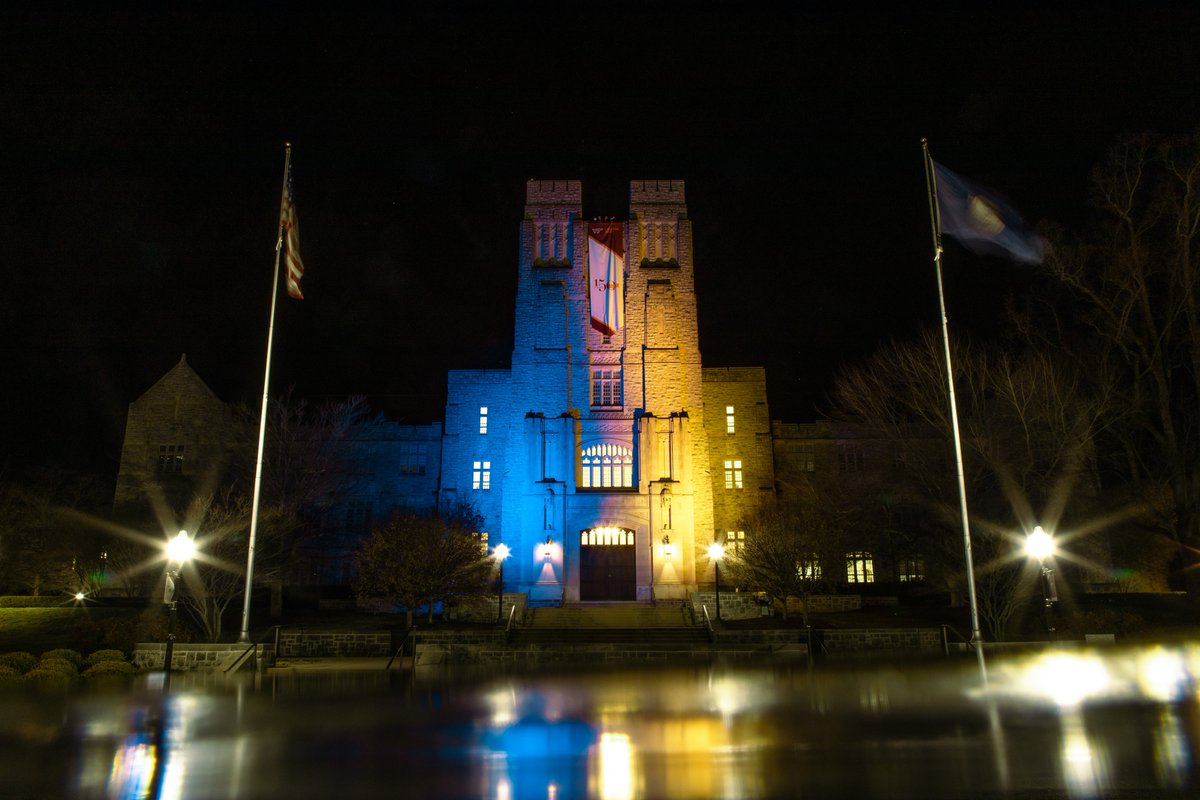
As @virginia_tech celebrates #VT150, students combined their disciplinary backgrounds to create innovative historical exhibits. 👏
Join @historylab_vt tomorrow (May 3) at 2 p.m. to check out the projects! ✔
More details.⬇️
https://t.co/WyRrcXQAOb
@virginia_tech You can also visit our digital exhibit - How WW1 Changed Us: Virginia Tech - to learn about how #WorldWar1 played a role in women coming to @virginia_tech as students and instructors!
🔗https://t.co/b9UfBY3tF1
We shall hold the enemy towards nightfall
and they will move
mutely into the dark behind us,
only the creaking cart
disturbing their sorrowful serenity.
(3/3)
"The Refugees" by Sir Herbert Read, written in 1914 during his service with the Green Howards in France:
Figures with bowed heads
They travel along the road:
Old women, incredibly old
and a hand-cart of chattels.
They do not weep:
their eyes are too raw for tears.
(1/3)
Past them have hastened
processions of retreating gunteams
baggage-wagons and swift horsemen.
Now they struggle along
with the rearguard of a broken army.
(2/3)