What do we know about the psychology of censorship? In our newest preprint, we (@Leesplez@MatthewFacciani@awilson_WLU ) explore how partisans respond to and process info with a censorship frame, i.e., the communicator claims it has been suppressed.
https://t.co/mVYoZqyh2n
Why does this matter? If people believe that info aligned with their worldview is censored, they may seek alternative sources to satisfy their curiosity. And if the information is cast as forbidden knowledge, people may be less prone to thinking critically about what they find!
Do we think only conservatives will be prone to this error? No – we just haven’t yet studied a case where liberals are exposed to forbidden knowledge consistent with their worldview. We expect patterns could reverse.
What do we know about the psychology of censorship? In our newest preprint, we (@Leesplez@MatthewFacciani@awilson_WLU ) explore how partisans respond to and process info with a censorship frame, i.e., the communicator claims it has been suppressed.
https://t.co/mVYoZqyh2n
With the easy spread of misinformation online, there are often calls for content moderation or censorship. However, even when information is suppressed on some platforms it is usually available elsewhere.
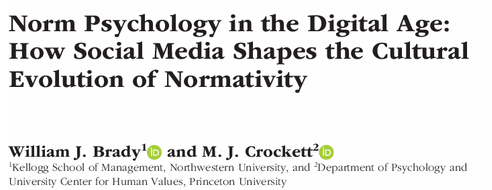
In a new commentary @mollycrockett and I hypothesize 3 ways norm psychology is impacted through interactions with social media. In other words, we do (2) and (6) from below thread😂
https://t.co/U5EY9Iyn40
“The issue isn’t just about debunking false information — it also involves addressing extremists’ need for social belonging and identity affirmation.”
Nice description of our new paper on extremism and misinformation sharing (led by @ClaraPretus) https://t.co/cLWrFicFAb
👓 NEW PAPER👓 ACROPHILY ON TWITTER: users (especially conservatives) are more likely to affiliate with others of their own political group who have *more extreme views* compared to moderate views (taking available users into account).
1/6
https://t.co/SO1lG4nHKv
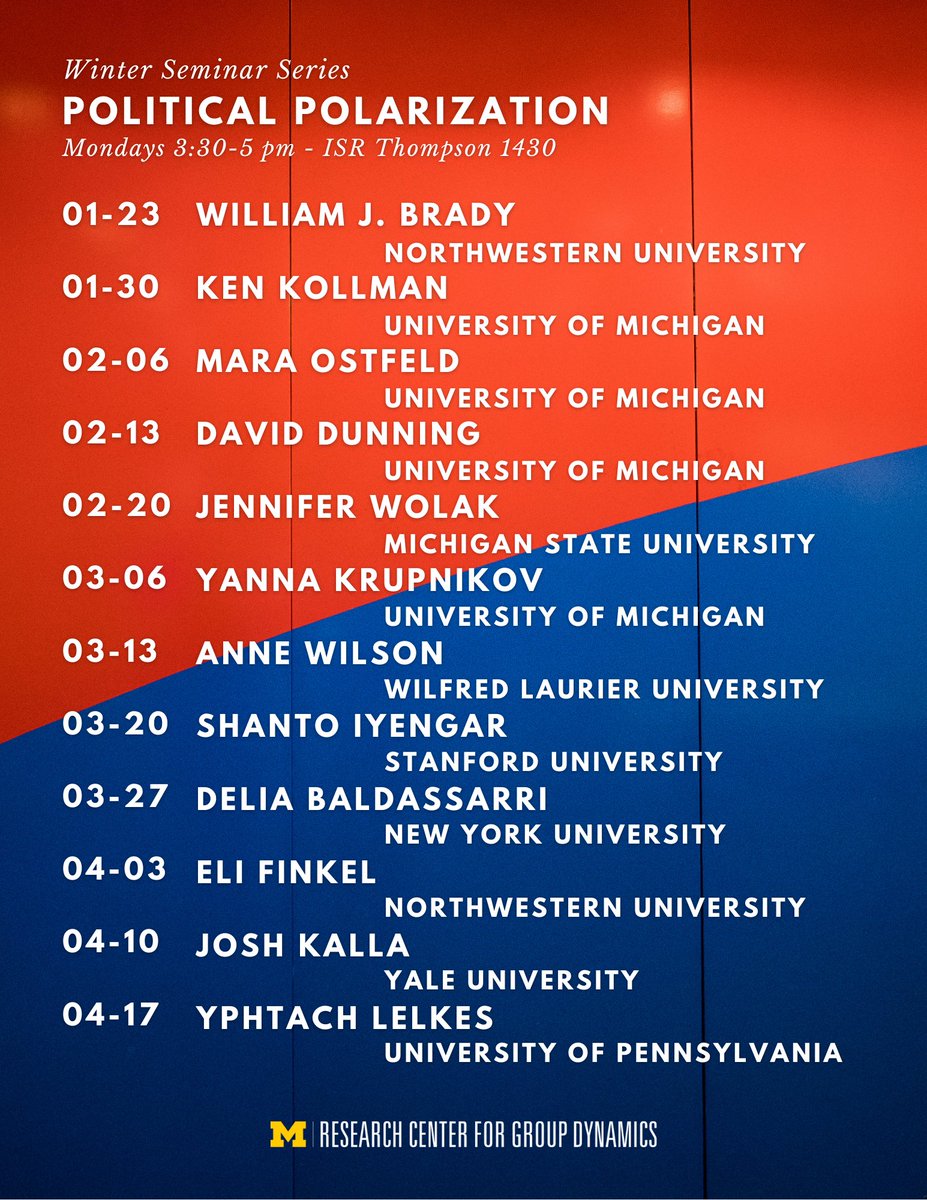
Join RCGD's Winter Seminar Series on Political Polarization Mondays at 3:30 at @umisr 1430. R/T and follow @RCGD_ISR for more on this outstanding series, open to the public. https://t.co/E5Ctng2sos
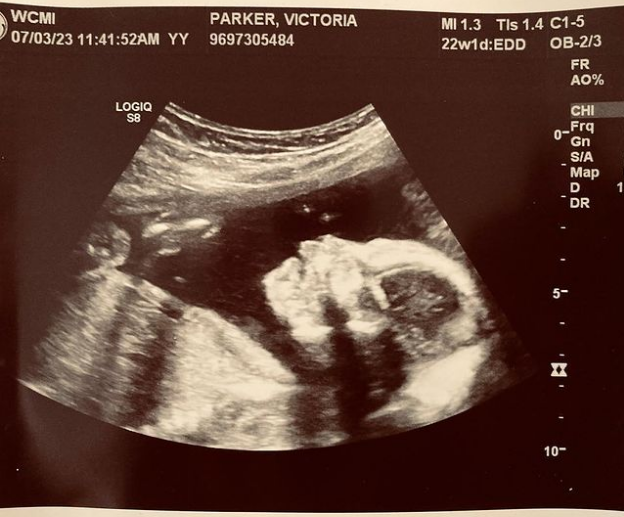
I have OTHER news as well! We'll be welcoming a little scientist to the family in July! Which means she'll be tagging along to my dissertation defense in the spring. I hope her suggested edits aren't too difficult to implement.
I have some news to share! VERY excited and honoured to be joining the Dispute Resolution Research Center (DRRC) at @NorthwesternU's Kellogg school of Managemet as a Postdoctoral Fellow this fall! Thank you DRRC, I can't wait to dive into this exciting opportunity with you!
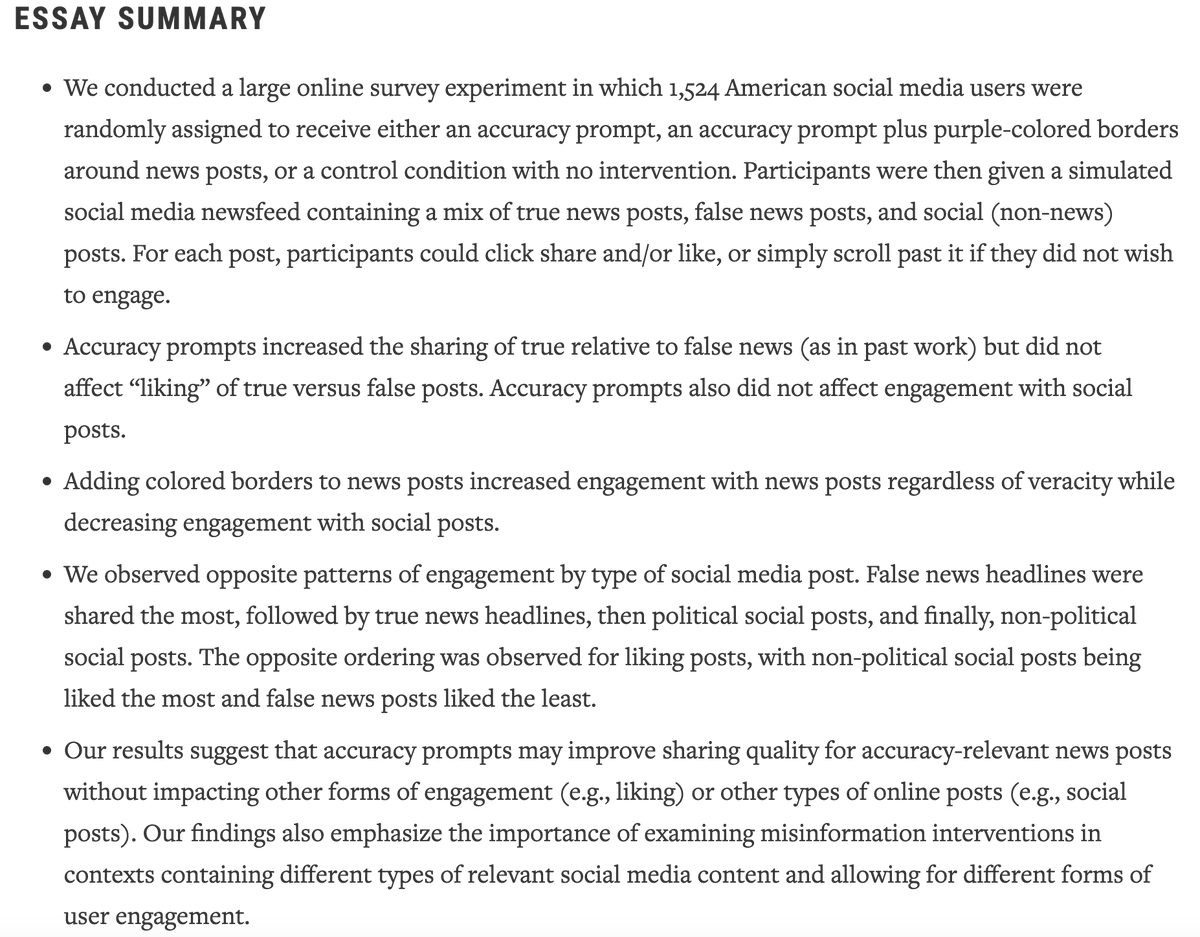
🚨New paper🚨 with @venyab04 & @DG_Rand via @MisinfoReview: Accuracy prompts improve sharing quality for news w/o impacting other engagement (liking) or content (social); but adding colored borders to news increases news engagement regardless of truth 1/N
https://t.co/SEqSAAnRv5
@DavidBOstler @awilson_WLU@alexa_tullett@PsyArXiv Hi there! We are just in the process of resubmitting after adding more data. I will absolutely keep you posted with its progress.
Very pleased to share our newest pre-print (@awilson_WLU, @alexa_tullett, and Matt Feinberg) up on @PsyArXiv, “The Ties that Blind: Misperceptions of the Opponent Fringe and the Miscalibration of Political Contempt” https://t.co/ecTAPavk5s