New preprint: Jack Lucas, Christian Breunig and I reanalyze 70,470 assessments made by 12,860 politicians about their constituents' positions and demographics, from every available published study of elite perceptual accuracy and our own original data. /1
https://t.co/UiKA5VUlc2
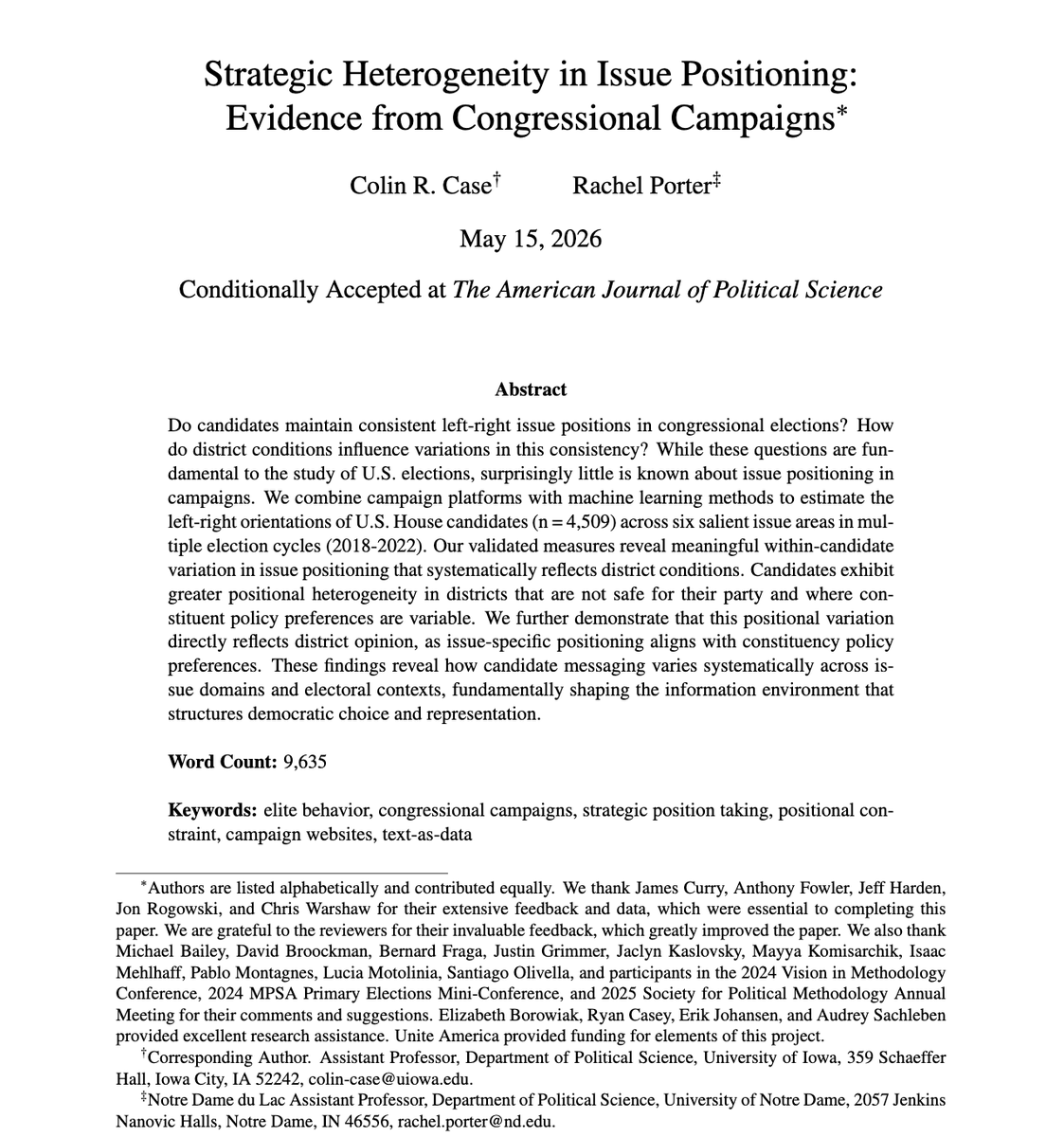
Very excited that my paper with @colinrcase has been conditionally accepted for publication at @AJPS_Editor!
Using our CampaignView data, we produce measures for candidates' left-right positioning across six salient issue areas
Big takeaways below ⬇️⬇️
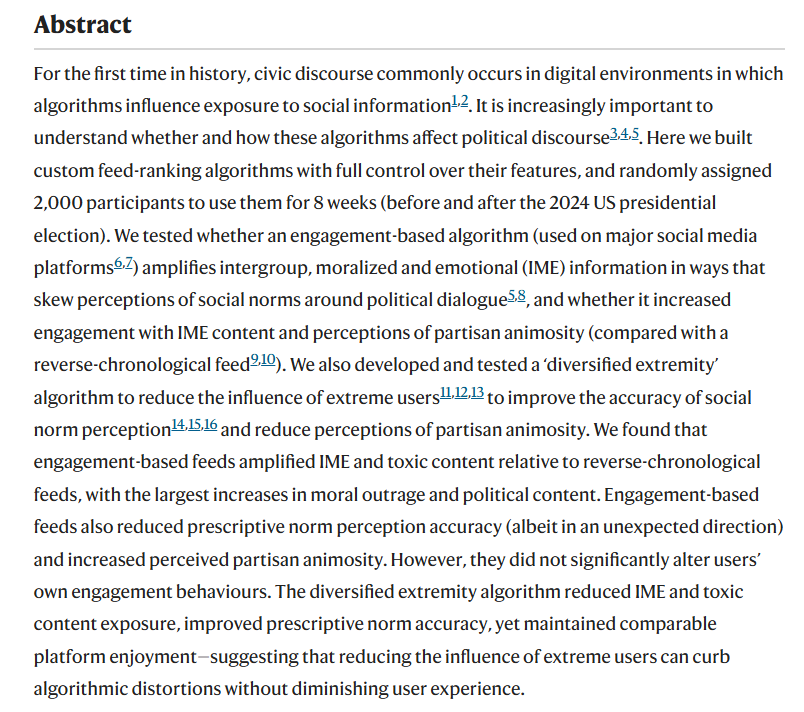
✨New paper out @SpringerNature✨ For 8 weeks around the 2024 US election, we randomly assigned 2,000 people to use social media algos we custom-built. Do engagement-based algorithms amplify intergroup, moral & emotional content + does that distort how we see political norms? 🧵
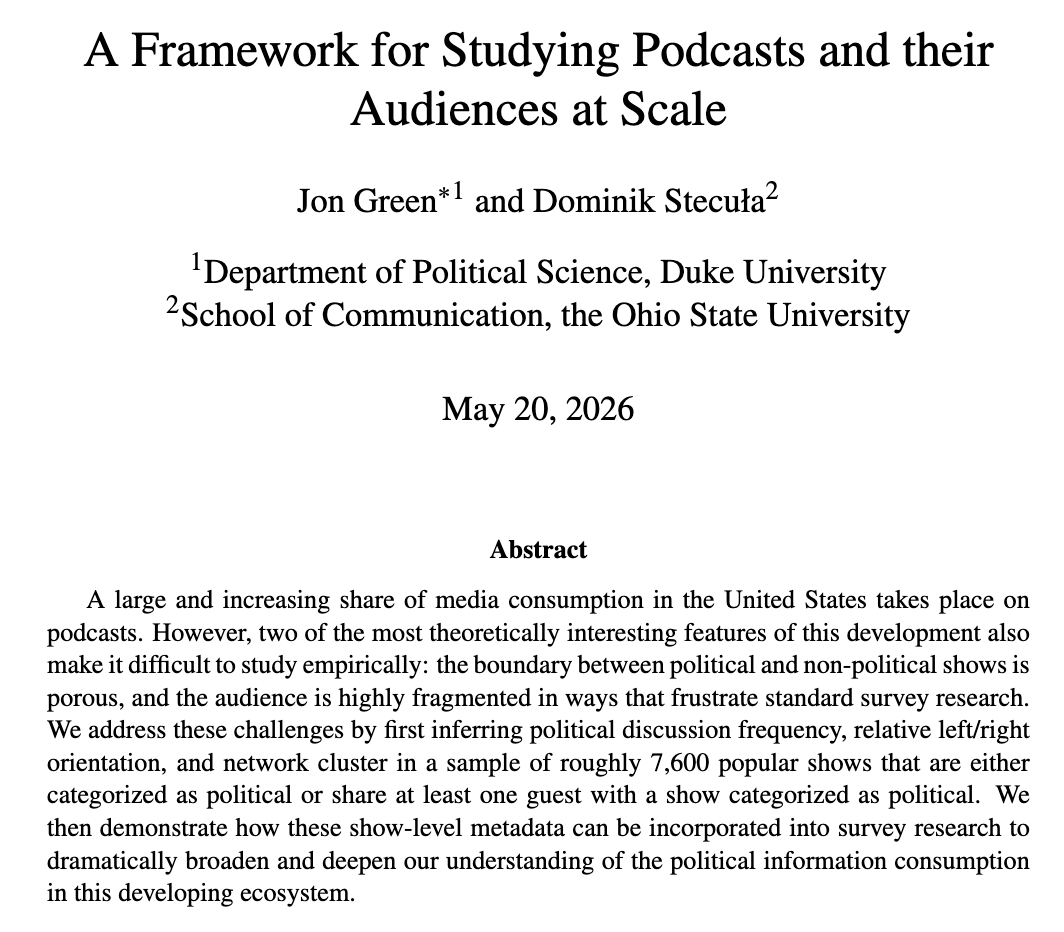
new (w/ @decustecu): we infer show-level metadata for a large sample of popular politics and politics-adjacent podcasts, then merge it with survey data to characterize political information exposure for their audiences
Place also matters: churches in pro-Trump counties were more likely to engage in advocacy than those in more liberal areas. In R-leaning and swing states, advocacy levels were relatively stable: local partisan context is a stronger driver than national electoral strategy.
How common is political advocacy from the pulpit? We find it is both more common and more geographically dispersed than previously understood. The American pulpit now functions as a significant channel for partisan base mobilization.
https://t.co/yI9odceCeW
87.5% of references to Republicans were favorable, and 71.3% of references to Democrats were in opposition. Donald Trump comprised 52.4% of discussion.
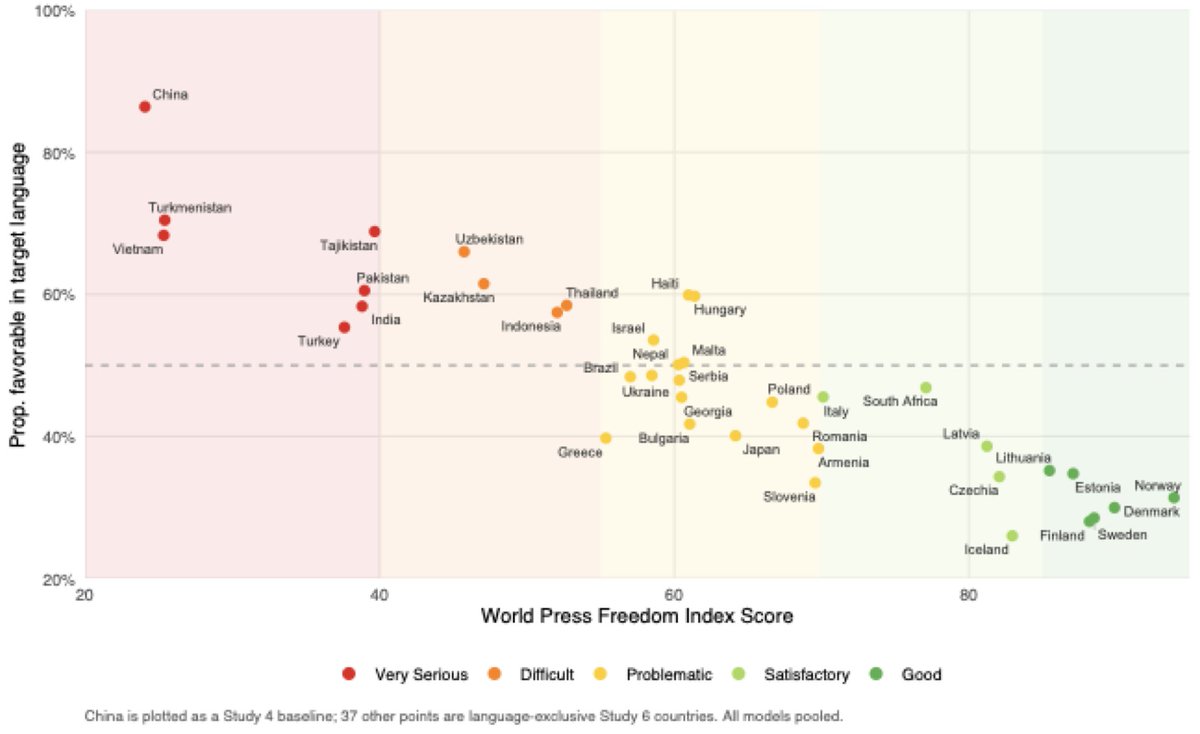
New in Nature: LLMs give "the party line" in the languages of authoritarian regimes. This works when they control the media, which feeds pretraining data. We show more state control over media means less critical LLMs. 6 studies w 38 languages & 13 models. Details ↓
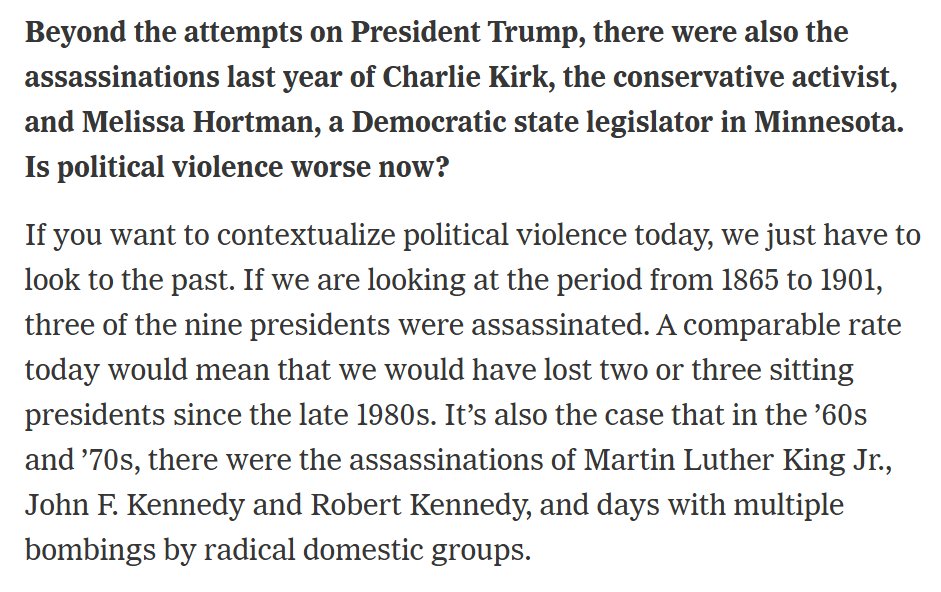
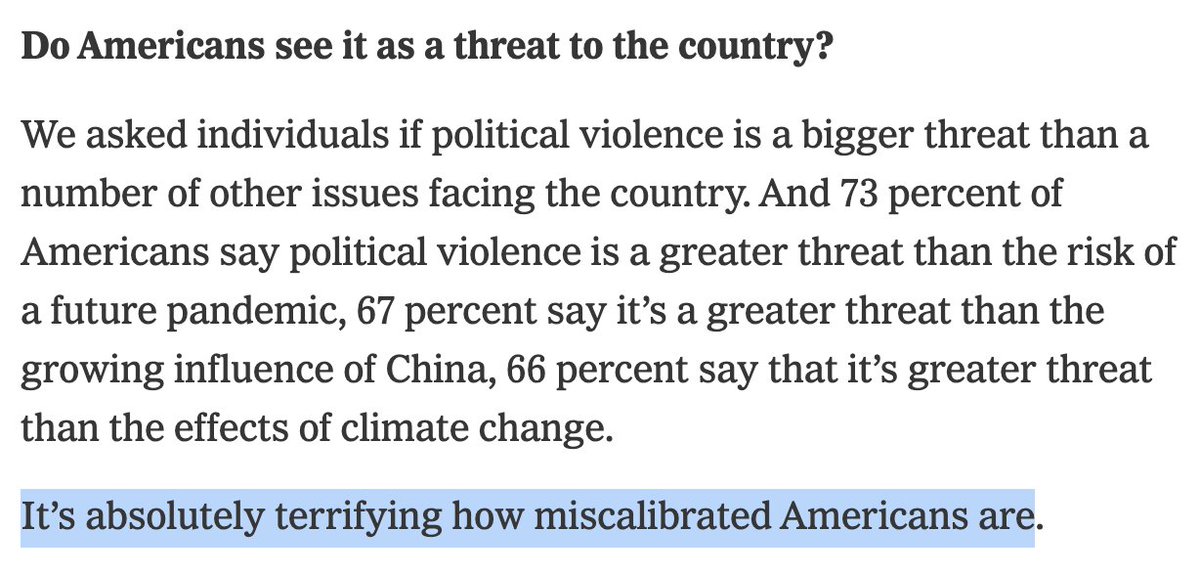
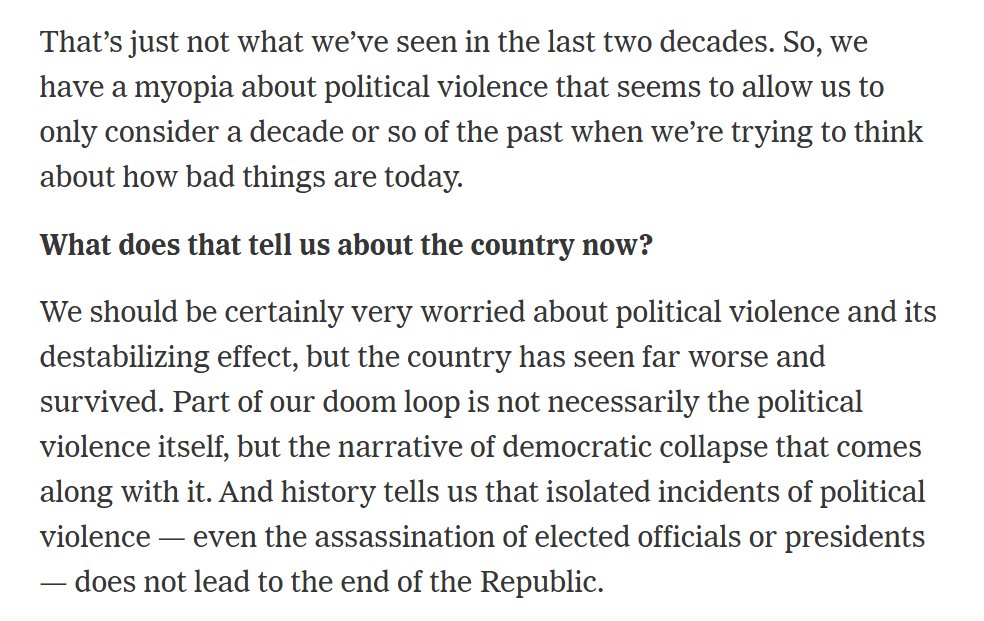
Researchers who study political violence say that the U.S. is in a period of more intense political rhetoric, but there have been far darker periods in the nation’s history
https://t.co/37lBleOINP
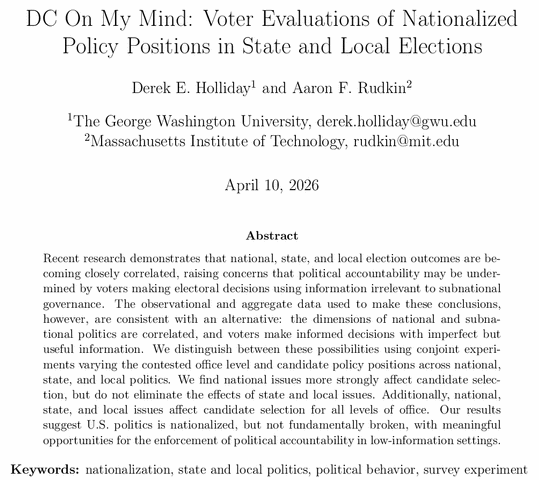
In increasingly nationalized elections, how do voters use policy information to choose candidates?
In a paper just accepted at @The_JOP (with @aaronrudkin), we provide experimental evidence of nationalized information-processing in the electorate, but with a few nuances
🧵1/8
“The number of incidents of political violence is small, a couple of dozen, maybe three dozen incidents over the four years ending in 2024. But over the same period, we’ve had more than 9,000 religious hate crimes — about 5,700 were antisemitic — and more than 25,000 racial hate crimes. I would strongly argue that it’s these other cleavages, these other acts of violence that are hurting us.” https://t.co/M4jgXtym24
Political violence is not worse now than at other points in US history, nor are we at the precipice of democratic collapse, says @seanjwestwood, who tracks such violence & the reaction to it.
An informative & thought-provoking interview by @stavernise. https://t.co/55FCKdUPVz
PRL's Sean Westwood interviewed in the NYT about political violence, Americans' support for political violence, and how the fear of violence can be exploited. PRL has continuously tracked support for partisan violence for the past 4 years.
https://t.co/Aue4tcTsgU
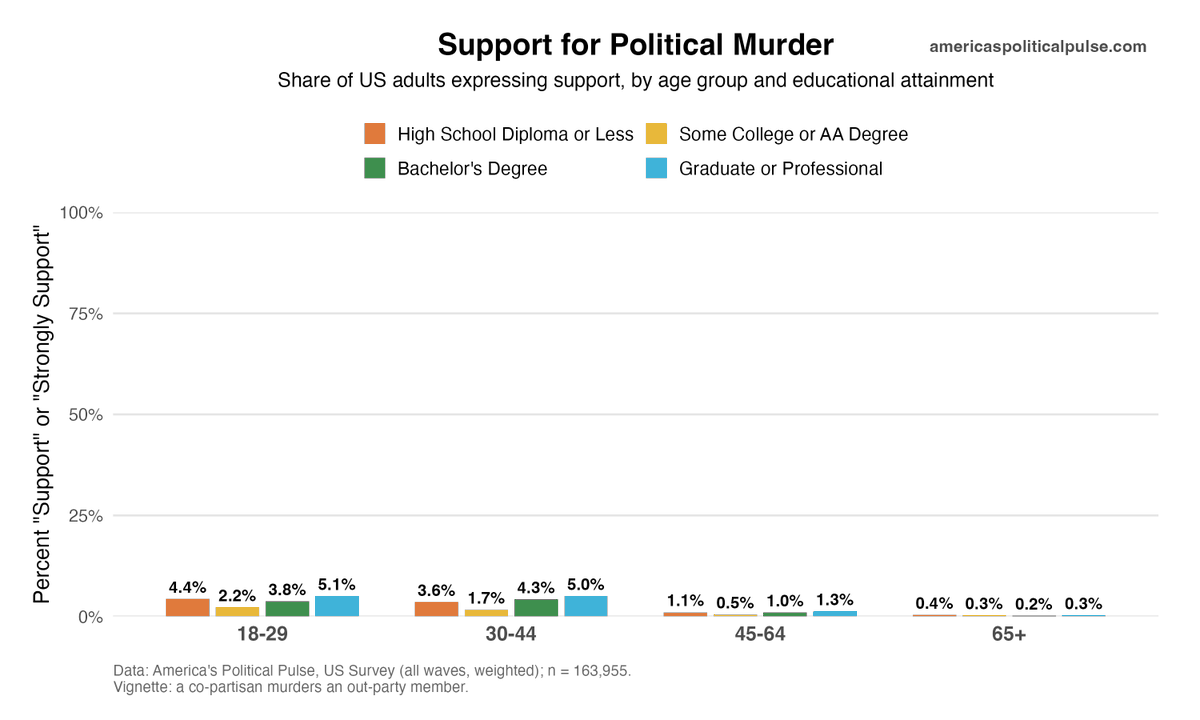
The rank order replicates with better data, but the % supporting partisan murder is much lower.
Importantly, this is passive support and not willingness to actually murder.
A study conducted by the Polarization Lab run by Dartmouth College, UPenn & Stanford, found that while overall support for political violence was low, those most likely to support it were "young, male, wealthy, non-white, and more educated Americans" https://t.co/IiIsJQfDnq