Millennials are the elite generation because they cranked out 12-page essays the night before they were due. No ChatGPT. No Claude. Just lo-fi beats playing in the background, Black coffee at midnight, footnotes that were somehow correct, and pure delusion. Grade was an A minus. Period.
As a former U.S. Surgeon General who held an active medical license and practiced medicine while in the role (at Walter Reed and aboard the USS Comfort) it is incomprehensible that the Senate is even considering a nominee for this role who lacks any active license and has never practiced unsupervised. 🤯
Congratulations to Indiana University and Coach Cignetti on winning their first College Football Playoff National Championship. One of the greatest turnarounds of all time.
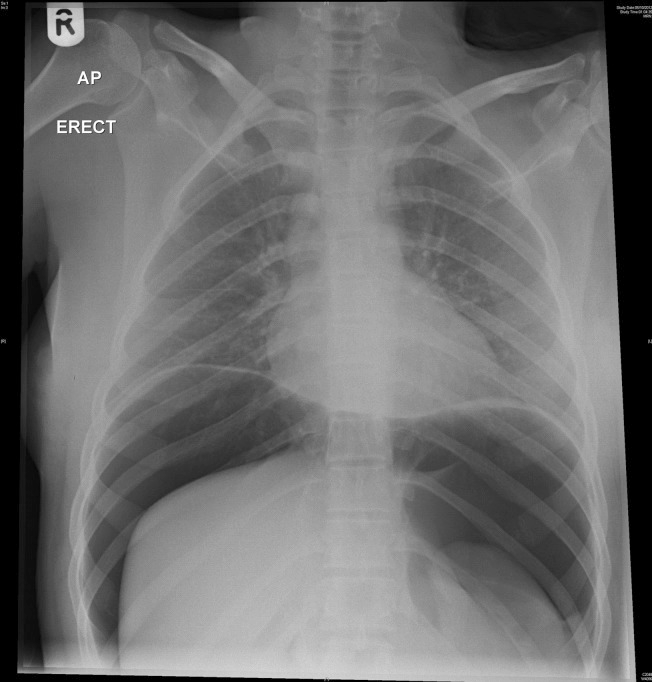
An 18-year-old female presents to the emergency department with abdominal pain and shortness of breath after drinking a fancy cocktail. Her x-ray is below.
What do you think is going on?
The smartest doctors are rarely the ones who make the greatest impact in medicine.
Impact is less about intelligence in 2026 and beyond.
It’s about agency.
Intelligence is the ability to understand, analyze, and process information.
It’s pattern recognition. Memory. Reasoning. Cognitive horsepower.
Medicine selects heavily for this.
But intelligence alone is no longer scarce - particularly as AI has begun to meet and exceed human intelligence for many tasks.
Agency is different.
Agency is the ability to:
-Observe the world as it is
-Recognize that it is not immutable
-Act to change it
-Execute despite uncertainty, friction, or incomplete knowledge
Agency = curiosity + creativity + execution.
In the pre-AI era, expertise was largely about how:
-How to run statistics
-How to code analyses
-How to format manuscripts
-How to search literature
That made intelligence and technical mastery the bottleneck.
That world is gone.
Today, AI can:
-Run statistical models
-Write clean, reproducible code
-Perform literature searches
-Draft and revise text
-Execute technical steps accurately and repeatedly
I say this as someone who did a Master’s in epidemiology and learned to write Python for stats.
The syntax mattered then.
Today, I can write the scripts in minutes using Claude Code.
If the "how" is becoming automated, what's left to automate? The "what" and the "why". @johnrushx talks about this.
- What to study.
- Why it matters.
- When to act.
- And whether you actually do anything at all.
That’s agency.
Medicine doesn’t suffer from a lack of smart people.
It suffers from a lack of people who:
-Start projects
-Ship imperfect versions
-Build things outside formal pathways
-Take responsibility for changing broken systems
95% of people never take the first step.
Not because they aren’t smart —
but because agency is uncomfortable.
For the next generation of physicians:
- Stop trying to maximize how much you know.
- Start maximizing how much you can do.
Learn to:
- Turn ideas into action (even bad first drafts)
- Execute without permission
- Build, test, iterate
Use intelligence as a tool, not an identity.
In 2025 and beyond, agency will define who shapes medicine
@JamieAA_Again Like every test in medicine, pulse oximetry isn't perfect. But it's good enough to help make clinical decisions, in context with other tests, physical exam, and clinical reasoning.
🧵 What drives blood flow – the heart or the vessels?
Eminent physiologists have argued this for decades.
The disagreement survives because of imprecise causality.
Here’s the resolution 👇