When asked to rate their AP course on how well it prepared them for college, students worldwide gave all of their AP subjects high marks, but highest rated of all was AP Calculus. AP Calculus students believe — without yet actually having attended college, to be clear — that the course provided them with unparalleled preparation for the type of coursework they expect to encounter on college campuses.
Other AP subjects with the very highest student ratings in response to the prompt “This course prepared me for college” were AP English Literature, AP Research, AP Seminar, AP Spanish Literature, and AP Physics C: Electricity & Magnetism.
The 2026 AP Calculus AB Exam scores:
5: 20%; 4: 28%; 3: 17%; 2: 24%; 1: 11%
The 2026 AP Calculus AB Exam was taken by ~292,000 students, roughly 2% of the U.S. high school population.
AP Calculus AB Multiple-Choice Questions (MCQ):
Students earning scores of 3 or higher scored very well on questions related to Unit 1: Limits and Continuity. Students achieving an AP 5 typically answered 100% of these questions right, whereas to earn a 4, students typically missed no more than 1 point, and to earn a 3, students typically missed no more than 2 points.
The two most difficult MCQs measured aspects of Unit 6: Integration and Accumulation of Change, and were typically only earned by students achieving AP 5s. Students receiving AP 2s were generally unable to earn many points on questions related to this unit, so this unit is very much a differentiator between students earning scores of 3+, who were able to succeed on a variety of these questions, and students earning scores of 1 and 2, who could not.
AP Calculus AB Free-Response Questions (FRQ):
Each AP exam has multiple versions, for different time zones. I'll focus the commentary below on the version taken by most students:
https://t.co/1ahAQehN10
Since AP scores are reported on a 5-point scale, the free-response questions deliberately include some very difficult points to differentiate AP 5s from AP 4s, points of varying difficulty to differentiate AP 4s, 3s, and 2s, and more foundational points to separate AP 2s from AP 1s.
FRQ #1, the Modeling Rates of Change question, required students to estimate a rate of change, construct a midpoint Riemann sum, interpret the meaning of a definite integral in context, set up and evaluate a definite integral for accumulation, and apply the Intermediate Value Theorem. The question spans nine points, creating a broad range of difficulty:
• The two points in Part C, which required students to provide a definite integral for accumulation and evaluate it using the calculator, were earned by 80% and 72% of students respectively, meaning that most students who understood the fundamentals of integration could set up and execute these computations. Accordingly, these points differentiated between students receiving AP scores of 2, who were generally able to earn these points, and students receiving AP scores of 1, who were not.
• Comprised of points that were aspirational for most students, Part D was exceptionally difficult, and so provided opportunities for the most advanced students to demonstrate exceptionally strong knowledge and skills.
FRQ #2, the Area and Volume question, presented two functions f and g bounding regions and asked students to calculate areas of regions using definite integrals, set up an integral for the volume of a solid with rectangular cross sections, and set up an integral for the volume of a solid generated by revolving a region about the y-axis.
Other than the first point within Part C (presenting an integrand of a certain form in a definite integral for the area of a region), which some students receiving an AP 2 were able to earn, this FRQ, like most AP Calculus FRQs, focuses on differentiating performance among AP 3s, 4s, and 5s, who were each typically able to earn a variety of points across this FRQ, with AP 5s typically earning all points possible.
FRQ #3, the Modeling with Differential Equations question, was the most difficult FRQ on this year's exam, laser focused on differentiating between scores of 4 and 5, with students achieving AP 5s able to earn significantly more points on this question than other students. The question asked students to explain why a given slope field could not represent the given differential equation, find the slope of a tangent line, determine whether a tangent line approximation is an overestimate or an underestimate, and solve the differential equation using separation of variables.
FRQ #4, the Graphical Analysis question, presented students with the graph of f′ (the derivative) for a twice-differentiable function f and asked them to use the graph to evaluate a related derivative, identify points of inflection of the graph of f, determine where the function f is increasing and concave down, and determine the locations of absolute extrema of the function f. While students receiving AP 1s were unable to engage with the difficulty of this FRQ, the question provided multiple opportunities for students receiving AP scores of 2, 3, 4, and 5 to distinguish themselves — a question that differentiates performance very well across this spectrum. For example:
• Students achieving an AP 3 were typically able to set up and answer Part A correctly, answer Part C, and earn other points throughout this FRQ, while students receiving an AP 2 were not.
• Students achieving an AP 4 or an AP 5 were generally able to earn some of the points available in the more difficult Part D, whereas students earning an AP 3 typically did not.
FRQ #5, the Particle Motion question, provided students with analytical and graphical representations of the velocity of a toy car moving along a straight path. Students overall scored higher on this FRQ than any other on this exam.
Part A (finding acceleration as the derivative of the given velocity function) included a basic entry point that differentiated between students receiving AP 2s, who could typically earn this point, and students receiving AP 1s, who could not.
Students achieving AP 3s, 4s, and 5s generally earned the majority of points possible across this FRQ. Part D served as the key differentiator between students earning AP 4s and 5s, who were usually able to earn points in this part, and students earning AP 3s, who were often less able to succeed on Part D.
FRQ #6, the Analysis of Functions question, presented students with a table of values for a twice-differentiable function f and its derivative. Without a graphing calculator, students had to evaluate a limit, apply the chain rule to find a related derivative, solve an initial value problem, find the derivative of a function defined by an integral, and apply the product rule to find a derivative.
From a psychometric perspective, this question may be the best on the exam, as the available points very neatly differentiate performance levels across the spectrum of students receiving AP 2s, 3s, 4s, and 5s. (Students receiving AP 1s typically earned no points on this question, which was beyond their ability level.)
• The points available in Part B and one of the points available in Part D were all points that students earning an AP 3 could consistently earn, whereas students receiving an AP 2 had more mixed performance here.
• Students receiving AP 5s generally earned all points in Part C, something students earning other scores could not usually achieve.
All subjects' AP score distributions for 2026 will be posted here when available: https://t.co/OrkaQhPZYO
The 2026 AP Calculus BC exam scores:
5: 46%; 4: 22%; 3: 14%; 2: 14%; 1: 4%
The 2026 AP Calculus BC exam was taken by ~171,000 students — roughly 1% of the U.S. high school population.
AP Calculus BC Multiple-Choice Questions (MCQ)
• AP Calculus BC students scored especially well on questions related to Unit 1: Limits and Continuity (35% earned all points) and Units 4 and 5: Applications of Differentiation, such that students earning AP 3+ scores answered most of these questions correctly.
• The most challenging MCQ content area was Unit 10: Infinite Sequences and Series, a unit requiring students to master convergence tests, power series, and error bounds for series approximations, for example. Earning 100% of these points was rare, given how difficult and advanced this unit is; 3% of students achieved a perfect score on this unit.
AP Calculus BC Free-Response Questions (FRQ)
Each AP exam has multiple versions for different time zones. I'll focus the commentary below on the version taken by most students:
https://t.co/vBf6vwVcMB
Collectively spanning the AP Calculus BC curriculum, the six FRQs included rate modeling with tabular data, polar curve analysis, differential equations, graphical reasoning, area-volume applications, and Maclaurin series. Throughout the FRQs, students must communicate reasoning. For example, they needed to construct arguments, interpret a definite integral in context, evaluate the validity of a slope field, and determine the convergence of a series.
Since AP scores are reported on a 5-point scale, the free-response questions deliberately include some very difficult points designed to differentiate AP 5s from AP 4s, points of varying difficulty to differentiate AP 4s, 3s, and 2s, and more foundational points to separate AP 2s from AP 1s.
The following commentary will focus on the questions unique to Calculus BC:
FRQ #2 — Polar Curve: Area and Tangent Lines
Q2, the Polar Curve question, tested students' ability to work with polar functions — finding the area of a polar region using a definite integral, working with the slope of a line tangent to a polar curve, and analyzing curve behavior.
The second point in Part C (answer using a derivative test) and both points for Part D were the most difficult points of this FRQ. These served to differentiate students achieving AP 5s, who could typically earn these points, from other students.
FRQ #5 — Area, Volume, and Perimeter
Q5, the Area-Volume question, asked students to evaluate a definite integral without the use of a calculator, write an integral expression for the volume of a solid of revolution, write an integral for the perimeter of a region (arc length), and evaluate an improper integral.
Students receiving AP 1s were not usually able to earn points on this question. Rather, it served especially well to differentiate among AP 3s, 4s, and 5s. For example:
• Students earning AP 3s consistently earned points across Parts A and B, as well as the antiderivative point in Part D, whereas students receiving AP 2s did not.
• Students earning AP 5s were consistently able to succeed on Part C, the most difficult part of this FRQ, whereas students receiving AP 3s and 4s were more likely to struggle and only earn partial points here.
FRQ #6 — Maclaurin Series
In this demanding question, which tended to differentiate between AP scores of 4 and 5, students were given a Maclaurin series for a function g and asked to find the sum of g(3) (an alternating geometric series), find a series for the derivative g', justify an error bound, and write a Maclaurin series for a related function.
• In Part B, students earning AP 3s could typically write two terms of the series for g', while students earning AP 4s were more likely to proceed and write the remaining two terms.
• In Part D (ii), students earning AP 4s were typically able to write two terms of the series for the related function, and students earning AP 5s were typically able to write all three terms.
• Part C was the most challenging segment of this FRQ, with these points generally earned only by students achieving AP 5s.
All subjects' AP score distributions for 2026 will be posted here when available: https://t.co/OrkaQhPZYO
The 2025 AP Calculus AB Exam scores:
5: 20%; 4: 29%; 3: 15%; 2: 23%; 1: 13%
Multiple-Choice Questions
AP Calculus AB students scored highest on questions related to Unit 2: Differentiation: Definition and Fundamental Properties. 50% of students answered all or all but one of these questions right.
The most challenging questions were from Unit 6: Integration and Accumulation of Change. 7% of students answered correctly all or all but one of these questions.
Free-Response Questions
https://t.co/C1EOY5jnZH
Students generally scored highest on Q3, in which they modeled reading rates for a student and a teacher. And this was the best question, psychometrically, of the exam, since its points varied significantly in difficulty, enabling good measurement of student abilities across the 1-5 AP scale. The question was worth 9 points total, and students unable to answer at least 2 of those points correctly are generally receiving AP 1s and 2s, while students who could answer 8-9 of the points are typically receiving AP 5s.
The most challenging FRQ for AB students was Q1, the modeling of an invasive plant species’ spread within a fruit grove. (Who says farmers don’t need calculus?) Students earning 6-9 points on this question tended to receive AP 5s. Writing justifications for global maxima and minima is a good instructional focus for next year.
All subjects’ AP score distributions for 2025 will be posted here when available: https://t.co/kmtO7H9hEh
The 2025 AP Calculus BC Exam scores:
5: 44%; 4: 22%; 3: 13%; 2: 15%; 1: 6%
Multiple-Choice Questions
As is typical, Calculus BC students scored extremely well across the units that are shared with Calculus AB, especially Unit 1, where 55% of students answered every question right, and Units 2-3, where 41% did so.
The most challenging Calculus BC questions were from Units 9 and 10, which don’t overlap with Calculus AB. As usual, students found questions about infinite sequences and series most difficult: 4% answered all of these questions right.
Free-Response Questions
https://t.co/7hlTwOiKxj
Setting aside the three FRQs shared with Calculus AB, which Calc BC students typically find easier than the BC-specific FRQs, students scored highest on Q5, the differential equation question that requires understanding of the second-degree Taylor polynomial, the Lagrange error bound, and Euler’s method.
By far the most difficult question on this year’s BC exam was Q2, polar area, which served to differentiate among BC students, who are qualifying for AP 4s and 5s. Polar area is a good instructional focus for next year.
All subjects’ AP score distributions for 2025 will be posted here when available: https://t.co/gyEUzWB2JS
NEW VIDEO: Interview with Polaris Dawn Mission Specialist Sarah Gillis!
We talked about everything from Polaris training to her EVA and musical performance.
Link in replies!
Apologies for another long one... I clearly haven’t found the TLDR edit button yet.
We are nearing the end of our immediate post-flight Polaris Dawn obligations. We have reviewed a lot of data, debriefed on all the major phases of flight and systems, celebrated with the @PolarisProgram & @SpaceX teams at a futuristic splashdown party, and visited several facilities to express our appreciation to the SpaceXers who made our mission possible. Our work isn’t completely done—we still have a few final visits—but we have had a great time over the past few weeks and I wanted to share a bit about that experience.
As a crew, we spent the most time with the teams in Hawthorne and KSC, so it was a real privilege to get on the road and meet so many of the 14,000+ people it took to make a mission like Polaris Dawn possible. We enjoyed meeting with many of them, answering questions and congratulating them on such a successful mission—not to mention all the other recent accomplishments. In the month since we returned from space, SpaceX has made history many times over—launching Crew-9, returning Crew-8, the Starship booster chopstick catch (probably the greatest engineering accomplishment in the last half-century), and the next day’s launch of Europa Clipper on Falcon Heavy.
I wish more people could see what goes on behind the scenes at SpaceX. The McGregor team relentlessly tests motors, stages and hardware with the goal of making rockets and spaceships more reliable. The sense of individual ownership is intense and there is a real hunger for data to improve rapidly. For example, we spent time with the teams that conducted O2 flammability and ESD testing to ensure we were safe in Dragon and EVA suits when exposed to elevated oxygen levels. They even showed us subscale testing footage of Super Heavy to assess what would happen if the tower didn’t successfully catch the booster. They’ve since shared that data across the industry so others can learn from it. And of course, the chopsticks did their job and caught the booster perfectly... before we know it, Starships will be launched and recovered as routinely as Falcon.
We also visited Starbase to meet the teams responsible for preparing Starship, the booster, and the tower for the last historic mission and saw how Booster 12 still looks practically new. The energy at Starbase—and the new Starship factory—is infectious and inspires so much confidence that SpaceX’s grand vision isn’t that far off in the future. We also visited the Starlink factories outside Austin and in Redmond. This made-in-America operation is cranking out thousands of satellites and millions of Starlink terminals. True to SpaceX fashion, the vertical integration is impressive. These SpaceX employees are building an amazing communication product—one that will help fund a vision as incredible as making life multi-planetary—but they are also the same employees working around the clock when over 150,000 Starlink kits were needed to respond to the recent storms that devastated much of the Southeastern United States.
As we have told the thousands of SpaceXers we’ve met over the past few weeks, they are part of the greatest adventure in human history. What could be more exciting than unlocking the secrets of the universe while making life better here on Earth? They continue to inspire countless new dreamers, all eager to contribute to this bold new age of exploration.
Though we are still ‘on mission’... the end is approaching. We have been incredibly lucky to witness firsthand the history SpaceX is capable of making and be inspired by the path ahead. Like millions around the world, we eagerly await what comes next.
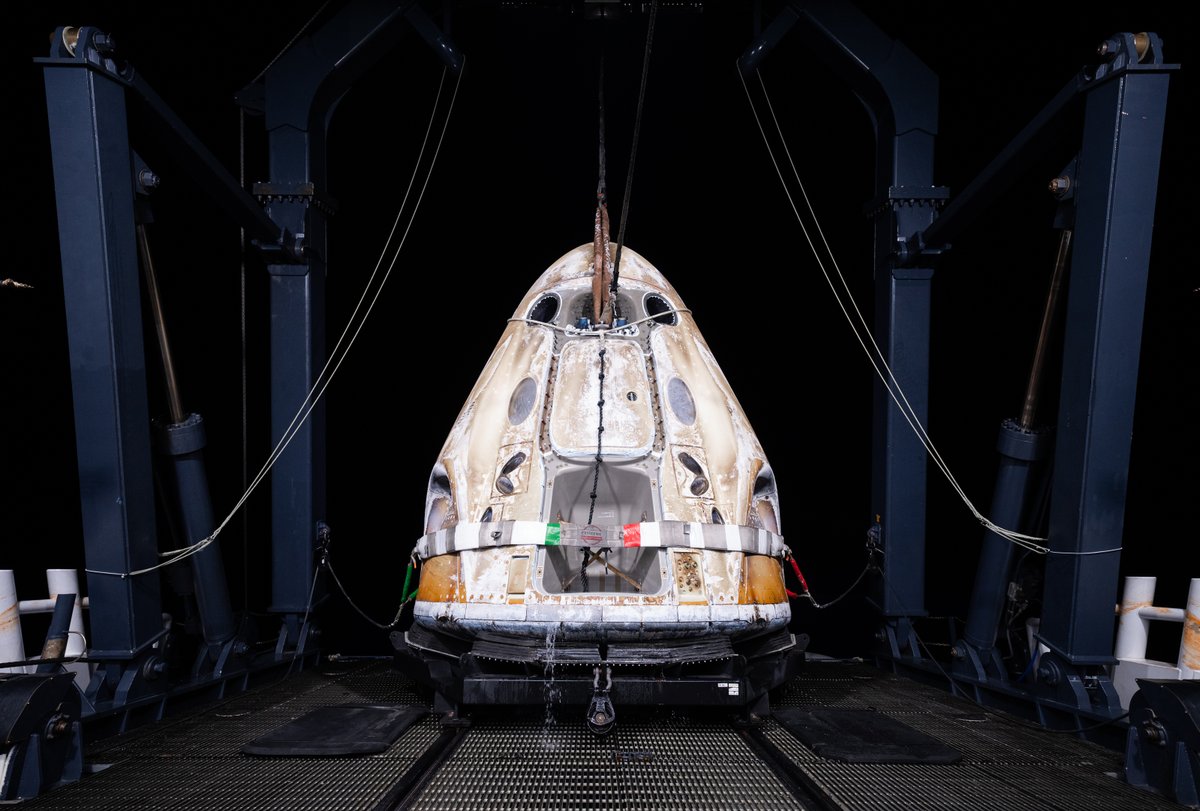
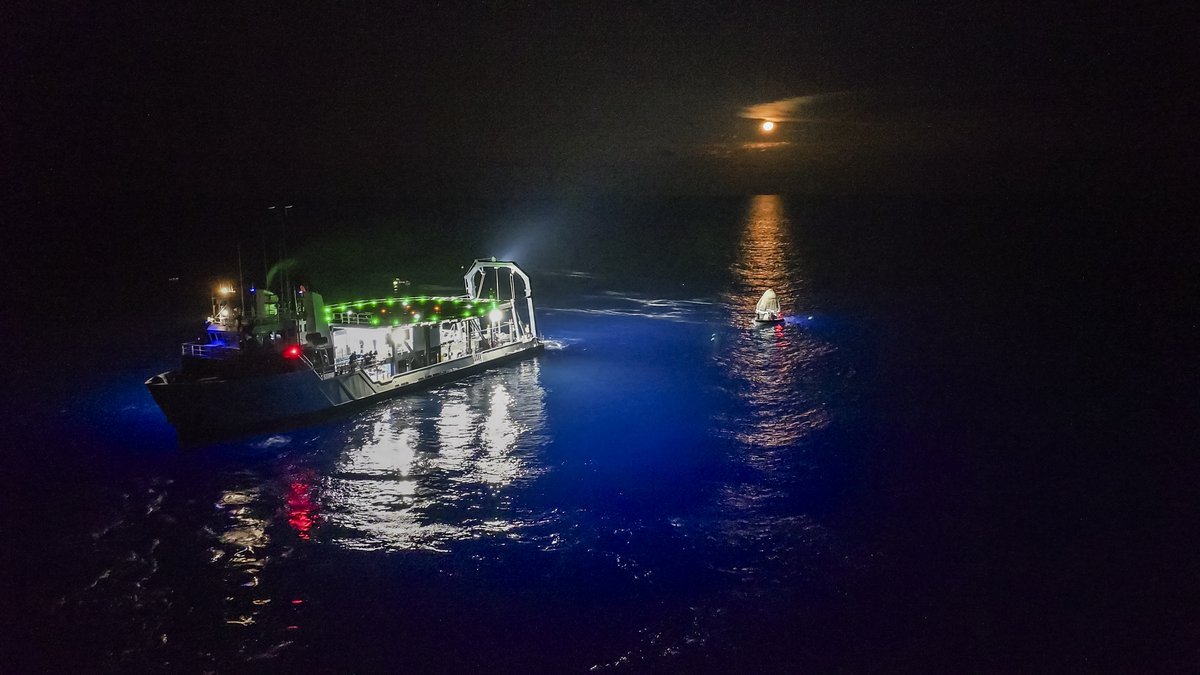
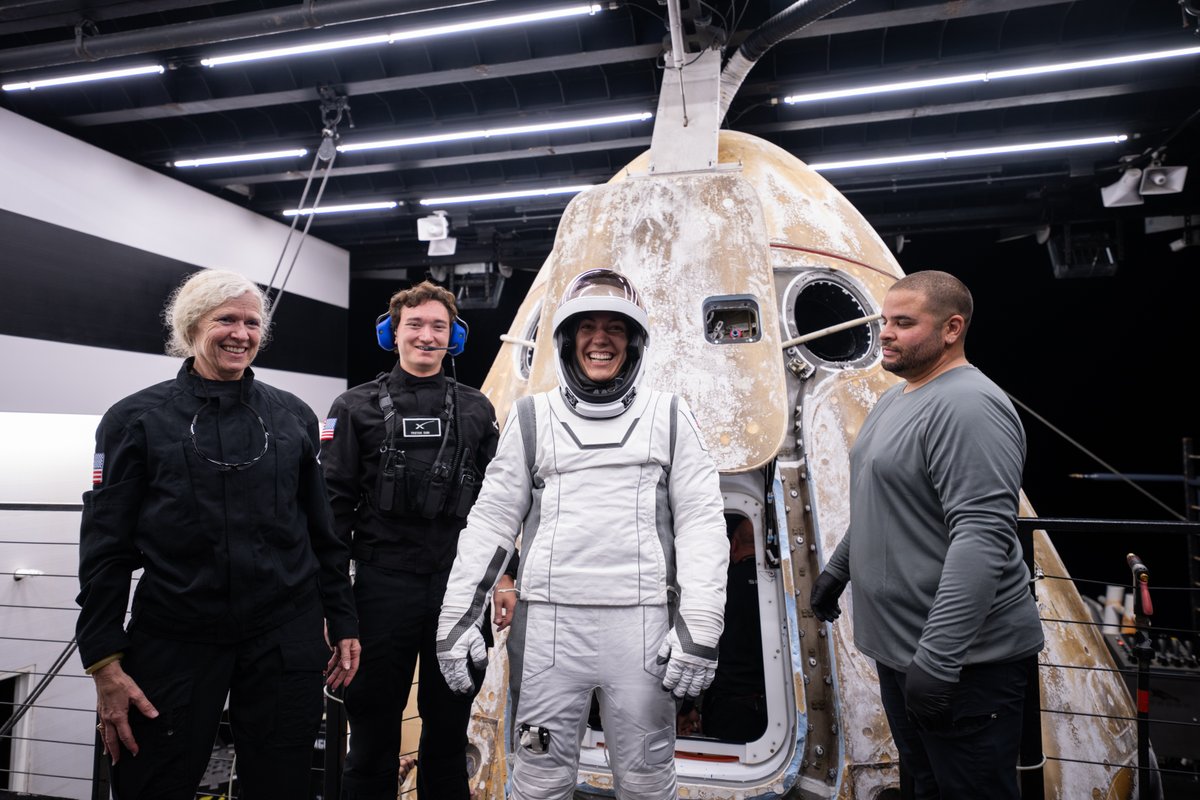
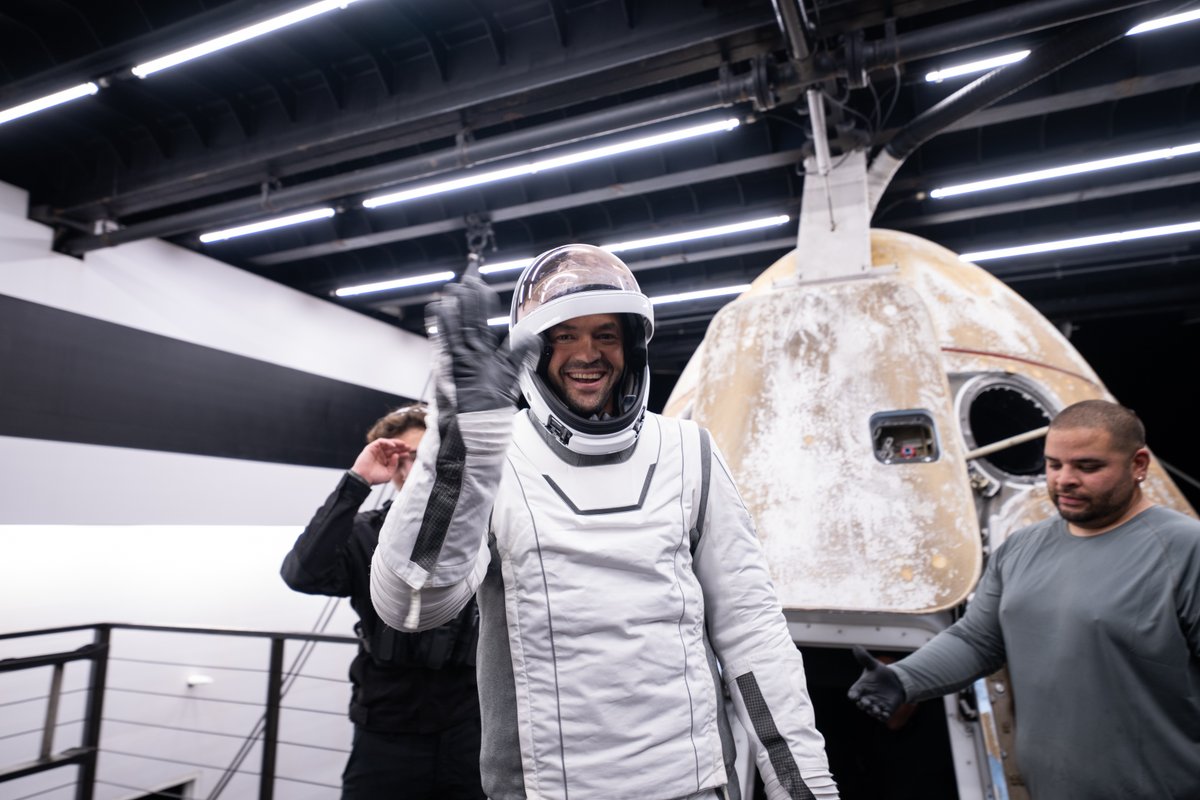
We are back on Earth and look forward to sharing the results and our experiences with all of you. The scientists and doctors rightfully own all of our time for the next few days, but I did want to share a few thoughts as I reflect on our mission and what we set out to accomplish.
We deeply care about the world we live in today and making it better. That’s why we wear the @Stjude patch on our flight suit and why we dedicate so much time to raising funds and awareness for their vital work. It’s why we partnered with @ElSistemaUSA to show how the beauty of music can bring people together all over the world. It is why we’ve brought Starlinks to various corners of the world to help connect people and provide access to information—building blocks for solving many of the world’s challenges.
As we work to address today’s problems, we must also look to the future we want our children to grow up in. As a crew, we have always believed in humanity's destiny among the stars—a belief that’s only been reinforced by our recent journey. We had very specific mission objectives, some familiar from the past, but in many ways, they were different today.
We took our spaceship farther than any human has gone since the last Apollo mission over 50 years ago, and along the way, two of our crewmates became the women who have journeyed farthest from this planet. Now, if we have been there before, why is it significant? The better question might be: Why haven’t we gone back? It’s not easy to travel that far into space. It requires immense energy to send a human-rated spaceship to such a height, and if a rapid deorbit is required, dissipating that energy is not easy. The environment is harsh, with increased radiation, more micrometeoroid debris, and no nearby safe havens in case of trouble. We went there to study the radiation environment, gather data on its impact on systems and human health, and to explore areas we know less about, where we can learn new problem-solving methods that will help in future missions. Records are meant to be broken, and we are so excited for @Artemis to take us ALL to even greater heights.
We conducted an EVA (spacewalk) and tested a new-generation spacesuit. There have been over 300 spacewalks in the 60-year history of human spaceflight, the most famous being those of the Apollo moonwalkers. By any standard, what we did was basic in comparison. The difference is that those spacewalks were conducted by government agencies—NASA, ESA, Russian Cosmonauts, Chinese Taikonauts—with the full backing of their nations' resources. In the future, tens of thousands of people will be working in space on multiple space stations, lunar bases, and Mars outposts and not all of them will be government astronauts. Space belongs to everyone, and it’s essential that both commercial and government efforts work together to make that future a reality. It is critical for the commercial industry to have the tools and experience for spacewalk operations and the suit we tested is just the first step in that journey. By opening up new frontiers, we’re building a future for all of humanity, not just a select few. Along the way, we’ve learned a lot about the technical disciplines related to EVA operations, which will only accelerate the iterative design process that @SpaceX executes so masterfully. I will personally treasure the experience my crew and I shared, but I am most excited about future generations of the suit and where they might be used someday.
We tested new laser-based Starlink communications, using it primarily as an alternative communication pathway to Mission Control, but also to put together a very special moment: my crewmate @Gillis_SarahE playing the violin in space. This wasn’t about being first at something, but about showing the world a different perspective through the power of music. To maybe think a bit less about the differences that dominate daily discourse and a bit more about our shared humanity and what we can achieve through some measure of unity.
Beyond what we hope to learn from these technical objectives or the ~40 science and research experiments, there is always a fundamental requirement of any space mission: to cast the widest possible inspirational message. There were many firsts on our mission, but just as important were the things that were simply different from what people are used to seeing. These differences can spark all sorts of creative thinking and maybe inspire the next generation to dream about what they can accomplish among the stars. Because if we’re going to realize humanity’s destiny to reach out and unlock the mysteries of the universe, we are going to need a lot of inspired dreamers to join this grand endeavor.
I want to close by thanking everyone who worked so hard to make this mission safe and successful. Of course, that starts with the 14,000+ @SpaceX employees, from top leadership like @elonmusk, @Gwynne_Shotwell, @jjfactorykat ,@skeech412 and @TurkeyBeaver to the SpaceX technicians inspecting our booster before flight. Special thanks to all the @PolarisProgram team that supported us throughout this journey over the last 2.5 years of training to the 24x7 on-orbit operations. I also want to thank @NASA for their foresight in creating the commercial crew program, which breathes life into initiatives like @PolarisProgram ..not to mention NASA's direct mission support and EVA suit testing. Thanks to the weather teams, recovery teams (including the @USCG), all the researchers, and everyone of our supporters that cheered us on and dreams of a brighter future✨. With our deepest appreciation and gratitude, THANK YOU!
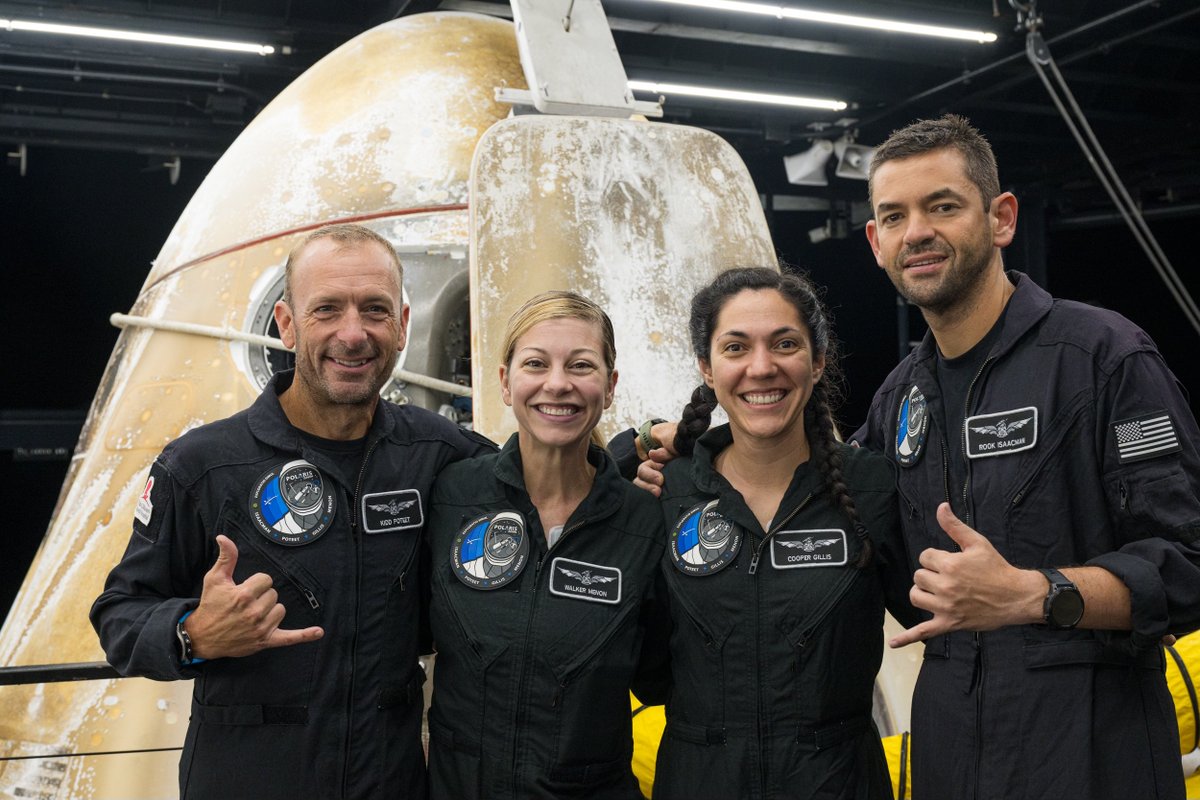
Fresh off their historic space flight, the crew of the Polaris Dawn sat down for an exclusive interview with @LesterHoltNBC about the mission, where they went farther into space than any American has in the last five decades.