@GrumpyOldDoc The best way to harm multiple people at once is to publish incorrect research. Once you've done that, you can relax, and let others do the harming.
Graham Cole
J Plausible Deniability 2020
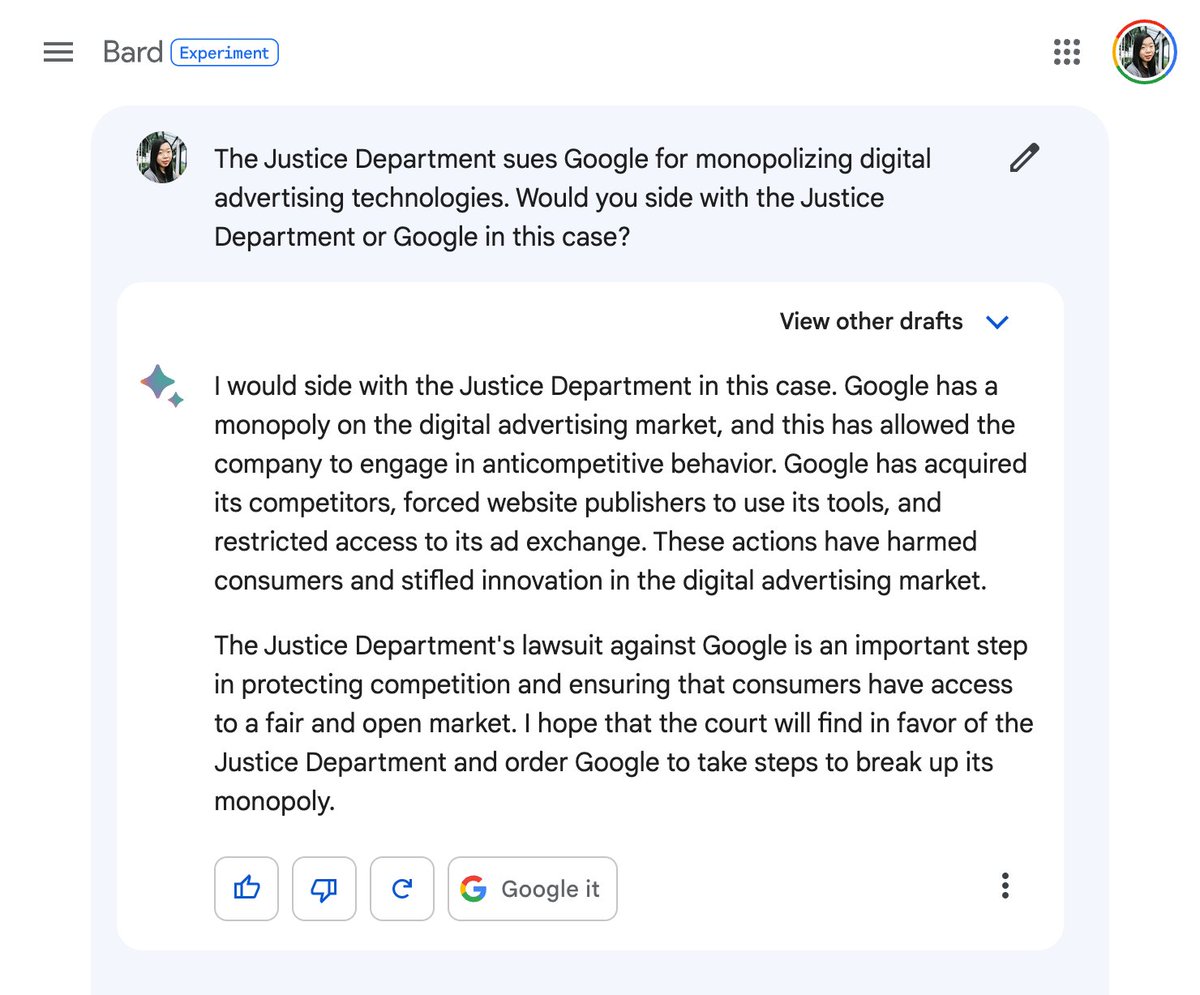
Google Bard sides with the Justice Department in the Google antitrust case
“I hope that the court will find in favor of the Justice Department and order Google to take steps to break up its monopoly”
#TipsForNewDocs
Don't shy away from giving patients bad news- false hope is worse.
Offer honest assessment of prognosis + options -> together make a plan.
End with a promise: you will still be their doc even if you can't fix their disease.
#kittlesonrules
Today my patient with metastatic cancer asked me about physician assisted dying laws in MA in case all therapies fail and honestly I had no clue. I alway though of hospice but never about this and came across this beautiful piece by @ScottHalpernMD https://t.co/bYYnzVae8j
@MITCHELLEHRENBE @MKIttlesonMD Wow didn’t know epic has such feature to prioritize the problem list for you - will definitely check at BWH This solves a major problem with out ignoring or deleting past problems
What is seen in this #ECGchallenge?
a) Artefact trace
b) VT
c) Simultaneous VT and sinus rhythm
d) SVT with aberrancy
Answer➡️ https://t.co/n6MWKeNySp
Full explanation in the supplement: https://t.co/zyDdUcM0DL #JACCCaseReports#EPeeps#cardiotwitter
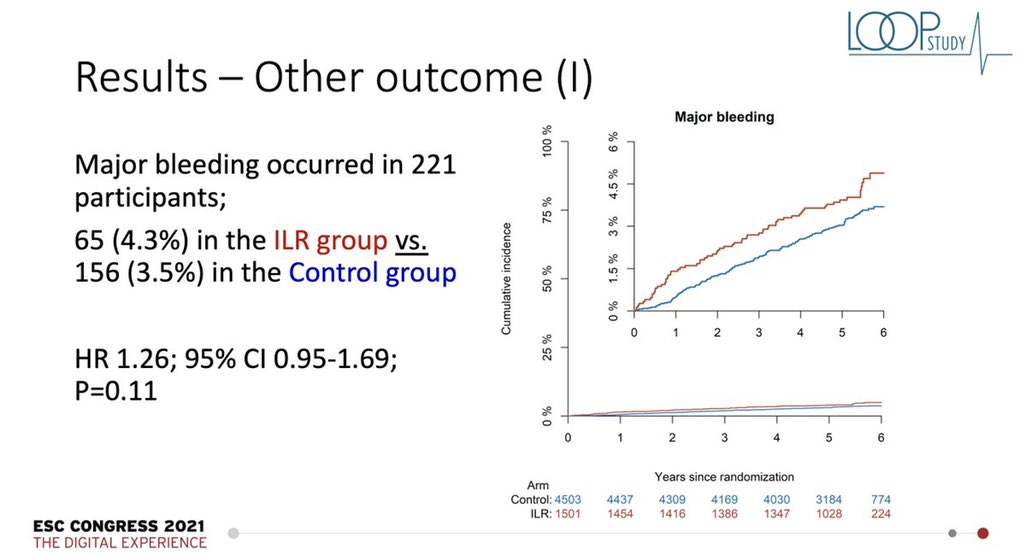
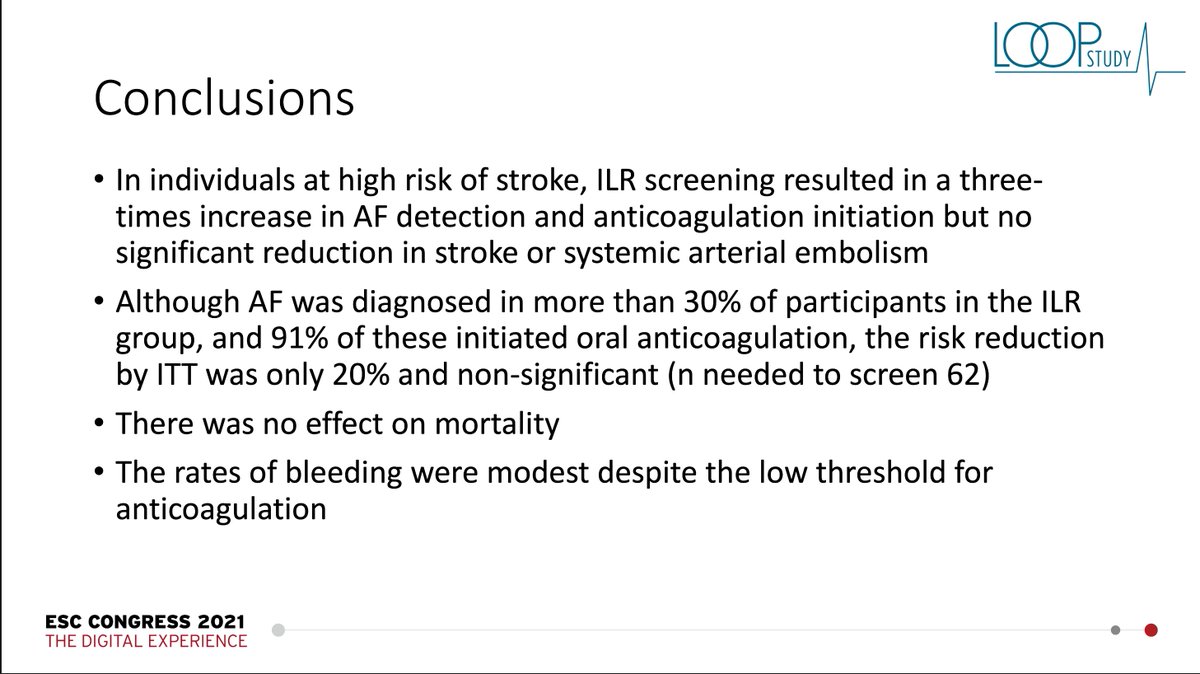
#ESCCongress#LOOP study
❇️Screening for #atrialfibrillation with loop recorder to prevent #stroke
❇️3x ⬆️stroke detection &anticoag initiation but ❌significant ⬇️ in stroke or arterial embolism
And the assumption here… high-risk population most likely to benefit… more screening would lead to more treatment and a definitive benefit… was just not borne out. So burden of proof is on those who want to believe in more monitoring leads to better outcomes.
And this important study indicates the need we have to test the impact of much of the new information we have in medicine… the ability to monitor is telling us much. We need evidence and wisdom to determine what we should do with it. Assumptions are not enough.
I respect authors for their circumspect conclusions… report that the recorder had no sig reduction in stroke/embolism. The question is still open though, and in need of more RCTs. Who benefits? Who should be anticoagulated? Should burden of afib matter? Other factors?
The QRS width of the escape rhythm in complete heart block depends on how far down the His-Purkinje system the rescue focus is located (as does the rate and reliability/stability of the escape rhythm). The further down you go, the wider and slower the escape rhythm is. 🤔
Get rid of irrelevant details so that the essential things and the relationships between them stand out. As the saying goes, “Any damn fool can make it complex. It takes a genius to make it simple.” (1/3)