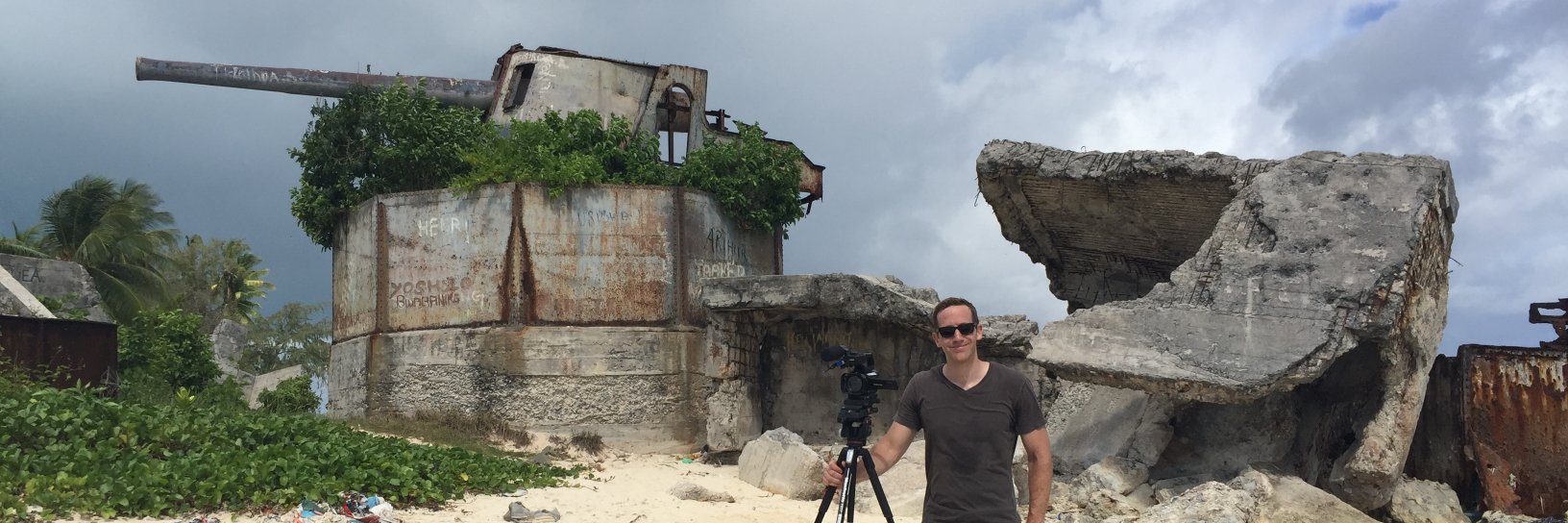
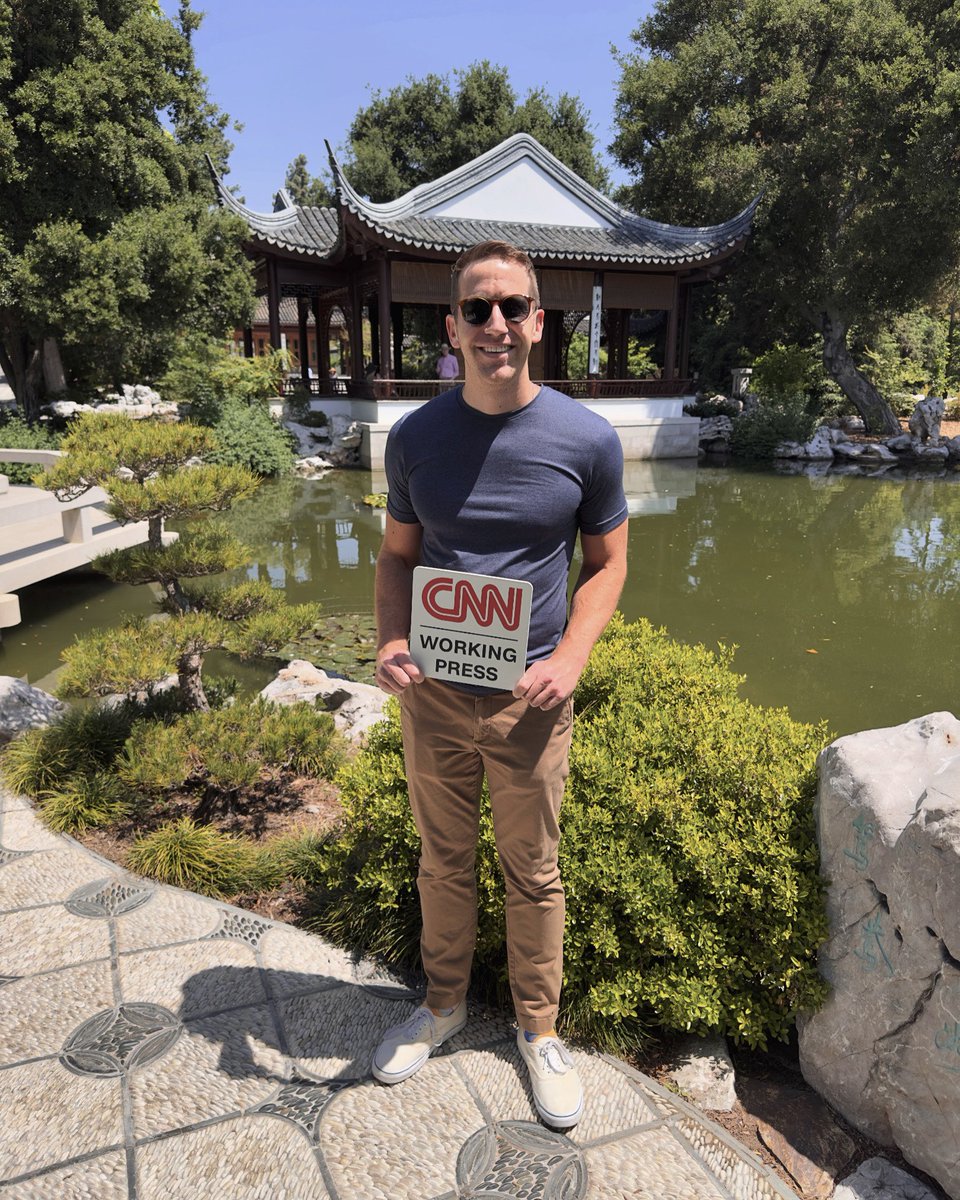
Next stop, Asia!!✈️
Absolutely over the moon to begin a new role with CNN as an international correspondent, starting next week.
If you’re in the region, let’s talk.
Here to help, excited to elevate voices and stories that need to be heard around the world🌏
The latest from the L.A. County vote processing center…
@nithyavraman cut into @spencerpratt’s lead by about 3,000 votes today but still trails him by about 37,000 votes for 2nd place.
It could take 3 weeks to know the outcome.
China has just released new State Council regulations on outbound investment (《国务院关于对外投资的规定》), significantly tightening controls on Chinese investors investing abroad. The new rules expand the scope of state oversight and further integrate outbound investment into China’s broader national security, export control, and data governance framework.
Key provisions include:
1. The definition of “investor” has been broadened. Previously, the rules mainly applied to domestic enterprises and organizations (中国境内的企业、其他组织). The new regulations explicitly include individual residents (居民个人). Article 27 also states that investors who fail to complete required approval or filing procedures for overseas investment may face fines and confiscation of illegal income. This likely explains last week’s draconian restrictions on Chinese individuals investing through foreign stock brokers.
2. Article 13 directly links outbound investment to China’s export control regime. Investors are prohibited from exporting or using banned goods, technologies, services, or related data abroad, and restricted items require prior authorization. The provision also covers indirect technology transfer through cross-border deployment of personnel, technical guidance, overseas work arrangements, or training programs. In effect, outbound investment is now explicitly tied to China’s controls over technology, data, and talent flows.
3. Article 15 incorporates outbound investment into China’s national security review system. Relevant State Council departments may review overseas investments, asset transfers, or disposals that affect or may affect national security. Organizations and individuals are required to cooperate fully and comply with review decisions. This provision is particularly noteworthy when read alongside the recent ban involving Manus.
4. Article 22 further restricts cooperation with foreign legal and regulatory authorities. Chinese organizations or individuals involved in overseas litigation, arbitration, or foreign investigations must comply with China’s laws on state secrets, data security, personal information protection, export controls, and judicial assistance before providing evidence or materials abroad. Where approval is legally required, the relevant procedures must be followed first. In practice, this makes it extremely difficult for foreign governments to obtain data from Chinese firms — a point illustrated by China’s recent first finding of improper foreign extraterritorial jurisdiction in the Nuctech case.
5. Article 32 extends these rules to investments in Hong Kong, Macau, and Taiwan unless separate rules apply. This means the new outbound investment controls also affect the Hong Kong market, potentially dealing another blow to Hong Kong’s role as an international financial center.
Overall, the new regulations mark another major step in China’s tightening control over cross-border capital flows, technology transfer, and overseas economic activity. It is becoming increasingly difficult for Chinese investors to invest abroad independently of state oversight. The move also suggests growing concern in Beijing over capital outflows and pressure on China’s foreign exchange reserves.
https://t.co/DBR9u1L9H0
Wang Yi in Ottawa: “Bilateral relations have set sail anew, exchanges and cooperation across all fields have been fully restored and the major economic and trade concerns of both sides have been properly addressed.”
https://t.co/CY65Ebp3U0
The key finding, in my view:
Many Taiwanese appear to see the “1992 Consensus” as a tool for maintaining dialogue and the status quo — not as support for unification.
But Beijing increasingly treats the “1992 Consensus” and “One Country, Two Systems” as inseparable.
Trump brought a delegation of business leaders to China. But who were the representatives on China's side? From Zhou Qunfei of Lens Technology to Zhou Yunjie of Haier, we look at the Chinese executives who rubbed shoulders with Musk and Cook.
Just before the White House is set to unveil its new Executive Order on AI safety, it was great to join @CNBCi Squawk Box Asia to discuss U.S.-China competition in AI services.
Thanks to hosts @cherykang and @Manisha3005 for having me on the program.
BEIJING (@CNN) — Vladimir Putin is here in Beijing, arriving to a similar Trump tableau — sea of students in blue & white uniforms, waving Russian / Chinese flags… They chanted "welcome, welcome, enthusiastically welcome" (Same as Trump's arrival) Music from the CCTV stream.
BEIJING (@CNN) — Vladimir Putin’s plane has just landed in Beijing, as the Russian president arrives for his visit with Chinese leader Xi Jinping Wednesday
Trump tells Fox News that he and President Xi "talked the whole night" about Taiwan.
“We talked the whole night about that issue. I think I know more about Taiwan right now than I know about almost any country.”
Trump also speculated that China will not attack the island during the remainder of his term, though he suspects it could happen after he leaves office.
“I don’t think they’ll do anything when I’m here. When I’m not here, I think they might, to be honest with you,” Trump said. “I’m not sure that they’ll do anything if it remained as is.”
UPDATE: Taiwan Presidential Office Responds to Trump AF1 Comments —
“Regarding recent comments made by United States President Donald Trump during a media interview, Presidential Office Spokesperson Karen Kuo (郭雅慧) stated on May 16 that the office has noted multiple reaffirmations from the US side, including President Trump and Secretary of State Marco Rubio, that the consistent US policy and position toward Taiwan remain unchanged.”
https://t.co/mqyYPQAeLU
What's it like meeting with Xi Jingping?
@JerryBrownGov sat across from him multiple times.
"It's hard to read that expression...what he's thinking?"
"He definitely exudes a level of confidence...he has a sense of...strategic patience...a very formidable person."
#Trump says #China will buy #US crude as both powers urge reopening of #Hormuz:
- 🌏 White House says Trump and Xi agreed the Strait of Hormuz must remain open
- 🛢️ Trump says China will buy US oil, though Beijing hasn’t confirmed
- 🚢 30 vessels have crossed the strait since Wednesday (well below the pre-war daily average of ~140) including tankers linked to Japan & China
- 🤝 Analysts suggest Iran may be allowing crossings to avoid disrupting China’s position during the talks
- ⚠️ Risks remain high: a ship was seized off the UAE and redirected toward Iran, while an Indian cargo ship was attacked and sank off Oman
- ⛽ Oil prices are climbing after ending flat Thursday
- 🛑 Hundreds of ships and ~20,000 seafarers remain stranded, underscoring ongoing danger despite a ceasefire
The latest.
@Elex_Michaelson@CNNTheStoryIs
Exclusive: All eyes are on Trump's visit to China but Putin is next. The Russian leader will pay a one-day visit to Beijing on May 20, sources say, with little expectations that there will be an elaborate parade or welcome.
https://t.co/BpS1613lwb
Grateful to the Beijingers who spoke with us after talks between Xi & Trump on Thursday. Some wanted to thank Trump for making China stronger:
Mr. Pan, Beijing IT Employee
As ordinary people, of course, we don’t hope for any conflict between the two countries. Both are major powers; if there is conflict, it is actually not very good for either country.
Mr. Shen, Beijing Construction Industry Employee
Trump's policies of imposing external sanctions have actually further galvanized us to strive for self-reliance and independence; in that respect, I actually quite like this president.
Mrs. Sun, Beijing Resident
I hope the two countries can reach a consensus, both countries will develop in a better direction, and I hope there will be better economic policies and better relations between the two countries. In all aspects, I hope for a better future.